
Reviewed · GHENT TOURS
Ghent Running and Sightseeing Tour
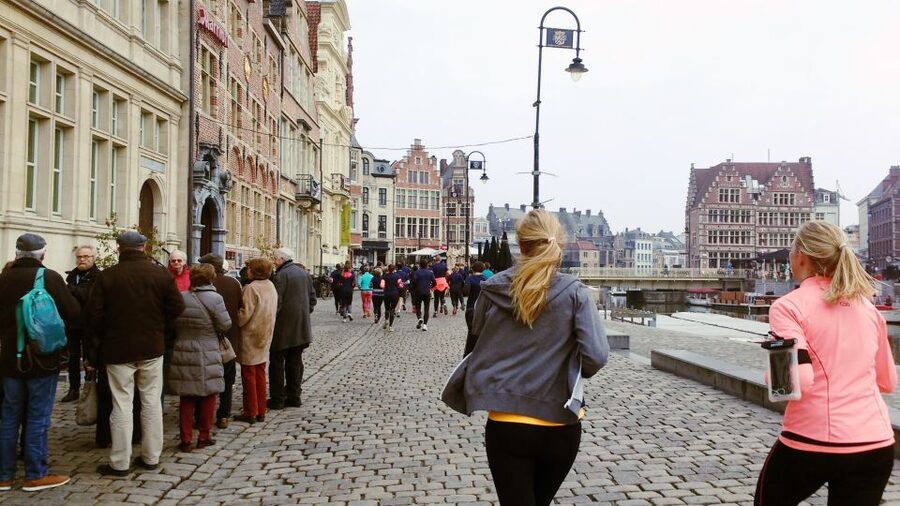
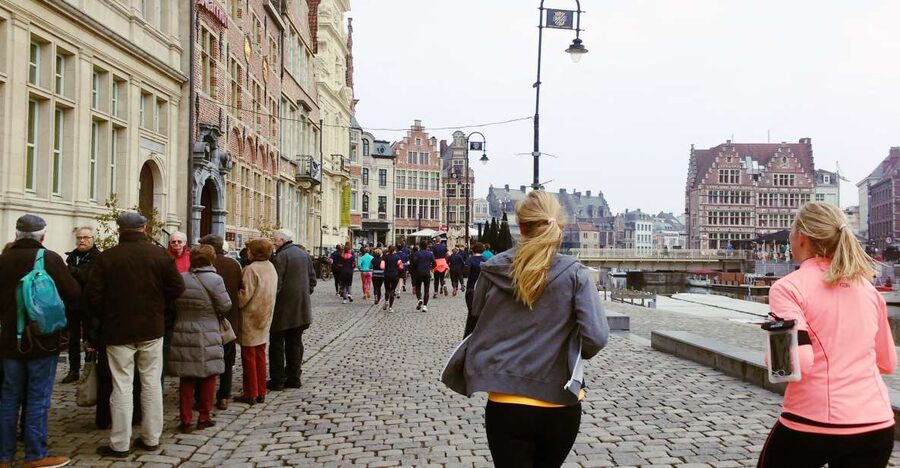
Ghent looks different before breakfast. This gentle 45-minute sightseeing run lets you see the old centre, nearby quarters, and the city waking up, all with regular stops for stories and photos. I like the adjustable pace and the chance to go beyond the usual walking-tour route. The main consideration is that this is still a run, so it suits active adults better than anyone seeking a slow stroll.
I also like the small-scale feel and the local focus. Guide Sophie earned special praise for adapting the route to the day and the group, while another booking covered about 6 kilometers at a pace that remained easy to adjust. Bring sports shoes, sportswear, and water, and expect sightseeing with a little exercise built in.
In This Review
- Key points to know before you book
- Starting at Kouter beside Ghent Opera
- Why a running tour shows you more of Ghent
- Korenlei and Graslei, Ghent’s medieval trade centre
- Portus Ganda and the beginning of Ghent
- Graffiti Street adds a modern change of pace
- The three towers provide Ghent’s classic skyline
- The Opera and Handelsbeurs add the city’s working side
- What the pace is really like
- Sophie and the value of a personal guide
- Is $53 good value for 45 minutes?
- Booking details and a practical morning plan
- Who should choose this Ghent run?
- Should you book the Ghent Running and Sightseeing Tour?
- FAQ
- Where does the Ghent Running and Sightseeing Tour start?
- How long does the tour last?
- What language is the tour conducted in?
- Is this a competitive race?
- How far does the group run?
- Which major landmarks are included?
- What should I bring?
- Is the tour suitable for children?
- Can I cancel the booking?
Key points to know before you book
- A morning run through central Ghent: Start outside the Opera House at Kouter and see the city before it fully wakes up.
- Six kilometers may be possible: One reported outing covered roughly 6 kilometers, though the pace and route can be adjusted to the group.
- The three famous towers are included: Stop at St. Bavo Cathedral, the Ghent Belfry, and St. Nicholas Church.
- You go beyond the postcard centre: The route includes Portus Ganda, Graffiti Street, Kouter, the Opera, and Handelsbeurs.
- The pace is deliberately relaxed: This is a jog with sightseeing stops, not a race or fitness test.
- Best for adults who can run comfortably: The tour is not suitable for children under 18, pregnant women, people with mobility impairments, back problems, or pre-existing medical conditions.
Starting at Kouter beside Ghent Opera
Your meeting point is outside the main entrance of the Ghent Opera, beside Kouter, one of central Ghent’s notable squares. This is a useful starting place because the tour immediately places you among important city landmarks rather than spending its first few minutes reaching them.
The guide begins with a brief warm-up. That small step matters. You are not being asked to sprint away from the meeting point with cold legs, and the guide can set the tone before the group moves off. The run is meant to be leisurely, with the pace adjusted to the people taking part.
I would still arrive ready to move. Wear proper sports shoes and comfortable sportswear rather than everyday sightseeing clothes. The tour lasts only 45 minutes, but one outing covered about 6 kilometers, so you should be comfortable jogging for much of that time.
Kouter also gives the guide an early chance to explain how Ghent developed and how the square connects with the World Expo. That detail helps you read the city as more than a collection of handsome old buildings. Ghent has changed with trade, public events, business, and modern city life, and this run touches on all of those themes.
A few more trips and experiences worth a look
- Ghent: 50-Minute Medieval Center Guided Boat Trip
★ 4.5 · 5,637 reviews - Historical Walking Tour: Legends of Gent
★ 5.0 · 1,761 reviews - Ghent: 40 Minute Medieval Center Guided Boat Tour
★ 4.4 · 884 reviews
Why a running tour shows you more of Ghent
A walking tour naturally keeps to a compact area. That is useful when you want long explanations at each site, but it can leave you with only a slice of the city. A gentle run covers more ground in less time, which is the main reason to choose this experience.
The pace also changes how you notice Ghent. You are not simply moving from one landmark to the next in a line of sightseeing stops. You see the streets between them, pass through different quarters, and get a brief look at how the historic core connects with places outside the standard route.
The morning timing adds another benefit. Ghent is known for its historic centre, but the city does not feel exactly the same before the day gets going. Shops, streets, and public spaces are still settling into their daily rhythm. The tour’s appeal is partly visual and partly atmospheric: you get an early start, some exercise, and a guided introduction before a full day of sightseeing.
There is a practical tradeoff. Running is not ideal for taking in every architectural detail. You will stop at landmarks, but you will not have the same long, quiet viewing time as you would on a traditional walking tour. Choose this if covering more ground matters to you.
Korenlei and Graslei, Ghent’s medieval trade centre
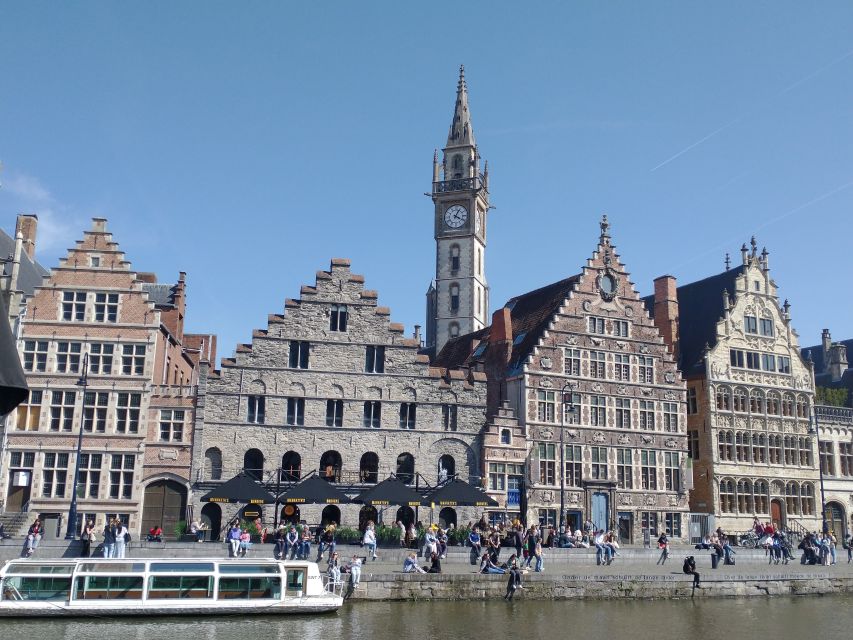
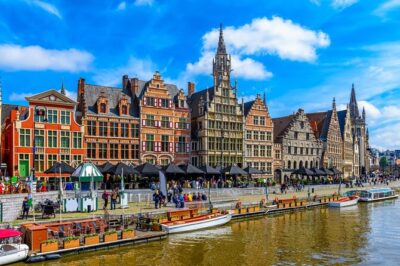
The route includes Korenlei and Graslei, the famous waterfront area where medieval trade shaped Ghent’s fortunes. These quays are among the city’s most recognizable sights, with historic buildings gathered along the water.
Here, the guide explains how trade worked in the Middle Ages and why this stretch mattered. That context is useful because the buildings can otherwise seem like a beautiful but disconnected row of façades. The story of commerce gives the waterfront a clear purpose: goods, movement, money, and river access helped form the city you see today.
A stop here is also valuable for orientation. You can connect the old trading centre with the other places on the route, including Portus Ganda and the central squares. The tour does not treat each sight as an isolated photo opportunity. It links them through Ghent’s growth.
Expect a short explanation rather than a long lecture. The format requires the group to keep moving, so you will hear the essential points, take in the view, and continue. If you want detailed architectural analysis of every building, a longer walking tour would suit you better.
Portus Ganda and the beginning of Ghent
Portus Ganda is another important stop, especially if you want to understand the city’s name and early development. The guide explains its connection with the birth of Ghent, giving you a look at the city before its best-known medieval buildings took shape.
This is one of the reasons I like the route. It does not focus only on the famous centre that appears in guidebooks. It includes a place tied to Ghent’s beginnings, then sets that story beside the later importance of trade along Korenlei and Graslei.
For you, the value is simple: the city becomes easier to understand. You can see that Ghent developed through connected places and changing functions, not from a single historic square. Since the run moves between several areas, you get a broader picture in a short time.
The stop also shows why a running format works here. You can reach more than one part of the city without turning the experience into a long morning commitment. At 45 minutes, it leaves plenty of time for your own sightseeing afterward.
Something different, still within reach of Ghent:
- Evening Tour of the Dark Side of Gent
★ 5.0 · 646 reviews - Ghent Bike Tour Off-the-beaten-track
★ 5.0 · 505 reviews - Ghent: 40-Minute Historical Boat Tour of City Center
★ 4.3 · 430 reviews - Ghent: Guided Urban Bike Tour
★ 4.9 · 297 reviews
Graffiti Street adds a modern change of pace
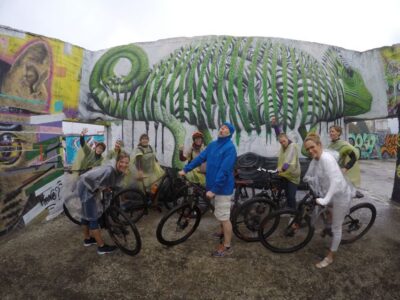
Graffiti Street breaks up the medieval focus. The route passes through this popular street and makes time for photographs, giving you a more current side of Ghent.
That contrast is important. The tour includes cathedrals, churches, towers, trade routes, and early city development, but it also acknowledges that Ghent is not preserved in one historic period. Graffiti Street brings colour, public art, and a more informal mood into the route.
You should have time to stop for pictures, but remember that this remains a moving tour. The photo opportunity is part of the run rather than a dedicated photography session. If you want carefully composed shots, you may wish to return later on your own.
For many people, this will be one of the most enjoyable moments because it changes the visual tone. It also gives the guide a chance to show that the city’s identity includes more than grand stone buildings.
The three towers provide Ghent’s classic skyline
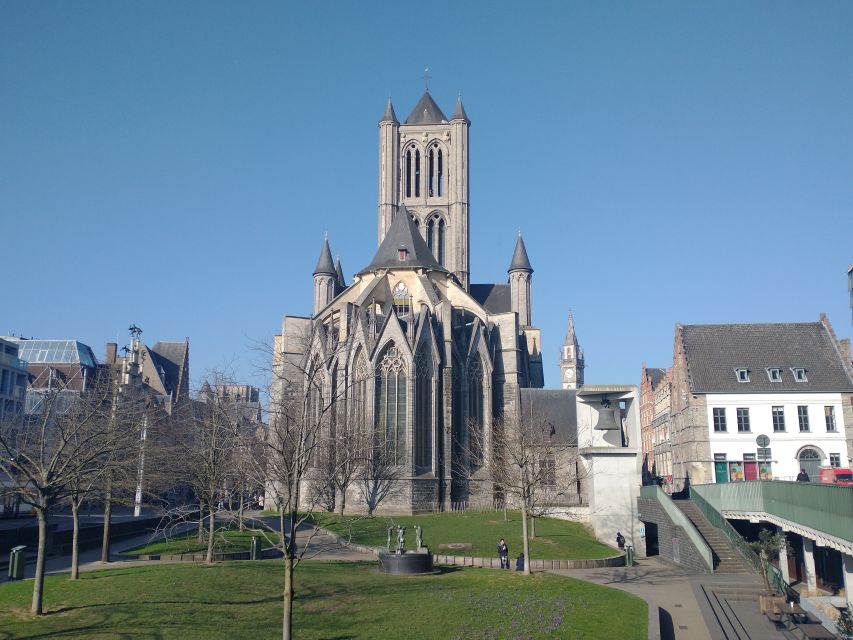
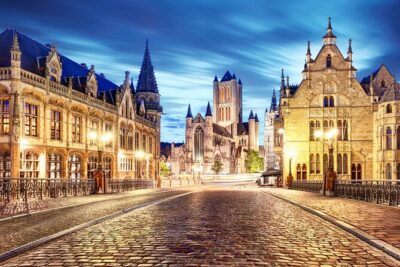
The tour stops at Ghent’s three famous towers: St. Bavo Cathedral, the Ghent Belfry, and St. Nicholas Church. Seeing all three in one short outing gives you a useful introduction to the city’s central skyline.
St. Bavo Cathedral is one of the major religious landmarks in Ghent. The Ghent Belfry represents the city’s civic identity, while St. Nicholas Church adds another major historic church to the group. Even without an extended interior visit, seeing the three together helps you understand the shape and importance of the old centre.
The route does not promise entry into these buildings, so you should think of the stops as outdoor sightseeing and guided explanation. That is not a flaw, but it is important to know before booking. You are getting orientation, history, and photo chances, not a detailed cathedral visit.
I like the way the three towers are treated as a set. Instead of seeing one landmark and moving on, you learn how these buildings relate to Ghent’s public and religious life. If this is your first morning in the city, the stops will help you recognize the centre when you return for a longer visit.
The Opera and Handelsbeurs add the city’s working side
The Opera is not just your meeting point. The tour also explains its importance, along with Handelsbeurs, another place connected with Ghent’s public and commercial life.
These stops widen the subject beyond medieval churches and waterways. They show how the city’s identity continued to develop through performance, business, and civic activity. For a short tour, that range is useful because it prevents the experience from becoming a simple parade of old buildings.
You may appreciate this part most if you want a sense of how Ghent functions as a living city. The route does not only point out the biggest sights. It gives you a reason to notice different quarters and the roles they have played.
The limitation is time. A 45-minute run cannot offer long background talks at every location. The guide’s job is to give you a clear introduction, then keep the group moving. You can use the places that interest you most as targets for later exploration.
What the pace is really like
The word running can put off people who do not consider themselves runners. In this case, the activity is described as a leisurely run or jog, not a competition. The guide adjusts the pace to the group and makes regular stops for landmark explanations.
That flexibility is the strongest practical feature of the experience. One booking covered about 6 kilometers, but the distance should not be treated as a fixed promise for every group. Your pace, route, and stops can affect how much ground you cover.
A report from Peter in the Netherlands described the pace as very accessible and easy for the guide to adapt. That is useful reassurance, but you still need a basic level of fitness. This is not a walking tour with a few steps between sights.
The tour is not suitable for pregnant women, people with back problems, people with mobility impairments, people with pre-existing medical conditions, or children under 18. If you have doubts about your health or ability to jog, choose a non-running sightseeing option instead.
Sophie and the value of a personal guide
A local guide makes a major difference on a tour this short. You are not following an audio track or simply checking off landmarks. The guide decides how much time to spend at each stop and can adjust the pace when the group needs it.
Sophie received especially strong praise for a private morning outing. She was described as highly informed and able to adapt the experience to the conditions of the day. That flexibility matters more here than it would on a fixed bus route because running groups can vary greatly in pace.
The guide also provides photo opportunities, local history, and explanations of less obvious places. You can ask questions while stopped, although the format is not designed for long discussions at every landmark.
The experience is conducted in English. If you want a personal introduction to Ghent without committing to several hours, the guide-led format gives you a useful balance of structure and movement.
Is $53 good value for 45 minutes?
At $53 per person, this is not the cheapest way to see Ghent. The price is easier to justify if you value the personal guide, the active format, and the chance to cover more ground than a short walk.
You are paying for more than 45 minutes of jogging. The experience includes a local guide, sightseeing at major landmarks, history, photo stops, and a route that includes places beyond the most familiar centre. It also includes the planning and guiding work that makes a short route feel organized.
Still, the time is brief. If you mainly want a long historical explanation, interior visits, or a relaxed pace for close-up architecture, $53 may feel high. A standard walking tour could give you more time at fewer sights.
The best value comes when you use the run as an early orientation. You get your exercise done, learn the basic shape of Ghent, and can then return to the cathedral, towers, waterfront, or Graffiti Street later. You should bring your own water because a bottle is not included. Transport and snacks are also not included, though the central meeting point reduces the need for additional transport during the activity.
Booking details and a practical morning plan
The experience lasts 45 minutes, with starting times dependent on availability. Since it is designed around seeing Ghent wake up, an early slot is the natural choice, though you should check the available time when booking.
Your meeting point is outside the main entrance of Ghent Opera at Kouter. The guide welcomes you there and begins with a brief warm-up. Bring a passport or ID card with you because Belgian rules require you to carry identification at all times, although you do not need to show it to the guide.
Smoking and audio recording are not allowed. A water bottle is recommended, especially if the group covers close to the 6-kilometer distance mentioned in one booking.
The cancellation terms are practical: you can cancel up to 24 hours in advance for a full refund. You can also reserve now and pay later, which helps if you are arranging several activities during a short stay in Ghent.
Who should choose this Ghent run?
I would recommend it most strongly to an active adult who wants a quick first look at the city. It suits you if you enjoy light exercise, prefer local guidance, and want to see both famous landmarks and less obvious parts of central Ghent.
It is also a good fit if your schedule is tight. Forty-five minutes is short enough to place before breakfast or another activity, yet the route covers a useful range of subjects: medieval trade, the city’s beginnings, major churches, the Belfry, public buildings, Graffiti Street, and different quarters.
You may want another type of tour if you dislike jogging, need frequent unscheduled breaks, or want to spend a long time inside historic buildings. The run offers outdoor sightseeing and history, not museum visits or a slow architectural study.
For couples or small groups, the personal format can be especially appealing. Sophie’s outing was private, and the guide’s ability to adjust the route and pace can make the experience feel more responsive than a large fixed group.
Should you book the Ghent Running and Sightseeing Tour?
Book it if you want to see more of Ghent while getting gentle exercise, and if a relaxed jog sounds more appealing than a conventional walking tour. The route combines the three towers, Korenlei and Graslei, Portus Ganda, Graffiti Street, Kouter, the Opera, and Handelsbeurs in a compact morning outing.
Skip it if you want a purely leisurely stroll or detailed interior visits. At $53 for 45 minutes, the value depends on using its special format: an adjustable pace, a local English-speaking guide, early city views, and a broader route than you might cover on foot.
For the right person, it is a cheerful way to begin a Ghent stay. You finish with a basic map of the city in your head, several useful historical points, and your morning exercise already done.
FAQ
Where does the Ghent Running and Sightseeing Tour start?
The meeting point is outside the main entrance of the Ghent Opera, beside Kouter.
How long does the tour last?
The tour lasts 45 minutes.
What language is the tour conducted in?
The live tour guide conducts the experience in English.
Is this a competitive race?
No. It is a leisurely run or jog for sightseeing, not a competition. The pace is adjusted to the group, with regular stops at landmarks.
How far does the group run?
One booking covered about 6 kilometers, but the route and pace can be adjusted to the group and conditions of the day.
Which major landmarks are included?
The route includes St. Bavo Cathedral, the Ghent Belfry, St. Nicholas Church, Korenlei, Graslei, Portus Ganda, Graffiti Street, Kouter, the Opera, and Handelsbeurs.
What should I bring?
Bring sports shoes, sportswear, a passport or ID card, and a bottle of water. Water is recommended but not included.
Is the tour suitable for children?
No. The experience is not suitable for children under 18.
Can I cancel the booking?
Yes. You can cancel up to 24 hours in advance for a full refund. You can also reserve now and pay later.
Just added around Ghent
- Ghent: Walking Tour from Friday Market to the Cathedral★ 4.8 · 3 reviews
- Ghent Walking Tour – City Highlights and Beyond Tradition★ 4.5 · 3 reviews
- Ghent: City Walk with Audio Guide in 7 Languages on your Phone★ 4.5 · 3 reviews
- Children’s escape game in the city of Ghent Marsupilami★ 5.0 · 3 reviews
- Discover Ghent while playing! Escape game – The Walter case★ 4.5 · 4 reviews
- Discover Ghent while playing! Escape game – The alchemist★ 4.0 · 4 reviews
- e-Scavenger hunt Mons: Explore the city at your own pace★ 5.0 · 4 reviews
- Ghent: Guided City Highlights Walking Tour with Light Meal★ 4.6 · 5 reviews
Ghent Tours, compared.
Browse the lists this tour appears in