
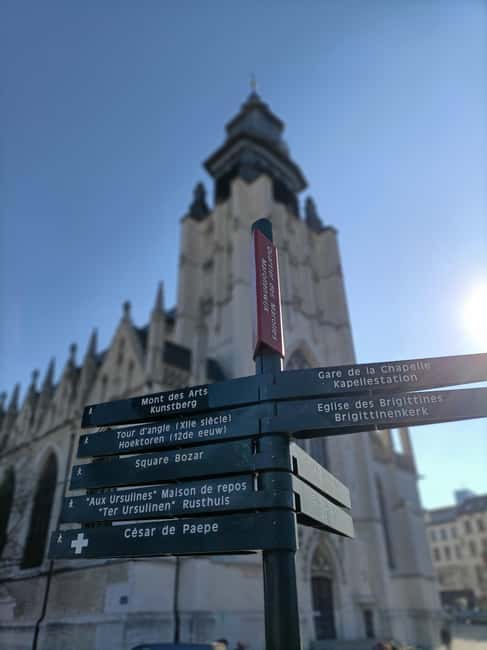
Reviewed · BRUSSELS TOURS
Brussels, 1000 Years of Struggles
Brussels has a rebellious side. This two-hour walk through the Marolles district explores the neighborhood’s fights over housing, change, and local identity, using humor, anecdotes, alleys, and dead ends instead of a standard list of monuments. I like the focus on real social conflict, and I like that the route reaches less familiar corners alongside important sites. The main drawback is the unclear final cost: the $3.53 booking price may not be the only payment expected, so bring cash.
The tour is especially appealing if you want Brussels explained from street level. You will hear about the 1969 Battle of the Marolles and the 1989 Mattress War, then connect those events to the wider question of gentrification and who gets to remain in a changing neighborhood. English and French tours are available, but the meeting point can change with the option you choose.
In This Review
- Key points to know before you book
- Why the Marolles makes such a good classroom
- Following the 1969 Battle of the Marolles
- The 1989 Mattress War and the power of a good story
- Alleys, dead ends, and the less polished Marolles
- Gentrification, explained without city-planning jargon
- The guide’s style: funny, interactive, and direct
- Is the $3.53 price really the whole cost?
- How to fit this walk into a Brussels visit
- Who should book this Marolles walk?
- Should you book Brussels, 1000 Years of Struggles?
- FAQ
- Where does the Brussels, 1000 Years of Struggles tour take place?
- How long does the tour last?
- Which languages are available?
- What does the tour include?
- Are food and drinks included?
- Can I cancel the booking for a refund?
Key points to know before you book
- The Marolles is the main subject: The route stays focused on Brussels’ most rebellious neighborhood and its long record of local resistance.
- Two modern struggles anchor the walk: The 1969 Battle of the Marolles and the 1989 Mattress War give the tour memorable historical reference points.
- Small lanes are part of the experience: You pass through lesser-known alleys and dead ends, not only the district’s best-known streets.
- The tone is playful: Stories and humor make serious subjects such as housing and gentrification easier to follow.
- Plan for two hours on foot: There is no pickup, and food and drinks are not included.
- Check the payment details carefully: The listed price is about $3.53 per person, but you may need to pay the guide separately at the end.
Why the Marolles makes such a good classroom
The Marolles is not presented as a quiet backdrop for pretty architecture. It is the subject itself. This part of Brussels has become a useful place to discuss how ordinary people react when officials, developers, or wealthier newcomers threaten to change the character of a neighborhood.
That makes the tour different from a general Brussels walk. You are not simply moving from one famous building to another. Instead, the guide uses streets and public spaces to explain disputes that shaped local life. The point is not only what happened, but why residents cared enough to organize, resist, and sometimes turn conflict into a public spectacle.
I like this approach because it gives you a way to read the city after the walk ends. A shopfront, apartment block, renovated street, or expensive-looking home can raise questions about who lived there before and who can afford it now. The tour connects those everyday details to the larger subject of urban change.
The title refers to 1,000 years of struggles, but you should not expect a full millennium of dates and rulers. The emphasis is on the Marolles as a place with a long habit of resistance, especially through memorable local episodes. The tour’s strength is its human scale, not a complete history of Brussels.
A few more trips and experiences worth a look
- Brussels: Atomium Entry Ticket with Design Museum Ticket
★ 4.4 · 9,254 reviews - From Brussels: Guided Day Trip to Bruges and Ghent
★ 4.6 · 8,353 reviews - From Brussels: Bruges & Ghent Day Tour – 2 Fairytale Cities
★ 4.7 · 8,242 reviews
Following the 1969 Battle of the Marolles
The 1969 Battle of the Marolles is one of the main historical stops in the story. It gives the walk a clear example of residents defending their neighborhood when major changes threatened the area.
The supplied information does not provide a full account of the battle’s events, so the guide’s explanation will matter greatly here. You can expect the stop to focus on the local struggle itself, the people affected, and the way collective action shaped the district. This is a good point to listen closely and ask questions if you want the political or social background spelled out.
The value of this stop is that it turns an abstract idea such as community resistance into a specific Brussels event. You hear about a named conflict tied to a particular neighborhood, rather than a general lecture about city planning. That makes the past easier to remember.
I would also keep your expectations realistic. This is a two-hour walking tour with several stories, not a specialist seminar on the Battle of the Marolles. If you want detailed archival research, legal documents, or a year-by-year account, this may feel light. If you want an engaging introduction to the issue, the stop should work well.
The 1989 Mattress War and the power of a good story
The 1989 Mattress War is the tour’s other headline episode. Even the name signals the walk’s style: serious social issues are presented through unusual, memorable stories rather than dry civic language.
The title suggests a conflict tied to everyday life and the physical experience of living in a neighborhood. That is useful because housing disputes can sound remote when explained only through policy. A mattress, by contrast, brings the matter down to street level. It hints at people, homes, inconvenience, protest, and the small objects that can become symbols during a public dispute.
This is also where the tour’s playful tone seems most useful. Humor does not erase the seriousness of the struggle. It helps you remember the event and understand how local activism can take creative forms.
You should expect the guide to tell the story in an interactive and lively way, but the exact presentation can vary by guide and language. Simon, one named guide associated with the experience, received especially strong praise for making the visit engaging and absorbing. If Simon is leading your session, you may find the storytelling style particularly appealing, though guide availability is not guaranteed.
Alleys, dead ends, and the less polished Marolles
A major benefit of this walk is that it does not stay only on the district’s main streets. The route includes lesser-known alleys and dead ends, which gives the experience a more local feel and breaks up the historical discussion.
These smaller spaces matter because they can show you the texture of a neighborhood better than a broad avenue does. A dead end may have little value as a conventional sight, yet it can help the guide explain how people used the area, how neighbors interacted, or why a particular corner became part of a local struggle.
I like the balance between important places and overlooked ones. The best neighborhood walks make you notice spaces you would otherwise pass without a second glance. Here, an alley is not merely a shortcut. It becomes part of the story.
There is a tradeoff. Since the route includes small lanes and several stops, the walking pace may feel slower than a quick sightseeing circuit. You will need to give the guide room to talk and keep your attention on the group. Wear comfortable shoes and expect the experience to be about streets and stories rather than grand interiors.
Something different, still within reach of Brussels:
- Choco-Story Brussels: Chocolate Museum Entrance with Tasting
★ 4.3 · 4,883 reviews - Bruges and Ghent – Belgium’s Fairytale Cities – from Brussels
★ 4.0 · 4,809 reviews - Brussels: Hop-On Hop-Off Bus Tour
★ 4.0 · 4,016 reviews - Brussels: Guided Walking Tour
★ 4.6 · 3,560 reviews
Gentrification, explained without city-planning jargon
The tour also addresses gentrification, described as the social and economic change that happens when wealthier residents move into an area. In the Marolles, this topic gives the older struggles a present-day connection.
This is one of the most useful parts for you as a visitor. It encourages you to look beyond the surface of a fashionable neighborhood. A district can appear attractive and improved while longtime residents face higher costs or feel pushed aside. The tour asks you to hold both facts in your mind at once.
That balance is important. You are not being asked to view every change as bad, nor to assume that every renovation is good. Instead, the walk frames urban change as a contest between investment, preservation, local identity, and the right to remain at home.
The German-language description of the experience particularly praised this connection between past struggles and present-day urban change. That focus makes the tour more than a collection of colorful anecdotes. It gives the stories a clear reason to matter now.
The guide’s style: funny, interactive, and direct
This is not designed as a formal lecture. The description promises a playful and funny approach, and the experience works best if you enjoy history told through conversation and anecdotes.
I would choose this walk if you like asking questions, comparing past and present, and learning through stories. You may enjoy it less if you prefer a quiet, highly structured tour with exact dates, long explanations, and little audience interaction.
The English and French language choices are useful, particularly for couples or small groups with different language preferences. The guide’s personality will shape the experience, as it does on any story-based walk. Simon was praised for being passionate and engaging, which is a good sign for anyone who values delivery as much as subject matter.
Because the route deals with conflict, you should expect some strong opinions and difficult subjects. The humor appears to keep the tone approachable, but the underlying themes include displacement, class, housing, and local resistance. That mix gives the tour more substance than a purely lighthearted neighborhood stroll.
Is the $3.53 price really the whole cost?
At about $3.53 per person, the initial price looks like an excellent value for a two-hour guided walk. You receive a focused look at one Brussels neighborhood, a guide in English or French, and stories that are difficult to pick up from a standard city guidebook.
But you should read the payment terms carefully. A recent French-language booking experience reported that the guide expected an additional payment at the end, beyond the small online amount, and the person had not brought cash. The exact extra amount is not provided here, so I would not assume that $3.53 is the final price.
That uncertainty is the main practical concern. Bring cash, and confirm the payment arrangement before setting out. A low-cost walk can still be good value if you know what you will pay. It is less satisfying when the final request comes as a surprise.
Food and drinks are not included, and there is no pickup. Those exclusions are minor for a neighborhood walk, but they matter if you are planning a tight schedule. You will need to reach the meeting point yourself, and the meeting point may vary depending on the option booked.
How to fit this walk into a Brussels visit
Two hours is a manageable length for most sightseeing plans. You can place the tour in the morning or afternoon and still have time for other parts of Brussels, but allow extra time to find the correct starting point.
Do not treat the walk as a quick introduction to every major Brussels sight. Its focus is the Marolles and its struggles. If you want a broad first look at the city’s grand landmarks, choose a general city tour first or afterward.
I would place this experience after you have seen a little of central Brussels. Some basic sense of the city makes the discussion of neighborhood change easier to follow. At the same time, it works early in a trip because it gives you a sharper way to interpret the streets you see later.
The best audience is curious and independent. You do not need a background in Belgian politics or urban history. You simply need an interest in why neighborhoods change and how residents respond.
Who should book this Marolles walk?
I would recommend it to you if you enjoy:
- Local history told through personal stories
- Social and political subjects presented in an approachable way
- Neighborhood walks that include ordinary streets and small lanes
- Discussions of housing, gentrification, and community identity
- Guides who use humor and interaction rather than a formal speech
Families with older children may also find the Mattress War and other anecdotes easier to remember than a list of dates. The subject matter is serious, but the playful style should make it accessible.
I would think twice if your main goal is famous architecture, museum access, food tasting, or sweeping city views. None of those are the point here. You are paying for interpretation and storytelling, not for entry to a landmark or a meal.
The small number of published ratings means you should not treat the 4.4 score as a final judgment for every guide or departure. Still, the strongest feedback points in the same direction: the subject is interesting, and a passionate guide can make the two hours memorable.
Should you book Brussels, 1000 Years of Struggles?
Book this tour if you want to understand Brussels through the people who resisted change, not only through its monuments. The 1969 Battle of the Marolles, the 1989 Mattress War, and the discussion of gentrification give the walk a clear purpose. The alleys and dead ends add a sense of place, while the humor keeps the subject from becoming heavy.
Before booking, confirm the meeting point, language, and full payment arrangement. Bring cash because the advertised low price may not cover everything expected at the end.
For a small cost, this can be a strong choice for curious visitors who want a more human view of Brussels. It is not the city’s broadest tour, but it may be one of its most useful if you want to understand how a neighborhood fights to remain itself.
FAQ
Where does the Brussels, 1000 Years of Struggles tour take place?
The tour takes place in the Marolles district of Brussels, within the Brussels Capital Region of Belgium.
How long does the tour last?
The guided walking tour lasts two hours.
Which languages are available?
The live tour guide is available in English and French.
What does the tour include?
The experience includes a guided tour through the Marolles district.
Are food and drinks included?
No. Food and drinks are not included in the tour price.
Can I cancel the booking for a refund?
Yes. You can cancel up to 24 hours in advance for a full refund.
Just added around Brussels
- Discover the secrets of Brussels while playing★ 5.0 · 3 reviews
- Standard vehicle from Charleroi airport to city of Brussels★ 4.5 · 3 reviews
- Full day Brugge & Ghent: the gems of Flanders★ 5.0 · 3 reviews
- Private tour : Best of Brussels half day From Brussels★ 5.0 · 3 reviews
- Private Tour – Bruges and Ghent, our fairytale cities★ 5.0 · 3 reviews
- Floating in the clouds★ 5.0 · 3 reviews
- Full-Day City Tour of Ghent and Bruges from Brussels★ 4.5 · 3 reviews
- Brussels Private Walking Tour With A Professional Guide★ 4.5 · 3 reviews
Brussels Tours, compared.

Atomium Entry Ticket with Design Museum Ticket
Read our review →

Choco-Story Brussels: Chocolate Museum Entrance with Tasting
Read our review →
Bruges and Ghent – Belgium’s Fairytale Cities – from Brussels
Read our review →

Hungry Mary’s Famous Beer and Chocolate Tour in Brussels
Read our review →Browse the lists this tour appears in