
Reviewed · E-SCAVENGER HUNTS & CITY GAMES
Discover the secrets of Brussels while playing
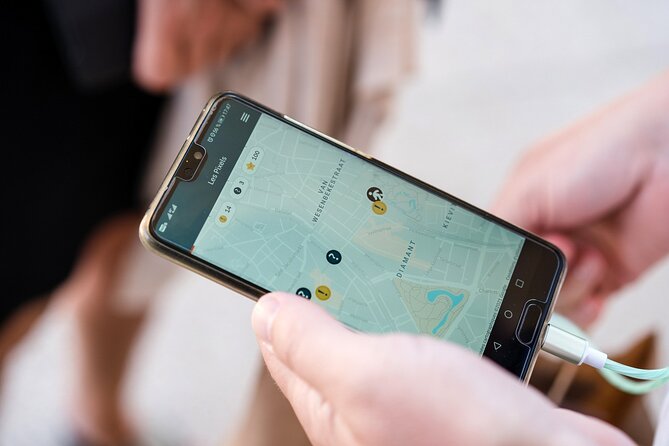
Brussels becomes your game board. This two-hour Urban Escape Game turns a walk from Grand Place into a team challenge, with a virtual character sending riddles and missions to your phone as you explore the city. I like the mix of sightseeing and problem-solving, and I like that the private format lets your own group set the pace. The main drawback is simple: you need your own smartphone and battery, and the app-led format will not replace a traditional guide who can answer questions on the spot.
At $17.45 per group for up to six people, this is priced more like a shared activity than a standard guided tour. It is a particularly good fit for families, friends, and anyone who finds ordinary city walks a little flat. Just remember that the puzzles may shape your route and attention, so you may not linger at every monument as long as you would on a classic sightseeing tour.
In This Review
- Key points to know before you play
- Starting at Grand Place, Brussels
- Following the virtual character through the city
- Solving riddles beside monuments and facades
- What the two-hour route feels like
- Why this works well for families with children
- Competition, teamwork, and the final score
- What you get for $17.45 per group
- How the app-led format compares with a guide
- Practical planning for your Brussels game
- Who should book this experience?
- Should you book the Brussels Urban Escape Game?
- FAQ
- Where does the Brussels Urban Escape Game start?
- Where does the activity finish?
- How long does the experience last?
- How much does the game cost?
- Is this a private activity?
- How does the game work?
- Do I need to bring a smartphone?
- Are food and drinks included?
- Can I cancel for a full refund?
Key points to know before you play
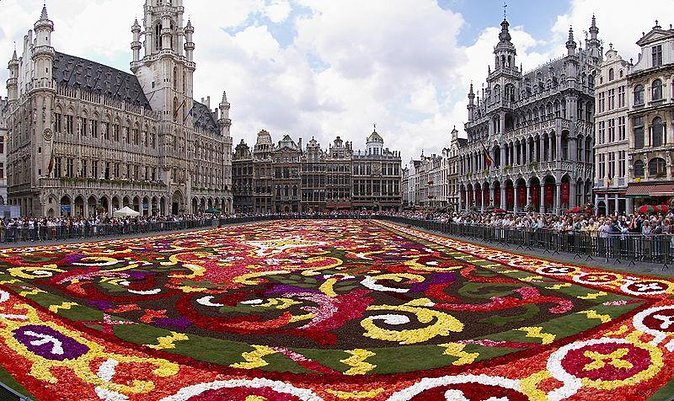
- Grand Place is your launch point: The game begins at Grand Place, also called Grote Markt, in central Brussels.
- The city supplies the clues: You investigate riddles around monuments, facades, familiar sights, and less obvious corners.
- A virtual character leads the way: The story follows a curious digital character rather than a person walking beside you.
- Private play keeps the group together: Only your party takes part, with up to six people sharing one booking.
- Families can join in: The Kids explore in Brussels version has been described as clear and suitable for children aged 5 and 8.
- Your phone is essential: The activity uses a mobile application, while the smartphone and battery are not provided.
Starting at Grand Place, Brussels
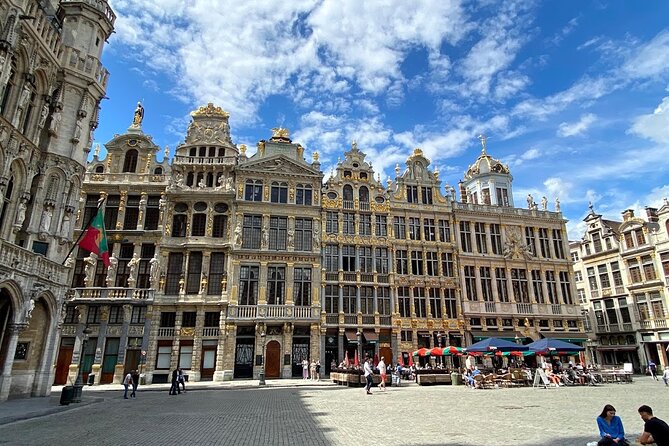
Grand Place is a smart starting point for this kind of activity. It gives you an immediate sense of Brussels, with ornate facades and one of the city’s most famous public squares around you. You do not begin in a dull meeting area or on the edge of town. You start in the middle of the action.
The meeting point is listed as Grand PlaceGrote Markt, 1000 Brussel, Belgium. That bilingual naming is useful when you are checking maps or asking for directions, since Grand Place is also known as Grote Markt.
From there, the game guides you through central Brussels using the mobile application. The exact sequence of stops is not fixed in the information provided, so you should expect the experience to reveal its route through the riddles rather than hand you a full sightseeing list in advance. That is part of the appeal. You are not simply being told to look at a building. You are being asked to notice it, interpret clues, and work out what matters.
I would allow a few minutes before the start to gather your group, open the app, and make sure your phone is ready. The published hours run daily from 12:00 AM to 11:30 PM, giving you a wide range of possible start times. Since the experience lasts about two hours, you can place it in the morning, afternoon, or evening according to the rest of your Brussels plans.
More E-Scavenger Hunts in Brussels
- Beer Tasting and Scavenger Hunt in Brussels – About 3 Hours
★ 4.5 · 35 reviews - e-Scavenger hunt Brussels: Explore the city at your own pace
★ 4.0 · 22 reviews - e-Scavenger hunt Leuven: Explore the city at your own pace
★ 4.5 · 21 reviews
Following the virtual character through the city
A curious virtual character accompanies you through the streets. This character provides the thread that links the puzzles together, sending challenges and missions through the application as you go.
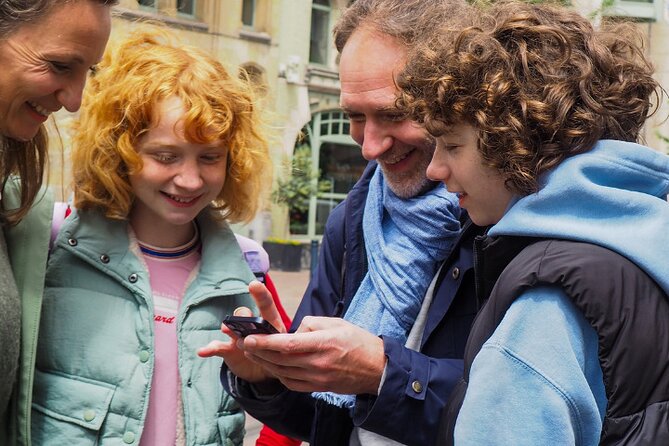
That setup gives the walk a light story rather than the feel of a worksheet. You and your companions must discuss clues, inspect your surroundings, and decide what to do next. The experience works best when everyone takes part. One person may notice a detail on a facade, another may connect it to the riddle, and a child may spot something adults walked right past.
The digital guide also means the activity is flexible. You are not tied to a guide’s pace or to a group of strangers. Because it is a private activity, your party can talk freely, pause when needed, and enjoy the game as a shared outing.
The tradeoff is that the character is virtual. If you want detailed answers about Brussels politics, architecture, food, or daily life, a human guide would offer more depth. Here, the information is delivered through the missions and historical anecdotes, with the main goal being active discovery rather than a long lecture.
Solving riddles beside monuments and facades
The heart of the activity is the riddle system. You investigate clues in real locations, looking at the buildings and public spaces around you for answers. The challenges are designed to make you examine the city instead of walking past it with your eyes fixed on a map.
The route includes tourist corners and less familiar places in downtown Brussels. That balance matters. Famous sights give you a sense of place, while the more unusual stops can make the city feel less predictable. You may recognize a square or facade, then find yourself paying attention to a detail you would otherwise miss.
Historical anecdotes add context to the missions. The supplied information does not list each monument or provide a full stop-by-stop route, so I would not book this expecting a guaranteed checklist of Brussels landmarks. Think of it as a themed city walk with historical touches, not a complete architectural survey.
The game also gives you a reason to look up. You may need to inspect a facade, identify a feature, or connect a building to a clue. That is valuable in a city where many details sit above eye level. A normal stroll can become a search for evidence.
What the two-hour route feels like
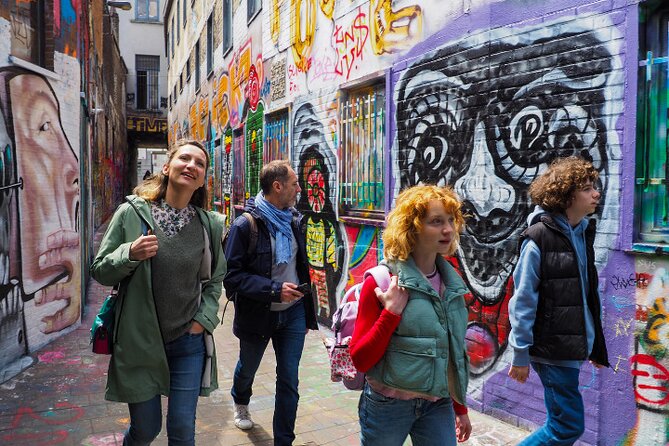
Two hours is a useful length for this format. It is long enough to cover several parts of central Brussels but short enough to fit around lunch, museum visits, or an evening meal. You are likely to spend the time moving between locations, reading prompts, discussing answers, and stopping to investigate.
The pace depends on your group. A competitive team may move quickly and focus on the score. A family with young children may take longer at each clue and treat the walk as a relaxed outing. Since no guide is setting the tempo, you have room to play in the way that suits you.
Still, the game has an intended structure. If you stop for a long meal or wander far off course, you may interrupt the flow. Food and drinks are not included, so plan those separately. A snack before starting can help families, especially if you are playing near a busy sightseeing day.
The experience ends back at the meeting point. That makes planning easier. You do not have to arrange transport from a distant final stop or guess where the activity will leave you. You can continue exploring central Brussels from Grand Place once the game is over.
More self-guided city games:
- Brussels Highlights Self guided scavenger hunt and Walking Tour
★ 4.0 · 14 reviews - Discover Leuven while playing! Escape game – The alchemist
★ 4.5 · 5 reviews - Discover Brussels while playing! Escape game – The alchemist
★ 5.0 · 4 reviews - e-Scavenger hunt Antwerp: Explore the city at your own pace
★ 4.5 · 67 reviews
Why this works well for families with children
The family angle is one of the strongest reasons to consider this activity. A standard city tour can lose younger children after a few buildings. A mission-based walk gives them something to do with each stop. They are not only listening. They are searching, guessing, and helping the group progress.
The Kids explore in Brussels version has clear instructions and a duration that suits children aged 5 and 8. That does not mean every child will solve every clue alone. Younger players may need adults to read the instructions or connect the historical information to the task. The point is shared participation, not a test.
I would divide responsibilities within the group. Let children look for visual details while adults handle the phone and read the longer prompts. Then switch roles so the children still feel involved. This can turn a phone-based activity into a useful way to get children looking at streets, buildings, and public spaces.
The private format helps here. Your group does not need to worry about slowing down a larger party or disturbing strangers on a fixed tour. If a child needs a short pause, you can take it without holding up a guide-led schedule.
There is one practical concern for families: the phone remains central throughout the activity. Bring a fully charged device and treat battery life as part of your preparation. The provider does not supply a smartphone or battery.
Competition, teamwork, and the final score
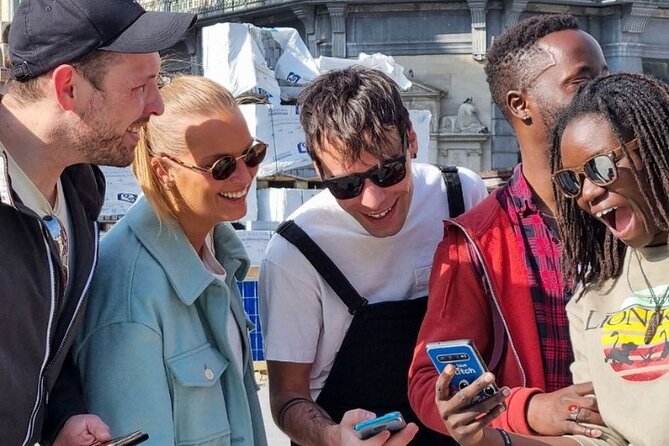
The game includes a score, so you can approach it as a friendly contest. That adds energy for groups of friends and older children. You might split into teams, compare answers, or simply try to beat your own pace.
The score should not be the only measure of success. The best part of this activity is getting your group to notice Brussels together. If everyone becomes fixated on speed, you may rush through places that deserve a closer look. I suggest treating the score as a bonus and the city walk as the main event.
The missions also suit groups with different interests. History fans can focus on the anecdotes. Puzzle lovers can chase the answers. Families can use the tasks to keep children engaged. Friends can turn the walk into a light competition.
Because the game is private, there is no public leaderboard or shared group atmosphere mentioned in the available details. Your result matters mainly to your own party. If you enjoy social competition with a large crowd, this may feel quiet. If you prefer a private challenge, that is a strength.
What you get for $17.45 per group
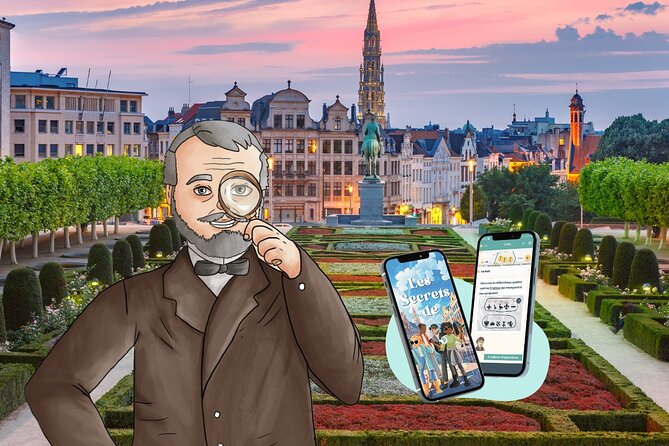
At $17.45 for up to six people, the price is appealing. A full group of six pays less than $3 per person, which makes this one of the more affordable structured activities you can add to a Brussels visit. Even a smaller group may find the cost reasonable for two hours of entertainment and city exploration.
The value comes from combining three things: a self-guided walk, a puzzle game, and historical information. You do not pay separately for a guide, and you can choose your starting time within the broad daily operating window.
The price does not cover food or drinks. It also does not cover the smartphone or battery needed to run the experience. Those are small but important details. You should arrive with your own working device and budget for refreshments outside the game.
The booking is valid for up to three years, which gives you unusual flexibility if your plans change long before your visit. Free cancellation is available up to 24 hours before the start time for a full refund. Cancellations or changes made within 24 hours are not accepted for a refund.
How the app-led format compares with a guide
I see this as a different product from a classic walking tour. A human guide can adjust explanations to your questions, point out details without waiting for you to solve a clue, and share personal knowledge about Brussels. This game instead asks you to become an active observer.
That difference affects the kind of value you receive. If you want a clear lesson in Belgian history, look for a specialist walking tour. If you want your group to explore while laughing, arguing over answers, and spotting details, the game has a strong case.
The app also lets you avoid a fixed group. Only your party participates, and 24/7 online support is included if you need help. That support is useful because a digital activity can be frustrating if you get stuck or have trouble with the instructions.
Do not expect the same personal touch as a guide who knows your names or adapts the route to your interests. The virtual character supplies the story, but the group supplies the conversation and energy.
Practical planning for your Brussels game
Wear comfortable shoes. The activity is a city walk lasting about two hours, and the route runs through central Brussels streets. The information does not state the exact distance, so you should avoid assuming it is a short stroll between only a few nearby buildings.
Check your meeting details carefully before setting out. The start and finish are both at Grand Place, so the location is easy to use as a fixed point in your day. The area is near public transportation, which helps if you are coming from another part of Brussels.
Service animals are allowed, and most people can participate. No special fitness requirement is listed. Still, you should plan around your own group’s walking comfort, since this is an active city experience rather than a seated attraction.
Bring:
- A charged smartphone
- Any charging equipment you normally use
- Comfortable shoes
- Weather-appropriate clothing
- A little extra time before the start to gather your group
Confirmation is provided at booking. The game can be booked for any day and is listed as available from Monday through Sunday during the stated operating period, which runs through June 17, 2026.
Who should book this experience?
I would choose this for families who want children to take part in sightseeing, friends looking for a low-cost activity, and couples who enjoy solving clues together. It is also useful if you have already seen Brussels and want to look at the city in a new way.
The activity may not suit you if you dislike phone-based tours, want a detailed conversation with a local expert, or prefer to spend long periods inside museums and churches. The route is built around movement, observation, and missions.
It is also a good option for a first afternoon in Brussels. Grand Place gives you a central beginning, and the riddles can help you get your bearings while introducing both well-known and less familiar corners. Just leave room in your schedule for stops the game may make you want to revisit later.
Should you book the Brussels Urban Escape Game?
Book it if you want a private, playful introduction to Brussels at a modest group price. The mix of riddles, city history, tourist sights, and unusual corners gives you more purpose than a basic self-guided walk, while the two-hour length keeps the activity manageable.
I would especially recommend it for families with children around the ages mentioned, and for groups of friends who enjoy a little competition. Bring your own charged phone, keep your expectations focused on interactive discovery rather than expert commentary, and you should get good value from the experience.
FAQ
Where does the Brussels Urban Escape Game start?
It starts at Grand Place, also called Grote Markt, at 1000 Brussels, Belgium.
Where does the activity finish?
The game ends back at the meeting point at Grand Place.
How long does the experience last?
The activity lasts approximately two hours.
How much does the game cost?
The listed price is $17.45 per group for up to six people.
Is this a private activity?
Yes. Only your group participates in the activity.
How does the game work?
You follow a mobile application through Brussels while a virtual character gives you riddles, challenges, and missions to complete.
Do I need to bring a smartphone?
Yes. A smartphone and battery are not included, so you need to bring your own device and power supply.
Are food and drinks included?
No. Food and drinks are not included.
Can I cancel for a full refund?
Yes, if you cancel at least 24 hours before the experience start time. Cancellations or changes made within 24 hours are not accepted for a refund.
Just added around Brussels
- Full day Brugge & Ghent: the gems of Flanders★ 5.0 · 3 reviews
- Private tour : Best of Brussels half day From Brussels★ 5.0 · 3 reviews
- Standard vehicle from Charleroi airport to city of Brussels★ 4.5 · 3 reviews
- Private Tour – Bruges and Ghent, our fairytale cities★ 5.0 · 3 reviews
- Floating in the clouds★ 5.0 · 3 reviews
- Full-Day City Tour of Ghent and Bruges from Brussels★ 4.5 · 3 reviews
- Brussels Private Walking Tour With A Professional Guide★ 4.5 · 3 reviews
- Brussels Walking Tour with Waffle Tasting: History and Delights★ 5.0 · 3 reviews
E-Scavenger Hunts & City Games, compared.
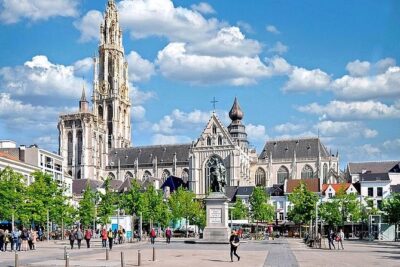
e-Scavenger hunt Antwerp: Explore the city at your own pace
Read our review →
e-Scavenger hunt Bruges: Explore the city at your own pace
Read our review →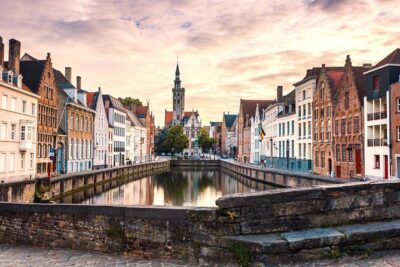
Bruges Scavenger Hunt and Highlights Self Guided Audio Tour
Read our review →

Beer Tasting and Scavenger Hunt in Brussels – About 3 Hours
Read our review →
e-Scavenger hunt Mechelen: Explore the city at your own pace
Read our review →
e-Scavenger hunt Hasselt: Explore the city at your own pace
Read our review →
e-Scavenger hunt Brussels: Explore the city at your own pace
Read our review →Browse the lists this tour appears in