
Reviewed · GUIDED
Brussels: Fall and Rise of Art-Nouveau Guided Tour
Art Nouveau rewards a slower walk. This 150-minute route through Saint-Gilles and Ixelles focuses on sgraffito techniques and the surviving traces of Victor Horta’s Maison du Peuple, turning handsome façades into readable works of art. I like the three-kilometer route because it takes you beyond the city center, and I like the clear focus on how these buildings were made, not just how they look.
The main consideration is language: the live guide speaks Spanish. You should also expect a steady three-kilometer walk outdoors, with rain a real possibility in Brussels. The route is wheelchair accessible, but anyone who prefers indoor sightseeing or a shorter stroll may find the length and weather less convenient.
In This Review
- Key points at a glance
- Why this Brussels walk is worth your time
- Meeting the guide near Horta Metro station
- Saint-Gilles and Ixelles, Brussels’ Art Nouveau classroom
- Sgraffito, frescoes, and the craft behind the façades
- Victor Horta’s Maison du Peuple and what remains
- A three-kilometer route through quieter streets
- Audiovisual material and the Curiositas Mundus channel
- The $17 price and what you receive
- Who should book this Art Nouveau tour?
- Should you book the Fall and Rise of Art Nouveau tour?
- FAQ
- Where does the tour meet?
- How long does the tour last?
- How far do you walk?
- What language is the tour conducted in?
- Is the tour wheelchair accessible?
- What should I bring if it rains?
- Which Brussels areas does the tour explore?
- Does the tour include information about sgraffito?
- Will I see anything connected with Victor Horta?
- Can I cancel my booking?
Key points at a glance
- Sgraffito explained in front of real façades: Learn how this layered wall decoration differs from fresco painting.
- Victor Horta’s Maison du Peuple: See the historical remains of an important building linked to Brussels Art Nouveau.
- Saint-Gilles and Ixelles focus: Explore two Brussels communes known for some of the city’s best-preserved Art Nouveau houses.
- A three-kilometer neighborhood walk: The route leaves the central sights behind for quieter streets and close-up architecture.
- Spanish-speaking guidance: The tour is led in Spanish, with extra audiovisual material available.
- Good value at $17: For two and a half hours of guided architecture, the price is modest, especially if Art Nouveau is a priority.
Why this Brussels walk is worth your time
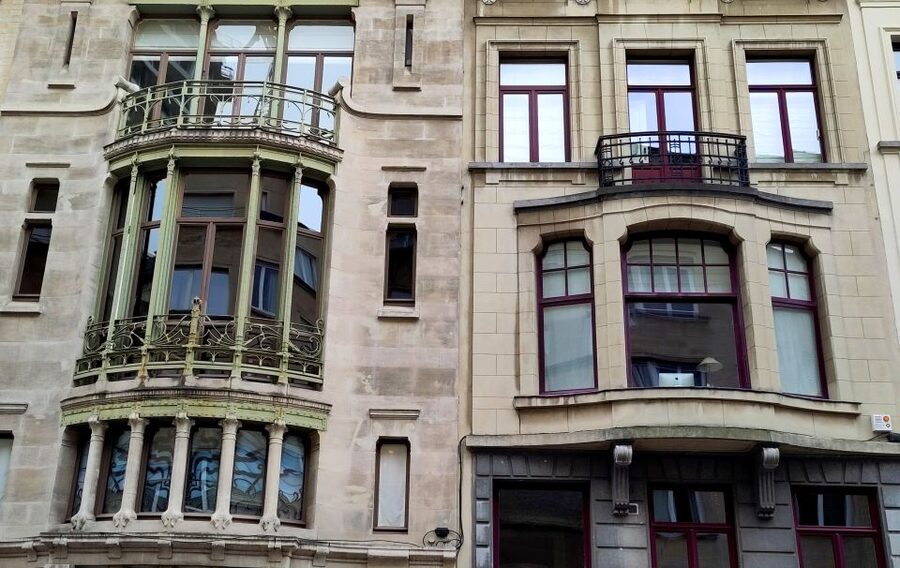
Brussels is often sold through its Grand-Place, chocolate shops, and comic murals. Those are good reasons to visit, but they tell only part of the city’s story. The Art Nouveau districts of Saint-Gilles and Ixelles show Brussels at a turning point, when architects began breaking away from older decorative rules and treating the entire building as a work of art.
This tour is useful because it gives you a way to read what you are seeing. Instead of walking past a curved doorway and simply calling it pretty, you learn to notice the materials, lines, colors, and decorative methods. That changes the experience. A street becomes a series of design decisions.
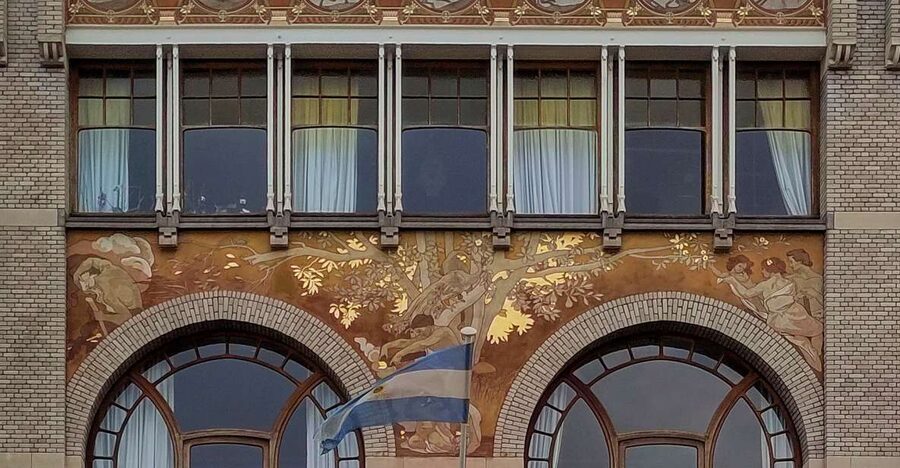
I especially like the emphasis on construction techniques. Art Nouveau can be easy to reduce to curling plants and elegant ironwork. The focus on sgraffito gives you something more precise to look for. The guide can point out how the wall surface was built up in layers and then scratched to reveal contrasting colors beneath. That is quite different from a fresco, where pigment is applied to wet plaster.
The tour also connects private houses with the wider civic story of Brussels. The remains of Victor Horta’s Maison du Peuple add an important sense of loss. You are not only seeing what survived. You are also being reminded that major works can disappear, leaving fragments that still help explain a city’s past.
A few more trips and experiences worth a look
- Brussels: Atomium Entry Ticket with Design Museum Ticket
★ 4.4 · 9,254 reviews - From Brussels: Guided Day Trip to Bruges and Ghent
★ 4.6 · 8,353 reviews - From Brussels: Bruges & Ghent Day Tour – 2 Fairytale Cities
★ 4.7 · 8,242 reviews
Meeting the guide near Horta Metro station
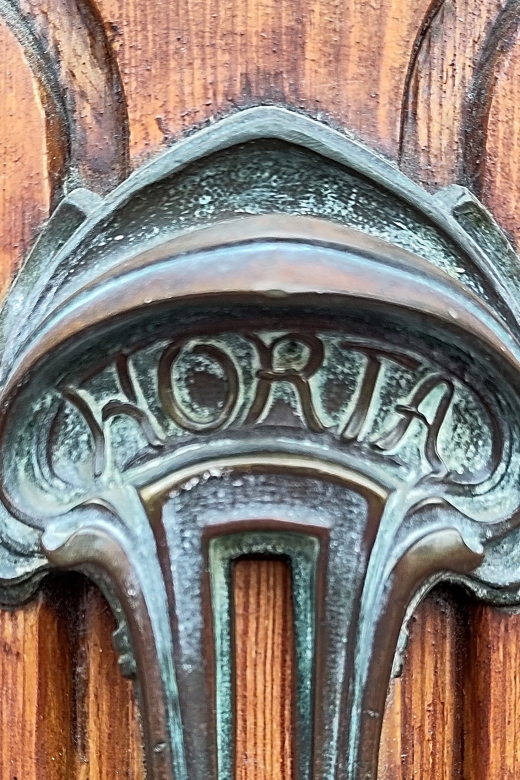
The meeting point is next to Horta Metro station, served by lines 3 and 4, on the Chaussée de Waterloo near number 187. This is a practical starting place because you can reach it by public transport rather than making a long cross-town walk before the tour begins.
Look for the guide wearing a Curiositas Mundus badge. That small detail matters in a city where a busy street and several entrances can make a meeting point less obvious. I would arrive with a few minutes to spare, especially if you are unfamiliar with Brussels Metro stations.
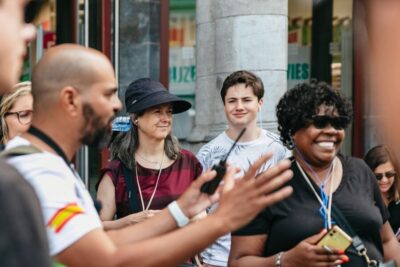
The tour is conducted in Spanish. If you understand Spanish well, this format should make the explanations easy to follow and conversational. The guide named Samuel received particular praise for explaining Art Nouveau clearly, answering questions without hesitation, and using the façades themselves to make the subject easier to understand.
That last point is important. Architecture tours work best when the explanation stays tied to what is directly in front of you. Samuel’s approach, as described by participants, seems to favor that method rather than giving a long lecture detached from the street.
Saint-Gilles and Ixelles, Brussels’ Art Nouveau classroom
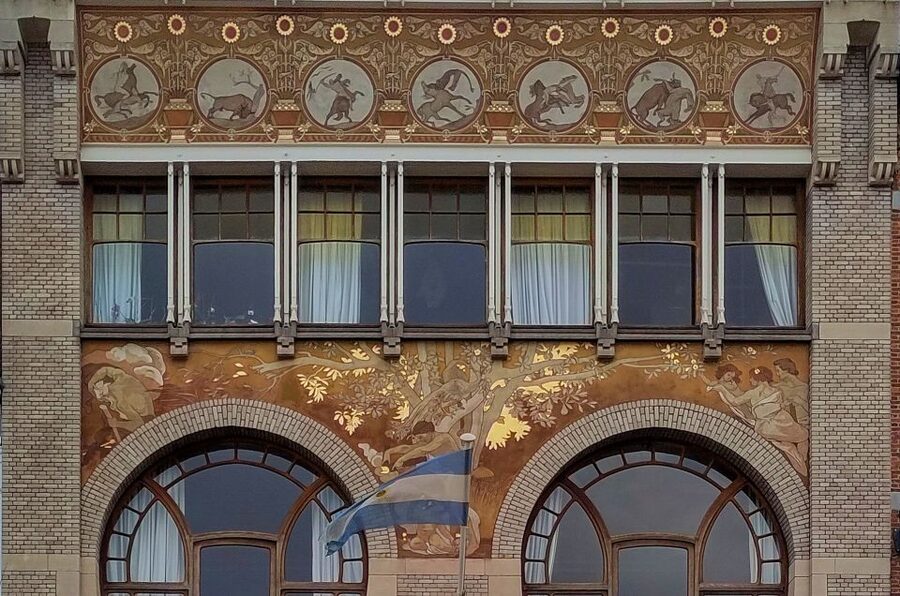
Brussels is divided into 19 communes, or town halls. Saint-Gilles and Ixelles are the key areas for this walk, and they contain several of the capital’s most stable groups of Art Nouveau houses from the late nineteenth century.
The phrase stable houses refers to the survival of these buildings as recognizable examples of the period. You are not visiting a single museum or one preserved monument. You are walking through ordinary urban streets where architecture appears on a domestic scale, attached to homes and neighborhood life.
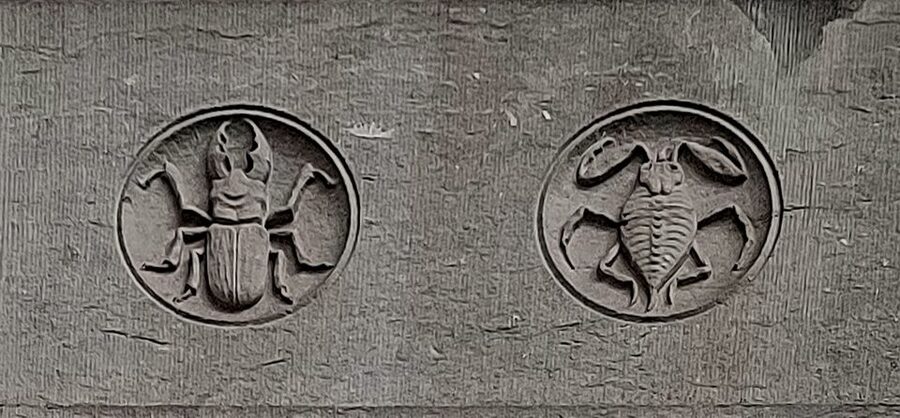
That makes the route feel different from a standard landmark circuit. You might find that the most useful details are not always on the grandest building. A doorway, balcony, window frame, or strip of wall decoration can show how an architect carried one design idea across the whole façade.
The guide’s job is to help you connect these details. Art Nouveau often uses natural forms, flowing curves, asymmetry, and decorative unity. Once those features are pointed out, you can begin spotting them on your own. That skill is one of the lasting benefits of taking the tour early in a Brussels visit.
If you are staying in the historic center, allow time to reach the starting point. The tour does not begin at Grand-Place, and the route takes you into the outer parts of Brussels rather than keeping you among the city’s best-known central sights.
Sgraffito, frescoes, and the craft behind the façades
The discussion of sgraffito is one of the strongest reasons to book this experience. The word may be unfamiliar, but the technique is central to understanding many Art Nouveau façades.
Sgraffito involves applying layers of plaster or coating and scratching through the upper layer to reveal the color beneath. The result can produce ornamental panels, flowing lines, floral patterns, and carefully framed designs. It is a method that depends on both planning and handwork.
A fresco works differently. In a fresco, pigment is painted onto wet plaster so the color becomes part of the plaster surface as it dries. Sgraffito instead relies on cutting or scratching through a surface layer. Seeing examples along the route makes that distinction far easier to remember than reading a definition in a guidebook.
I like this practical focus because it gives you a checklist for looking at buildings:
- Are the decorations painted, scratched, tiled, or made from metal?
- Do the patterns follow the shape of the façade?
- Are the colors part of the wall surface or applied on top?
- Do the ornaments frame windows and doors, or do they spread across the whole elevation?
You should not expect a hands-on workshop. This is a walking tour with explanations and audiovisual material. Still, the technique lesson gives the route a clear purpose. You leave with more than photographs of attractive houses. You have a better sense of the labor and choices behind them.
Something different, still within reach of Brussels:
- Choco-Story Brussels: Chocolate Museum Entrance with Tasting
★ 4.3 · 4,883 reviews - Bruges and Ghent – Belgium’s Fairytale Cities – from Brussels
★ 4.0 · 4,809 reviews - Brussels: Hop-On Hop-Off Bus Tour
★ 4.0 · 4,016 reviews - Brussels: Guided Walking Tour
★ 4.6 · 3,560 reviews
Victor Horta’s Maison du Peuple and what remains
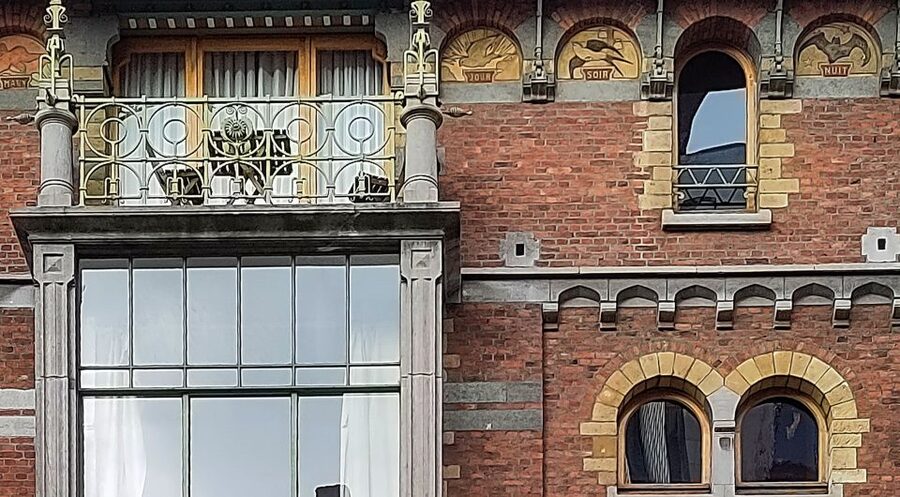
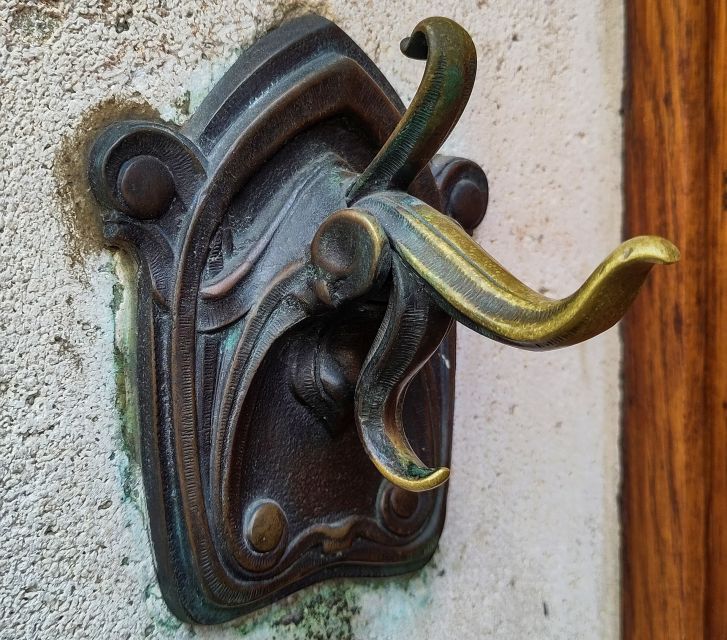
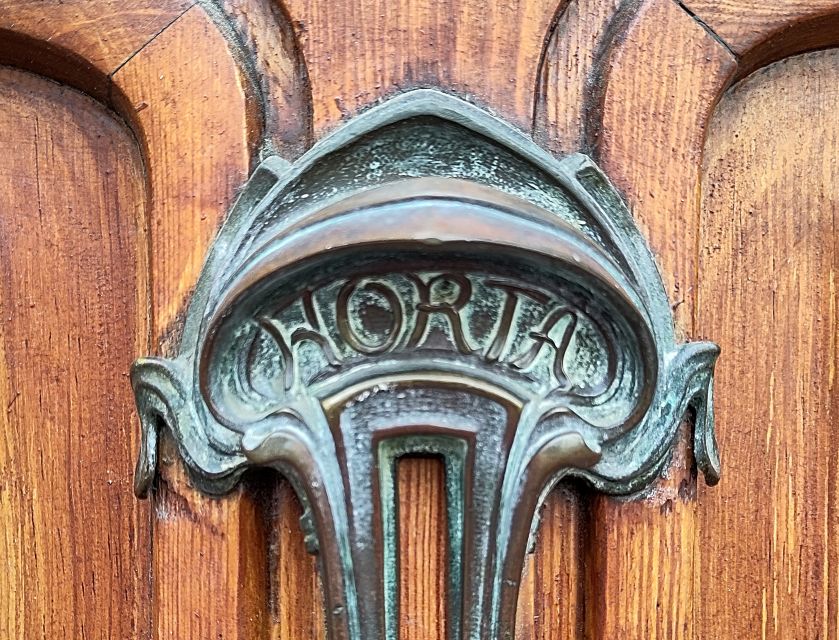
Victor Horta is one of the central names in Brussels Art Nouveau. The tour includes the historical remains of his Maison du Peuple, or House of the People, an important stop because it shows both Horta’s influence and the damage caused by later urban change.
The building’s remains are not presented as a fully intact monument. That distinction matters. You should come ready to see traces and surviving elements rather than an entire original interior or complete façade.
Even in partial form, the site helps explain why Horta matters. His work is associated with structural openness, flowing lines, inventive use of iron and glass, and decoration that works with the building rather than being pasted onto it. The Maison du Peuple also carries a civic meaning, linking architecture to public and social life rather than only to private wealth.
The tour’s question about the first Art Nouveau house adds another useful layer. You learn not only about famous architects but also about the period’s beginnings. The guide can place individual façades within the larger shift that took place in Brussels during the late nineteenth century.
For me, this is where the tour moves beyond a pretty-streets walk. Buildings become evidence of a changing society, new materials, fresh ideas about design, and a city trying out a different visual language.
A three-kilometer route through quieter streets
The full route covers about three kilometers and lasts 150 minutes. That is a comfortable pace for most people who enjoy walking, since the time includes stops for explanations and viewing façades rather than continuous marching.
Still, you should wear comfortable shoes. The tour is entirely outdoors, and the streets of Brussels can feel less forgiving in poor weather. Bring an umbrella, raincoat, or poncho, as specifically advised. A gray or wet day will not erase the architecture, but it can make a long stop on the pavement less pleasant.
The route through the outskirts is part of its appeal. You see charming streets away from the most crowded central attractions, and the buildings are encountered in their neighborhood setting. That provides useful scale. A house is not an isolated museum object. It is part of a street, a block, and a working city.
The trade-off is that you will not get a broad survey of every major Art Nouveau site in Brussels. This is a focused walk through Saint-Gilles and Ixelles. If you want a full citywide architecture program, you may need another visit or a separate tour.
The route is wheelchair accessible, which makes the activity more welcoming than many historic walking tours. Since the route is three kilometers and outdoors, you should still consider your own comfort with the distance and the weather before booking.
Audiovisual material and the Curiositas Mundus channel
Additional audiovisual information is included. The supplied details do not specify its exact format, so you should think of it as supporting material rather than a substitute for the live explanation.
You are also encouraged to join the Curiositas Mundus Telegram channel for extra content during the tour. If you use Telegram, joining can add another layer to the experience. It may be useful for following visual references or retaining information after the walk.
The live guide remains the heart of the activity. Audiovisual material can show details that are hard to see from street level or help compare techniques, but it cannot replace the advantage of having someone identify a feature at the exact building where it appears.
The $17 price and what you receive
At $17 per person, this tour is priced reasonably for a 150-minute guided walk. You receive a live Spanish-speaking guide, a route through two important Art Nouveau districts, explanations of decorative methods, access to additional audiovisual information, and a look at the remains of Horta’s Maison du Peuple.
The value is strongest if you already care about architecture or want a more focused Brussels experience. Two and a half hours is long enough to build a subject from basic terms to specific examples, while the price remains far below what you might pay for a major museum visit or a private guide.
The value is weaker if you want a general introduction to Brussels. This is not a food tour, a city-center highlights walk, or a broad history lesson. You are paying for a specialized subject and a neighborhood route.
Flexible booking also helps. You can reserve now and pay later, and cancellation is allowed up to 24 hours in advance for a full refund. Check available starting times before committing, since the exact departure schedule is not fixed in the information provided.
Who should book this Art Nouveau tour?
I would recommend it most strongly to:
- Architecture fans who want more than exterior photographs
- Visitors curious about Horta and Brussels design
- Spanish-speaking visitors looking for a guided cultural activity
- People who enjoy neighborhood walks away from the busiest sights
- Anyone who wants a useful introduction to sgraffito and other decorative techniques
- Repeat visitors looking for a different side of Brussels
Families may also enjoy it if children can manage a three-kilometer walk and listen during several explanation stops. The subject is visual, but the tour is still an adult-style architecture walk rather than a specifically child-focused activity.
I would think twice if you have limited time in Brussels and have not yet seen the central landmarks. I would also choose another activity if rain would seriously affect your enjoyment of an outdoor walk.
Should you book the Fall and Rise of Art Nouveau tour?
Book this tour if you want to understand why Brussels is one of Europe’s key Art Nouveau cities, not simply photograph a few elegant façades. The combination of Saint-Gilles and Ixelles, the sgraffito lesson, and the remains of Horta’s Maison du Peuple gives the walk a clear identity.
The strongest reason to choose it is the guide’s teaching style. Samuel is specifically praised for clear explanations, useful answers, and a pleasant manner. At $17, that personal guidance makes the tour good value.
Skip it if you need an English-language tour, dislike three-kilometer walks, or want only central Brussels sights. For the right audience, though, this is an affordable and thoughtful way to see the capital’s architecture at street level.
FAQ
Where does the tour meet?
The meeting point is next to Horta Metro station, served by lines 3 and 4, on the Chaussée de Waterloo near number 187.
How long does the tour last?
The tour lasts 150 minutes, or two and a half hours.
How far do you walk?
The route covers approximately three kilometers through the outskirts of Brussels.
What language is the tour conducted in?
The live tour guide speaks Spanish.
Is the tour wheelchair accessible?
Yes, the activity is listed as wheelchair accessible.
What should I bring if it rains?
Bring an umbrella, raincoat, or poncho. Rain gear is specifically recommended.
Which Brussels areas does the tour explore?
The route focuses on Saint-Gilles and Ixelles, two Brussels communes with important Art Nouveau houses.
Does the tour include information about sgraffito?
Yes. The guide explains the sgraffito technique and how it differs from fresco painting.
Will I see anything connected with Victor Horta?
Yes. The tour includes the historical remains of Victor Horta’s Maison du Peuple.
Can I cancel my booking?
You can cancel up to 24 hours in advance for a full refund. You can also reserve now and pay later, subject to the booking terms.
Just added around Brussels
- Discover the secrets of Brussels while playing★ 5.0 · 3 reviews
- Standard vehicle from Charleroi airport to city of Brussels★ 4.5 · 3 reviews
- Full day Brugge & Ghent: the gems of Flanders★ 5.0 · 3 reviews
- Private tour : Best of Brussels half day From Brussels★ 5.0 · 3 reviews
- Private Tour – Bruges and Ghent, our fairytale cities★ 5.0 · 3 reviews
- Floating in the clouds★ 5.0 · 3 reviews
- Full-Day City Tour of Ghent and Bruges from Brussels★ 4.5 · 3 reviews
- Brussels Private Walking Tour With A Professional Guide★ 4.5 · 3 reviews
Guided, compared.
Small Group Boat Cruise and Guided Walking Tour
Read our review →
Choco-Story Chocolate Museum Guided Tour w/Tastings
Read our review →
Browse the lists this tour appears in