
Reviewed · DINANT & THE ARDENNES
Luxembourg and Dinant Day Trip from Brussels
Small countries can make long days. This Brussels excursion pairs Luxembourg City with Dinant, giving you two very different places in one 12-hour outing. I like the efficient route, especially the chance to see Luxembourg’s old quarters, European institutions, and dramatic river valleys without arranging several trains or hotels. I also like the stop in Dinant, where a blue-grey riverfront, cliff-top citadel, and onion-domed church create some of Belgium’s best photo views. The main drawback is the time spent on the coach, roughly three hours each way to Luxembourg, with only limited time in each destination.
The price, about $79.30 per person, is fair if you value transport and a guide more than a slow, independent visit. Expect a long day, possible bilingual commentary in English and Spanish or French, and a large group that can reach 200 people. The best guides, including Bruno, Veronica, Paolo, Stefan, and Jan, have made the day warm, funny, and useful, but the quality of the guiding can vary.
In This Review
- Quick points before you book
- Is $79.30 fair for a 12-hour day?
- Meeting the coach in central Brussels
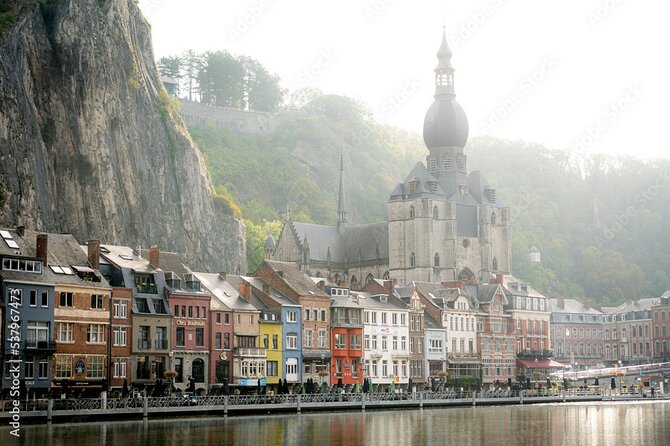
- Dinant: a short stop beside the Meuse
- Luxembourg City: old quarters, churches, and royal buildings
- Bridges and the European quarter
- Making the most of Luxembourg free time
- The guide can make or break the day
- Who should book this day trip?
- Should you book Luxembourg and Dinant?
- FAQ
- How long does the Brussels to Luxembourg and Dinant tour last?
- Where does the tour start and finish?
- Is hotel pickup included?
- Is lunch included in the price?
- What languages may be used during the tour?
- Are entrance fees included?
- Can I cancel the tour for a full refund?
Quick points before you book
- Three-hour drive each way: The Ardennes scenery is pleasant, but this is a coach trip first and a sightseeing visit second.
- Two countries in one day: Luxembourg City gives you grand buildings and old streets, while Dinant offers river views, a cathedral, Sax history, and a citadel.
- Free time matters: You have roughly two to three hours in Luxembourg after the guided walk, and about an hour to 90 minutes in Dinant.
- Bilingual guiding is possible: English commentary may be repeated in Spanish or French, which can lengthen stops and make the presentation feel less fluid.
- Admission fees are extra: Food, drinks, museum tickets, the citadel, and other paid sights are not included.
- Be early: The coach leaves promptly, and latecomers may be left behind unless they call ahead and receive confirmation.
Is $79.30 fair for a 12-hour day?
I see this as a practical transport deal, not a luxury sightseeing bargain. For $79.30, you get an air-conditioned coach, a professional guide, radios and earphones when needed, and access to two places that are awkward to combine by public transport in one day.
The price is strongest for a first visit. You can cross into Luxembourg without worrying about train changes, border details, parking, or finding the right walking route once you arrive. The guide also supplies historical context, points out major buildings, and gives advice for your free time.
The tradeoff is pace. You are paying to cover distance, and much of the day takes place on the road. With the return journey, the entire outing can run from 8:30 in the morning until around 7:30 or 8:00 in the evening, depending on traffic.
Food is not included, and Luxembourg can be expensive. I would carry cash, as the operator advises, and plan a quick meal rather than assuming you will have time for a long restaurant lunch. A slow restaurant service can eat into the only free time you have in the city.
The tour has an average score of 4.1 from 1,475 ratings, which fits the experience well. Many people find the route worthwhile and praise the guides, while the lower scores usually focus on cramped seats, long driving hours, rushed sightseeing, or weak commentary.
More Dinant and Ardennes trips:
- Bus day trip to Luxembourg and Dinant from Brussels
★ 4.0 · 72 reviews - Remembrance Tour: The Battle of the Bulge in the Ardennes
★ 5.0 · 51 reviews - Excursion to Luxembourg and Dinant from Brussels
★ 5.0 · 5 reviews
Meeting the coach in central Brussels
The meeting point is Bd de Berlaimont 18, 1000 Brussels. There is no hotel pickup, so you need to reach the starting point yourself. The departure time is 8:30 am, and arriving early is important because the coach does not reliably wait for late arrivals.
The company says it can wait five minutes if you call in advance at +32 2 513 77 44. I would treat that as a safety net, not part of the plan. One particularly useful warning from the day itself is that the bus may leave exactly on time, even if someone is missing.
The coach is air-conditioned and suitable for luggage, but comfort can vary. Several seats at the rear have less legroom and may feel cramped, particularly on a full departure. If sitting together matters, arrive early rather than accepting the first available seats.
The drive to Luxembourg takes about three hours. You travel through the Ardennes, which gives the outward journey a pleasant rural setting, but the distance still matters. If you dislike long coach rides, this may be the wrong way to see Luxembourg.
Dinant: a short stop beside the Meuse
The schedule may place Dinant either before or after Luxembourg. The usual route described here visits Luxembourg first and Dinant on the way back, but guides sometimes reverse the order to make better use of daylight. That flexibility can help with photographs, though it may also change the traffic pattern on the return to Brussels.
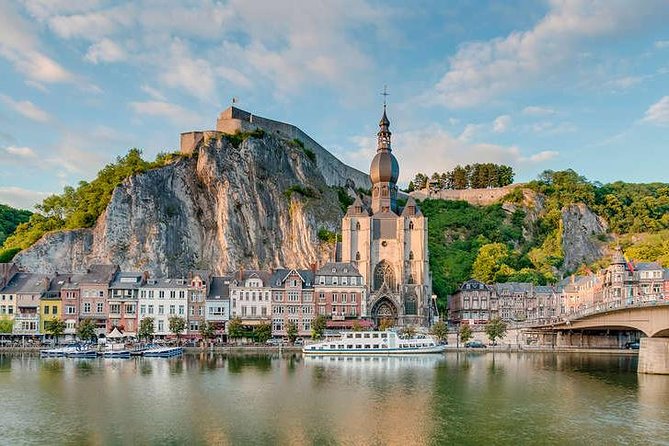
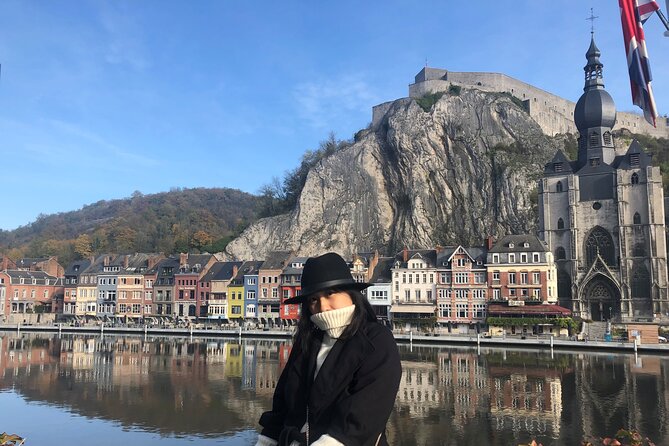
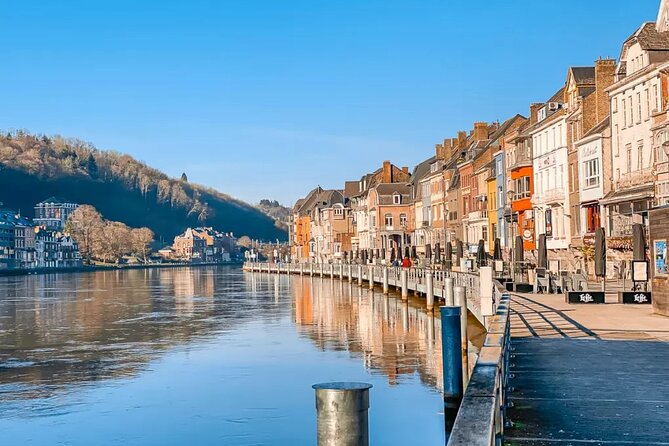
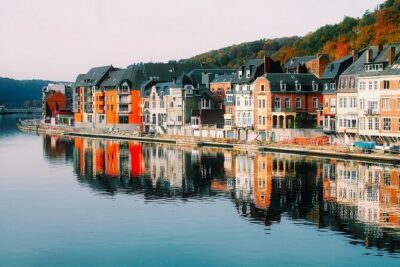
Dinant sits along the Meuse River, squeezed between water and steep rock. From the coach or riverfront, you can look up toward the citadel and the Collegiate Church of Notre Dame, whose onion-shaped tower is the town’s most recognizable feature. The row of buildings beside the river gives the place an easy visual charm, even when you have only an hour.
You have about 90 minutes in the Dinant area, with the actual free time depending on the guide’s arrangements. That is enough for a riverfront walk, photographs, a quick look at the church exterior, and the small museum connected with Adolphe Sax.
Dinant is the birthplace of Saxophone inventor Adolphe Sax, born in 1814. The Maison de Monsieur Sax presents this connection through a compact historical display. Do not expect a large museum visit. You might see the main material in only a few minutes, so the value is in the town itself, not in spending the entire stop indoors.
The Citadel is the big question. It rises above town and is reached by a lift or more than 400 steps, depending on what is operating. A climb can take most of your stop, especially if the funicular is closed or under repair. If you are unsure about the climb, I would use the time for the riverfront, church, Sax display, and photographs instead.
Closures are another concern. The citadel, lift, or shops may not be operating on the day you visit. In quieter periods, especially some weekdays, many shops may be closed. Dinant can then feel more like a scenic pause than a full sightseeing visit.
Still, I would not dismiss the stop. Dinant’s appeal is immediate and compact. You do not need a long museum schedule to enjoy the church tower, river, rock walls, and colorful buildings. The limitation is simply that this is an introduction, not a full day in town.
Luxembourg City: old quarters, churches, and royal buildings
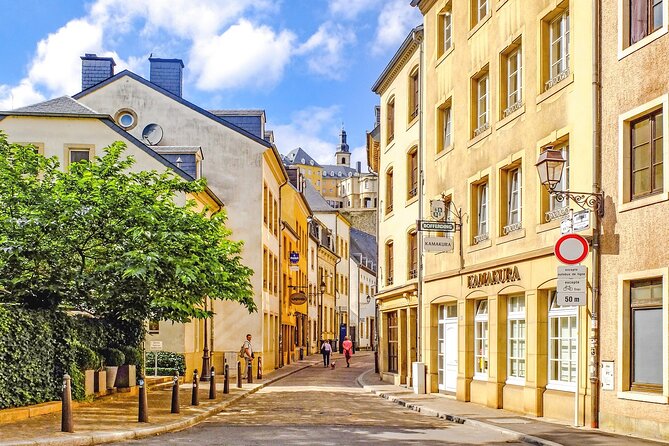
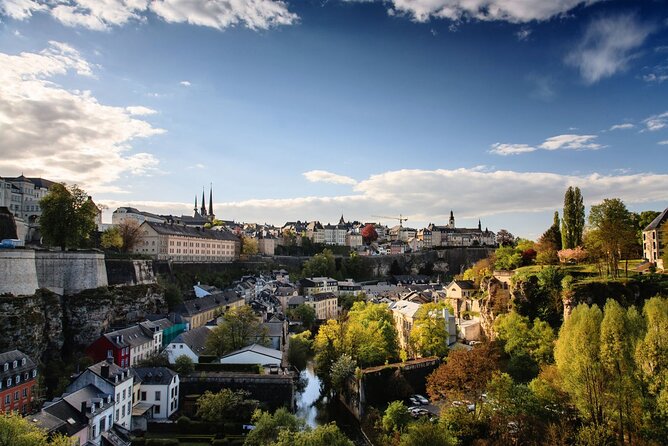
After the long drive, Luxembourg City offers a change of scale. The capital combines a historic center with government offices, European institutions, ravines, bridges, and steep streets. The guided walk helps you understand how the old and modern parts fit together before you explore alone.
The Grand Ducal Palace is one of the main sights. It is the official residence of Luxembourg’s grand duke and the place where he carries out much of his work as head of state. The building combines several periods, including a Renaissance section from 1572, a Baroque and Renaissance middle section from 1741, and the Chamber of Deputies on the right from 1858.
The palace is mainly a viewing stop on this excursion. Do not assume that the schedule includes an interior visit. The guide points out the building and explains its role, while you continue through the city with the larger group.
Notre-Dame Cathedral provides a more substantial stop, listed at about 30 minutes. This former Jesuit church dates from the 17th century and mixes Baroque and Renaissance design with Gothic details. Inside, you may see the forum dedicated to the grand ducal family on the left side of the nave.
The former Jesuit College beside the cathedral now serves as the National Library. That detail helps show how Luxembourg reuses older religious and civic buildings rather than treating them as frozen museum pieces. If the cathedral is open, it is worth taking a quiet moment inside, but the tour does not include paid admission because the main sights are presented from public areas.
Neumünster Abbey comes next, with about 20 minutes listed for the visit. The abbey sits in the Grund district, below the upper city. After the original Benedictine abbey on the Altmünster Plateau was destroyed in 1542, monks built this new abbey in 1606.
Today, Neumünster serves as a public meeting place and cultural center. The setting is one of the more attractive parts of the city, but the stop can feel brief. If the guide gives only a short orientation, use your free time later to return toward the Grund if that appeals to you.
A few more trips and experiences worth a look
- From Brussels: Guided Day Trip to Bruges and Ghent
★ 4.6 · 8,353 reviews - From Brussels: Bruges Day Trip with Boat Tour Option (ENG)
★ 4.6 · 1,352 reviews - From Brussels: Bruges Day Trip with Boat Tour Option (ES)
★ 4.7 · 1,171 reviews - Bruges and Ghent Day Trip from Brussels
★ 4.5 · 784 reviews
Bridges and the European quarter
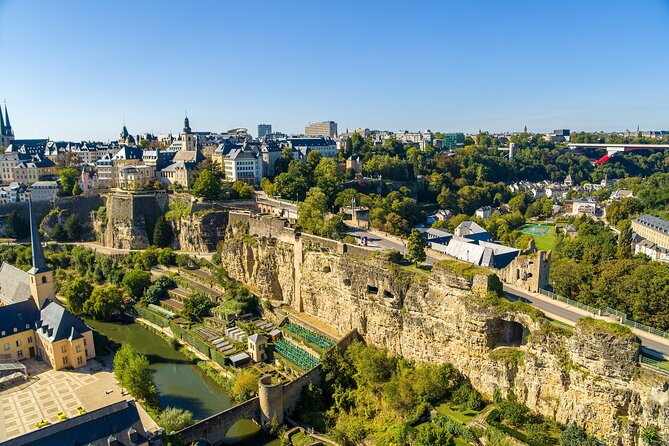
The drive or walking route also takes in the Grand Duchess Charlotte Bridge, a red-painted steel bridge dating from 1966 that crosses the Alzette. It links the central city with Kirchberg and gives you a quick look at how Luxembourg handles its deep valleys and divided districts.
Nearby, you may see the Municipal Theater and the Robert Schuman Monument. Schuman is remembered as a founding figure of European cooperation, so this section connects Luxembourg’s local identity with its role in European government.
Kirchberg is the modern side of the capital. The European Center, described in the schedule as dating from 1966, includes a 23-floor building used by the European Parliament. The Schuman Center is associated with the Council of Ministers.
The guide also explains the European Court of Justice and the Secretariat of the European Parliament. These stops are useful if you want a quick picture of how European institutions operate, but they are not interior tours. You will see government architecture and hear the background from the coach or roadside.
The bilingual format affects this part of the day most clearly. If commentary is delivered in English and then Spanish or French, a short explanation can take twice as long. Some guides handle the rhythm well. Paolo, Stefan, and Bruno received especially warm praise for clear delivery, humor, and useful advice. Other guides have been described as quiet, scripted, or difficult to hear through the microphone.
That difference matters because the walking tour is an overview. A lively guide can make a brief stop feel full. A flat presentation can leave you wondering why the coach drove so far.
Making the most of Luxembourg free time
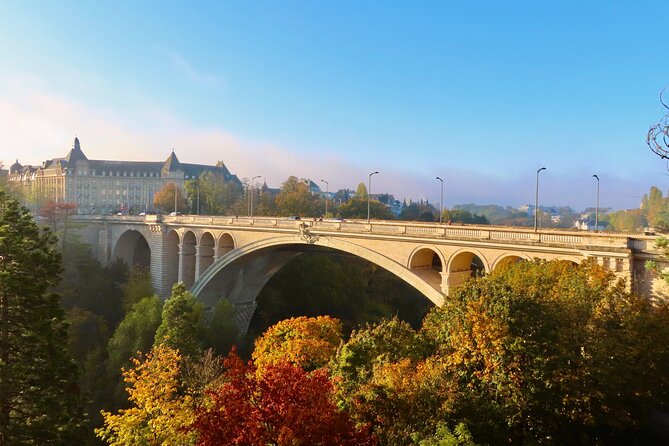
After the guided portion, you normally have around two to three hours for your own plans, with lunch included in that window. This is the most valuable part of the day if you enjoy choosing your own pace.
I would keep lunch simple. A long sit-down meal may consume much of the free time, particularly if service is slow. Street food, a bakery, or a quick café stop lets you spend more time walking through the Old Town.
The city is suited to a loose walking plan. You can revisit the cathedral, wander around the palace area, look down toward the Grund, browse shops, or follow the guide’s suggestions. You also receive a tourist map, which helps if you decide not to remain with the group after the formal walk.
The underground tunnels are a point to handle carefully. They can be a worthwhile paid sight, but opening hours and last admission are important. One frustrating situation can occur when the guide recommends the tunnels but the final entry time arrives soon after the group reaches the city, or the attraction closes before you return from the walk. Check the timing immediately and do not wait until the end of your free period.
Entrance fees are your responsibility. This includes the citadel in Dinant and any paid attraction in Luxembourg. Bring suitable shoes, since both cities involve walking, slopes, steps, and uneven streets. The operator recommends a moderate level of fitness and does not recommend the excursion for people who have difficulty walking.
The guide can make or break the day
The strongest feature of this excursion is often the person at the microphone. A good guide sets the mood during the long road sections, explains the history before you arrive, and gives clear instructions for free time.
Stefan, a former teacher, was praised for a calm speaking style, thorough explanations, and gentle humor. Bruno was described as friendly, highly informed, and able to adjust the order of the stops to make better use of daylight. Veronica was praised for being helpful and professional, while Paolo was appreciated for switching between English and Spanish with humor.
That is the best version of the tour. You arrive with enough background to recognize what you are seeing, then get practical advice about where to walk and eat.
The weaker version feels different. Some guides have been hard to hear, slow to introduce themselves, or too scripted. A few visitors have expected guided visits inside Notre-Dame, Neumünster, or the Sax museum and instead received brief explanations before exploring alone.
You should also know that the tour may be bilingual even though you book an English departure. The operator says English, French, and Spanish may be used depending on the group. This makes the excursion accessible to more people, but it can reduce the time available for each stop and may feel repetitive if you speak only one language.
Who should book this day trip?
I would choose this excursion if you have limited time in Brussels and want a first look at Luxembourg without planning the route yourself. It also suits you if you enjoy scenic coach journeys, short walks, historical commentary, and the satisfaction of seeing two destinations in one day.
It is a good fit for first-time visitors who want orientation more than depth. The guide shows you the main framework of Luxembourg City, then you can use free time to follow your own interests.
I would think twice if you want relaxed meals, long museum visits, or time to climb the Dinant citadel. A private trip or overnight stay would give both places more breathing room.
The experience is also less suitable for anyone with mobility limits. You need to manage coach boarding, city walking, steps, slopes, and the possibility of a strenuous citadel climb. Comfortable shoes and weather protection are essential, since the trip operates in rain and is canceled only for extreme conditions such as severe storms or floods.
Should you book Luxembourg and Dinant?
Book it if convenience is your priority. For about $79.30, you get transport across two countries, a guide, a structured introduction, and enough free time to form your own first impression.
Go in with realistic expectations. This is a long coach day with brief stops, not a slow exploration of Luxembourg and Dinant. Check the weather, arrive early, carry cash, keep lunch quick, and ask immediately about paid attractions and closing times.
I would book it for the efficient overview, especially with a highly praised guide such as Bruno, Veronica, Paolo, or Stefan. I would skip it if six hours on a coach sounds unpleasant or if you want a detailed visit inside every major sight. The tour can show you why both towns deserve more time, but it cannot provide that extra time itself.
FAQ
How long does the Brussels to Luxembourg and Dinant tour last?
The excursion lasts approximately 12 hours. It starts at 8:30 am and usually returns to central Brussels in the early evening, often around 7:30 or 8:00 pm depending on traffic.
Where does the tour start and finish?
The meeting point is Bd de Berlaimont 18, 1000 Brussels, Belgium. The activity ends back at the same meeting point.
Is hotel pickup included?
No. Hotel pickup and drop-off are not included, so you need to reach the listed meeting point yourself.
Is lunch included in the price?
No. Food and drinks are not included. You should budget for lunch and carry some cash during the day.
What languages may be used during the tour?
The tour may be conducted in English, French, or Spanish. Depending on the group, the guide may provide bilingual commentary.
Are entrance fees included?
No. Admission fees are paid separately. This may include the Dinant citadel, Luxembourg’s underground tunnels, museums, or other attractions.
Can I cancel the tour for a full refund?
Yes, you can cancel for a full refund up to 24 hours before the local start time. Cancellations or changes made less than 24 hours before departure are not refunded or accepted.
Just added around Brussels
- Discover the secrets of Brussels while playing★ 5.0 · 3 reviews
- Standard vehicle from Charleroi airport to city of Brussels★ 4.5 · 3 reviews
- Full day Brugge & Ghent: the gems of Flanders★ 5.0 · 3 reviews
- Private tour : Best of Brussels half day From Brussels★ 5.0 · 3 reviews
- Private Tour – Bruges and Ghent, our fairytale cities★ 5.0 · 3 reviews
- Floating in the clouds★ 5.0 · 3 reviews
- Full-Day City Tour of Ghent and Bruges from Brussels★ 4.5 · 3 reviews
- Brussels Private Walking Tour With A Professional Guide★ 4.5 · 3 reviews
Dinant & the Ardennes, compared.
Bus day trip to Luxembourg and Dinant from Brussels
Read our review →
Remembrance Tour: The Battle of the Bulge in the Ardennes
Read our review →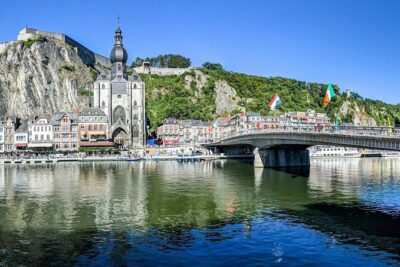
Small Group Dinant’s, Castle and Beer Monastery Expedition
Read our review →
Private Beer Bike Tour in Hotton in the Belgian Ardennes
Read our review →
Discover Dinant while playing! Escape game – The alchemist
Read our review →
Bioul (near Dinant) : Château de Bioul Tour and Wine Tasting
Read our review →
Browse the lists this tour appears in