
Reviewed · BELGIUM
Mons : The Van Gogh House
Van Gogh’s story begins in a small Belgian house. In Cuesmes, near Mons, you can visit the authentic home where Vincent van Gogh lived and worked between 1879 and 1880. I like the personal scale of the place, and I like how the visit connects his early religious work with the working-class Borinage that shaped his art. The main drawback is simple: the house is small, and the information may feel limited if you already know Van Gogh’s story well.
The visit costs about $5 per person, which makes it an easy addition to a day in the Mons area. I also appreciate the new presentation, which begins in the garden and continues through a renovated pavilion before leading you inside the house. Still, this is not a full guided tour, and one part of the presentation has been described as too long by some visitors.
In This Review
- Key points to know before you go
- Why Cuesmes matters in Van Gogh’s story
- Starting in the garden and renovated pavilion
- Inside the small Van Gogh House
- The final audio presentation and Borinage context
- What the $5 admission really buys you
- Getting there and handling your ticket
- Is this suitable for children, students, and serious Van Gogh fans?
- What the experience does well, and where it falls short
- Should you book the Van Gogh House?
- FAQ
- Where is the Van Gogh House located?
- Did Vincent van Gogh live at this house?
- What was Van Gogh doing in the Borinage?
- How much does admission cost?
- Is a guided tour included?
- Which languages are available?
- Is the Van Gogh House wheelchair accessible?
- How do I get to the site?
Key points to know before you go
- This is Van Gogh’s real Borinage home: He lived and worked here from 1879 to 1880, before his fame as a painter.
- The visit follows a clear route: You begin in the garden, enter a renovated pavilion, continue through the small house, and finish with an audio installation.
- The setting explains his early artistic path: The Borinage combined rural surroundings with a hard-working mining community, influences that stayed with Van Gogh.
- A ticket buys entry, not a guided tour: Dutch, English, and French support is available from the host or greeter, but a guide is not included.
- Allow extra time for ticket checks: Bring the entry ticket sent by email, and arrive during the time slot you selected.
- The house is accessible: The site is wheelchair accessible, and you can reach it by private or public transport.
Why Cuesmes matters in Van Gogh’s story
Cuesmes is part of the Mons region, in Wallonia, Belgium. It sits in the Borinage, an area shaped by rural life and working-class communities. For Van Gogh, this was not a brief sightseeing stop. It was a serious period of personal change.
He came to the Borinage as a preacher. During his time here, his attention slowly moved toward drawing and art. That shift gives the Van Gogh House a special place in his biography. You are not visiting the grand studio of an established painter. You are seeing the modest setting of a man still trying to work out what he wanted to do with his life.
I find that distinction important. Many Van Gogh museums focus on the finished artist, his famous paintings, or the dramatic events of his later years. Cuesmes takes you back to the beginning. The house helps you picture a young man living simply, observing the people around him, and finding artistic direction in a place that was far removed from the art capitals of Europe.
The Borinage also matters because its people and surroundings stayed with Van Gogh. The area’s working life and plain rural views became lasting subjects in his imagination. You will not see a huge collection of masterpieces here. Instead, you get a physical connection to the place that helped form his eye.
Other Belgium trips people book alongside this one:
- Brussels: Atomium Entry Ticket with Design Museum Ticket
★ 4.4 · 9,254 reviews - From Brussels: Guided Day Trip to Bruges and Ghent
★ 4.6 · 8,353 reviews - From Brussels: Bruges & Ghent Day Tour – 2 Fairytale Cities
★ 4.7 · 8,242 reviews
Starting in the garden and renovated pavilion
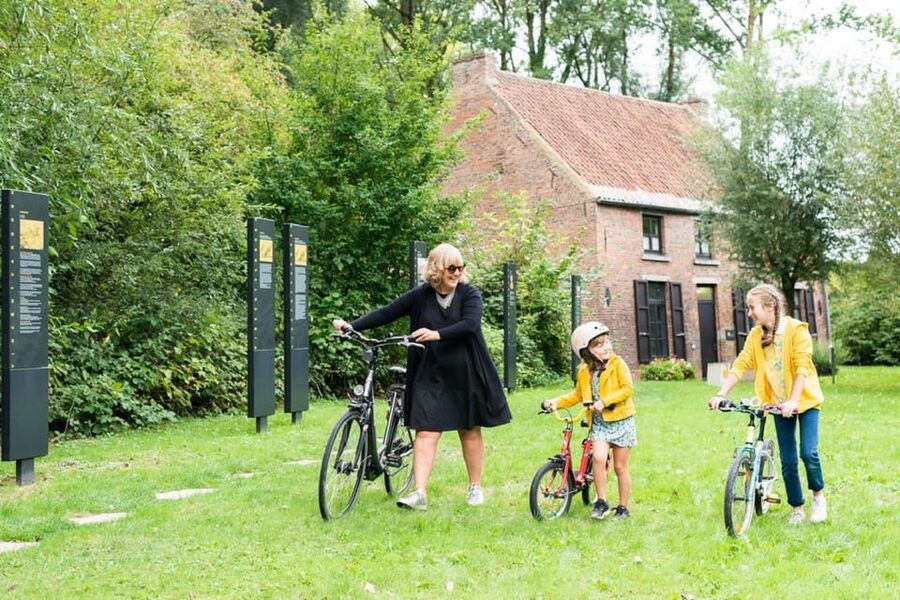
The visit begins outside, in the garden. This is a useful introduction because it lets you approach the house gradually rather than walking straight into a display room. The garden helps set the tone: this is a place of memory, not a large museum complex.
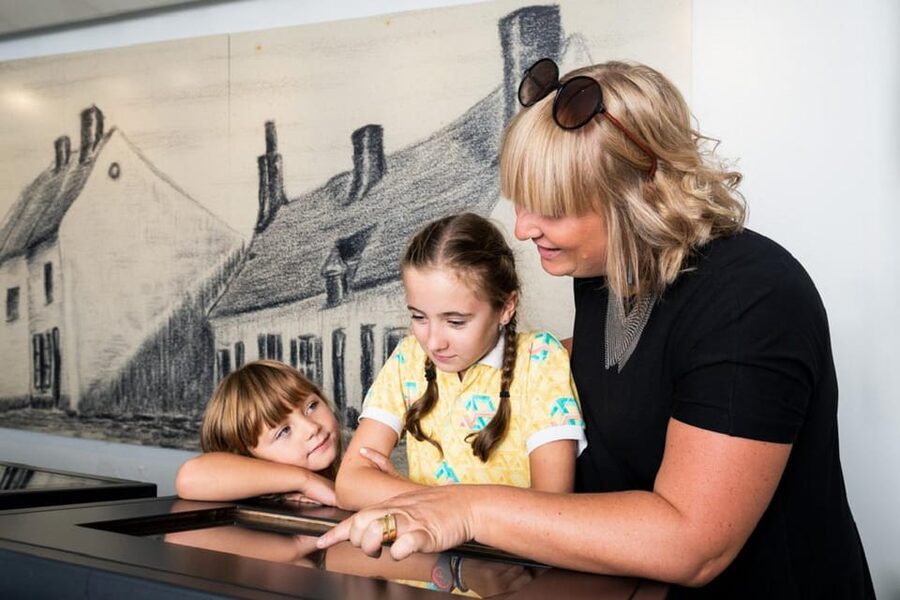
From there, you continue into a renovated pavilion. The pavilion provides the modern part of the presentation. It prepares you for the house and gives the story more structure than the small building could provide on its own.
I like this order. The house itself has limited space, so the pavilion gives the visit room to explain Van Gogh’s time in the Borinage. It also helps connect the building with the wider area. You begin with the physical setting, then receive context, then enter the rooms associated with Van Gogh.
Do not expect a grand entrance or a long list of original objects. The power here comes from the place itself. The garden and pavilion work as a short introduction before you reach the most personal part of the visit.
Inside the small Van Gogh House
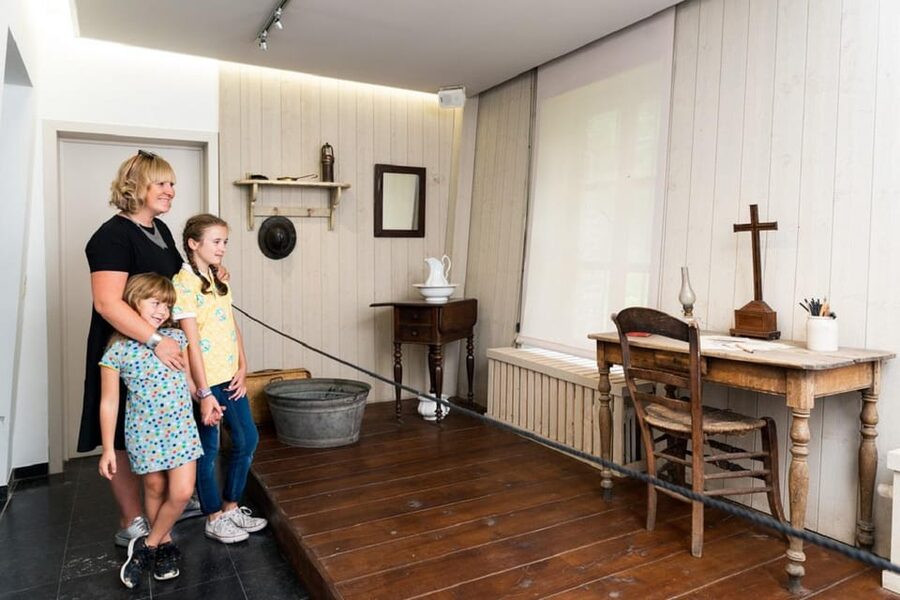
The house is small. That fact is central to the experience, both in a good way and a limiting one.
You can feel the modest scale of the building and better understand the simple conditions surrounding Van Gogh during these early years. The house gives you a sense of his daily environment, rather than presenting his life as a polished museum story. For anyone interested in how artists begin, that physical setting can be more useful than another room filled with reproductions.
At the same time, the size means the visit may feel brief. If you arrive expecting a large Van Gogh collection, you may leave disappointed. There are not endless galleries, famous originals, or a detailed display covering his entire career. The house is best viewed as a place of remembrance connected to one chapter of his life.
The presentation has been modernized, which helps the building speak to today’s audience. The aim is to let the spirit of its former inhabitant come through without pretending that this was a grand artistic workplace. You are visiting a humble home linked to an early turning point.
I would suggest slowing down here. Look at the proportions of the rooms. Think about the difference between the preacher Van Gogh who arrived in the Borinage and the artist he would later become. The house cannot tell every part of his story, but it gives that story a physical starting point.
The final audio presentation and Borinage context
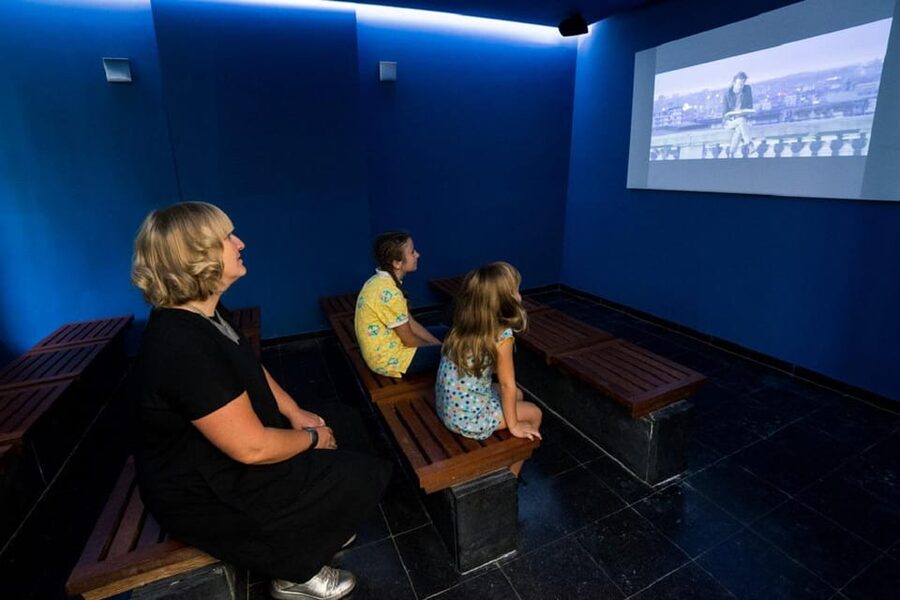
An audio installation closes the visit. Its purpose is to place Van Gogh and his work within the history of the Borinage.
This final section is valuable because the house alone cannot explain why the area mattered. Van Gogh’s early artistic direction was tied to the people and surroundings he encountered here. The audio presentation helps connect the personal story to the broader setting.
The tone may not suit everyone. One recent account found the film interesting but too long. That is a useful warning if you prefer a quick visit or already know the Borinage chapter of Van Gogh’s life in detail. You may find the presentation worthwhile for its context, but less essential if your main goal is simply to see the house.
I would treat the audio portion as the place to listen selectively and absorb the main ideas. The value is not in speed. It is in understanding the setting that influenced Van Gogh long after he left.
The available languages are Dutch, English, and French. That gives you a fair chance of following the historical material, though the activity does not include a private guide. If you want a personal conversation about Van Gogh’s life, plan to ask questions at the welcome desk when possible.
Something different, still within reach of Belgium:
- Ghent: 50-Minute Medieval Center Guided Boat Trip
★ 4.5 · 5,637 reviews - Choco-Story Brussels: Chocolate Museum Entrance with Tasting
★ 4.3 · 4,883 reviews - Bruges and Ghent – Belgium’s Fairytale Cities – from Brussels
★ 4.0 · 4,809 reviews - Bruges: Small Group Boat Cruise and Guided Walking Tour
★ 4.8 · 4,102 reviews
What the $5 admission really buys you
At around $5 per person, the Van Gogh House is inexpensive by museum standards. The entry covers access to the house and its presentation. Food, drinks, and a guided tour are not included.
The value depends on what you want. If you are a Van Gogh specialist, the small building may not provide many new facts. You are paying for access to an authentic place connected to his early years, not for a major collection of art.
For casual art lovers, the price is easier to justify. The visit gives you a concrete stop in the Mons region and adds meaning to Van Gogh’s early story. It can also work well as part of a larger day in the area, especially if you are already exploring Mons or the Borinage.
I would not plan an entire trip around this house alone unless you have a strong personal interest in Van Gogh’s development. But at this price, it is a reasonable cultural stop. The low admission also makes it easier to accept the limits of the site. You are not buying a full-day museum experience. You are buying a focused visit to a meaningful place.
The listed validity is one day, so you can use the ticket during the selected date and time period. The visit itself is not described as a full-day guided program. Think of the one-day validity as booking flexibility, not a promise that the house will occupy your entire day.
Getting there and handling your ticket
You must make your own way to the site. You can use private transport or public transport, but check bus timetables before setting out. This matters because Cuesmes is a small municipality, and a missed connection could waste more time than the visit itself.
Arrive during the time slot you chose. The instruction is practical and important: do not treat the ticket as an open arrival pass. Keep the entry ticket sent by email ready to show at the museum reception.
There has been at least one serious ticket-check problem at the entrance, with a visitor spending about 45 minutes trying to locate the booking on the venue’s computer. The visit itself was considered worthwhile once entry was sorted, but that kind of delay can sour a short outing.
I would save the ticket on your phone before leaving and, if possible, keep the email easy to open without a strong mobile signal. If you are traveling with a group or school class, check every ticket before arrival. A little preparation is especially useful here because the admission is inexpensive and the visit may be short.
The site is wheelchair accessible. That is helpful, though the supplied information does not detail every surface, doorway, or transport connection. If you need very specific access arrangements, ask the host or greeter before your visit.
Is this suitable for children, students, and serious Van Gogh fans?
The house can work for several types of visitors, but your expectations should match the format.
For Van Gogh fans, the strongest reason to come is authenticity. You are standing in a place tied directly to his Borinage years, before he became a household name. If you enjoy tracing an artist’s life through real locations, this is more rewarding than a general museum display.
For students, the visit can provide a clear story about artistic development. Van Gogh did not begin as the painter most people recognize. The house and the audio presentation show how his time as a preacher, his surroundings, and his observations of working people formed part of that change.
A recent visit involving students benefited from a very available and patient host who explained things clearly. That suggests the site can work well for school groups when the welcome staff has time to help. Still, a guided tour is not part of the standard admission, so teachers should not assume that a detailed live lesson is included.
For families, the small size can be an advantage. You will not need to manage a huge museum route. The visit has a clear beginning and end, with the garden, pavilion, house, and audio section following a simple sequence.
The long film or audio section may test the patience of younger children. If your family has only a casual interest in Van Gogh, keep the visit as one stop within a broader day rather than making it the only activity.
For people with limited time in Mons, the house is worth considering if Van Gogh is a priority. If your main interest is architecture, food, or a large art collection, you may prefer to spend more time elsewhere in the region.
What the experience does well, and where it falls short
The best feature is the connection between Van Gogh and the actual Borinage setting. You are not just reading that he lived here. You are entering a modest place associated with the period when his direction changed.
The new presentation also helps. Without the pavilion and audio installation, the house might feel too slight to carry the whole story. The added material gives you a better sense of the area and its effect on Van Gogh.
The setting around the building adds another layer. Greenery and the quiet character of Cuesmes help you picture a place far removed from the crowds surrounding Van Gogh’s most famous museums. That does not make the visit more important than those museums, but it does make it different.
The weaknesses are just as clear. The house is restricted in size, and the information may feel sparse if you have already studied Van Gogh closely. The lack of a standard guide means you are relying on the exhibition and audio material rather than an expert who can adjust the explanation to your interests.
The ticket problem reported at the entrance is another practical concern. It does not appear to define the whole experience, but it is a reason to prepare your email ticket carefully and arrive with time to spare.
Finally, the film may be too long for some people. I would not skip the historical context entirely, but I would plan your energy around it. This is a small site with a focused story, not a fast photo stop.
Should you book the Van Gogh House?
Book it if you care about Van Gogh’s early life, authentic locations, or the Borinage’s influence on his work. The low price makes it a sensible addition to a Mons day, and the wheelchair access plus Dutch, English, and French support make it practical for many visitors.
Think twice if you expect a large museum, original masterpieces, or a full guided tour. The house is small, the information may feel limited, and the final film may run longer than you prefer.
My advice is to visit with the right idea: you are coming to see where Van Gogh’s path began, not where his fame ended. Bring your ticket, check the bus schedule, arrive on time, and let the modest scale work in your favor. At $5, this is a good-value stop for anyone who wants the human beginning of the Van Gogh story.
FAQ
Where is the Van Gogh House located?
The Van Gogh House is in Cuesmes, a small municipality within the Mons region of Wallonia, Belgium.
Did Vincent van Gogh live at this house?
Yes. Van Gogh lived and worked in the house between 1879 and 1880.
What was Van Gogh doing in the Borinage?
He was working as a preacher when he stayed in the Borinage. During this period, he began moving toward a life as an artist.
How much does admission cost?
The listed price is about $5 per person.
Is a guided tour included?
No. The entry ticket includes access to the Van Gogh House, but food, drinks, and a guided tour are not included.
Which languages are available?
The available languages are Dutch, English, and French.
Is the Van Gogh House wheelchair accessible?
Yes. The site is wheelchair accessible.
How do I get to the site?
You must reach the site by your own means of transport or by public transport. If you use a bus, check the timetable in advance.
Just added around Belgium
- Antwerp: Help the Lost Boy – Self-Guided Mystery Walk★ 4.5 · 3 reviews
- Guided E-kickscooter tour: The big five of Antwerp★ 5.0 · 3 reviews
- Bruges Beer and Chocolate Walking Tour★ 4.5 · 3 reviews
- Discover the secrets of Brussels while playing★ 5.0 · 3 reviews
- Full day Brugge & Ghent: the gems of Flanders★ 5.0 · 3 reviews
- Private tour : Best of Brussels half day From Brussels★ 5.0 · 3 reviews
- Standard vehicle from Charleroi airport to city of Brussels★ 4.5 · 3 reviews
- Private: Discover Bruges beers & brewery with chocolate pairing by a young local★ 5.0 · 3 reviews