
Reviewed · HISTORICAL WALKING TOURS
Private Antwerp’s Diamonds and Jewellery Old City Center Historic Tour
Antwerp’s diamonds have an old-city story. This private walk connects medieval trading streets, silversmith traditions, and working jewellery studios in a way a museum visit alone cannot. I especially like the small independent ateliers and the chance to meet makers such as Pascale Masselis. I also like the private format, which lets your guide adjust the pace and answer your questions.
The main thing to understand is the tour’s focus. This is a history and design walk in the old center, not a visit to Antwerp’s modern diamond district or a demonstration by diamond cutters. The old diamond quarter moved toward Central Station in 1905, and the tour explains that change rather than taking you into today’s trading offices.
Guides including Viviane, Margaret, Catherine, Maria, and Lauren have been praised for making the walk personal and easy to follow. One guide even added an impromptu cathedral visit, though that should be considered a pleasant extra, not a guaranteed stop. If DIVA is closed on your date, you will miss the museum introduction, since admission is not included.
In This Review
- Key points to know before you book
- Why Antwerp’s jewellery story works best on foot
- Starting at DIVA, Antwerp’s jewellery museum
- Grote Markt and the beginning of Antwerp’s diamond trade
- Wisselstraat and the less glamorous side of trade
- Saint Paul’s Church and a treasury of precious objects
- Zwartzustersstraat and the vanished shopping street
- Zirkstraat and the first diamond cutter
- Pascale Masselis and jewellery made by hand
- Lange Koepoortstraat and the old silversmith organization
- Wijngaardstraat and Antwerp’s modern independent designers
- Rembrandt Jodan’s gallery, atelier, and shop
- The private format and the $234.93 price
- Who will get the most from this Antwerp walk?
- Should you book the Diamonds and Jewellery Old City Center Tour?
- FAQ
- How long does the tour last?
- Where does the tour start?
- Where does the tour end?
- Is admission to DIVA included?
- Does the tour include a diamond-cutting demonstration?
- How many people can join the private tour?
Key points to know before you book
- The tour begins at DIVA: You get an introduction to Antwerp’s diamond, jewellery, and silver trades before walking through the old center.
- Two working design spaces anchor the visit: Pascale Masselis and Rembrandt Jodan offer a look at jewellery making beyond ordinary shop windows.
- It is a private group walk: The price is $234.93 for up to 15 people, so the value improves sharply for a family or group.
- The focus is historical Antwerp: You learn about early traders, money exchange, guild organization, and diamond cutting in the medieval city.
- You will visit several creative jewellery streets: Wijngaardstraat brings together several designers with different styles and price points.
- Plan for an outdoor walking tour: Most stops are free, but DIVA admission is separate, and poor weather can lead to a new date or refund.
Why Antwerp’s jewellery story works best on foot
Antwerp is often reduced to one modern idea: diamonds. This tour gives you a broader picture. It shows how jewellery, silver, money exchange, merchant fairs, guild rules, and small workshops shaped the old center over several centuries.
That wider view matters. The city’s diamond trade did not appear as a single modern business district. It grew from fairs and merchant activity, then developed through specialist crafts. Streets that now look quiet or residential once held shops on the ground floor and cutting rooms above them.
You walk between these places with a private guide rather than following a large group. That makes a difference in narrow streets and small studios. You can ask why Antwerp became important, what happened to local cutting, or how a goldsmith turns an old piece into something new.
The pace is fairly brisk. Ten stops are fitted into about two hours, so you should expect short explanations at several locations rather than long visits at each one. The best parts are the workshop encounters, while the street stops supply the historical frame.
More Historical Walking Tours in Antwerp
- Historical Walking Tour: Legends of Antwerp
★ 5.0 · 1,837 reviews - Antwerp: Historical Walking Tour in the Old City
★ 4.8 · 373 reviews - Historical Walking Tour in Antwerp Old City
★ 5.0 · 277 reviews
Starting at DIVA, Antwerp’s jewellery museum
The meeting point is in front of DIVA, the museum for diamonds, jewellery, and silver, at Suikerrui 17/19. This is a sensible starting place because it puts the subject in context before the walk begins.
Your guide introduces Antwerp’s connection with diamonds and jewellery, then explains what you are about to see in the surrounding streets. DIVA itself is not included in the tour price, but it is worth adding if you have time. Its exhibits can help you make sense of the tools, objects, and craft traditions discussed during the walk.
Allow yourself a little flexibility here. One group arrived to find DIVA closed and still enjoyed the tour, but the missing museum visit was a disappointment. Check opening arrangements for your date if seeing the museum matters to you.
From DIVA, the tour moves into the city center, where the story becomes easier to picture. Instead of looking at finished jewellery behind glass, you begin seeing the streets where trade and craft once took place.
Grote Markt and the beginning of Antwerp’s diamond trade
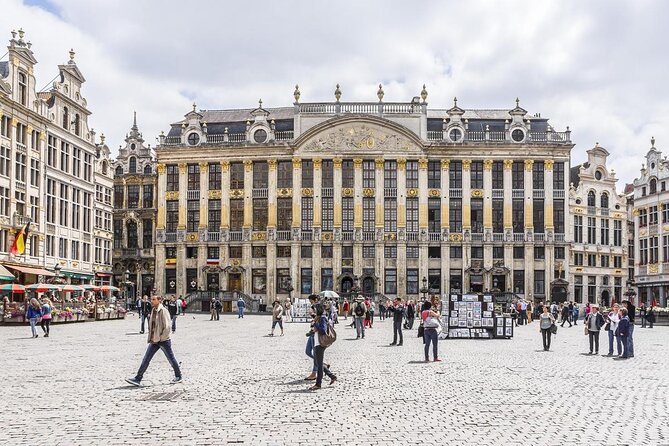
At Grote Markt, your guide explains how Antwerp’s annual fairs brought foreign merchants into the city to buy and trade precious stones and jewellery. This is a short stop, about ten minutes, but it gives you an important starting point.
The square is one of Antwerp’s major city sights, so you may already visit it during your stay. The value here is not simply seeing the buildings. It is hearing how trade worked in the city and how visiting merchants helped create demand for skilled local crafts.
This is also a useful place to ask questions about the difference between Antwerp’s old trade and its modern diamond business. The tour does not pretend that every part of the industry remains in the old center. Instead, it links the historic trade to the city you see today.
Wisselstraat and the less glamorous side of trade
Next comes Wisselstraat. The name refers to exchange, since foreign buyers changed money here. The guide also explains the connection between this street and the origin of the word bankrupt.
That detail adds some welcome grit to the story. Precious stones and fine metal suggest wealth, but trading cities also depend on credit, currency, contracts, and financial risk. This stop reminds you that Antwerp’s success was built on business systems as much as on craftsmanship.
The explanation takes around ten minutes and costs nothing to visit. It is not a grand sight, so the guide’s storytelling is the point. If you prefer only famous buildings and major collections, this may feel slight. If you enjoy the everyday mechanics behind a city’s success, it is a good little pause.
More history walks in Antwerp:
- Private Historical Tour: Legends of Antwerp
★ 5.0 · 125 reviews - Antwerp: Private 3-Hour Historical Sightseeing Walking Tour
★ 4.8 · 70 reviews - TukTuk tour through historic Antwerp of 1.5 hours
★ 5.0 · 36 reviews - Antwerp: Private Historical Highlights Walking Tour
★ 4.9 · 36 reviews
Saint Paul’s Church and a treasury of precious objects

Saint Paul’s Church adds a religious and artistic side to the walk. Its connection with silversmithing and jewellery continues through a treasury said to contain more than 3,000 diamonds.
The church stop lasts about 15 minutes and admission is listed as free. A church treasury is a useful counterpoint to commercial jewellery shops. Here, precious materials serve religious art and historic objects rather than personal fashion.
Opening conditions can affect what you see, so treat the church visit as part of the planned route, not a promise of a long interior tour. One guide added Antwerp Cathedral for a group interested in churches, but that kind of adjustment depends on time, guide, and group interest.
Zwartzustersstraat and the vanished shopping street
Zwartzustersstraat is a reminder that Antwerp’s old center has changed. It once functioned as a busy shopping street, with jewellery shops at street level and diamond-cutting ateliers upstairs.
Today, you may not recognize it as a former craft center. That contrast is exactly why the stop works. The guide helps you read an ordinary-looking street as a workplace filled with merchants, craftspeople, and customers.
The tour’s historical focus becomes clear here. You are not being promised access to active diamond-cutting rooms. You are learning where the work happened and how the craft fitted into the old city.
Zirkstraat and the first diamond cutter
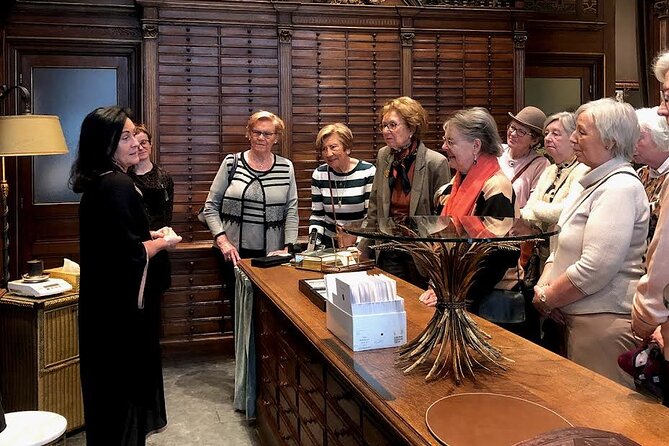
At Zirkstraat, the guide discusses the first diamond cutter who lived there in the 15th century. The stop lasts around ten minutes and focuses on the development of diamond cutting.
This is one of the clearest moments for understanding Antwerp’s early role. The city’s diamond identity was not only about buying and selling stones. It also involved specialist knowledge and handwork.
Keep your expectations precise. The route does not include working diamond cutters or a full cutting demonstration. Its strength is the historical explanation, especially for anyone curious about how the craft began and why much cutting later moved elsewhere.
One useful point raised during the walk is that much cutting is no longer done in Antwerp because it can be cheaper in other countries. Competition also comes from Russia and other diamond-producing or processing regions. That modern context keeps the old story from sounding frozen in time.
Pascale Masselis and jewellery made by hand
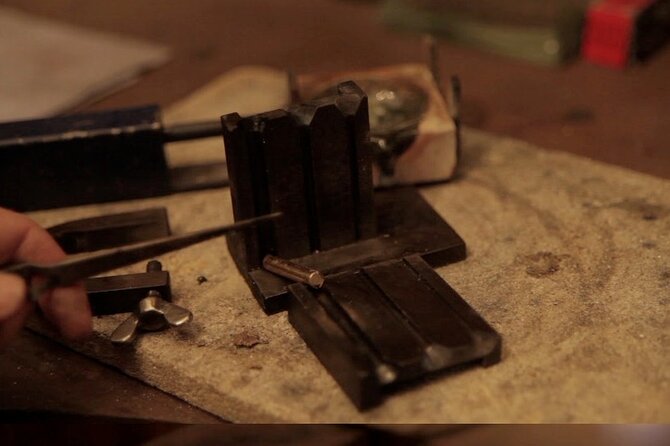
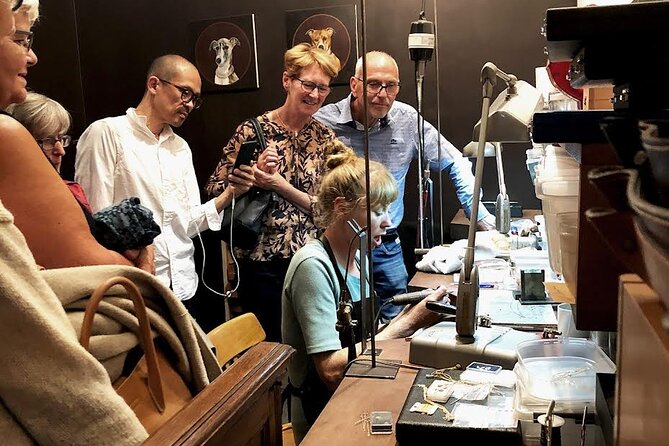
The visit to Pascale Masselis is one of the tour’s strongest sections. Masselis graduated from Antwerp’s Royal Academy in 1983 and works exclusively with 18-carat gold. Each piece is unique and handmade in her own atelier.
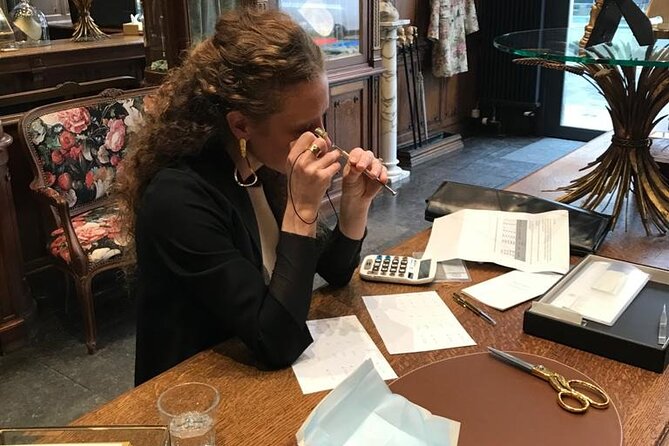
You may be invited inside to see the working space and hear how the jewellery is made. That personal contact gives the tour a human scale. You are not only looking at finished rings or necklaces. You are meeting a designer whose work reflects training, taste, and years of independent practice.
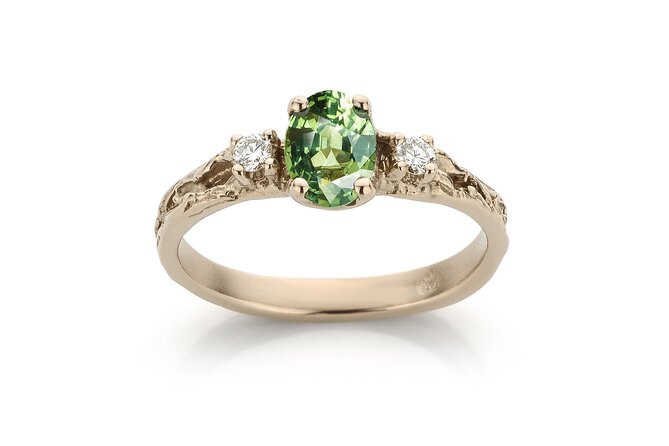
Masselis can also make pieces to order and transform old, outdated jewellery into modern designs. That detail is especially useful if you have inherited jewellery or own pieces you no longer wear. It shows how a goldsmith can preserve the material and meaning of an old object while changing its appearance.
The stop lasts about 15 minutes. Because the atelier is a working creative space, the exact welcome and conversation may vary. Still, this is the kind of encounter that makes the private tour worth considering.
Lange Koepoortstraat and the old silversmith organization
Lange Koepoortstraat once held the nation house of Antwerp’s goldsmiths and silversmiths. Your guide explains what this organization did and why such a house was needed.
This stop brings in the guild side of the story. Skilled crafts required standards, training, professional rules, and protection for established makers. A nation house gave the trade a place to organize itself and helped define who could work within it.
The building or street may not deliver an instant wow moment. Its value lies in the explanation. Without this context, the city’s jewellery past can seem like a collection of unrelated shops. With it, you begin to see a system of craft and commerce.
Wijngaardstraat and Antwerp’s modern independent designers
Wijngaardstraat is the creative center of the route. This picturesque street contains several jewellers, each with a different method and visual style.
Gerda De Vrij studied in Pforzheim with Klaus Ullrich, an important figure in modern jewellery. She later settled in Antwerp and founded her atelier with Emile Henry. Their two daughters have joined the business, giving the brand a family continuity that is unusual in a retail world often driven by large labels.
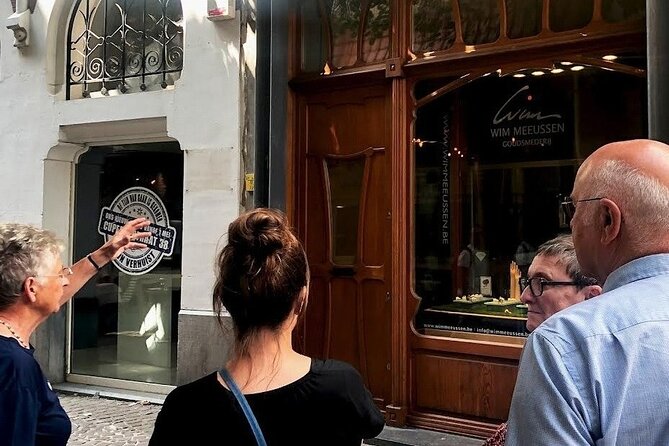
Wim Meeussen is known for jewellery and wedding rings. His nearby second shop focuses on silver jewellery, making his style available at a lower price level. That is a practical detail if you like the design but do not want to shop only among high-priced gold pieces.
Hanne Schoofs keeps testing new techniques, so her collection changes over time. Eva Crauwels, an independent goldsmith for more than 15 years, creates work with a retro-romantic and distinctly feminine feel.
The route does not ask you to buy anything. That matters. You can compare styles and methods without turning the walk into a sales presentation. Still, if you are shopping for a ring or a special piece, tell your guide early. The private format may allow more time for the makers who fit your interests, though the route’s total length remains about two hours.
Rembrandt Jodan’s gallery, atelier, and shop
The final stop is Rembrandt Jodan at Wijngaardstraat 18. Jodan combines an art gallery, atelier, and jewellery shop in one multidisciplinary space.
This makes a fitting end because it connects jewellery to the wider art world. You see how a goldsmith’s work can be presented not only as an object for sale but also as part of a creative practice.
The planned visit lasts about 20 minutes. The tour ends here, so you can continue exploring the street or return to another part of central Antwerp on your own. The ending is convenient for anyone who wants to browse the nearby studios after the guide leaves.
The private format and the $234.93 price
The price is $234.93 per group of up to 15 people. For one person or a couple, that is a serious cost for a two-hour walk. For a family, reunion group, or small club, the calculation changes: divided among 10 people, it comes to about $23.50 each; divided among 15, about $15.66 each.
That group pricing is the main value advantage. You receive a private guide, a tailored pace, and access to creative spaces that would be difficult to arrange independently. The tour is also booked, on average, 42 days ahead, so popular dates may not remain open close to your visit.
The experience is offered in English and uses a mobile ticket. It is near public transportation, service animals are allowed, and most people can participate. Wear shoes suited to city walking, since the route links many streets and includes several standing stops.
Free cancellation is available until 24 hours before the start time. If bad weather forces cancellation, you can receive another date or a full refund. Changes made inside that 24-hour window are not accepted.
Who will get the most from this Antwerp walk?
I would recommend it most to people who enjoy design, local craft, urban history, and conversations with makers. Families can also do well here. A guide has successfully kept children aged 12 and 17 engaged, which suggests the mix of stories and workshop visits works better than a long museum lecture.
It suits repeat visitors especially well. If you have already seen Grote Markt, the cathedral, and the main shopping streets, this route gives those familiar places a new purpose. You begin noticing the financial and craft networks behind the architecture.
It is less suitable if you specifically want the modern diamond district, a purchase-focused jewellery tour, or a hands-on diamond-cutting demonstration. The guide can explain why the trade changed and where the old craft took place, but the route remains in the historic center.
Should you book the Diamonds and Jewellery Old City Center Tour?
Book it if you want Antwerp’s jewellery story told through streets, workshops, and independent designers rather than only through display cases. The strongest reasons are the private guide, the Pascale Masselis atelier, the range of designers on Wijngaardstraat, and the clear explanation of how Antwerp’s diamond trade moved and changed.
Think twice if you are paying for only two people and mainly want to see diamond cutters at work. The price is easier to justify for a larger private group, and the experience rewards curiosity more than bargain shopping.
For the best fit, schedule DIVA separately if its exhibits matter to you, confirm the date, and tell the guide what interests you before the walk begins. With those expectations in place, this is a thoughtful way to see an older, more creative side of Antwerp.
FAQ
How long does the tour last?
The tour lasts approximately two hours. Individual stops range from about 10 to 20 minutes.
Where does the tour start?
It starts in front of DIVA, the museum for diamonds, jewellery, and silver, at Suikerrui 17/19 in Antwerp.
Where does the tour end?
The tour ends at Rembrandt Jodan, Wijngaardstraat 18, Antwerp.
Is admission to DIVA included?
No. The tour starts outside DIVA, and museum admission is not included.
Does the tour include a diamond-cutting demonstration?
No. The tour explains Antwerp’s diamond-cutting history and visits jewellery ateliers, but it does not include diamond cutters.
How many people can join the private tour?
The price covers one private group of up to 15 people. Only your group participates.
More Historical Tours in Antwerp
- Private tour: Highlights & History of Antwerp
★ 5.0 · 299 reviews - TukTuk Tour through historic Antwerp 2.5h
★ 5.0 · 35 reviews - Antwerp: walking through history
★ 4.8 · 14 reviews - Antwerp: Pub Crawl in the Historical City
★ 4.9 · 10 reviews
Just added around Antwerp
- Antwerp: Help the Lost Boy – Self-Guided Mystery Walk★ 4.5 · 3 reviews
- Guided E-kickscooter tour: The big five of Antwerp★ 5.0 · 3 reviews
- Surprise tour of Antwerp guided by a Local★ 5.0 · 3 reviews
- Antwerp Private Tour From Brussels★ 4.7 · 3 reviews
- Children’s escape game in the city of Antwerp – Peter Pan★ 4.0 · 4 reviews
- Discover Antwerp while playing! Escape game – The alchemist★ 4.5 · 4 reviews
- Discover Antwerp with this Outside Escape city game tour!★ 5.0 · 4 reviews
- Landed On Time 60 min. Max 1 Person★ 4.0 · 5 reviews
Historical Walking Tours, compared.
Historical Walking Tour with Chocolate & Waffle Tasting
Read our review →
Historical Tour with Chocolate & Waffle Tasting
Read our review →
Historical Walking Tour: The Story of Bruges – by Legends
Read our review →
Browse the lists this tour appears in