Reviewed · DARK SIDE & LEGENDS TOURS
Historical Walking Tour: Legends of Bruges
Bruges tells its best stories on foot. The Legends of Bruges tour gives first-time visitors a fast, friendly introduction to the city’s medieval center, moving from the Markt to Burg Square in about two hours and fifteen minutes. I like the route because it links the famous sights with the odd little stories behind them, from Bruges’ beer pipeline to its quarrel with Emperor Maximilian. I also like the price: at $3.62 per person, it is an unusually inexpensive way to get your bearings.
The guides are the main reason this tour earns such strong marks. Louis, Victoria, Sander, Martin, Wouter, Celine, Willem, Thomas, Emiel, Erik, and other guides are praised for humor, local knowledge, clear English, and good storytelling. The main drawback is that the tour relies on good weather, and one booking had a no-show guide. You should also expect to tip, since the low booking price is built around gratuities.
In This Review
- Key points to know before you book
- Starting in the Markt, where Bruges made its money
- The Belfort and the sound of medieval power
- Gruuthusemuseum and Bruges’ beer trade
- Sint-Janshospitaal and the social side of the city
- The Beguinage, a quieter corner of Bruges
- De Halve Maan and the Fools of Bruges
- Minnewater Lake, swans, and a royal dispute
- Our Lady’s Church and Bruges’ great works
- Groeningemuseum garden and Flemish art
- Huidenvettersplein and the smell of old industry
- Burg Square, where the walk ends
- What the guides add to the experience
- Price, tipping, weather, and practical value
- Who should take Legends of Bruges?
- Should you book this Bruges walking tour?
- FAQ
- How long does the Legends of Bruges tour last?
- Where does the tour begin?
- Where does the tour end?
- Is the tour offered in English?
- How large can the tour group be?
- Can I cancel for a full refund?
Key points to know before you book
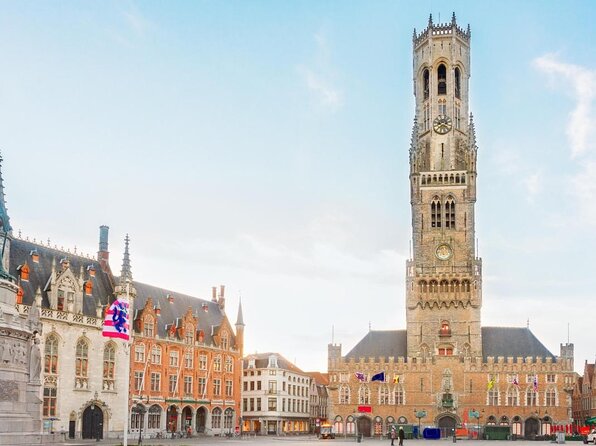
- Eleven central stops in 2 hours 15 minutes: You see Bruges’ major squares, churches, museums, canals, and historic neighborhoods without arranging several separate visits.
- A true introduction, not a museum tour: The guide explains the landmarks from outside and visits the halls behind the Belfort, the garden of the Groeningemuseum, and public spaces along the route.
- Excellent value at $3.62: The cost is tiny, but a generous tip is an important part of the experience.
- Local stories make the walk memorable: Expect tales about the Fools of Bruges, swans, beer, French rule, and the city’s medieval trades.
- Usually a manageable group: The maximum group size is 24 people, though some departures may be much smaller.
- Best taken early in your stay: The guides offer suggestions for food, shopping, chocolate, and other things to do in Bruges.
Starting in the Markt, where Bruges made its money
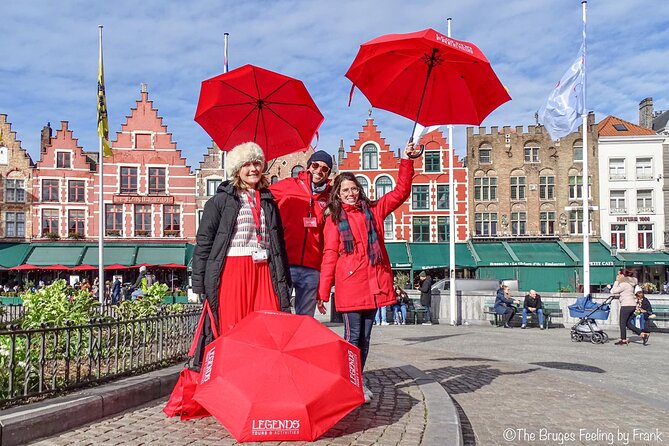
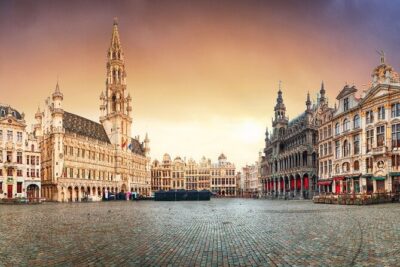
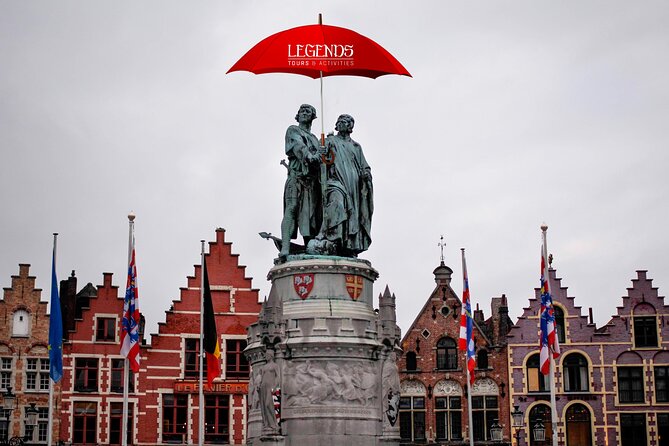
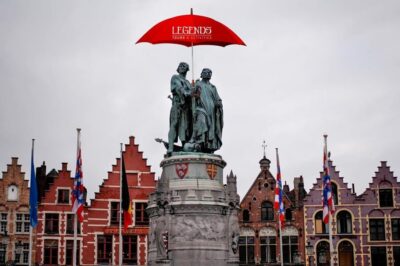
The tour begins at Pieter de Coninck en Jan BreydelMarkt, the large central square better known simply as the Markt. This is the right place to begin because Bruges’ story is closely tied to trade. The guide explains how the city became a major medieval commercial center and how merchants, rulers, and foreign powers competed for control.
You will also hear about Bruges’ difficult relationship with the French king. That political tension helps explain why the city’s proud civic identity matters so much. The Markt is not just a pretty square for photographs. It was a place where power, money, and public life met.
Allow about 15 minutes here. The square can be crowded, so stay close to the guide and make sure you can hear. This first stop is especially useful if you know little about Belgian history. It gives you a simple framework for understanding the buildings and stories that follow.
More Dark Side & Legends Tours in Bruges
- Evening Tour: The Dark Side of Bruges
★ 5.0 · 956 reviews - Historical Walking Tour: The Story of Bruges – by Legends
★ 4.7 · 483 reviews - Private Tour: The Dark Side of Bruges
★ 5.0 · 70 reviews
The Belfort and the sound of medieval power
The next stop is the Belfort, Bruges’ famous bell tower. The tour visits the halls behind the belfry and explains the tower’s role during the Middle Ages. You do not simply see a tall tower and move on. You learn how it served the city and why a bell tower was an important sign of civic strength.
The 10-minute stop is short, so do not expect a full tower visit or a climb. If you want to climb the Belfort, one useful tip is to buy your ticket early in the morning. The tower is a separate experience, and this walking tour does not include admission.
This part works well for anyone who wants historical context before deciding which sights deserve a return visit. The guide can give you the story; you can then choose if the climb is worth your time and energy.
Gruuthusemuseum and Bruges’ beer trade
At the Gruuthusemuseum, the group stops at a newly renovated city palace once owned by a wealthy Bruges family. The Gruuthuse family held a monopoly on a particular part of the beer trade, which gives the building a more colorful story than its grand stonework might suggest.
I like this stop because it connects architecture with business. Medieval wealth rarely appeared by magic. It came from trade, taxes, guilds, and control of valuable goods. The guide’s explanation helps you see the palace as a home built by a powerful commercial family, not just another attractive building.
The stop lasts about 10 minutes. The museum itself is not included as a full interior visit, so plan a separate visit if you want to see its collections. The walking tour is better viewed as a preview and a story-led introduction.
Sint-Janshospitaal and the social side of the city
The tour pauses at Sint-Janshospitaal, one of the oldest surviving hospitals in the world. The guide explains its place in medieval society and why hospitals were important cornerstones of city life.
This is one of the more meaningful stops because it broadens the tour beyond rulers and merchants. Bruges was also shaped by care for the sick, religious duty, charity, and organized community life. You get a glimpse of how ordinary social needs influenced the city’s institutions.
The stop is about 10 minutes. Again, this is not a full museum visit. If you want to explore the hospital’s art and interiors, you will need extra time and a separate admission. Still, the brief explanation can help you understand why the building deserves attention.
More Historical Walking Tours in Bruges
- Private Historical Tour: The Highlights of Bruges
★ 5.0 · 315 reviews - 2-Hour Historical Walking Tour in Bruges with Praline Included
★ 5.0 · 291 reviews - Bruges: Private Historical Highlights Walking Tour
★ 4.7 · 191 reviews - Food tasting & Historical walk
★ 4.5 · 47 reviews
The Beguinage, a quieter corner of Bruges
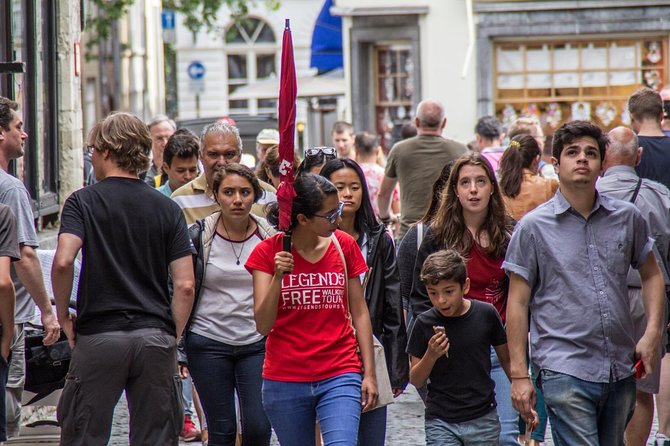
The Princely Beguinage Ten Wijngaarde brings a change of mood. The group walks into this picturesque enclosed area, where a community of women lived together for more than 800 years. It is described as the largest beguinage of its kind in the world.
After the busy central squares, this stop gives you a calmer view of Bruges. The story is not only about architecture. It is about women creating a shared religious and social life without living as nuns in a conventional convent. That makes the Beguinage one of the most distinctive places on the route.
You get about 10 minutes here. Keep your voice low and follow the guide’s lead, since the setting calls for a quieter pace. This is a good stop for photographs, but it rewards patience more than hurried picture-taking.
De Halve Maan and the Fools of Bruges

At De Halve Maan Brewery, the guide stops outside to tell the story behind Bruges’ nickname, the Fools of Bruges. You will also see a section of the beer pipeline running beneath the city.
That pipeline is a particularly good detail because it ties old brewing traditions to modern city life. The brewery stop also brings the tour back to trade and local identity. Beer was not a side issue in Bruges. It was part of the city’s economy, culture, and daily life.
The tour does not include a brewery tasting or an interior visit. You get about 10 minutes of explanation outside, so plan a separate brewery visit if you want more. For many people, this short stop is enough to add a memorable local story to the day.
Minnewater Lake, swans, and a royal dispute
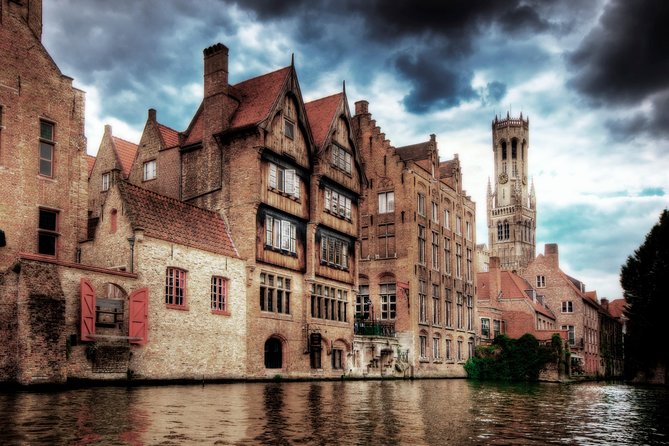
At Minnewater Lake, also called the Lake of Love, the guide explains why swans appear on Bruges’ canals and how the city came into conflict with Emperor Maximilian of Austria. This is a fine place for a story because the water, bridges, and swans create an atmosphere that feels almost too neat to be real.
The tale of the swans shows how a small symbol can carry political meaning. It also gives you something to watch for as you continue exploring the canals on your own. The stop lasts around 15 minutes, one of the longer pauses on the route.
If the weather turns cold or wet, this outdoor stop may be less comfortable. One participant had to leave the tour early with a toddler on a freezing day. Dress for the forecast, especially outside the warmer months.
Our Lady’s Church and Bruges’ great works
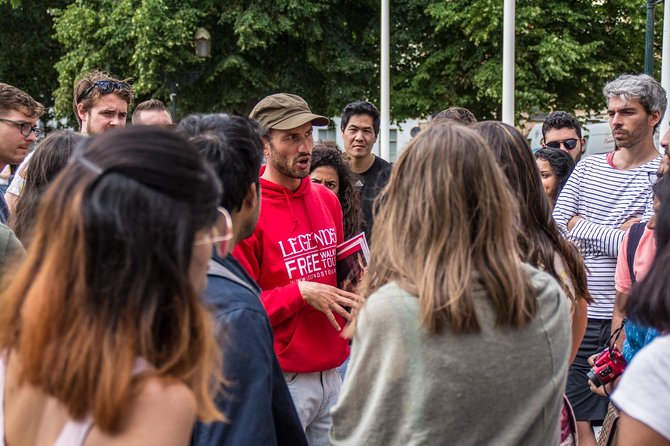
Onze-Lieve-Vrouwekerk, or the Church of Our Lady, is one of the tour’s major architectural highlights. Its brick tower is the second tallest of its kind in the world, and the church houses a statue by Michelangelo. It also contains the tombs of the last Dukes of Burgundy.
The guide explains why the church matters rather than asking you to admire it in silence. The building brings together art, dynastic power, religion, and local craftsmanship. Bruges can sometimes feel like a city made entirely of handsome façades, but details such as the Michelangelo statue and Burgundian tombs give this church real weight.
The tour allows about 10 minutes. That is enough for an introduction, not a full examination of the church. If art or the Burgundian court interests you, mark this spot for a later, slower visit.
Groeningemuseum garden and Flemish art
The route then enters the garden of the Groeningemuseum, where works by major Flemish masters are displayed. The stop is only five minutes, so it is best understood as a quick orientation.
This is useful for you if you want to know where Bruges’ art collections are located but do not have time to visit every museum. The guide can point out the setting and explain why Flemish painting is so important to the city’s identity. You may want to return later, since five minutes is not enough to study the works in any serious way.
The garden also gives the walk a brief pause between major buildings and busy streets. It is a small stop, but it helps connect the city’s medieval wealth with its artistic legacy.
Huidenvettersplein and the smell of old industry
At Huidenvettersplein, the old Tanner’s Square, you hear about the unpleasant work of greasing animal skins and turning them into leather. It is not the prettiest story in Bruges, and that is exactly why it is useful.
Historic cities are often presented as polished scenes of towers, canals, and grand churches. Tanner’s Square reminds you that real city life involved hard, dirty trades. Leather workers served a practical need, but their work also brought smells and waste into the urban center.
The guide spends about 10 minutes here. I appreciate this stop because it gives the tour a more human scale. You are not only hearing about nobles and famous artists. You are also learning how working people helped keep Bruges running.
Burg Square, where the walk ends
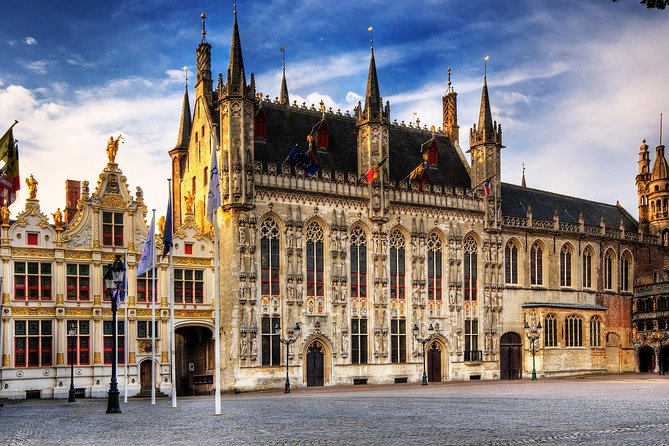
The tour passes the old Fishmarket and finishes at Burg Square, the political heart and birthplace of Bruges. The final stop lasts about 15 minutes, giving the guide time to draw the main stories together.
Burg Square is a fitting ending. You have moved from trade and civic pride through religion, art, brewing, industry, and royal conflict. The square brings the focus back to government and the city’s origins.
The ending point at Burg 15 is practical. You are still in the historic center, close to places you may want to revisit. This is also a good moment to ask the guide for suggestions. Several guides, including Celine and Martin, are praised for offering useful tips about getting around, eating, shopping, chocolate, and other activities.
What the guides add to the experience
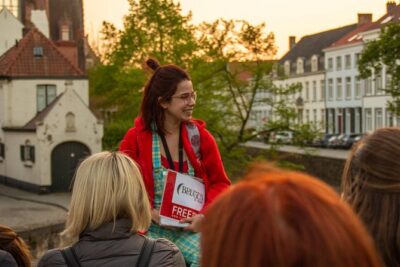
The route is fixed, but the quality of the walk depends heavily on the guide. The strongest guides turn a list of buildings into a connected story. Louis is praised for his love of the city and his ability to answer questions. Victoria is noted for charisma, humor, historical detail, and clear English.
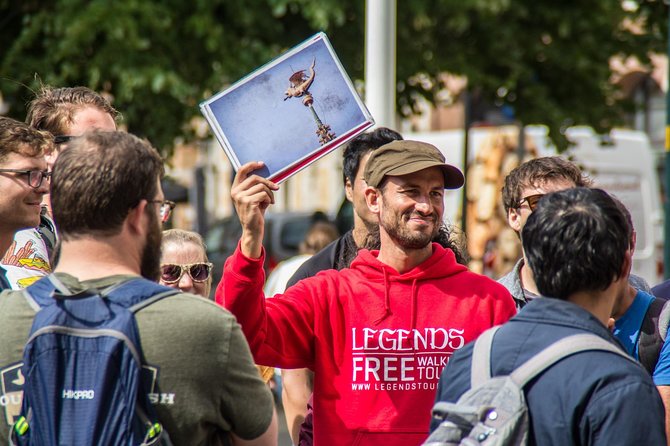
Sander, Martin, Wouter, Thomas, Emiel, Erik, Willem, and Celine also receive strong praise for being engaging, funny, friendly, and well prepared. One guide used visual aids to support the storytelling, which can help when discussing how Bruges looked or functioned in earlier centuries.
The tour seems to work best when you ask questions. A small group can make a big difference. One departure had only four people, allowing plenty of conversation. The official maximum is 24, which is still reasonable for a city walk, but a full group may make it harder to hear or ask about every detail.
The quality is not guaranteed every time. One booking had a guide who did not appear, despite the group waiting for 30 minutes at the meeting point. That appears to be an exception within a very strong overall record, but it is worth knowing before you book any low-cost tour.
Price, tipping, weather, and practical value
At $3.62 per person, this is an excellent bargain if you want a guided introduction to Bruges. All fees and taxes are included, and the tour is offered in English with a mobile ticket. The price is low because this is a tip-based free walking tour model, so you should plan to tip the guide at the end.
The value is not just the number of sights. A good guide saves you from seeing Bruges as a series of pretty but disconnected buildings. You learn why the Belfort mattered, how the beer trade shaped local wealth, and why swans became part of the city’s story.
The walk lasts about two hours and fifteen minutes, with frequent stops. Most people can take part, and service animals are allowed. The tour meets near public transportation, but no private transport is part of the experience.
The cancellation policy is flexible if your plans change. You receive a full refund when you cancel at least 24 hours before the start time. Changes or cancellations inside that window are not accepted for a refund. Poor weather or failure to reach the minimum number of participants can lead to a new date, another experience, or a full refund.
Who should take Legends of Bruges?
I would choose this tour for a first morning in Bruges. It covers the city’s main sights, gives you useful orientation, and leaves you with a clear list of places to revisit. It also suits people on a short visit who want history without spending half a day inside museums.
Families can enjoy it, but remember that this is a long outdoor walk. A toddler may struggle on a very cold day, and the weather can affect the experience. Comfortable shoes and clothing suited to the forecast matter more than anything fancy.
It is also a good match for curious adults who enjoy stories more than a formal lecture. The guides use humor and personal flair, and some were born and raised in Bruges. If you want detailed museum scholarship or long interior visits, this tour will feel too brief. If you want a lively overview with local color, it hits the mark.
Should you book this Bruges walking tour?
Yes, if you are visiting Bruges for the first time, have limited time, or want an inexpensive way to understand the old center. The route is well chosen, the stories cover more than kings and churches, and the best guides make the city feel personal.
Book it early in your stay so you can use the guide’s suggestions for the rest of your visit. Keep your expectations realistic: this is an outdoor overview, not a full museum tour, and the guide’s quality may vary. Bring good shoes, arrive at the Markt on time, and budget for a generous tip.
At $3.62, you have little financial risk. The real question is whether you want to spend two hours hearing Bruges explained instead of simply photographing it. For most first-time visitors, that small investment pays off.
FAQ
How long does the Legends of Bruges tour last?
The walking tour lasts approximately 2 hours and 15 minutes.
Where does the tour begin?
It begins at Pieter de Coninck en Jan BreydelMarkt, 8000 Brugge, Belgium.
Where does the tour end?
The tour ends at Burg 15 on Burg Square, 8000 Brugge, Belgium.
Is the tour offered in English?
Yes. The experience is offered in English.
How large can the tour group be?
The maximum group size is 24 participants.
Can I cancel for a full refund?
Yes, if you cancel at least 24 hours before the experience start time. Cancellations or changes made less than 24 hours before the start time are not refunded.
More Historical Tours in Bruges
- THE Storytelling Tour of Bruges | First Day Must | History & Tips
★ 5.0 · 925 reviews - Bruges: Nightly Tales and Untold History Walking Tour
★ 4.9 · 87 reviews - Bruges: History, Chocolate and Beer Walking Tour
★ 4.9 · 65 reviews - Historical walk in Bruges with local guide. Praline included
★ 5.0 · 31 reviews
More Walking Tours in Bruges
- Bruges: Small Group Boat Cruise and Guided Walking Tour
★ 4.8 · 4,102 reviews - Bruges: Walking Tour, Canal Boat Trip w/Beer Tasting Option
★ 4.4 · 2,759 reviews - Guided boat trip and walk
★ 4.5 · 703 reviews - Bruges: Guided Walking Tour
★ 4.5 · 682 reviews
Just added around Bruges
- Bruges Beer and Chocolate Walking Tour★ 4.5 · 3 reviews
- Best of Brussels Private Tour from Zeebrugge or Bruges★ 4.0 · 3 reviews
- Private: Discover Bruges beers & brewery with chocolate pairing by a young local★ 5.0 · 3 reviews
- Visit of Bruges in 1 day private tour from Paris★ 5.0 · 3 reviews
- Brussels: Private & Customizable Day Trip to Bruges★ 5.0 · 3 reviews
- Explore the Instaworthy Spots of Bruges with a Local★ 5.0 · 3 reviews
- Bruges: Ticket Volkskundemuseum (Folk Museum)★ 5.0 · 3 reviews
- Bruges; private walking tour with the Beardbarian★ 5.0 · 3 reviews
Dark Side & Legends Tours, compared.
Historical Walking Tour: The Story of Bruges – by Legends
Read our review →