
Reviewed · BRUSSELS TOURS
Visite guidée : Bruxelles, 1000 Ans de Luttes
Brussels reveals itself in its scars. This two-hour walk through the Marolles connects a medieval church, the unfinished Palace of Justice renovation, and a neighborhood shaped by poverty, protest, and stubborn local pride. I like the focus on social history rather than postcard monuments, and I like that the route ends at the Place du Jeu de Balle, where you can continue the experience over a drink or meal.
The price is remarkably low at $3.62 per person, though a €10 gratuity is listed separately. The main consideration is that the tour is offered only in English and involves outdoor walking, with no promise of entry inside the major buildings. Still, the strong 4.9 rating from 82 reviews and praise for guides including Thomas, Simon, and François suggest a well-led, personal experience.
In This Review
- Key points about Brussels, 1000 Years of Struggles
- Why the Marolles makes a better tour subject than another grand square
- Starting at Notre-Dame de la Chapelle
- The Palace of Justice and Brussels’ costly unfinished project
- A five-minute pause at the Marolles elevator
- Walking the Marolles beyond the tourist surface
- Finishing at the Place du Jeu de Balle flea market
- Guides who make the difference
- Price, gratuity, and what you receive
- Who should choose this walk
- Should you book Brussels, 1000 Years of Struggles?
- FAQ
- Where does the tour start?
- Where does the tour end?
- How long does the experience last?
- What language is the tour offered in?
- How much does the tour cost?
- What is the maximum group size?
- Are service animals allowed?
- Can I cancel for a full refund?
Key points about Brussels, 1000 Years of Struggles
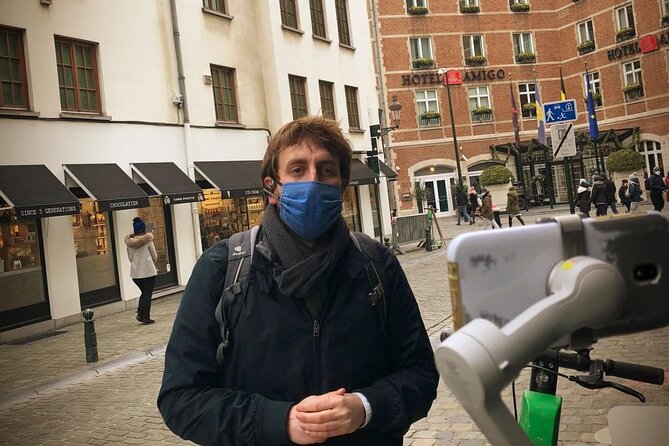
- A social-history walk through the Marolles: Learn how ordinary residents shaped one of Brussels’ oldest central districts.
- The Palace of Justice gets a hard look: The guide explains the decades-long renovation scandal and its cost to the public.
- A free viewpoint from the Marolles elevator: Pause for a clear look across Brussels without paying for an observation deck.
- The Place du Jeu de Balle is more than a flea market: Its daily market reflects the neighborhood’s long fight to preserve its identity.
- Small group size: The tour allows a maximum of 25 people, making questions and conversation more practical.
- An easy-to-budget walking experience: The listed price is only $3.62, with a suggested €10 gratuity not included.
Why the Marolles makes a better tour subject than another grand square
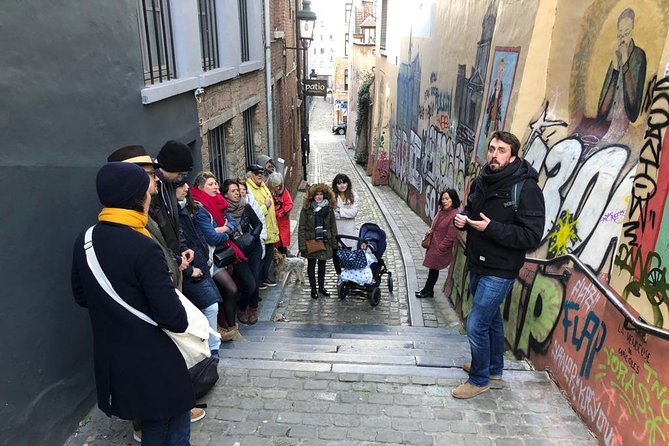
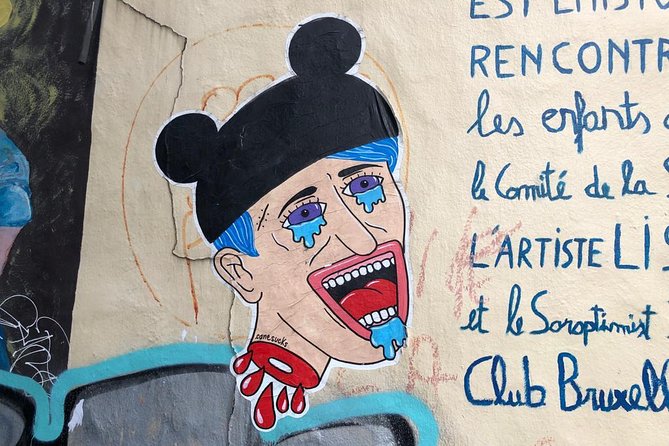
Brussels has no shortage of ornate buildings, famous chocolates, and handsome central squares. This tour takes a different path. Its subject is the Marolles, a district where the city’s grand plans have repeatedly met the needs of people living on the ground.
That gives the walk a useful point of view. Instead of treating Brussels as a collection of monuments, you look at who lived near them, who was pushed aside, and how residents fought to keep their streets and traditions.
The title, Brussels, 1000 Years of Struggles, is intentionally broad. The route does not attempt to cover every century in equal detail. Instead, the guide uses a handful of places to explain poverty, religion, public money, neighborhood identity, and the tension between redevelopment and conservation.
I especially like this approach for anyone who has already seen the Grand Place and the usual historic center. You still get recognizable Brussels landmarks, but the stories are less polished and more revealing. The emphasis is on the people and institutions behind the city’s appearance.
The tour is guided in English. It is suitable for most participants, runs near public transportation, and permits service animals. With a maximum of 25 people, it is not a private walk, but it is small enough to keep the guide within earshot and ask questions along the way.
A few more trips and experiences worth a look
- Brussels: Atomium Entry Ticket with Design Museum Ticket
★ 4.4 · 9,254 reviews - From Brussels: Guided Day Trip to Bruges and Ghent
★ 4.6 · 8,353 reviews - From Brussels: Bruges & Ghent Day Tour – 2 Fairytale Cities
★ 4.7 · 8,242 reviews
Starting at Notre-Dame de la Chapelle
The meeting point is Rue de la Chapelle 21, at the Église Notre-Dame de la Chapelle. This church dates to the 12th century and provides a fitting starting point because it links Brussels’ old religious life with the modern Marolles around it.
You spend about 10 minutes here. Admission is free, and the guide introduces the church’s less obvious details rather than asking you to admire it only as an old building. The church hosts painting exhibitions and offers Mass in Polish every Sunday, a detail that points to the district’s changing population and continuing role as a living neighborhood.
That short stop matters because it sets the tone. This is not a tour of sealed-off monuments. The church still has an active purpose, and the surrounding district still has its own routines, languages, and loyalties.
Ten minutes is enough for an introduction, not a full architectural study. If you want extensive information about the church’s artwork, construction phases, or religious history, you should plan a separate visit. Here, the church works as a doorway into the wider story.
The Palace of Justice and Brussels’ costly unfinished project
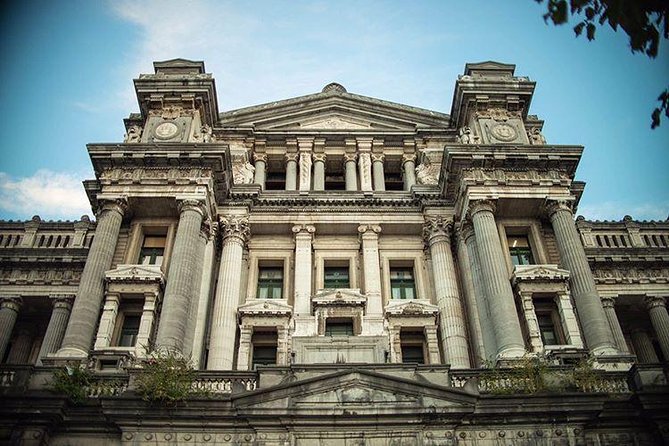
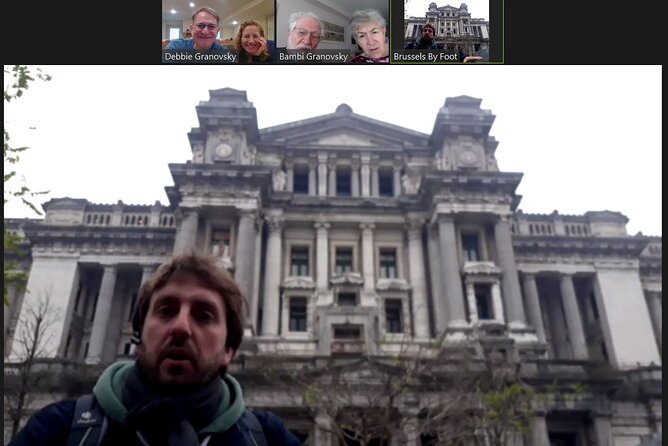
The next stop is the Palais de Justice, about 15 minutes into the walk. It is one of the route’s most memorable subjects, not simply because of its size or grand appearance, but because of the renovation work that began roughly 40 years ago and has still not been completed.
The guide uses this long-running project to discuss a distinctly Belgian scandal: public money spent on repairs that seem to have no clear finish line. That makes the stop useful even if you already know the building from photographs. You gain the civic and political background behind the scaffolding and delays.
This is also where the tour moves from old history into a problem that still feels current. A building can symbolize law and authority, yet its maintenance becomes a public joke. The contrast gives the guide plenty to work with, and the subject was specifically praised as one of the tour’s most absorbing stories.
You should not expect an interior visit. The stated stop is an admission-free exterior visit and discussion. The value comes from the explanation, not from entering the courthouse or seeing restoration work at close range.
If you have wondered what is happening with the Palace of Justice but never stopped to ask, this is likely the point that will stay with you. It is a good example of the tour’s method: use a familiar sight, then explain the forces and frustrations behind it.
A five-minute pause at the Marolles elevator
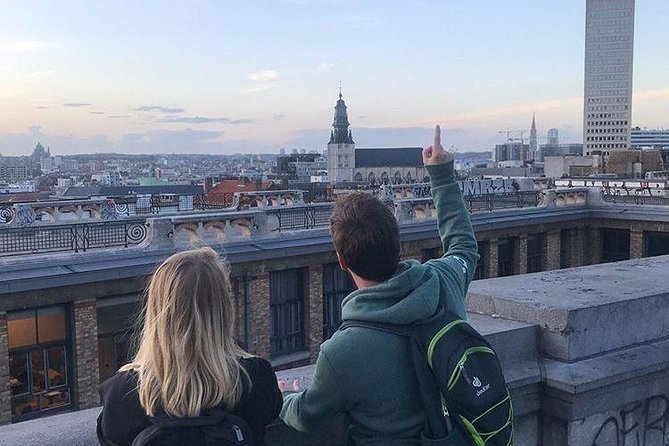
The Ascenseur des Marolles takes only about five minutes, but it supplies a welcome change of pace. From the top of the elevator, you get what the tour describes as the best view of Brussels.
Because the stop is brief and free, it is not presented as a formal lookout attraction. Think of it as a quick orientation point. After hearing about the district’s tight streets and social divisions, you can look across the city and understand its position within Brussels more clearly.
This is one of the route’s practical strengths. The walk does not rely only on talking. It adds a viewpoint, a church, a major civic building, and a market, so the ideas have physical places attached to them.
The downside is the short timing. Five minutes does not leave much room for a slow photo session or a long pause. If the view matters greatly to you, have your phone or camera ready before you arrive.
Something different, still within reach of Brussels:
- Choco-Story Brussels: Chocolate Museum Entrance with Tasting
★ 4.3 · 4,883 reviews - Bruges and Ghent – Belgium’s Fairytale Cities – from Brussels
★ 4.0 · 4,809 reviews - Brussels: Hop-On Hop-Off Bus Tour
★ 4.0 · 4,016 reviews - Brussels: Guided Walking Tour
★ 4.6 · 3,560 reviews
Walking the Marolles beyond the tourist surface
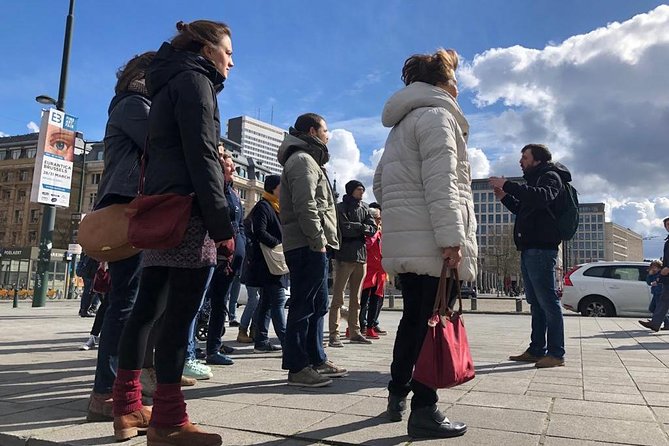
The main portion of the tour is the 20-minute walk through the Quartier Marolles. This is where the title’s struggles become most concrete.
The Marolles is described as a poor, quiet neighborhood in the center of Brussels, filled with narrow streets and blind alleys. Its location is part of the story. You are not being taken to a distant former industrial zone. You are looking at hardship and independence in a district close to the city’s grand institutions.
The guide explains how the neighborhood developed, how its people lived, and why the Marolles has such a strong identity. The focus is not simply on architecture. It is on the meaning residents attach to the streets, the boundaries that divide parts of Brussels, and the difference between how a district appears to outsiders and how it feels to people who identify with it.
This was the part most praised for its social insight. The walk has been described as nuanced, easy to follow, and particularly helpful for understanding the sentiment of people in the Marolles. That is important because a short tour can easily reduce a working-class district to colorful anecdotes. This one aims to explain context as well as character.
I would choose this walk if you want something more thoughtful than a standard monument circuit. It suits curious visitors, Brussels residents, and anyone interested in how a city’s identity is shaped from below.
The route may also appeal to people who have lived in Brussels for years but know little about the Marolles. One participant who had lived in the city for five years found that the walk changed how Brussels looked. That is a useful signal: the content is not limited to first-time visitors.
The main limitation is time. Twenty minutes in the neighborhood can introduce its stories, but it cannot cover every street, social change, or local institution. You should treat the tour as an informed starting point, then return to the Marolles on your own if the district catches your interest.
Finishing at the Place du Jeu de Balle flea market
The final stop is the Place du Jeu de Balle, where the tour spends about 10 minutes. The square is home to the Marolles’ daily flea market, and the guide explains the long effort to preserve it.
That detail gives the ending a strong sense of place. A flea market can look like a casual collection of tables and secondhand objects, but here it is tied to the neighborhood’s identity and its resistance to being reshaped by outside plans.
The square also makes a practical finish. It is surrounded by bars and restaurants, so you can end the walk with a meal or a drink. The official end point is Pl. du Jeu de Balle 64, in the middle of the square.
I like tours that finish somewhere useful rather than simply returning you to a street corner. You can continue exploring, browse the market, or sit down while the guide’s stories are still fresh. Since the market is daily, the square has a clear connection to ordinary local life.
The short stop means you should not expect a long shopping break during the guided portion. If you want to inspect stalls carefully, plan to stay after the tour. The guide’s job here is to explain the market’s importance, not to lead you through every table.
Guides who make the difference
The available feedback repeatedly points to the guide as the central strength. François is praised as a generous storyteller who led a group of 12 friends through unusual places in the Sablon and Marolles districts. Simon is credited with explaining living conditions and social progress in a way that made the area’s independent spirit clear.
Thomas receives especially strong praise. He is described as passionate, able to answer questions about the Marolles, and effective at showing the visible and invisible borders within Brussels. One account from a local resident says the tour changed their view of the city.
These details matter because the itinerary itself is fairly compact. The church, courthouse, elevator, streets, and market are not enough on their own to fill two worthwhile hours. The quality depends on how the guide connects them.
You should expect a storytelling walk with room for questions, not a lecture packed with dates. The best fit is someone who enjoys social background, local anecdotes, and a guide’s personal perspective. If you prefer art history, detailed architecture, or long interior visits, this may not be your ideal Brussels tour.
Price, gratuity, and what you receive
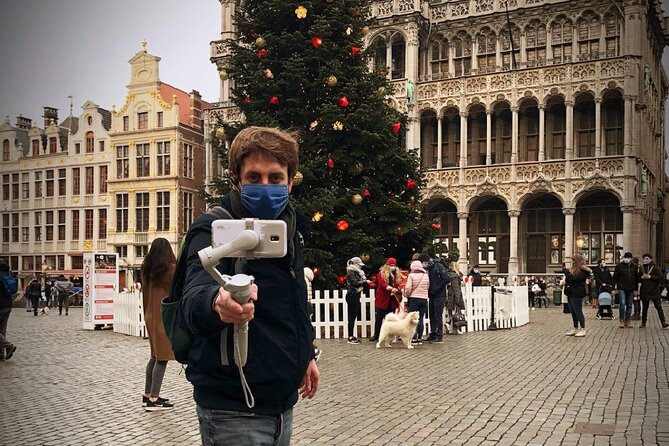
At $3.62 per person, the listed price is unusually low for a two-hour guided walk. Since each stop has free admission, you are mainly paying for the guide’s time, route design, and interpretation.
A €10 gratuity per person is not included. That changes the practical cost, especially for a couple or family, so you should include it in your budget. Even with that amount, the experience can offer strong value if you want a focused introduction to the Marolles rather than a costly attraction with entrance fees.
The tour is offered in English and includes a mobile ticket. Confirmation arrives at booking, and the maximum group size is 25. The start and finish are in central Brussels, with the route ending at the Place du Jeu de Balle rather than back at the starting church.
You can cancel for a full refund up to 24 hours before the start time. Changes or cancellations made less than 24 hours ahead are not accepted for a refund. The experience also requires a minimum number of participants, so a cancellation by the provider may result in another date, another experience, or a full refund.
The fact that it is commonly booked about 25 days ahead suggests you should not assume same-day availability, particularly if your Brussels schedule is fixed. Booking ahead gives you a better chance of fitting it into your visit.
Who should choose this walk
I would recommend Brussels, 1000 Years of Struggles to:
- First-time visitors who have already seen the major central sights and want a different side of the city.
- Brussels residents who want a better understanding of the Marolles.
- People interested in poverty, public policy, neighborhood identity, and urban change.
- Visitors who prefer stories and discussion to formal museum guiding.
- Groups that want a low-cost activity with a useful finish near food and drinks.
- Anyone curious about the Palace of Justice and its long renovation scandal.
I would hesitate if you need a fully indoor activity, want extensive church interiors, or dislike walking and informal neighborhood interpretation. The route is also not offered in multiple languages according to the supplied details, so English comprehension matters.
Should you book Brussels, 1000 Years of Struggles?
Book it if you want to understand Brussels through its people, arguments, and unfinished business. The walk’s best features are its strong local viewpoint, the Marolles’ unusual social story, and guides such as Thomas, Simon, and François who appear to bring energy and personal insight to the route.
The $3.62 price makes it easy to justify, though you should add the €10 gratuity to your planning. Give yourself extra time after the tour at the Place du Jeu de Balle, and arrive ready to listen rather than simply collect photos.
Skip it if your ideal Brussels outing is a fast tour of famous buildings with little discussion. For everyone else, especially repeat visitors and curious locals, this is a smart two-hour look at a district that explains far more about Brussels than its size suggests.
FAQ
Where does the tour start?
It starts at Rue de la Chapelle 21, 1000 Bruxelles, Belgium, at the Église Notre-Dame de la Chapelle.
Where does the tour end?
The tour ends at Pl. du Jeu de Balle 64, 1000 Bruxelles, Belgium, in the middle of the square.
How long does the experience last?
The guided walk lasts approximately two hours.
What language is the tour offered in?
The tour is offered in English.
How much does the tour cost?
The listed price is $3.62 per person. A €10 gratuity per person is not included.
What is the maximum group size?
The experience allows a maximum of 25 participants.
Are service animals allowed?
Yes, service animals are allowed.
Can I cancel for a full refund?
Yes. You can cancel at least 24 hours before the experience start time for a full refund. Cancellations or changes made less than 24 hours before the start time are not accepted for a refund.
Just added around Brussels
- Discover the secrets of Brussels while playing★ 5.0 · 3 reviews
- Full day Brugge & Ghent: the gems of Flanders★ 5.0 · 3 reviews
- Private tour : Best of Brussels half day From Brussels★ 5.0 · 3 reviews
- Standard vehicle from Charleroi airport to city of Brussels★ 4.5 · 3 reviews
- Private Tour – Bruges and Ghent, our fairytale cities★ 5.0 · 3 reviews
- Floating in the clouds★ 5.0 · 3 reviews
- Full-Day City Tour of Ghent and Bruges from Brussels★ 4.5 · 3 reviews
- Brussels Private Walking Tour With A Professional Guide★ 4.5 · 3 reviews
Brussels Tours, compared.
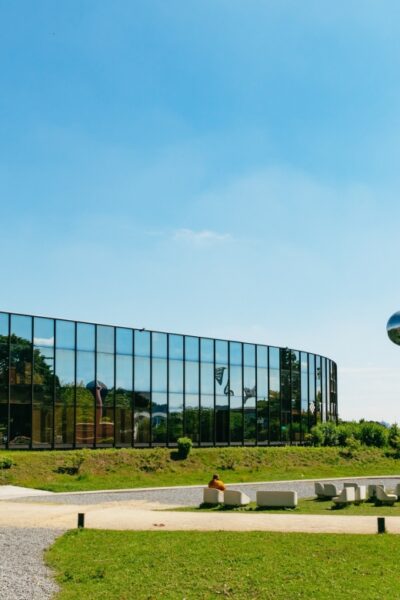
Atomium Entry Ticket with Design Museum Ticket
Read our review →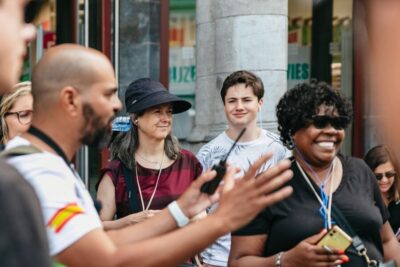

Choco-Story Brussels: Chocolate Museum Entrance with Tasting
Read our review →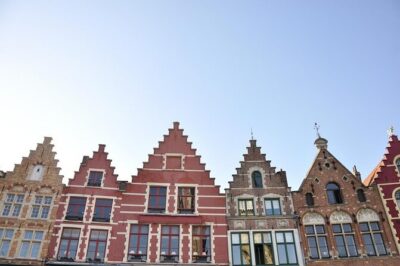
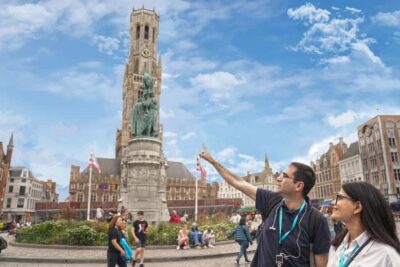
Bruges and Ghent – Belgium’s Fairytale Cities – from Brussels
Read our review →

Hungry Mary’s Famous Beer and Chocolate Tour in Brussels
Read our review →Browse the lists this tour appears in