Reviewed · CHOCOLATE-MAKING WORKSHOPS
1.5h Belgian Chocolate Workshop in Brussels (bean to bar)
Chocolate can be a hands-on lesson. This 90-minute Brussels workshop takes you from raw cacao bean and pod juice to decorated truffles, mendiants, and a personal chocolate bar. I like the bean-to-bar explanation and the chance to taste cacao at several stages. I also like that you pack your own work in a gift box. The main catch is that you are not turning raw beans into finished chocolate yourself.
The class costs $76.19 per person, so the value depends on how much you want the lesson as well as the sweets. Patricia and Elisabetta have earned especially warm praise for making the class clear and fun, but the experience can feel more like guided decorating than professional chocolate production. If you expect to roast, grind, and temper chocolate from scratch, adjust your expectations before booking.
In This Review
- Key points at a glance
- What the Brussels chocolate workshop really offers
- Starting at Place de la Justice
- Meeting cacao before meeting the chocolate
- Watching tempering on the marble table
- Making mendiants and a personal chocolate bar
- Shaping truffles by hand
- Learning about ruby chocolate
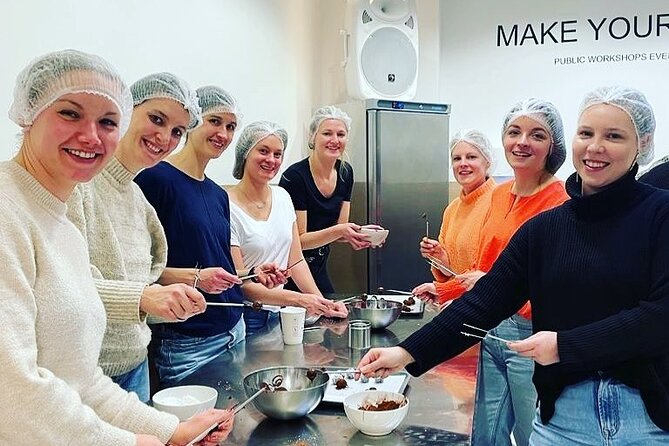
- The group size and instructor make a difference
- Taking home the box of chocolate
- Is $76.19 a fair price?
- Who should book this experience?
- Booking and cancellation details
- Should you book the Belgian Chocolate Workshop?
- FAQ
- How long does the chocolate workshop last?
- Where does the workshop begin?
- What chocolates will I make?
- Is champagne included?
- Is the workshop suitable for people with severe food allergies?
- Is the workshop wheelchair accessible?
Key points at a glance
- Taste cacao in several forms: Try a fresh cacao pod, raw beans, cacao nibs, cacao liquor, and pod juice.
- Make three kinds of treats: Create mendiants, truffles, and a personalized chocolate bar to take home.
- See real chocolate technique: Watch tempering on a marble table and learn why temperature matters.
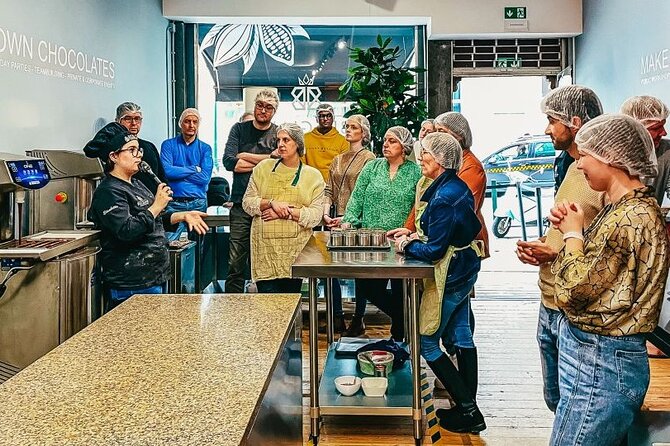
- Expect a group class: The training centre can hold up to 60 people, though some sessions may be much smaller.
- Consider the VIP upgrade: It adds a glass of champagne and an embroidered apron with the company logo.
- Plan for a cool, practical room: The air-conditioned centre provides hairnets, water dispensers, and an accessible toilet.
What the Brussels chocolate workshop really offers
The phrase bean to bar sounds grand, and the workshop does explain that full journey. You learn how cacao moves from small farms and plantations through processing and finally into Belgian chocolate shops.
But the hands-on work begins with prepared chocolate. The instructor demonstrates the process, then gives you melted chocolate to mold, pipe, decorate, and dip. That still teaches useful skills, especially tempering and presentation, but it is not a full production class.
I see this as an introductory chocolate workshop with a cacao lesson attached. It is aimed at curious visitors, families, couples, and chocolate fans who want to make attractive treats without spending half a day in a professional kitchen.
The company describes itself as a Belgian government-certified chocolate maker. Its cacao is organic and comes from small farmers with 100 percent traceable origins. That sourcing discussion adds weight to what could otherwise be a simple tourist activity.
More Chocolate Tours in Brussels
- Choco-Story Brussels: Chocolate Museum Entrance with Tasting
★ 4.3 · 4,883 reviews - Hungry Mary’s Famous Beer and Chocolate Tour in Brussels
★ 5.0 · 2,258 reviews - Brussels: Belgian Chocolate Making Workshop with Tastings
★ 4.7 · 1,629 reviews
Starting at Place de la Justice
You check in at The Belgian Chocolate Makers booking desk at Place de la Justice 5. This is the starting point, but it is not necessarily the room where you make the chocolate.
After check-in, staff lead the group to the workshop space. Build in a few extra minutes and arrive early, because the group leaves the meeting point on time. If walking is difficult, stay near the front and tell the staff before the group sets off. One reported detail is important here: the route to the working area includes stairs, so contact the operator in advance if you need specific accessibility help.
The activity ends back at the meeting point. It is near public transportation, making it easy to fit into a day of sightseeing around central Brussels.
Three daily sessions are currently offered at 11 AM, 2 PM, and 5 PM. The 90-minute format works well in a city where you want to keep moving. The final session may also suit you after a day of museums and sightseeing, though chocolate making late in the day can make dinner feel like a distant plan.
Meeting cacao before meeting the chocolate
The tasting section gives the class its strongest educational touch. You can hold a fresh cacao pod and taste raw cacao beans straight from the fruit. The bean is famously bitter, and it gives you a useful reality check: chocolate does not begin life as a sweet candy.
You also taste cacao nibs and several premium cacao origins from different countries. Pure cacao liquor is included as well. Despite the name, it contains no alcohol. It is the natural cacao paste used in chocolate making, and its strong, plain flavor helps explain how sugar, milk, cocoa butter, and processing change the final product.
The tasting may also include cacao pod juice, known as mucilage. This lets you sample a part of the fruit that most people never associate with a chocolate bar. The sequence from fruit to bean to paste to finished chocolate gives the workshop a clear thread.
One practical point: bring water and use the dispensers provided. The raw cacao tasting can leave a sharp, bitter flavor in your mouth. Water is available, but if champagne is part of your plan, remember it comes only with the VIP option and is not a substitute for drinking water.
Watching tempering on the marble table
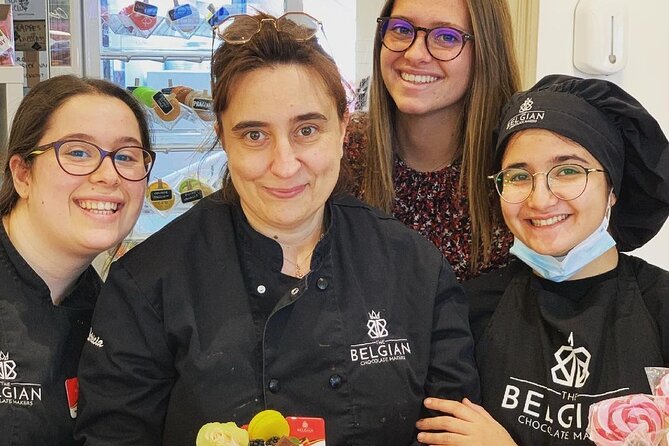
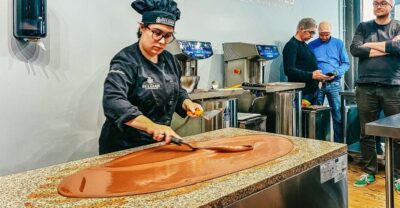
Tempering is the technical moment of the class. You watch the instructor work chocolate on a marble table, using the cool surface to control its temperature and texture.
You do not need to memorize every step to understand the point. Properly tempered chocolate should set with a smoother finish, a cleaner snap, and a more polished look. If the temperature is wrong, the chocolate may be dull, soft, or streaky.
This demonstration is useful because it shows the skill behind the neat chocolates sold in Belgian shops. It also puts the rest of your activity into context. You are not simply squeezing chocolate into shapes. You are learning why the finished pieces can look glossy and hold their form.
The class uses simple equipment and guided steps. That makes it approachable for beginners and children, but it also limits how much control you have. If you want advanced instruction on tempering curves, couverture percentages, or production-scale methods, this short session will not go that far.
More Chocolate-Making Workshops in Brussels
- Brussels: 2.5-Hour Belgian Chocolate Making Workshop
★ 4.8 · 933 reviews - Brussels: Waffle Making Workshop – All You Can Eat
★ 4.6 · 615 reviews - Brussels: Chocolate Truffle & Belgian Hot Chocolate Workshop
★ 4.7 · 367 reviews - Brussels: Belgian Waffle Making Workshop with Beer Tasting
★ 4.9 · 308 reviews
Making mendiants and a personal chocolate bar
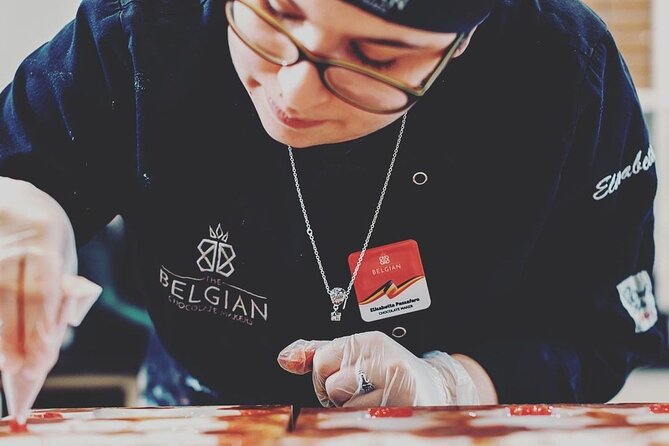
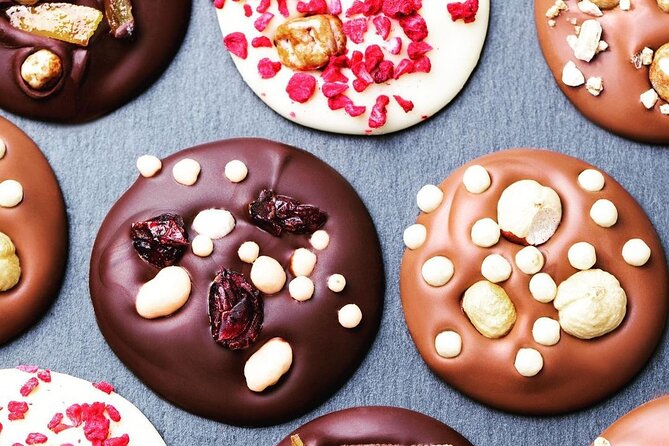
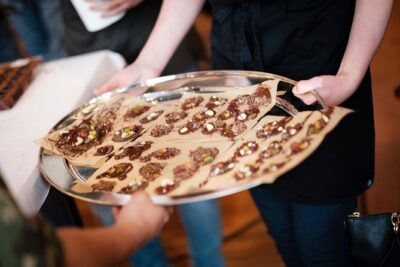
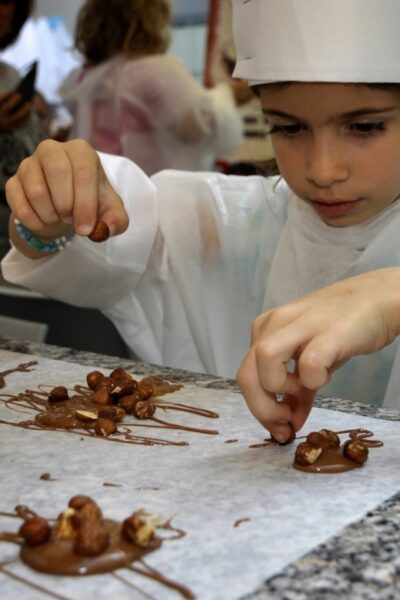
The first creations are mendiants, small chocolate rounds finished with toppings. The method is straightforward: pipe or pour prepared chocolate into a mold or onto a surface, then add your chosen decorations.
This is one of the easiest parts for children because the result appears quickly. It also gives you room to make pieces that look different from everyone else’s. The class is less about exact pastry technique and more about learning how toppings, shape, and finish affect the final product.
You also make a personalized chocolate bar. The bar is prepared with guidance, then decorated with your selections. It becomes the most obvious souvenir because it looks like a conventional Belgian chocolate product, only with your own design.
Be prepared to get chocolate on your clothes. You wear a hairnet during the workshop, and a protective apron is included only if you select the VIP upgrade. For the standard booking, wear something you do not mind spotting with a little chocolate.
Shaping truffles by hand
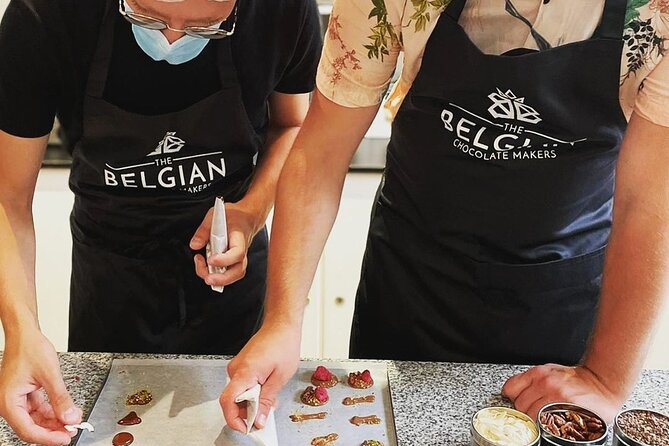
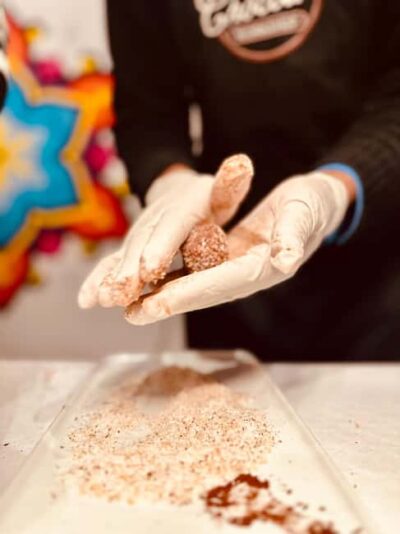
The truffle portion gives you the most direct contact with the chocolate. Prepared truffles are dipped, coated, or rolled, with finishes such as coconut or cocoa powder.
You may also work with chocolate in a paper funnel, squeezing it into a mold or shaping it freehand. This is where the workshop feels most playful. Your pieces do not need to look identical, and small imperfections are part of the fun.
Still, be clear about the level of participation. You are not making the ganache from the first ingredients, nor are you preparing chocolate from raw cacao. The instructor handles much of the technical setup, while you shape and decorate the final products.
For many people, this is exactly the right balance. You get to work with the chocolate without needing specialist equipment or a long safety briefing. For others, especially anyone expecting a professional class, the prepared ingredients may feel limiting.
Learning about ruby chocolate
Ruby chocolate is included in the workshop’s advertised themes, and the idea is appealing. Its pink color comes from the cacao and the way the chocolate is processed, rather than from simply adding ordinary food coloring.
The precise treatment of ruby chocolate can vary by session. It is worth asking at the start how it will be covered and if there will be a sample. Some participants have found that the ruby chocolate portion was not demonstrated or tasted, so do not book this class solely for a detailed ruby chocolate lesson.
The stronger and more consistent focus is the wider cacao journey, dark, milk, and white chocolate comparisons, and the hands-on decoration. Those parts are better supported by the workshop format.
The group size and instructor make a difference
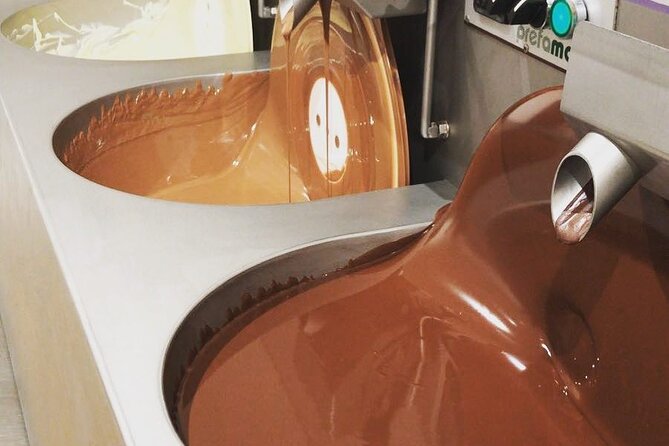
The centre can welcome up to 60 people, which is a sizeable class. That maximum matters if you prefer personal coaching or need help at each stage.
Actual group size can vary. Some sessions have been as small as six or ten people, creating a more relaxed, personal class. A smaller group gives you more time to ask questions and makes it easier for the instructor to watch your technique.
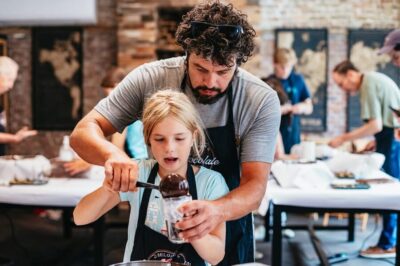
Patricia is a particularly strong guide for this experience. She has been praised for clear explanations, a warm manner, and a good way with children. She also makes the class comfortable for people speaking English, and has helped create an easy atmosphere for French practice.
Elisabetta has also been singled out for detailed instruction. The guides bring humor and energy to a class that could otherwise become a lecture followed by a messy table.
The English presentation is the stated option. The guide’s English may be conversational rather than polished, but the activity is visual and practical, so you can follow the main steps without needing advanced language skills.
Taking home the box of chocolate
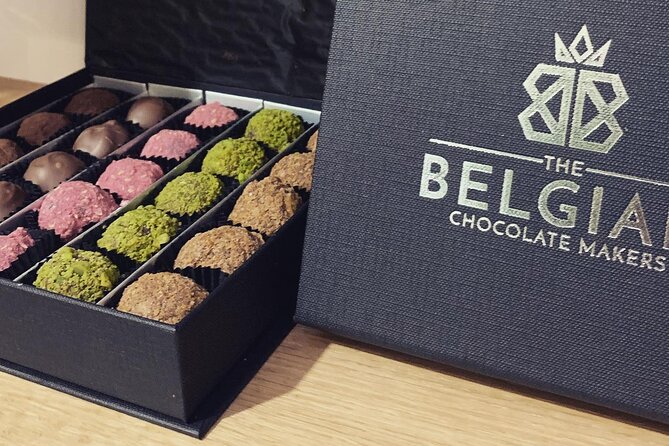
At the end, you pack your mendiants, truffles, and chocolate bar in a gift box. The take-home amount is generous enough to feel like a real part of the experience, not just a token sample.
This is also where the class works well as a family activity or a shared outing. You make separate pieces, compare results, and leave with something edible rather than another disposable souvenir.
The chocolate is dark-focused in some sessions. Milk chocolate is also part of the offering, but availability can vary if equipment is not working. If you are booking with children who prefer sweeter chocolate, ask what will be available that day.
You receive a 20 percent discount on the company’s full chocolate collection in the shop after the workshop. That can improve the value if you already planned to buy Belgian chocolate, though it is only useful if you want additional sweets.
Is $76.19 a fair price?
At $76.19 per person, this is not a bargain tasting. You are paying for instruction, ingredients, staff time, a dedicated training centre, and a box of chocolate to take home.
I think the price is reasonable if you value three things: tasting unusual cacao products, learning the basics of Belgian chocolate, and making several finished treats. The amount you take home helps, especially when compared with a simple shop visit where you only buy a bar.
The price feels high if your main goal is to eat premium chocolate or if you want to produce chocolate from bean to bar yourself. You can buy excellent Belgian chocolate for less, and the class does not include full bean processing.
The VIP upgrade adds champagne and an embroidered apron with the company logo. I would choose it for a birthday, a couple’s outing, or a special occasion. The apron is more useful than the champagne if you plan to cook at home, while the drink adds a festive touch.
Who should book this experience?
I would recommend the workshop to:
- First-time visitors who want a Brussels activity beyond chocolate shopping
- Couples looking for a shared, edible souvenir
- Families with children who can follow a 90-minute group class
- Chocolate fans curious about cacao’s journey from fruit to finished product
- Visitors who enjoy short demonstrations followed by practical work
- People who want an indoor activity in an air-conditioned space
I would be more cautious if you have a severe food allergy. The activity is not suitable for severe food allergies. If you have a less serious dietary concern, tell the staff before starting. One instructor has helped label containers for people with food allergies, but that should not be treated as a guarantee of a completely allergen-free setting.
The room can feel cool because it is air-conditioned, so bring a light layer. A hairnet must be worn, and the standard ticket does not include an apron.
Booking and cancellation details
The experience is offered in English and comes with a mobile ticket. It is often booked well ahead, around 36 days in advance on average, so reserve early if you need the 11 AM, 2 PM, or 5 PM slot on a particular date.
Free cancellation is available until 24 hours before the local start time. Cancellations or changes made inside that window are not refunded or accepted. If the minimum number of participants is not reached, the operator offers another date or experience, or a full refund.
Should you book the Belgian Chocolate Workshop?
Book it if you want a friendly, well-organized introduction to Belgian chocolate with plenty to taste and a box of your own creations at the end. Patricia and Elisabetta are strong guides, and the cacao tasting gives the activity more substance than a basic decorating class.
Skip it if you expect to roast cacao, grind beans, make ganache from scratch, or complete every stage of chocolate production yourself. At $76.19, the class earns its price through the explanation, tasting, instruction, and take-home sweets, not through advanced chocolate manufacturing.
For most visitors, I would choose the standard workshop first. Pick VIP for a celebration or if the branded apron matters to you. Arrive early, wear washable clothes, ask about the ruby chocolate segment, and keep your expectations focused on guided making rather than full bean-to-bar production.
FAQ
How long does the chocolate workshop last?
The experience is scheduled for approximately 1 hour and 30 minutes. Some sessions may finish sooner, particularly when the group is small.
Where does the workshop begin?
You check in at The Belgian Chocolate Makers booking desk at Place de la Justice 5, 1000 Brussels. The class may take place at a different nearby location, and staff lead the group there after check-in.
What chocolates will I make?
You make mendiants, truffles, and a personalized chocolate bar. You pack your finished creations in a gift box to take home.
Is champagne included?
Champagne is included only with the VIP upgrade. The VIP option also includes an embroidered apron with the company logo.
Is the workshop suitable for people with severe food allergies?
No. The activity is not suitable for severe food allergies. You should share any relevant food concerns with the operator before attending.
Is the workshop wheelchair accessible?
The site has a disabled-access toilet, but the route from the booking desk to the workshop may include stairs. Contact the operator before booking if you need specific accessibility assistance.
More Drinking Tours in Brussels
- Brussels: Pub Crawl and Nightlife Party Experience
★ 4.5 · 1,501 reviews - Belgian Beer Tasting in Brussels
★ 5.0 · 1,280 reviews - Brussels 2.5-Hour Belgian Beer Tasting Experience
★ 4.7 · 932 reviews - Marc’s Brussels Beer Tasting Tour
★ 4.5 · 645 reviews
More Workshops in Brussels
- Brussels: 2.5-Hour Chocolate Museum Visit with Workshop
★ 4.6 · 1,263 reviews - Brussels Chocolate Walking Tour and Workshop
★ 4.5 · 885 reviews - 2.5h Belgian Chocolate Pralines Workshop in Brussels
★ 5.0 · 406 reviews - Brussels: Chocolate Workshop and Guided Walking Tour
★ 4.7 · 225 reviews
Just added around Brussels
- Discover the secrets of Brussels while playing★ 5.0 · 3 reviews
- Standard vehicle from Charleroi airport to city of Brussels★ 4.5 · 3 reviews
- Full day Brugge & Ghent: the gems of Flanders★ 5.0 · 3 reviews
- Private tour : Best of Brussels half day From Brussels★ 5.0 · 3 reviews
- Private Tour – Bruges and Ghent, our fairytale cities★ 5.0 · 3 reviews
- Floating in the clouds★ 5.0 · 3 reviews
- Full-Day City Tour of Ghent and Bruges from Brussels★ 4.5 · 3 reviews
- Brussels Private Walking Tour With A Professional Guide★ 4.5 · 3 reviews
Chocolate-Making Workshops, compared.
Belgian Chocolate Making Workshop with Tastings
Read our review →
Belgian Waffle-Making Workshop with Beer Tasting
Read our review →
Belgian Praline and Mendiants Chocolate Workshop
Read our review →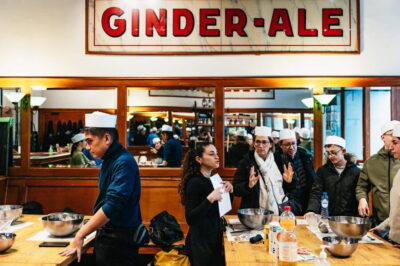
Chocolate Making Workshop and Chocolate Museum Entry
Read our review →