Reviewed · CHOCOLATE-MAKING WORKSHOPS
Brussels: Belgian Chocolate Making Workshop with Tastings
Chocolate gets better when you see its beginnings. This 90-minute workshop goes well beyond dipping sweets in melted chocolate: you handle a fresh cacao pod, taste raw beans and cacao juice, and follow the bean-to-bar process with a working Belgian chocolatier. I especially like the ethical, traceable cacao and the fact that everything you make goes home with you. The main drawback is the price, $82 per person, which is not cheap for a short activity.
I also like the mix of tasting and hands-on work. You make a topped chocolate bar, mendiants, and truffles, rather than simply watching a demonstration. Patricia, one of the instructors, receives especially warm praise for her humor and clear teaching. Plan carefully, though: check-in closes when the workshop begins, and the air-conditioned room can feel chilly.
In This Review
- Key points at a glance
- Why this Brussels chocolate class is more than a tasting
- Meeting at Place de la Justice 5
- Inside the 150-square-meter training center
- The first tasting: cacao before it becomes chocolate
- Making your own bar, mendiants, and truffles
- Patricia and the teaching style
- What you take home
- Is $82 a fair price?
- Who should book this activity?
- Timing, bookings, and useful preparation
- Should you book the Brussels chocolate workshop?
- FAQ
- Where does the Brussels chocolate workshop begin?
- How early should I arrive?
- How long does the workshop last?
- What chocolate will I make?
- Is the chocolate workshop suitable for vegans?
- Is the workshop wheelchair accessible?
- What is included with the booking?
Key points at a glance
- Taste cacao at several stages: Try fresh beans, mucilage from the cacao pod, cacao liquor, and finished chocolate.
- Make three kinds of treats: Each participant creates a chocolate bar, decorated mendiants, and truffles to take home.
- Use Haitian cacao: The workshop chocolate comes from Grand Anse in Haiti and is described as organic, traceable, and sourced from small farmers.
- Learn from a working chocolatier: Guides explain the journey from plantation and bean to finished bar and shop display.
- Allow extra time at the start: Meet at Place de la Justice 5, then walk about 200 meters to the training center after ticket checks.
Why this Brussels chocolate class is more than a tasting
Brussels has no shortage of chocolate shops. You can buy pralines on nearly every sightseeing route. This workshop gives you something different: a look at what happens before the glossy box reaches the counter.
The focus is bean to bar production. That means the chocolatier explains how cacao beans are handled, processed, roasted, ground, and turned into chocolate. You also get to see the company’s machinery after the practical session. This gives the activity a useful backbone. You are not only decorating sweets. You are learning why chocolate tastes the way it does.
The company identifies itself as a true Belgian artisan maker, certified by the Federal Belgian government. It says it does not use industrial chocolate in the workshops, and that the cacao supply is fully traceable. The stated sourcing policy also rules out deforestation and child labor while aiming to provide farmers with a fair income.
Those claims matter because chocolate production can be difficult to understand from a shop window. Here, you can ask about the origin and handling of the cacao while tasting it in several forms. For me, that makes the workshop more worthwhile than a standard confectionery demonstration.
More Chocolate Tours in Brussels
- Choco-Story Brussels: Chocolate Museum Entrance with Tasting
★ 4.3 · 4,883 reviews - Hungry Mary’s Famous Beer and Chocolate Tour in Brussels
★ 5.0 · 2,258 reviews - Brussels: 2.5-Hour Chocolate Museum Visit with Workshop
★ 4.6 · 1,263 reviews
Meeting at Place de la Justice 5
Your first stop is not the training room. Go to The Belgian Chocolate Makers ticket office at Place de la Justice 5, near Brussels Central Station and Mont des Arts.
Arrive at least 15 minutes before your chosen session. Staff check your ticket, issue a wristband, and give you a hairnet. They then lead you to the training center, which is about 200 meters away. One practical warning: the activity will not accept late arrivals once the workshop has started.
The short transfer is easy enough, but it can be confusing if you expect to make chocolate at the ticket office. A clear explanation from staff helps, so pay attention after check-in and stay with the person leading the group. One review describes the walk as roughly five minutes, while the official distance is 200 meters. Either way, this is a nearby second location, not a long transfer.
Tie back long hair before arriving. Pets, smoking, food, drinks, luggage, and large bags are not allowed inside. Water dispensers are available at the training center.
Inside the 150-square-meter training center
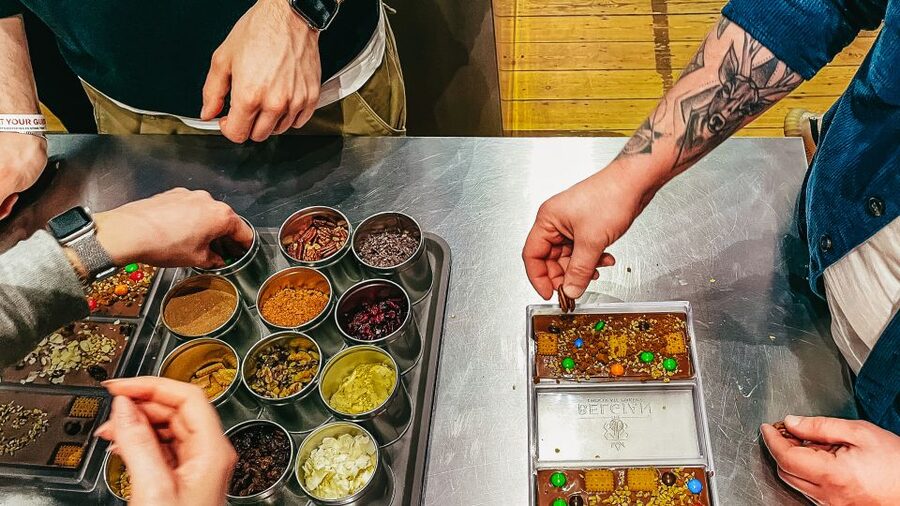
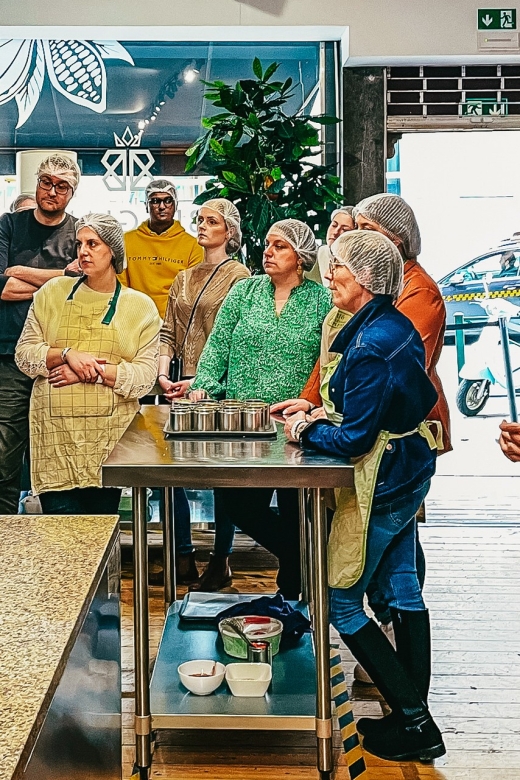
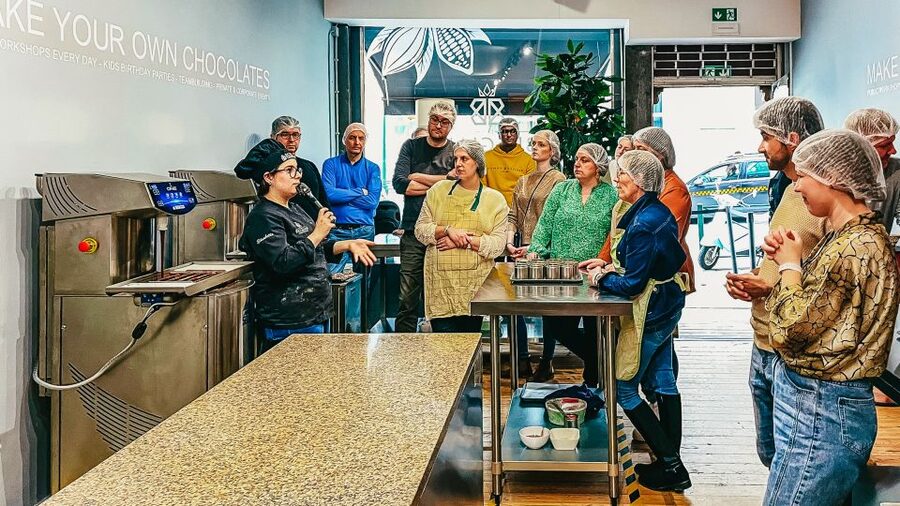
The workshop takes place in a new, fully equipped training center measuring 150 square meters. It can welcome up to 60 people at once, though the size of your particular session can vary. Some sessions have been small, with only a few people sharing the space, while the facility can also handle larger groups.
The setup includes four workstations according to one detailed account. If you are attending with a partner, you may share a station. That arrangement worked well for people who wanted to make chocolates together, but it may mean less individual bench space during a busy session.
The room is air-conditioned. That is useful for chocolate work, since temperature affects the finished product, but it can feel cold while you are sitting and listening. Bring a light layer, especially in winter or if you tend to feel chilly indoors.
You wear a hairnet during the activity. An apron is not included in the standard booking, so wear clothes you do not mind getting a little messy. A logo apron is part of the VIP upgrade, not the regular package.
The first tasting: cacao before it becomes chocolate
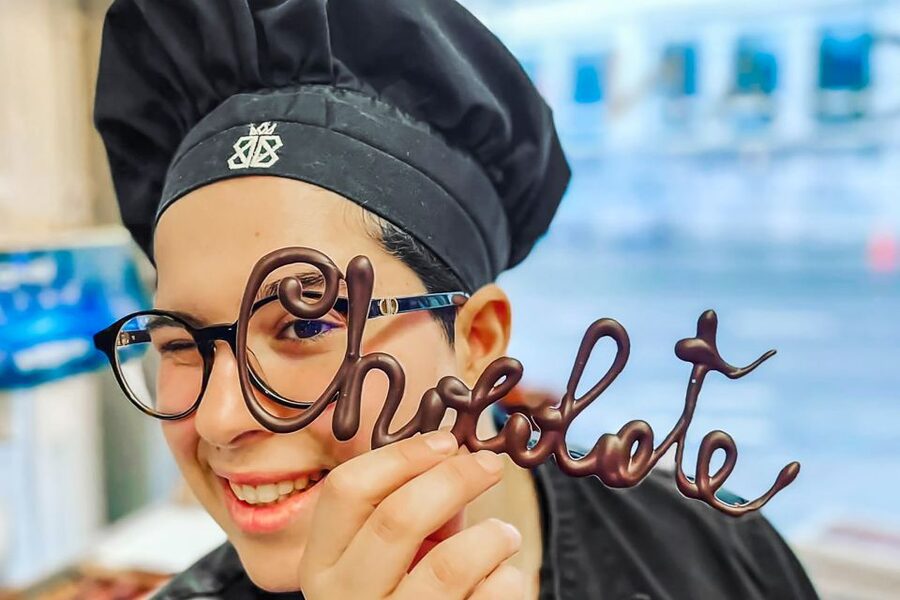
The tasting begins with cacao in forms you rarely encounter in a chocolate shop.
You can hold a fresh cacao pod and taste fresh cacao beans. The bean itself is notably bitter. That sharp taste is a useful lesson: the bean does not taste like the sweet chocolate bar it will eventually become.
You also taste the mucilage, the pale juice surrounding the beans inside the pod. This is one of the more unusual parts of the session. It gives you a sense of the fruit itself, rather than only the processed seed.
The class also includes cacao liquor. Despite the name, there is no alcohol. It is cacao mass made from ground beans, and it tastes intensely dark and direct. This helps explain how sugar, milk, roasting, and other steps change the raw material into the chocolate most people know.
Several premium cacao origins are included in the tasting. The workshop highlights cacao from Grand Anse in Haiti, with additional origin samples from different countries. Tasting side by side makes the lesson more useful than hearing a list of origins. You can notice how the flavors change before the ingredients become a finished confection.
Hot chocolate is included in winter, while chocolate granita is offered in summer. These seasonal drinks give the session a welcome pause, though the exact drink depends on the time of year.
More Chocolate-Making Workshops in Brussels
- Brussels: 2.5-Hour Belgian Chocolate Making Workshop
★ 4.8 · 933 reviews - Brussels: Waffle Making Workshop – All You Can Eat
★ 4.6 · 615 reviews - 1.5h Belgian Chocolate Workshop in Brussels (bean to bar)
★ 4.5 · 462 reviews - Brussels: Chocolate Truffle & Belgian Hot Chocolate Workshop
★ 4.7 · 367 reviews
Making your own bar, mendiants, and truffles
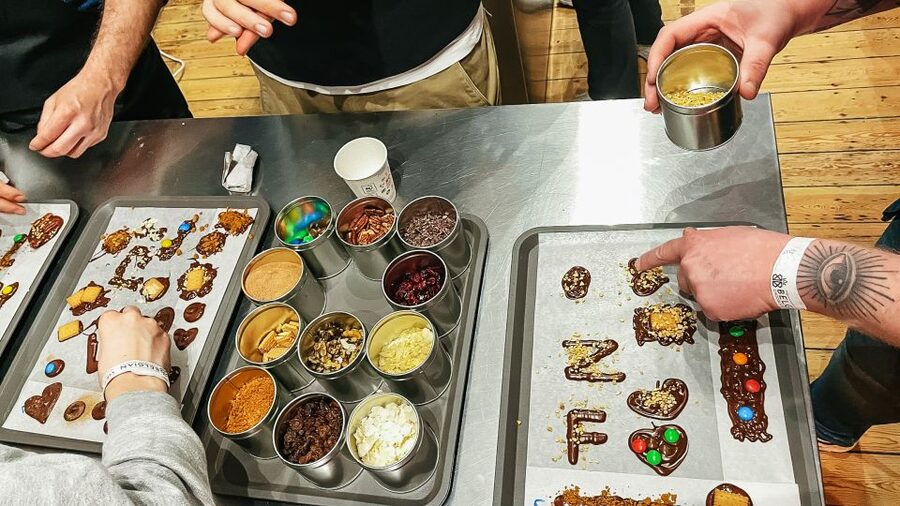
The practical part is the heart of the workshop. You do not simply watch the chocolatier make one perfect piece while you stand back.
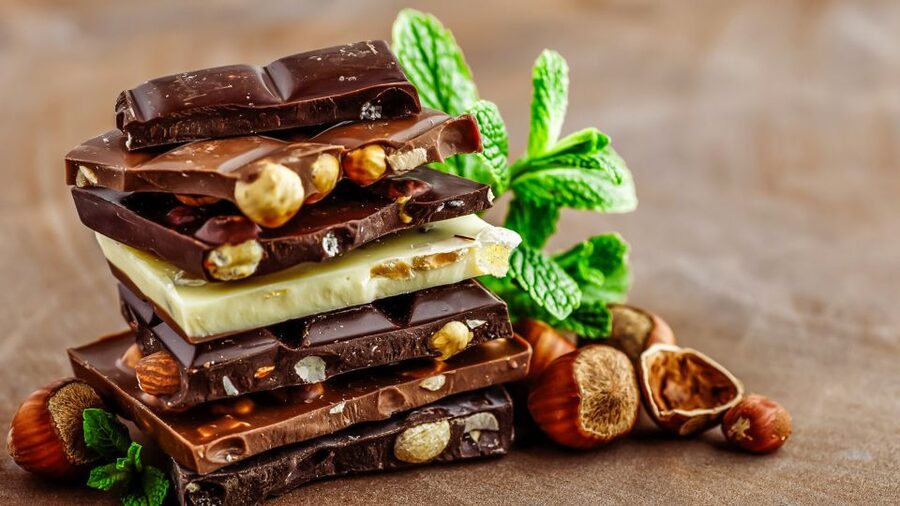
Each participant makes a chocolate bar with toppings. The available chocolate includes dark and milk options, and you can add decorations to create a personal design. Some people produce neat, polished pieces. Others make attractive, edible chaos. Both are part of the fun.
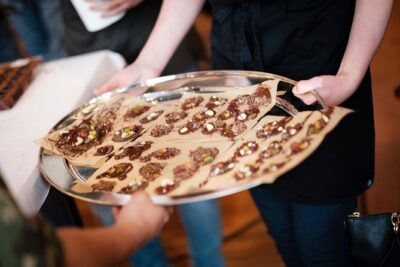
You also make mendiants, which are small chocolate rounds finished with toppings. The supplied comments refer to dark chocolate rounds and toppings, with nuts among the possible ingredients. This is a good chance to see how a few simple additions change the look and texture of chocolate.
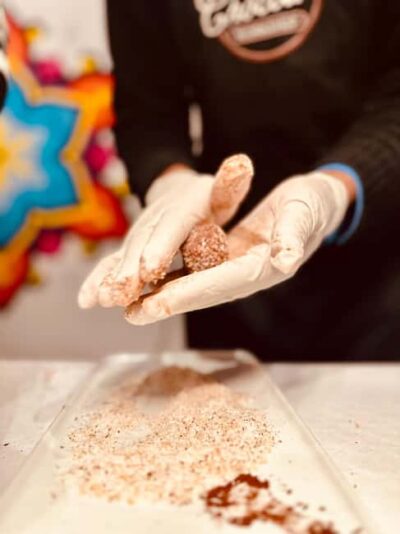
The final project is truffles. You shape them and finish them with options such as cocoa powder or coconut. One account describes making five truffles, though the exact quantity can depend on the workshop flow.
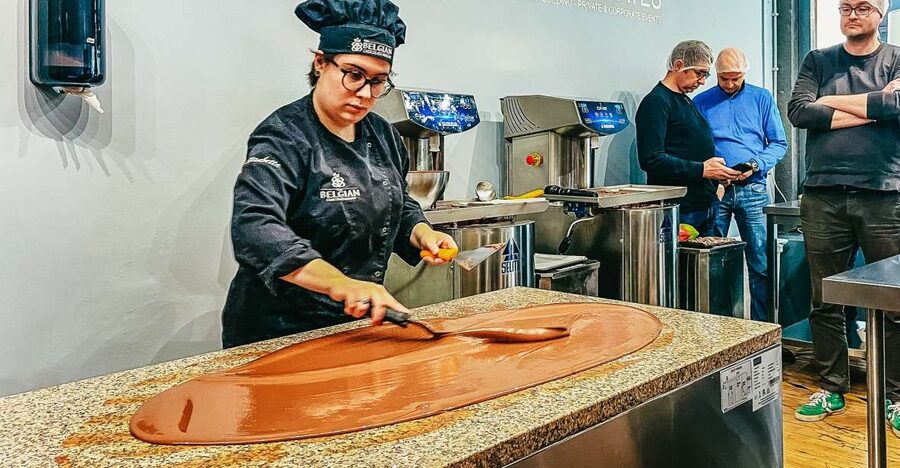
Your instructor demonstrates each stage before you work. That matters because chocolate can be fussy. Temperature, timing, and handling affect how it sets. The guides keep the class moving and give practical instructions, rather than expecting you to guess.
The activity is interactive without requiring professional pastry skills. You do not need to arrive with experience. You only need to follow directions, choose toppings, and accept that handmade chocolate may look less tidy than the shop version.
Patricia and the teaching style
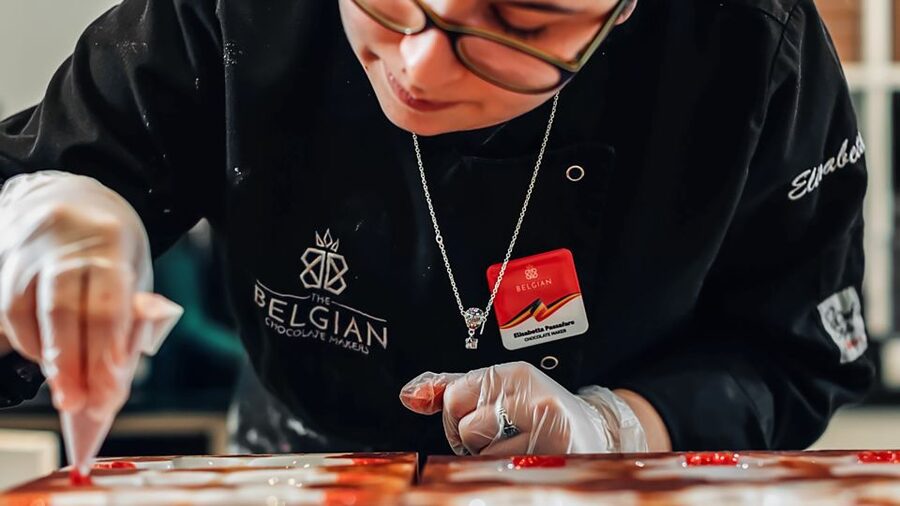
Patricia is the guide most often singled out for making the session lively. She combines chocolate instruction with a playful, sometimes strict teaching style. One description compares her to a headteacher, but in an entertaining way. She keeps people focused while still joking with the group.
That personality affects the pace. The workshop is not a quiet museum talk. You listen, taste, make, and respond to instructions in a shared room. Patricia has been praised for explaining the process clearly, answering questions, and making the history of cacao easy to follow.
Other staff members also help with the welcome and transfer to the training center. The company says its staff are handcraft chocolate makers certified by the Federal Belgian government.
The main teaching weakness is practical rather than personal. In a larger group, it may be hard to hear every word. One person found the room occasionally difficult for listening. If you have hearing concerns, try to position yourself near the instructor and ask staff for help at the start.
What you take home
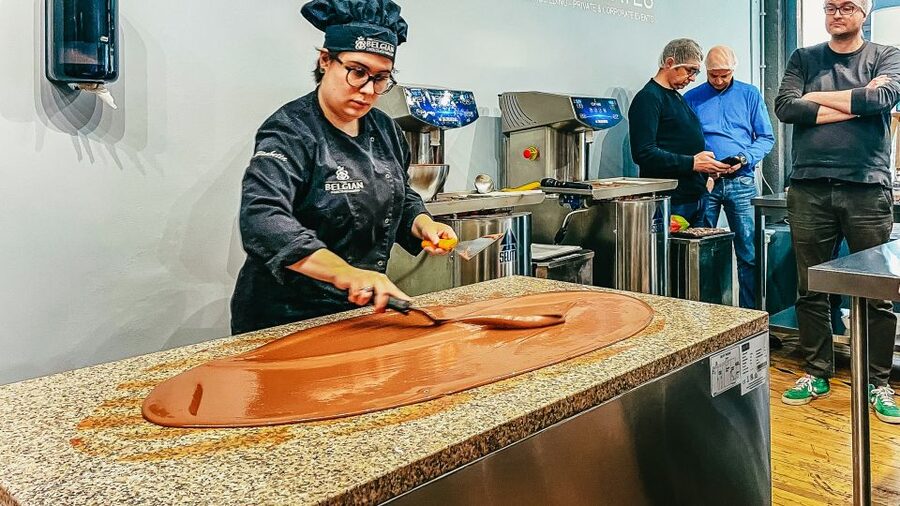
Everything you make during the workshop is yours. That usually includes your personalized bar, decorated mendiants, and truffles, packed in a box for the journey home.
This is important when judging the $82 price. You are paying for instruction, tastings, raw ingredients, drinks, access to the training facility, and a substantial edible souvenir. You also get a 20 percent discount on the chocolate collection in the company’s stores.
The finished pieces may not look like luxury pralines arranged by a professional. That is not a flaw. The value is partly in the work you put into them. Your box records what you learned, and it gives you something to share later.
Think about transport if you are visiting Brussels in warm weather. Chocolate can soften, and the workshop does not describe special shipping arrangements. Carry your box carefully and avoid leaving it in a hot place.
Is $82 a fair price?
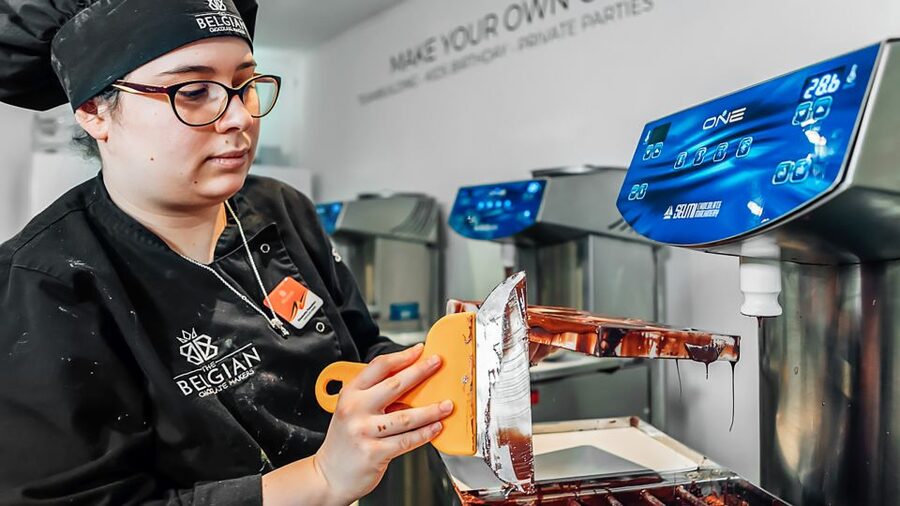
At $82 per person, this sits in the higher price range for a 90-minute food activity. If you only want a small chocolate sample, it is poor value. Brussels shops can provide a quicker and cheaper taste.
The calculation changes if you want a hands-on class. You receive several tastings, a drink, instruction from a professional chocolatier, a look at bean-to-bar machinery, and multiple chocolate creations to take home. The 20 percent shop discount may also help if you planned to buy Belgian chocolate afterward.
The ethical sourcing information adds value for people who care where cacao comes from. The chocolate used here is described as organic and fully traceable, with supply from small farmers and no industrial chocolate in the workshop. You are paying for a more specific production story, not only for sugar and cocoa.
Still, the activity is short. The 90 minutes pass quickly, especially once the hands-on work begins. I would book it for the educational side and the making, not because it is the cheapest way to eat chocolate.
Who should book this activity?
This is a strong choice for couples, families with children over six, solo visitors, and groups looking for an indoor break. Several families used it successfully, including one with a 10-year-old, and teenagers can take part without the activity feeling aimed only at small children.
It also works well in winter. Brussels sightseeing can be unpleasant in freezing weather, and the heated, indoor setting gives you a useful change of pace. Just bring a layer because the chocolate room itself is air-conditioned.
You do not need to be a serious chocolate fan. The process lesson gives non-specialists something to follow, and the practical work keeps the class from becoming a lecture. Still, people who dislike dark chocolate, raw cacao bitterness, or sweet foods may get less from it.
The standard language is English. The center is wheelchair accessible and has a disabled toilet, but one account notes stairs near the workshop, so contact the operator before booking if you need a fully step-free route.
Food restrictions need careful attention. Dark chocolate is available for vegans and people with lactose intolerance, but the official guidance says the activity is not suitable for people with food allergies, gluten intolerance, or lactose intolerance. Toppings contain nuts. Tell staff about allergies or intolerances at check-in, but do not assume the workshop can safely adapt the entire process.
Timing, bookings, and useful preparation
Sessions currently run at 11 AM, 2 PM, and 5 PM. The 2 PM slot is a sensible choice for a winter afternoon, when you may want an indoor activity after lunch and sightseeing. The 5 PM session can fit neatly after daytime visits near Mont des Arts.
Arrive at the ticket office 15 minutes early, not at the training center. Late entry is not accepted after the workshop begins, no matter the reason. That strict rule protects the schedule, but it means a delayed train or a slow lunch can cost you the booking.
Reserve ahead during busy periods. The activity has a strong 4.7 rating from 1,629 reviews, and the operator has added three daily sessions because demand is high. You can reserve now and pay later, and cancellation is free up to 24 hours before the start time.
Leave large bags at your accommodation. The workshop does not accept luggage or oversized items. Wear comfortable clothes, tie back long hair, and bring a sweater.
Should you book the Brussels chocolate workshop?
Book it if you want to make chocolate rather than only buy it. The fresh cacao pod, bitter bean, unusual mucilage, and cacao liquor give the class a real sense of the ingredient before it becomes a Belgian treat. Patricia’s warm, funny teaching style is another major reason the session works.
Skip it if $82 feels too high for a 90-minute activity, if you have serious food restrictions, or if you want a polished factory tour with no hands-on mess. For everyone else, especially families, couples, and winter visitors, this is a tasty and useful way to understand Brussels chocolate from bean to bar.
FAQ
Where does the Brussels chocolate workshop begin?
Check in at The Belgian Chocolate Makers ticket office at Place de la Justice 5, near Gare Centrale and Mont des Arts. Staff then lead you about 200 meters to the training center.
How early should I arrive?
Arrive at least 15 minutes before your session. Ticket checking closes when the activity starts, and late arrivals are not accepted.
How long does the workshop last?
The workshop lasts 90 minutes.
What chocolate will I make?
You make a personalized chocolate bar, mendiants, and truffles. Everything you make during the workshop is yours to take home in a box.
Is the chocolate workshop suitable for vegans?
Dark chocolate is available for vegans and people who cannot have lactose. The workshop also uses toppings containing nuts, and the official guidance says it is not suitable for people with food allergies, gluten intolerance, or lactose intolerance.
Is the workshop wheelchair accessible?
Yes, the activity is listed as wheelchair accessible, and a disabled toilet is available. One description mentions stairs near the workshop, so check the route with the operator if you need step-free access.
What is included with the booking?
The standard experience includes organic cacao from traceable small-farmer sources, tastings, cacao liquor, a seasonal hot chocolate or chocolate granita, your handmade chocolates, a box to take them home, and a visit to the bean-to-bar machinery after the workshop. A logo apron and Champagne require the VIP upgrade.
More Workshops in Brussels
- Brussels Chocolate Walking Tour and Workshop
★ 4.5 · 885 reviews - 2.5h Belgian Chocolate Pralines Workshop in Brussels
★ 5.0 · 406 reviews - Brussels: Belgian Waffle Making Workshop with Beer Tasting
★ 4.9 · 308 reviews - Brussels: Chocolate Workshop and Guided Walking Tour
★ 4.7 · 225 reviews
Just added around Brussels
- Discover the secrets of Brussels while playing★ 5.0 · 3 reviews
- Full day Brugge & Ghent: the gems of Flanders★ 5.0 · 3 reviews
- Private tour : Best of Brussels half day From Brussels★ 5.0 · 3 reviews
- Standard vehicle from Charleroi airport to city of Brussels★ 4.5 · 3 reviews
- Private Tour – Bruges and Ghent, our fairytale cities★ 5.0 · 3 reviews
- Floating in the clouds★ 5.0 · 3 reviews
- Full-Day City Tour of Ghent and Bruges from Brussels★ 4.5 · 3 reviews
- Brussels Private Walking Tour With A Professional Guide★ 4.5 · 3 reviews
Chocolate-Making Workshops, compared.

Belgian Waffle-Making Workshop with Beer Tasting
Read our review →
Belgian Praline and Mendiants Chocolate Workshop
Read our review →
1.5h Belgian Chocolate Workshop in Brussels (bean to bar)
Read our review →
Chocolate Making Workshop and Chocolate Museum Entry
Read our review →