
Reviewed · ATOMIUM & MINI-EUROPE TOURS
Antwerp and Ghent Day Trip from Brussels With Atomium Photo Stop
Two cities, one long day. This Brussels day trip makes Antwerp and Ghent easy to reach without planning train connections, finding bus stations, or working out which sights matter most. For $56.72, you get round-trip coach transport, an English-speaking guide, guided walks in both cities, and a short Atomium photo stop.
I like the strong mix of guided sightseeing and free time. You get useful context in Antwerp and Ghent, then time to look around on your own, find a snack, or follow a personal interest. I also like the guides’ energy and preparation. Antonio, Diego, Juliana, Jorge, Pablo, Paolo, and others have been praised for making architecture, politics, art, and local stories easier to understand.
The trade-off is simple: two cities in about 10 hours means a quick introduction, not a full visit. You will walk a lot, spend much of the day on the coach, and have roughly 90 minutes of free time in each city, with exact timing affected by traffic and the pace of the group.
In This Review
- Key Points to Know Before You Go
- The Brussels Start and the Atomium Photo Stop
- Antwerp Begins at the River
- Grote Markt, Guild Houses, and Rubens
- Antwerp Cathedral and Meir Avenue
- Using Antwerp’s Free Time Well
- Ghent’s Medieval Center
- Bridges, Guild Halls, and the Riverfront
- Ghent Free Time and the Limits of a Day Trip
- What the Guides Add
- Walking, Weather, and Group Size
- Is $56.72 Good Value?
- Who Should Book This Day Trip?
- Should You Book It?
- FAQ
- Where does the tour start?
- What time does the tour leave?
- How long does the experience last?
- Is the Atomium entrance included?
- Is transportation included?
- Is the tour offered in English?
- Are food and drinks included?
- How much free time do I get in Antwerp and Ghent?
- Can I cancel for a refund?
Key Points to Know Before You Go
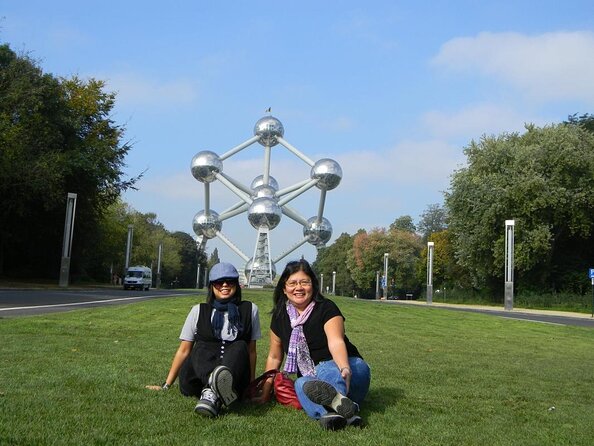
- The Atomium is a 15-minute photo stop: You see Brussels’ famous metal structure from outside, but admission inside is not included.
- Antwerp is explored on foot: The route links the river, Steen Castle, Grote Markt, Rubens sites, the cathedral, Groenplaats, and Meir.
- Ghent gets the stronger visual payoff: Its medieval center includes St. Bavo’s Cathedral, the Belfry, St. Michael’s Bridge, and the Graslei and Korenlei riverfront.
- The price covers the main practical pieces: Coach transport, an English-speaking guide, and guided walking tours in both cities are included.
- You need comfortable shoes: The tour includes long walks, cobbled areas, standing while listening, and limited personal time.
- The group can reach 45 people: Guide communication may be harder when the group spreads out, especially without an audio system.
The Brussels Start and the Atomium Photo Stop
The meeting point is at Carrefour de l’Europe in central Brussels, with departure at 8:30 am. This is a useful starting point if you are staying near the central train station or within easy reach of Brussels public transport.
The first stop is the Atomium, reached on the way to Antwerp. You have about 15 minutes for photographs. That is enough for a quick look and a few pictures, but not enough to visit the interior, climb through the spheres, or see the exhibitions.
I think this is a sensible add-on rather than a major part of the day. The Atomium is one of Belgium’s best-known modern symbols, and the stop gives you a quick landmark photograph without requiring another Brussels visit. If seeing the inside matters to you, plan a separate visit.
After the Atomium, you continue by air-conditioned coach toward Antwerp. The coach removes the need to organize separate train journeys, but the day still depends on road traffic. Keep this in mind if you have fixed dinner plans back in Brussels.
More Atomium and Mini-Europe visits:
- Brussels: Atomium Entry Ticket with Design Museum Ticket
★ 4.4 · 9,254 reviews - Brussels: Entry Ticket to Mini-Europe
★ 4.5 · 2,870 reviews - From Brussels: Day Trip to Ghent with Atomium
★ 4.7 · 163 reviews
Antwerp Begins at the River
The coach drops you near Plantinkaai, after which the group walks toward the center. At Steenplein, the guide pauses for a short introduction beside the river and points out the afternoon meeting place. This early orientation matters because free time later is easier when you already know where to return.
The walk then reaches Het Steen, Antwerp’s castle on the river. The guide explains the building’s past and uses its roof shape to discuss a wider architectural feature found in Belgium and the Netherlands. It is a brief stop, but it gives you a useful starting point for understanding the city rather than treating the castle as a quick photo backdrop.
At Vleeshuisstraat, the focus shifts to the old meat house and the way commerce shaped the city. This is one of the better kinds of tour commentary: a building becomes a clue to how the city functioned. You learn about trade and organization while looking at the actual setting.
Grote Markt, Guild Houses, and Rubens
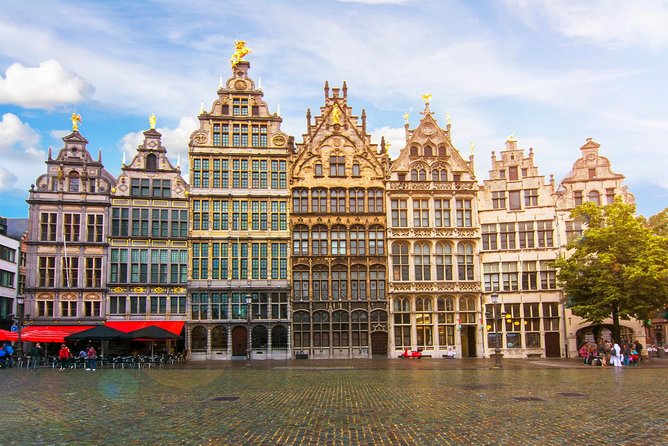
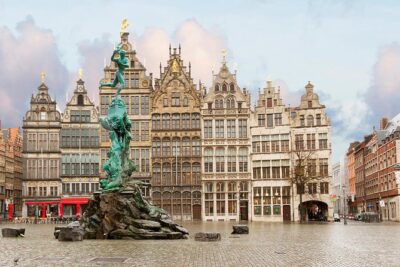
Antwerp’s Grote Markt is the visual center of the first walking tour. You see the town hall, ornate guild houses, and the Brabo statue. The guide also explains the legend linked to the sculpture, which gives the square a local story beyond its decorative façades.
The next major stop is St. Charles Borromeo Church, formerly connected with Saint Ignatius of Loyola. You enter the church and see a Rubens painting in its setting. The short visit is valuable because it connects Antwerp’s artistic identity with the religious buildings that commissioned and displayed major works.
As the route continues toward the cathedral, the guide discusses how Belgian politics works. That may sound like an unusual stop on a city walk, but it gives you a little present-day context between older buildings and art. The tour is not only about medieval stones.
Antwerp Cathedral and Meir Avenue
The Cathedral of Our Lady brings together several architectural styles and contains works by Peter Paul Rubens. The guide explains what you are looking at, rather than leaving you to identify the paintings and construction details alone.
You also hear the emotional story connected with the sculpture in front of the cathedral. The exact amount of time inside can vary, so do not plan to study every artwork at length. This is a guided introduction, not a museum visit.
At Groenplaats, the guide explains how an old cathedral cemetery became a green public square. You have a good angle for photographs of the cathedral and the Rubens sculpture before walking onward to Meir.
Meir is Antwerp’s main shopping avenue, but the architecture is part of the reason to walk it. The guide points out notable buildings and the giant hand sculpture, then explains why Antwerp and Belgium are linked with the hand symbol.
The Antwerp route covers a lot in a short time. You see the city’s riverfront, old trade center, churches, art, shopping avenue, and public squares. The drawback is that you rarely stop for long. If you want to enter more churches, visit museums, or shop seriously, the free period will feel short.
A few more trips and experiences worth a look
- From Brussels: Guided Day Trip to Bruges and Ghent
★ 4.6 · 8,353 reviews - Luxembourg and Dinant Day Trip from Brussels
★ 4.0 · 1,474 reviews - From Brussels: Bruges Day Trip with Boat Tour Option (ENG)
★ 4.6 · 1,352 reviews - From Brussels: Bruges Day Trip with Boat Tour Option (ES)
★ 4.7 · 1,171 reviews
Using Antwerp’s Free Time Well
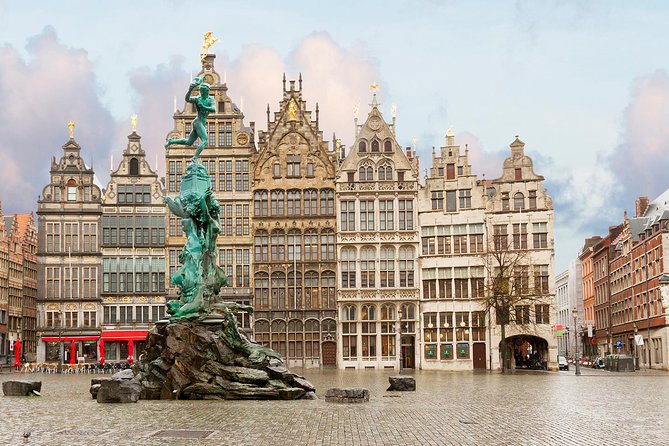
You get about an hour to an hour and a half in Antwerp, depending on traffic and group timing. The supplied schedule lists one hour in several places, while the practical description refers to roughly 90 minutes, so treat the free period as flexible.
This is enough for a quick meal, coffee, photographs, or one nearby personal stop. It is not enough for a relaxed museum visit plus lunch and shopping. Guides such as George, Diego, and Juliana have been praised for giving useful suggestions, but you should still decide before arrival what matters most.
I would use the free time for something close to the meeting point. Wandering far from the center creates unnecessary pressure when the coach departure time approaches. Your guide will remind you where and when to meet.
Ghent’s Medieval Center
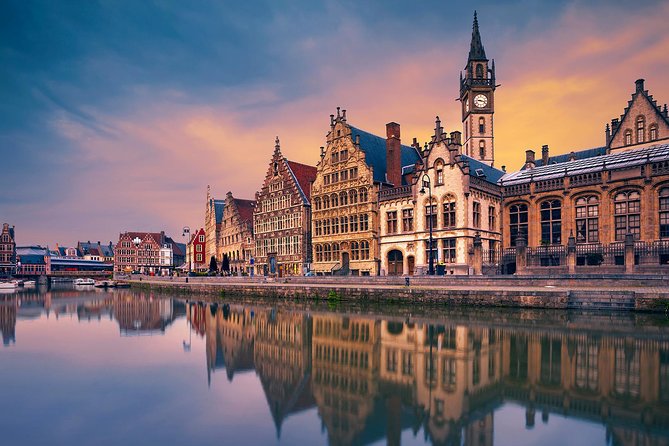
After Antwerp, the coach continues to Ghent. The group walks from the drop-off point toward the historic center, where the second guided walk begins.
Ghent often provides the most memorable part of this day because several major sights sit close together. You begin at Ghent Town Hall, where the guide points out its different architectural styles. This is a compact lesson in how buildings change over time, especially in a city that grew in stages rather than from one single plan.
Next comes the Belfry of Ghent. The guide explains the tower, its role, and the story of the dragon associated with it. You see the tower from ground level during this tour. Entry and a climb are not included, so plan a separate visit if you want the view from above.
St. Bavo’s Cathedral is the centerpiece of the Ghent walk. You see both the exterior and interior, including The Adoration of the Mystic Lamb by the Van Eyck brothers. The guide explains why the painting is so famous and discusses its unusual record of theft and recovery.
This stop can feel rushed for anyone interested in art. Still, seeing the work in its cathedral setting gives you much more context than a quick photograph would. If you want a long look, you will need to return to Ghent on another day.
Bridges, Guild Halls, and the Riverfront
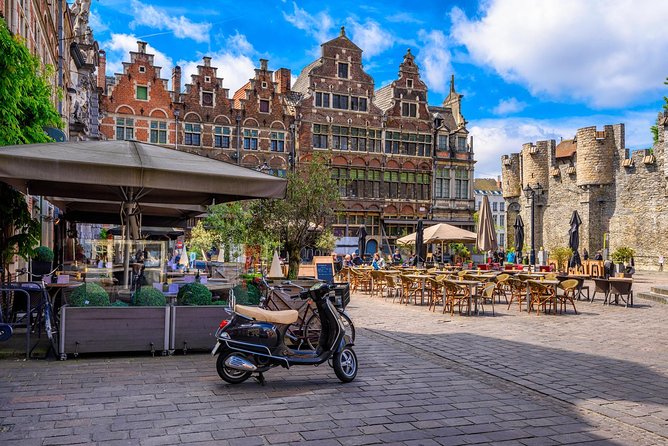
The route continues past St. Nicholas Church, where you learn that Belgian churches can also host concerts and other events. It is a very short stop, but it helps you see these buildings as part of current city life, not only as old monuments.
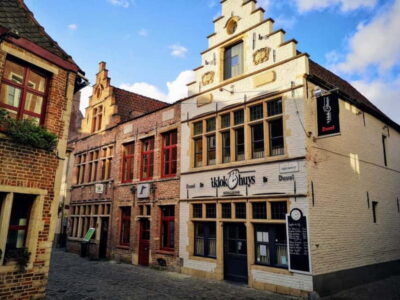
At the Masons’ Guild Hall, the guide explains what guild houses were and points out the unusual details of this particular façade. The nearby Korenmarkt adds another layer, with the former post office building providing a distinctive architectural landmark.
St. Michael’s Bridge is one of the best photo stops of the day. From here, you can frame several of Ghent’s towers and the riverfront in one view. The guide also explains the story connected with St. Michael’s Church.
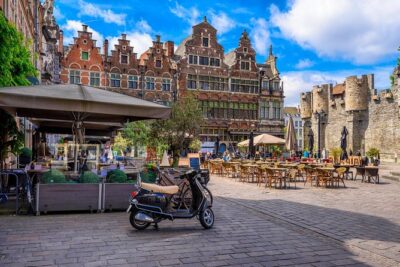
The walk then follows the Lys along Graslei and Korenlei. These riverbanks are lined with historic façades, including the Masons’ Guild House and the building now used as the Marriott Hotel. This is the stretch where Ghent’s setting becomes especially photogenic, so keep your camera ready rather than packed away.
At OOOST, the guide introduces the Great Butchers’ Hall, a covered market dating from the 15th century. Across from it, at Kleine Vismarkt, you stop at a traditional market stall and learn about cuberdons, Ghent’s famous cone-shaped candy.
The final guided stop is Sint-Veerleplein. The guide explains the square and its surrounding buildings, then offers suggestions for souvenir shops. You also receive a final reminder about the bus departure point and time.
Ghent Free Time and the Limits of a Day Trip
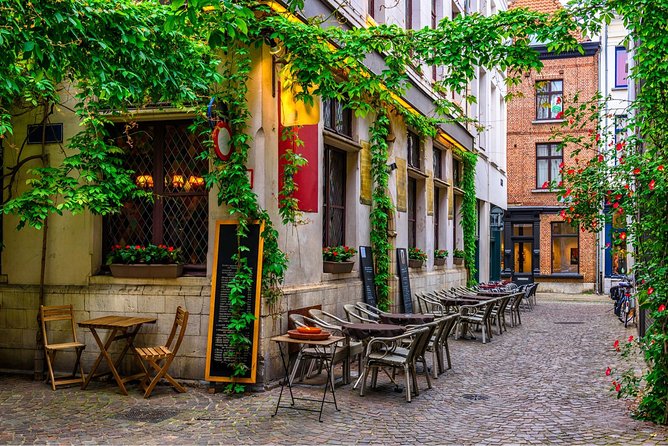
Ghent gives you about 90 minutes of personal time, though traffic and group pace can affect it. This is enough to explore the central streets, buy cuberdons, take more riverfront photographs, or sit down for a quick bite.
It is not enough to experience Ghent slowly. You will not have much room for a long restaurant meal, a museum, extra church interiors, and relaxed shopping all at once. Some businesses may also be closed depending on the day and time, particularly outside the busiest central areas.
I would choose one priority before you arrive. If food matters most, ask the guide for a nearby recommendation and keep your meal simple. If photographs matter most, head straight to the riverfront. If you want to see more of St. Bavo’s Cathedral, use the free period there rather than crossing the city.
What the Guides Add
The strongest part of this experience is the guiding. Antonio is praised for giving a clear historical overview, while Diego is often noted for his strong command of the subject and friendly manner. Juliana has been praised for her explanations of architecture and practical suggestions, and Jorge for his energy and wide range of information.
Pablo and Paolo have also been described as welcoming and good at managing the schedule. These individual guides matter because the tour includes many short stops. Without clear explanations, the day could become a parade of façades and names.
The coach may carry English and Spanish groups together, with separate guides for each language. That arrangement can work well, but communication has not always been perfect. A few people have found it hard to hear, especially in busy streets or when the group spreads out, and some wanted an audio system with earphones.
Stay near the guide, especially at the cathedral, riverfront, and busy squares. If you have trouble hearing, say so early rather than waiting until the group has moved on.
Walking, Weather, and Group Size
This is an active day. You walk between the drop-off points and city centers, stand during explanations, and cover a large number of streets. People with limited stamina may find the pace demanding, and the tour is harder for anyone who needs frequent sitting breaks.
The maximum group size is 45 people. That is manageable on a coach, but a large walking group can make it harder to hear and keep the guide in sight. Wear shoes you can use on cobbled streets and bring water.
The experience is listed as operating in all weather, with advice to dress appropriately. The cancellation terms also say that poor weather may lead to a different date or a full refund. In practical terms, bring rain protection and layers, but check the current arrangements if severe weather is forecast.
Food and drinks are not included. Your guide can suggest places to eat, but you pay for anything purchased during the free periods.
Is $56.72 Good Value?
At the stated price of $56.72 per person, I think this is good value if you want an efficient first look at both cities. You are paying for transport, a full day of coordination, and guided walks in two places that would otherwise require separate planning.
The value drops if you already feel comfortable using Belgian trains and researching city routes. Independent visits would give you more control over timing, especially in Ghent, where many people want longer with the cathedral, riverfront, or museums.
The tour also saves you from the risk of missing a connection between cities. That convenience is its main product. You trade independence for a simple plan and a guide who keeps the day moving.
Who Should Book This Day Trip?
I would recommend it if you are based in Brussels and have only one spare day for Antwerp and Ghent. It suits first-time visitors who want major sights, basic city context, and a reliable return to Brussels without arranging everything themselves.
It also works well for people who prefer a guide to explain architecture, art, politics, and local customs. The Atomium stop adds a quick Brussels landmark without taking much time.
I would hesitate if you dislike group travel, need a slow pace, want long museum visits, or have a fixed evening reservation. The return time depends on traffic, and one serious delay previously caused major disruption, including missed plans in Brussels. That appears to be an exception rather than the normal pattern, but it shows why you should leave room in your evening schedule.
Should You Book It?
Book this tour if your goal is to sample two major Belgian cities in one organized day. The guides, central sights, coach transport, and sensible route make it a practical choice at $56.72.
Skip it if you want deep time in either city. In that case, give Antwerp and Ghent separate days, or choose one for a slower independent visit. For most people with limited time in Brussels, this trip offers a useful and enjoyable first taste, provided you accept the walking and the tight schedule.
FAQ
Where does the tour start?
The tour starts at Carrefour de l’Europe, Carr de l’Europe, 1000 Bruxelles, Belgium.
What time does the tour leave?
The scheduled start time is 8:30 am.
How long does the experience last?
The day lasts approximately 10 hours and ends back at the Brussels meeting point.
Is the Atomium entrance included?
No. The Atomium stop lasts about 15 minutes and is intended for photographs. Admission is listed as free because no entry ticket is included.
Is transportation included?
Yes. Round-trip air-conditioned coach transportation from central Brussels is included.
Is the tour offered in English?
Yes. The experience is offered in English and includes a professional English-speaking guide.
Are food and drinks included?
No. Food and drinks are not included, though the guide can suggest places to eat.
How much free time do I get in Antwerp and Ghent?
You receive roughly 1 to 1.5 hours of free time in each city. The exact amount can change because of traffic and the group’s pace.
Can I cancel for a refund?
Yes. You can cancel at least 24 hours before the start time for a full refund. Changes or cancellations made less than 24 hours before the start time are not accepted for a refund.
Just added around Brussels
- Discover the secrets of Brussels while playing★ 5.0 · 3 reviews
- Full day Brugge & Ghent: the gems of Flanders★ 5.0 · 3 reviews
- Private tour : Best of Brussels half day From Brussels★ 5.0 · 3 reviews
- Standard vehicle from Charleroi airport to city of Brussels★ 4.5 · 3 reviews
- Private Tour – Bruges and Ghent, our fairytale cities★ 5.0 · 3 reviews
- Floating in the clouds★ 5.0 · 3 reviews
- Full-Day City Tour of Ghent and Bruges from Brussels★ 4.5 · 3 reviews
- Brussels Private Walking Tour With A Professional Guide★ 4.5 · 3 reviews
Atomium & Mini-Europe Tours, compared.
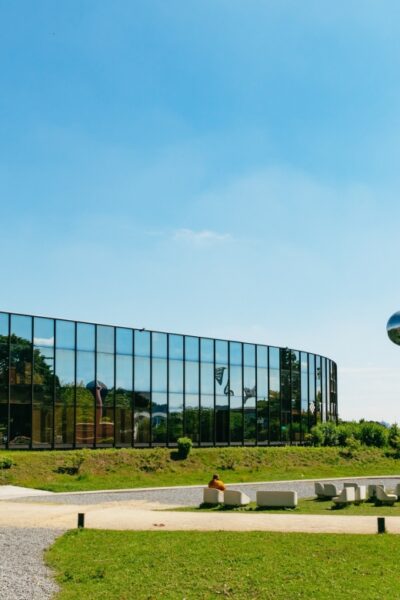
Atomium Entry Ticket with Design Museum Ticket
Read our review →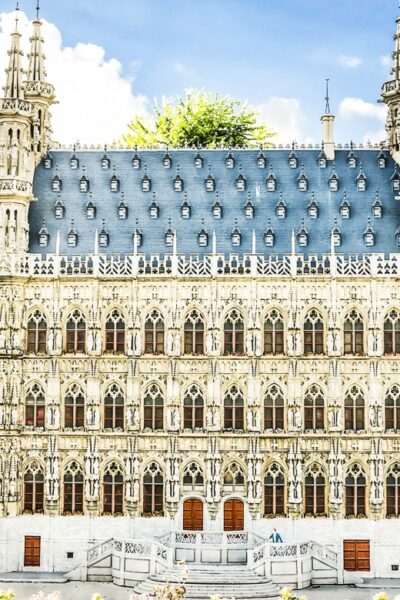
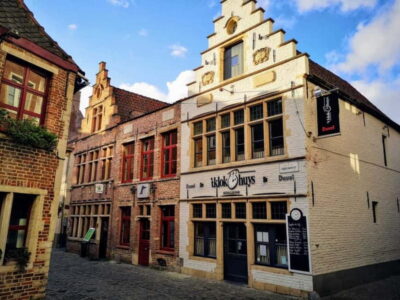
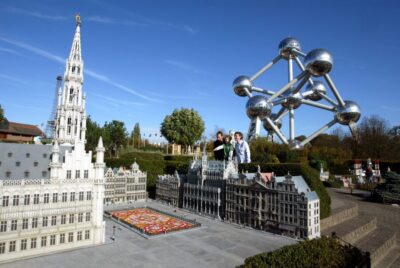
Excursion to Antwerp and Ghent by bus from Brussels with stop at the Atomium
Read our review →Browse the lists this tour appears in