
Reviewed · WALKING TOURS
Brussels: 2-hours “Art Nouveau” Walking Tour
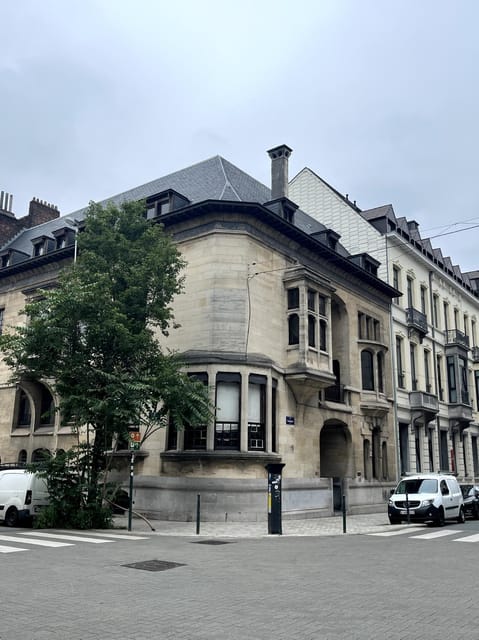
Brussels hides its best buildings in plain sight. I like the way this private tour links famous Horta designs with lesser-known houses, and I like that the guide explains Art Nouveau as a movement rather than simply pointing at pretty façades. The route introduces several styles, from flowing organic lines to more geometric work.
The main consideration is that the experience may not always remain a walking tour. One booking was conducted by car, while another guide, Yves, drove the group farther than expected. Confirm the format and meeting point before you set out, especially since the tour costs $136 per person.
In This Review
- Key points to know before booking
- Why Brussels is the right place to study Art Nouveau
- Meeting at Merode and beginning near Cinquantenaire
- Maison Cauchie and the first look at Brussels’ decorative side
- Palais Stoclet and the shift toward geometry
- Maison Saint Cyr and the art of making a narrow façade memorable
- Hôtel van Eetvelde and Horta’s architectural language
- Maison Van Dyck, Maison Roosenboom, and less familiar addresses
- Hôtel Ciamberlani and the final Saint-Gilles stretch
- Walking tour or car-assisted outing?
- How strong is the guide service?
- Is $136 per person a fair price?
- Who should book this Art Nouveau tour?
- Should you book it?
- FAQ
- Where does the tour begin?
- Where does the tour finish?
- How long does the experience last?
- What language is the tour offered in?
- Is this a private tour?
- Is transportation included?
- Can wheelchair users join?
- Can I cancel for a refund?
Key points to know before booking
- See a remarkable concentration of Art Nouveau: The route includes Hôtel Tassel, Hôtel van Eetvelde, Maison Horta, Maison Cauchie, Maison Saint Cyr, Maison Hannon, and more.
- Start at Merode: Meet in front of Brasserie Carpe Diem, across from the Merode Metro Station exit near Cinquantenaire.
- Expect a private English tour: Your group has a live guide rather than joining a large public walk.
- Look beyond Victor Horta: The tour also covers Palais Stoclet, Maison Roosenboom, Maison Hankar, Hôtel Ciamberlani, and other important addresses.
- Plan for some walking and uneven access: The experience is not suitable for wheelchair users, and transport tickets are not included if public transit is needed.
- Guide quality can shape the experience: Davit, David, Eric, and Yves have each led highly praised outings, but one booking raised concerns about the meeting instructions and architectural commentary.
Why Brussels is the right place to study Art Nouveau
Art Nouveau was born in Brussels at the end of the 19th century, when architects and artists were searching for a fresh visual language. Instead of copying classical columns and old European motifs, they used curves, plant forms, new materials, stained glass, ironwork, and decorative patterns drawn from nature.
This tour is useful because it places those ideas on actual city streets. You are not confined to a museum display. You see how the style shaped townhouses, private residences, façades, doorways, windows, and entire interiors.
Your guide begins with the movement’s origins and its defining traits. That introduction matters. Without it, many Art Nouveau buildings can look like a series of unrelated oddities. With a little context, the curling iron railings, asymmetrical façades, mosaics, and theatrical entrances begin to make sense.
You also get a quick look at the different trends within Art Nouveau. Brussels was not limited to one formula. Some architects favored plantlike curves and decorative detail. Others moved toward a more restrained, geometric style. That contrast is one of the strongest reasons to choose a specialist tour instead of simply walking around Saint-Gilles with a guidebook.
More Walking Tours in Brussels
- Brussels: Guided Walking Tour
★ 4.6 · 3,560 reviews - Brussels: Historical Walking Tour with Chocolate & Waffle Tasting
★ 5.0 · 1,165 reviews - Brussels Walking and Tasting Tour (Beers,Chocolates&Fries/Waffle)
★ 5.0 · 929 reviews
Meeting at Merode and beginning near Cinquantenaire
The meeting point is in front of Brasserie Carpe Diem, across from the Merode Metro Station. Merode has three station exits, so use the product-page photo carefully and allow extra time to get oriented.
The tour begins near the entrance to Parc du Cinquantenaire. The park provides a practical opening point because it places you near several important Art Nouveau addresses in the eastern part of Brussels. The first guided portion lasts about 15 minutes and focuses on the birth of the movement and its main features.
This short introduction is especially helpful if Art Nouveau is new to you. You will learn what to look for before the route begins: natural forms, curved lines, elaborate metalwork, unusual proportions, and the close relationship between architecture and decoration.
The meeting instructions deserve attention. One person lost time because the reservation and confirmation gave the wrong meeting location. Since Merode has multiple exits, check the current details before leaving your hotel and keep the guide’s contact information handy.
Maison Cauchie and the first look at Brussels’ decorative side
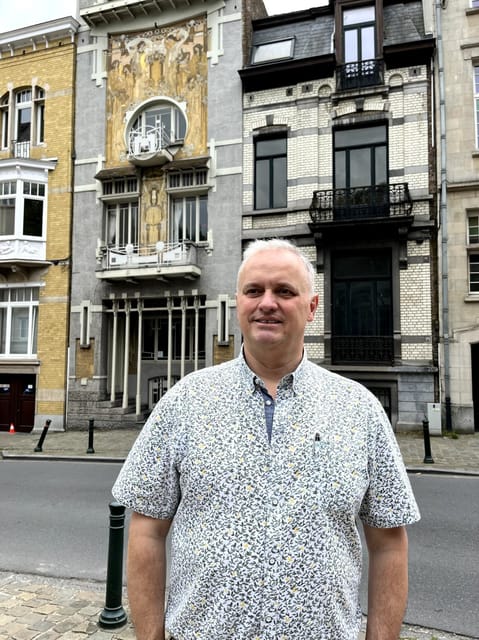
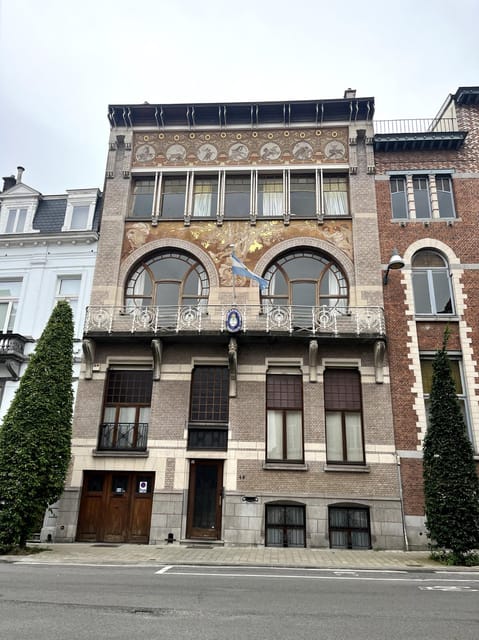
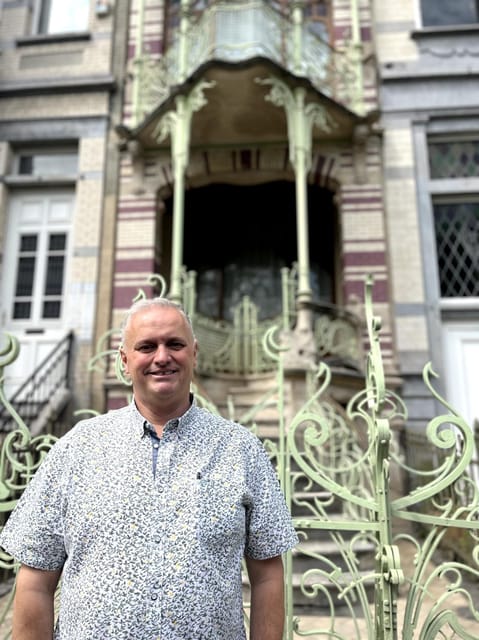
Maison Cauchie is one of the most memorable addresses on the route. Its façade shows how Art Nouveau could turn a private home into a large decorative panel. The building is associated with Paul Cauchie, an architect and decorative artist whose work combined architecture with painted ornament.
At Maison Cauchie, look closely at the composition rather than only the overall shape. Art Nouveau façades often reward a slow inspection. Painted panels, lettering, borders, and small decorative figures can be easy to miss when you are standing across the street.
The stop also helps explain why Art Nouveau was more than a style for wealthy homes. The movement brought together architecture, furniture, graphic design, glass, metalwork, and painting. Even when you only see the exterior, you get a sense of that larger artistic program.
Palais Stoclet and the shift toward geometry
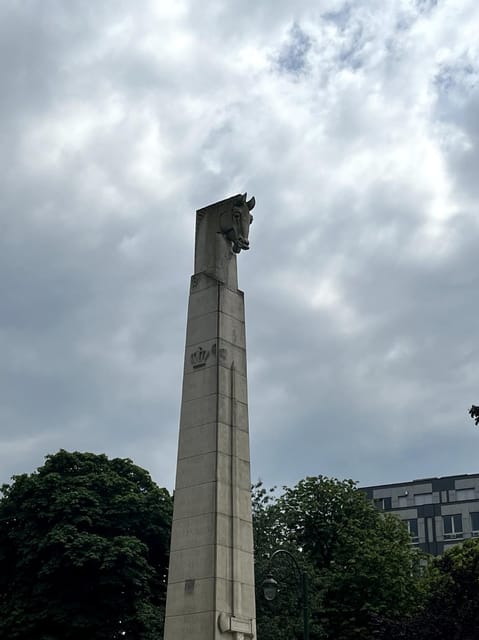
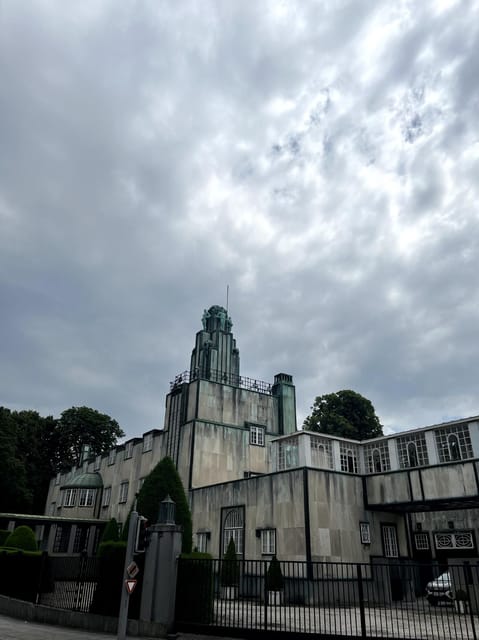
Palais Stoclet offers a useful contrast to the more flowing designs along the route. It is one of Brussels’ best-known Art Nouveau landmarks, but its appearance is more controlled and geometric than the curved, plant-inspired façades many people expect.
The building is associated with Josef Hoffmann and the Vienna Secession, a related Central European trend. Its inclusion gives the tour useful range. You see that Art Nouveau was not one fixed look. It could be soft and organic, highly decorative, or disciplined and almost abstract.
A practical note: the route focuses on seeing and explaining buildings from the city streets. Do not assume that every interior is open for entry. The value here comes from the guide’s interpretation and from comparing one façade with the next.
Something different, still within reach of Brussels:
- Brussels: Atomium Entry Ticket with Design Museum Ticket
★ 4.4 · 9,254 reviews - From Brussels: Guided Day Trip to Bruges and Ghent
★ 4.6 · 8,353 reviews - From Brussels: Bruges & Ghent Day Tour – 2 Fairytale Cities
★ 4.7 · 8,242 reviews - Choco-Story Brussels: Chocolate Museum Entrance with Tasting
★ 4.3 · 4,883 reviews
Maison Saint Cyr and the art of making a narrow façade memorable
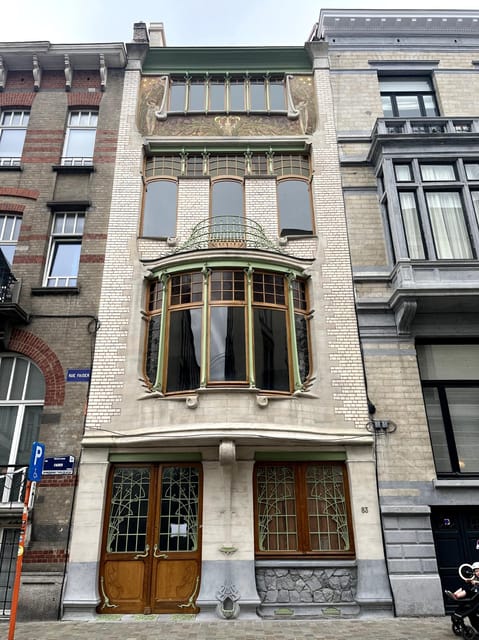
Maison Saint Cyr is another highlight, particularly for its compact but elaborate design. The building is associated with Gustave Strauven, an architect known for highly expressive Art Nouveau work.
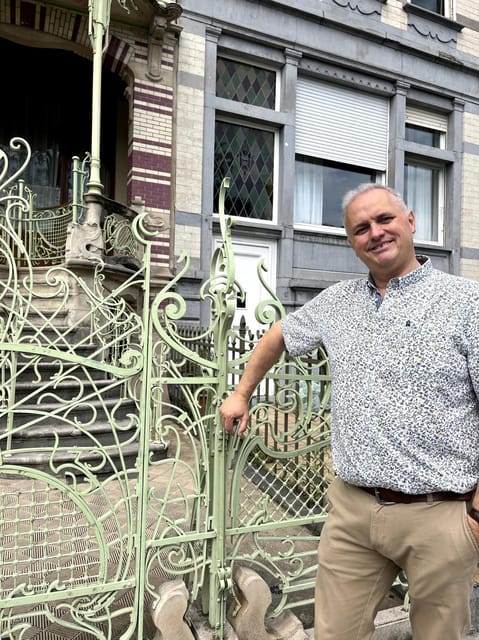
Its narrow façade makes a strong point about Brussels townhouses. Limited width did not prevent architects from creating drama. Curving balconies, ornamental ironwork, unusual window shapes, and a busy vertical composition can make a relatively small frontage feel theatrical.
This is the kind of stop where a guide earns the fee. You might notice that the building looks ornate, but a good explanation helps you understand how the parts work together. It also gives you a better eye for similar details at the next houses.
Hôtel van Eetvelde and Horta’s architectural language
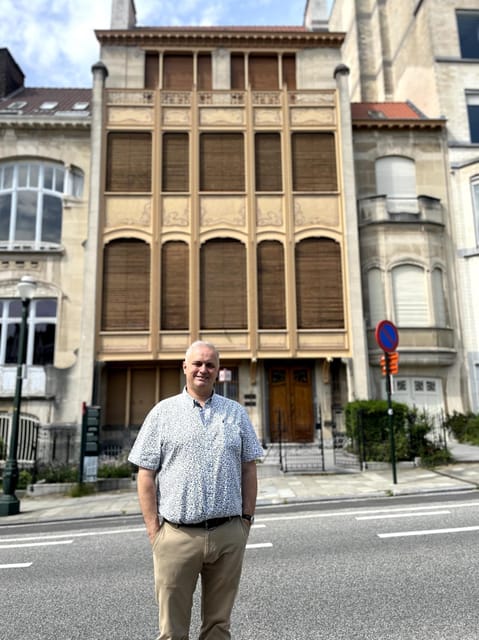
Victor Horta is the central name in Brussels Art Nouveau, and Hôtel van Eetvelde is one of the essential stops. Horta used architecture as a complete composition, bringing together structure, decoration, light, and circulation.
The building is particularly valuable for showing how Horta pushed beyond historic models. Curves appear in the ironwork and interior details, but the design is not decoration pasted onto a conventional house. The structure itself supports the visual effect.
You will also see Hôtel Tassel, often treated as one of Horta’s defining works, along with Maison Horta and Atelier Horta. These addresses allow your guide to trace Horta’s development and explain the features that made his work so influential.
Maison Horta and the adjoining atelier are especially important because they connect the architect’s professional life with his domestic design. The house and studio reveal how closely Horta linked work, living space, and artistic detail.
If you plan to visit the Horta Museum separately, take this tour first if possible. One particularly useful outcome is that the museum visit becomes easier to read. You will already know what to watch for in the stairways, materials, curves, and use of natural light.
Maison Van Dyck, Maison Roosenboom, and less familiar addresses
The route does not stop with the famous names. Maison Van Dyck and Maison Roosenboom add variety and show how Art Nouveau spread beyond a few star architects.
That matters because Brussels’ Art Nouveau identity is not built from one or two monumental houses. It comes from a network of façades scattered across different neighborhoods. A guide helps you connect them and saves you from spending hours searching for addresses that are easy to miss.
Maison Roosenboom is associated with Albert Roosenboom and gives you another chance to compare decorative choices. Maison Hankar adds the work of Paul Hankar, an important early figure in Brussels Art Nouveau. Seeing Horta and Hankar in the same experience helps you understand that the movement developed through several overlapping careers and ideas.
The route also includes a house connected with Horta’s brother. That stop may appeal most to architecture enthusiasts who want a broader picture of the people and buildings around the movement, rather than only the headline attractions.
Hôtel Ciamberlani and the final Saint-Gilles stretch
The tour’s final guided segment takes place around Hôtel Ciamberlani, with about 15 minutes devoted to the building. The address is linked to Paul Hankar and is known for its carefully designed façade and decorative treatment.
Ending near Avenue de la Jonction in Saint-Gilles gives the experience a neighborhood feel. Saint-Gilles is one of the key areas for Brussels Art Nouveau, and the route shows how these buildings are woven into ordinary urban streets rather than separated in a single historic quarter.
The ending location is not the same as the starting point. That is useful if you want to continue exploring Saint-Gilles afterward, but it means you should not plan a tight connection back at Merode. Ask your guide about the best onward route, since transport tickets are not included.
Walking tour or car-assisted outing?
The experience is described as a two-hour walking tour, but the actual format can vary. Yves once took a group in his car, allowing them to see more buildings than expected. Another booking was conducted by car and left the customer disappointed because the experience did not match the advertised walking format.
There is no simple way to treat this as either good or bad. A car can cover more ground and make it possible to see addresses spread across Brussels. If your main goal is to photograph a large number of buildings in two hours, that flexibility may be useful.
On the other hand, walking gives you time to study façades and notice how the buildings relate to their streets. If you specifically want a walking experience, confirm the format before booking. This is also important if you prefer to move at a slow pace or want time for photographs.
The tour is private, which gives you a better chance to ask questions and request emphasis on Horta, decorative arts, or specific architects. It also means the $136 price is easier to justify for a small group than for one person booking alone.
How strong is the guide service?
Guide quality appears to be the biggest variable. Davit was praised for passion and for leading a group across the city to see many Art Nouveau addresses. David was described as articulate and well informed, and Eric was singled out for making an afternoon in Brussels especially engaging.
Yves added value by driving the group and covering more ground. These examples suggest that the best version of the tour is lively, flexible, and led by someone who can explain why each building matters.
There was also one clear warning: a guide was considered pleasant but unable to provide strong architectural explanations. That is unusual beside the more positive experiences, but it is worth keeping in mind. This tour depends heavily on the person holding the keys to the story.
The booking is offered in English. If you are interested in technical architecture, ask direct questions about the architect, date, style, and relationship between the buildings. A specialist guide should be able to make those connections clear.
Is $136 per person a fair price?
At $136 per person, this is not a casual city stroll. The price makes the most sense for a private group that wants a focused introduction to Brussels Art Nouveau and would otherwise spend time locating the houses independently.
You are paying for three things: a private guide, a carefully connected route, and access to buildings that are spread across several parts of Brussels. The guide can also help you understand details that are easy to miss from a photograph.
The value drops if you mainly want a general sightseeing walk, if you already know Brussels architecture well, or if the guide cannot provide more than basic descriptions. One weak architectural commentary can make the fee feel high.
For most first-time Art Nouveau visitors, I would treat the experience as a specialist orientation. It works especially well early in a Brussels stay, before visiting the Horta Museum or returning independently to Saint-Gilles.
Who should book this Art Nouveau tour?
I would recommend it most strongly to:
- First-time visitors who want to understand why Brussels is important to Art Nouveau
- Architecture and design fans who want Horta, Hankar, Cauchie, Strauven, and related buildings in one route
- Private groups that value questions and a flexible pace
- Visitors planning to visit the Horta Museum and wanting useful context first
- People who enjoy looking closely at façades, ironwork, windows, lettering, and decorative details
It may be less suitable if you need step-free access, dislike walking between separate neighborhoods, or want a guaranteed vehicle-based sightseeing route. Smoking is not allowed, and wheelchair users cannot take part.
The tour lasts two hours, so it is compact enough to fit into a busy Brussels schedule. Still, the scattered addresses mean you should keep your next appointment flexible, particularly if the guide uses a car or the route changes.
Should you book it?
Book this tour if you want Brussels Art Nouveau explained by a specialist rather than collected as a list of pretty houses. The strongest guides, including Davit, David, and Eric, appear to add real value through clear explanations and enthusiasm for the subject.
Before paying $136 per person, confirm the exact meeting point at Merode and ask if the outing will be on foot or include a vehicle. I would also choose it before a Horta Museum visit, when the architectural context can make the museum far more rewarding.
If those details are confirmed and your group cares about architecture, this private tour is a strong choice. If you simply want a standard city walk or need fully accessible transportation, choose another Brussels experience.
FAQ
Where does the tour begin?
Meet in front of Brasserie Carpe Diem, across from the Merode Metro Station exit near Parc du Cinquantenaire. Merode has three exits, so check the meeting-point photo carefully.
Where does the tour finish?
The tour finishes at Avenue de la Jonction in Saint-Gilles, Belgium.
How long does the experience last?
The tour lasts two hours.
What language is the tour offered in?
The live guided tour is offered in English.
Is this a private tour?
Yes. The group type is private.
Is transportation included?
No transport ticket is included. The experience may sometimes involve a car, but one booking should confirm the format before departure because the advertised experience is a walking tour.
Can wheelchair users join?
No. The experience is not suitable for wheelchair users.
Can I cancel for a refund?
You can cancel up to 24 hours in advance for a full refund. You may also reserve now and pay later, subject to the booking terms.
Just added around Brussels
- Discover the secrets of Brussels while playing★ 5.0 · 3 reviews
- Standard vehicle from Charleroi airport to city of Brussels★ 4.5 · 3 reviews
- Full day Brugge & Ghent: the gems of Flanders★ 5.0 · 3 reviews
- Private tour : Best of Brussels half day From Brussels★ 5.0 · 3 reviews
- Private Tour – Bruges and Ghent, our fairytale cities★ 5.0 · 3 reviews
- Floating in the clouds★ 5.0 · 3 reviews
- Full-Day City Tour of Ghent and Bruges from Brussels★ 4.5 · 3 reviews
- Brussels Private Walking Tour With A Professional Guide★ 4.5 · 3 reviews
Walking Tours, compared.
Small Group Boat Cruise and Guided Walking Tour
Read our review →
Walking Tour, Canal Boat Trip w/Beer Tasting Option
Read our review →
Historical Walking Tour with Chocolate & Waffle Tasting
Read our review →
Brussels Walking and Tasting Tour (Beers,Chocolates&Fries/Waffle)
Read our review →Browse the lists this tour appears in