
Reviewed · MUSEUMS
Brussels: Museum Halle Gate Entry Ticket
Medieval Brussels still has a gate. I like the 14th-century vaulted rooms and the chance to walk through the old central passage, where the building feels more like a fortress than a standard museum. I also like the rooftop panorama, a fine reward after the climb. The main drawback is that the displays are not all labeled in English, so you will need the included audio guide to make sense of the visit.
For $8, this is an inexpensive way to add a slice of Brussels history to your day. I would allow enough time to follow the trail carefully, since the tour begins on a lower level and the rooftop is reached only by stairs. Some upper rooms may feel sparse during renovation work, which can make the experience uneven.
In This Review
- Key points to know before you go
- Why Halle Gate matters in Brussels
- Entering through the medieval central passage
- Following the lower-level route first
- The 14th-century vaulted rooms
- Temporary exhibitions and changing rooms
- Climbing the spiral staircase to the roof
- Language, accessibility, and practical comfort
- Is the $8 ticket good value?
- Who should book Halle Gate?
- Should you book the Museum Halle Gate ticket?
- FAQ
- How much does the Museum Halle Gate ticket cost?
- How long is the ticket valid?
- Is an audio guide included?
- Is the museum available in English?
- Can I reach the rooftop by elevator?
- Is the museum wheelchair accessible?
- Can I cancel the booking?
Key points to know before you go
- Walk through a real medieval gateway: Halle Gate was once an entry point into fortified Brussels, controlling the movement of people and goods.
- Start below the entrance level: The museum route includes a lower level, and missing it can leave a noticeable gap in the story.
- Use the audio guide: Dutch and French appear on many displays, while the audio guide provides English explanations.
- Climb for the city view: The rooftop is reached by stairs only, but the panorama gives you a useful look across Brussels.
- Expect a compact museum with changing content: Temporary exhibitions provide a reason to return, though some rooms may feel quiet or lightly furnished during renovation.
- Pay little for a lot of history: At $8, Halle Gate works well as a short, low-cost stop between other Brussels sights.
Why Halle Gate matters in Brussels
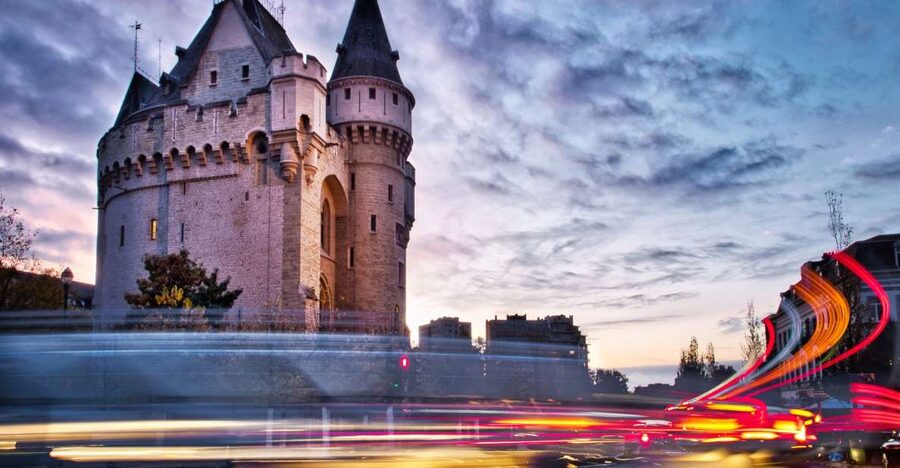
Halle Gate is not a replica built for atmosphere. It was one of the gateways through the medieval fortifications of Brussels, helping control who and what entered the city. That practical role gives the building a strong sense of purpose.
As you approach the museum, you are not simply heading toward a collection of objects. You are entering a surviving piece of the city’s defensive system. The thick structure, central passage, spiral staircase, vaulted rooms, and heavy roof all help you picture Brussels as a walled city rather than the open capital you see today.
I find this kind of museum especially useful early in a Brussels visit. It gives you a basic framework for understanding the city’s growth, defenses, trades, and civic life. You do not need to be a medieval-history expert. The educational trail guides you through the main ideas in a fairly direct way.
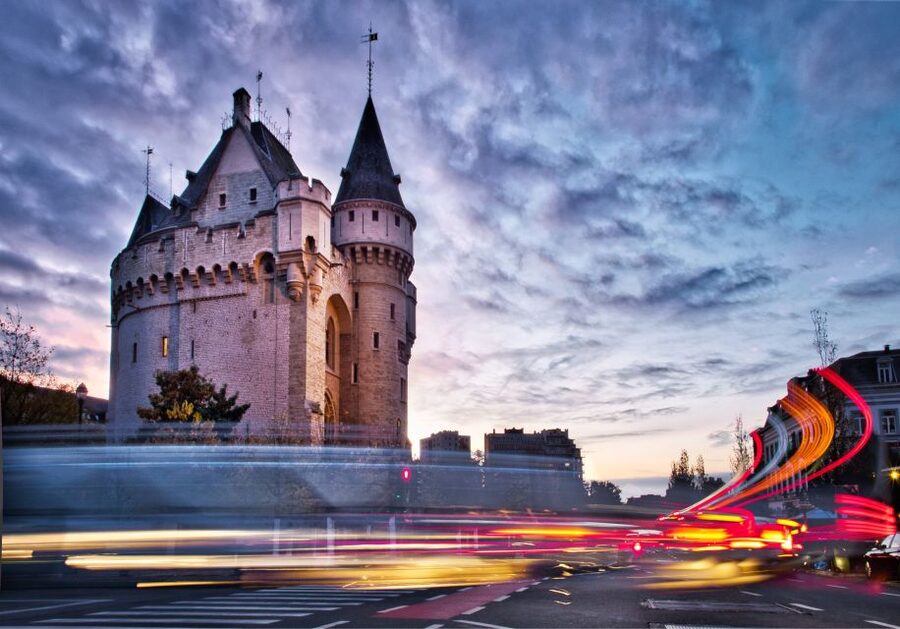
The building also has a fairy-tale look, thanks to its large spiral staircase and imposing roof. That appearance is not just decoration. It reflects the unusual shape and defensive character of the gate, making the architecture part of the museum experience.
More Museums in Brussels
- Brussels: Atomium Entry Ticket with Design Museum Ticket
★ 4.4 · 9,254 reviews - Choco-Story Brussels: Chocolate Museum Entrance with Tasting
★ 4.3 · 4,883 reviews - Brussels: Autoworld Museum Ticket
★ 4.7 · 1,301 reviews
Entering through the medieval central passage
The central passage is the natural starting point. This was the controlled route into fortified Brussels, so walking through it gives you a physical sense of how the city once managed access.
I like this part because it is simple and direct. You can imagine goods, workers, officials, and other people moving through a narrow point watched by the city. The passage helps explain why the gate mattered before you begin reading about fortifications and guilds.
You should take a moment here rather than rushing straight to the displays. Look at the structure around you and notice how different the experience is from entering a modern museum. Halle Gate is both container and exhibit.
The route may not feel large, but that is part of its appeal. You are exploring a historic gateway, not walking through a huge museum complex. The visit works best when you allow the architecture to carry some of the story.
Following the lower-level route first
One practical point matters more than it might seem: begin on the level below the one where you enter. It is easy to assume that the ground level is the start, but doing so can cause you to miss part of the museum.
I would look for signs or staff directions before moving upward. Start with the lower section, then follow the educational trail through the rest of the building. This order should give you a clearer account of the fortifications and the groups connected with them.
The museum explains the Brussels fortresses and the guilds they defended. That pairing is useful. The walls protected more than buildings. They also helped safeguard the city’s trade, work, and organized communities.
Because many labels are in Dutch and French, the English audio guide is important. Without it, you may recognize objects and rooms but miss their purpose. The guide is available in Dutch, French, and English, and I would make sure you select your language at the start.
Some objects on display may not have a matching audio explanation. That means you should treat the guide as a strong aid, not a complete spoken label for every item. If you are interested in details, take your time with the written material and use the guide alongside it.
The 14th-century vaulted rooms
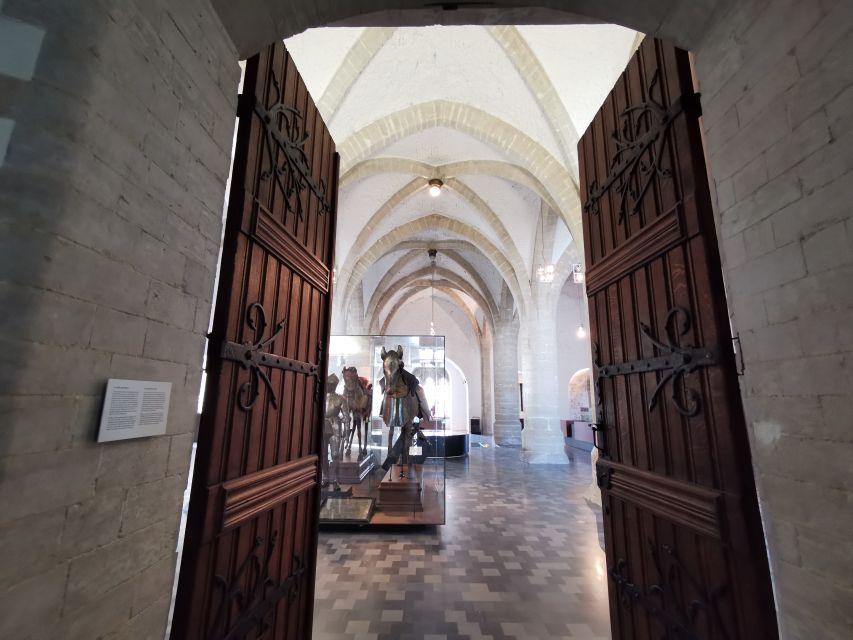
The vaulted rooms are among the most atmospheric parts of the museum. Their age and construction make the history feel close at hand, even when the displays are modest.
These rooms help you picture how a defensive building functioned from the inside. The stonework, enclosed spaces, and low-key museum setting suit the subject better than a polished modern gallery would. I like that the building itself does much of the work.
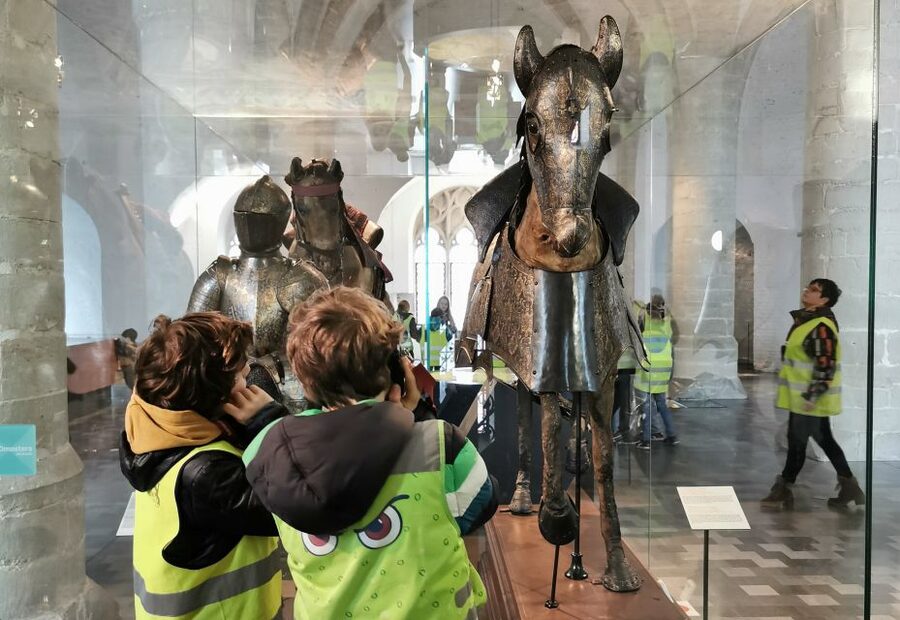
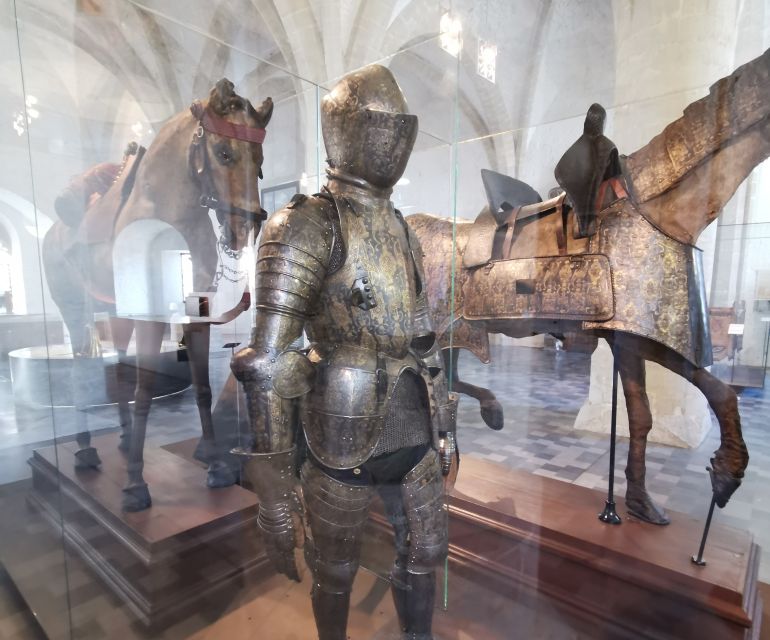
The historical collection adds context about the fortifications and the guilds associated with them. You may find the presentation most rewarding if you enjoy connecting physical places with civic history. The objects are not there simply to decorate the rooms. They support the larger story of how Brussels was protected and organized.
At the same time, do not expect a huge collection or a full day of exhibits. The ticket is valid for one day, but that does not mean the museum requires an entire day. The available information gives no fixed visit length, and I would treat Halle Gate as a compact cultural stop rather than a full-day museum outing.
The difference matters when planning. At $8, the ticket is easy to fit between larger attractions. If you want a long sequence of galleries, the museum may feel too small. If you want a focused look at one remarkable building, the size works in its favor.
Something different, still within reach of Brussels:
- From Brussels: Guided Day Trip to Bruges and Ghent
★ 4.6 · 8,353 reviews - From Brussels: Bruges & Ghent Day Tour – 2 Fairytale Cities
★ 4.7 · 8,242 reviews - Bruges and Ghent – Belgium’s Fairytale Cities – from Brussels
★ 4.0 · 4,809 reviews - Brussels: Hop-On Hop-Off Bus Tour
★ 4.0 · 4,016 reviews
Temporary exhibitions and changing rooms
Temporary exhibitions give Halle Gate a reason to change over time. A return visit may offer a different angle on the building or on Brussels’ past.
The benefit is variety. You are not locked into a permanent display that never changes, and repeat visitors may find fresh material. I would check the current exhibition details if you have a special interest, since the temporary program can affect how much there is to see during your visit.
The drawback is that the condition of the museum may feel uneven during renovation work. Some upper areas have been described as dark and sparse, with only a few unusual objects on view. That does not necessarily ruin the visit, but it can make the route feel less polished than the historic architecture deserves.
I would keep expectations sensible. The strongest parts are the gate, the old rooms, the historical context, and the view. Temporary displays can add value, but they should not be the only reason you buy the ticket unless you have checked what is currently showing.
Climbing the spiral staircase to the roof
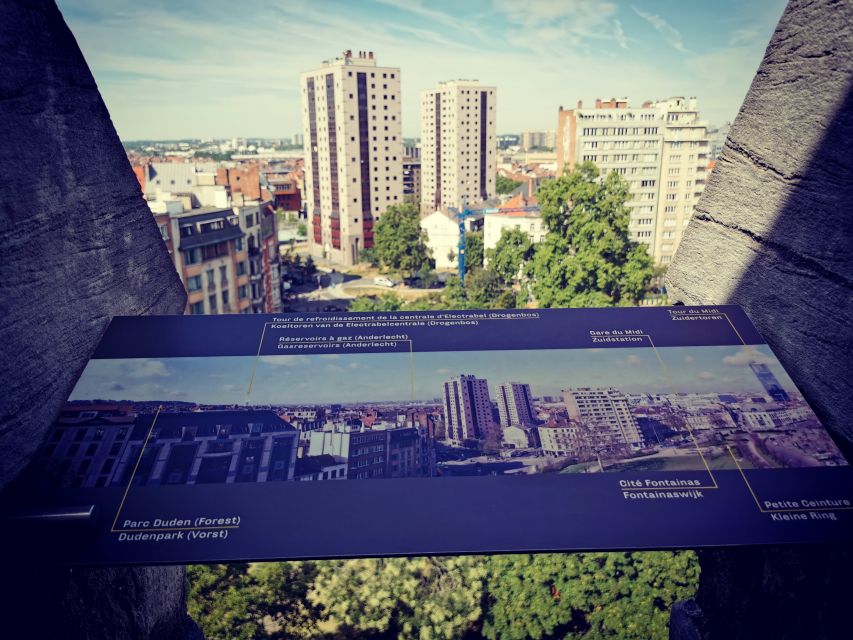
The rooftop is the clearest payoff for completing the route. From above, you get panoramic views across Brussels, allowing you to see the city from the same fortified structure you have just explored.
The climb is also part of the story. The large spiral staircase contributes to Halle Gate’s unusual, almost storybook appearance. It is not merely a way to reach a viewing platform. It reinforces the building’s old defensive design.
You must use stairs to reach the rooftop. An elevator is available for the rest of the museum for people with impaired mobility, but it does not remove the stair requirement for the panorama. If the view is important to you, keep this limitation in mind before booking.
The rooftop may be the highlight for many people because it changes your sense of Brussels. Instead of seeing streets from ground level, you can connect the old gate with the wider city around it. I would save a few minutes to look out carefully rather than treating the roof as a quick final stop.
The uppermost interior spaces may not have the same appeal. Renovation work can leave a room dark, empty, or lightly presented. You might find an unusual display, such as a dollhouse or theatrical object, but do not expect every room at the top to offer a full historical presentation.
Language, accessibility, and practical comfort
English-speaking visitors should use the audio guide. Much of the written material is in French and Dutch, and that can make the displays hard to follow if you rely on labels alone.
The audio guide is included and available in English, French, and Dutch. I consider this a real part of the ticket’s value, not an optional extra. It helps turn an architectural visit into a clearer lesson about the city’s walls, entrance controls, and guilds.
Flash photography is not allowed. You can still take in the rooms and views, but you should leave the flash switched off.
The museum is wheelchair accessible for the main areas, with an elevator available for people with impaired mobility. The rooftop is the exception because it can only be reached by stairs. That distinction is worth checking before you plan around the panoramic view.
There is no hotel pickup or drop-off. You make your own way to Halle Gate, so this ticket suits an independent day in Brussels rather than anyone seeking a packaged tour with transport.
The activity is valid for one day, and you can check available starting times when booking. You can also cancel up to 24 hours in advance for a full refund, and a reserve-now, pay-later option keeps your plans flexible. Those terms are helpful if your Brussels schedule is still changing.
Is the $8 ticket good value?
I think $8 is a fair price, especially if you appreciate historic buildings more than large collections. You get access to the passage, vaulted rooms, educational trail, historical collection, temporary exhibition areas, and rooftop view, plus the audio guide.
The value is strongest when you combine the museum with other plans in Brussels. Halle Gate does not need to occupy your whole day. It can fill a spare block of time and give you a different view of the city’s past without demanding a large budget.
The value is weaker if you expect every room to be full of objects and detailed English text. The language issue makes the audio guide essential, and some areas may feel bare during renovation. You are paying mainly for access to an important building and its setting, supported by a focused collection.
I would book it for a history-minded visit, a rainy-day plan, or a short stop that adds medieval context to a Brussels itinerary. Families may also enjoy the fortress shape and spiral staircase, though the darker upper displays may not suit every child.
Who should book Halle Gate?
I would choose this experience if you like:
- Medieval buildings with original architectural character
- Short museum visits with a clear theme
- City views reached by an unusual historic route
- Audio-guided exhibits
- Low-cost cultural attractions
- Brussels history linked to trade, defense, and guilds
I would think twice if you want a large museum with extensive English labels, a fully polished route, or a rooftop accessible without stairs. You may still enjoy the central passage and vaulted rooms, but the experience depends heavily on what is open and presented during renovation.
The best mindset is to see Halle Gate as a concentrated piece of Brussels history. It is not trying to compete with the city’s biggest museums. Its appeal comes from walking through a former city entrance, learning what it protected, and looking out over the modern streets from the roof.
Should you book the Museum Halle Gate ticket?
Book it if you want an affordable, focused stop with genuine medieval character and a city panorama at the end. The $8 price is modest, and the audio guide makes the visit more useful for English speakers.
Skip it if you need a long museum session, complete English labeling, or guaranteed access to fully finished upper rooms. Before you go, plan to begin below the entrance level and confirm that the rooftop is suitable for you, since stairs are required.
For most independent visitors with an interest in Brussels’ past, I think Halle Gate earns its place as a worthwhile small attraction. The building is the main event, the history gives it meaning, and the roof gives you a memorable final look at the city.
FAQ
How much does the Museum Halle Gate ticket cost?
The ticket costs $8 per person.
How long is the ticket valid?
The ticket is valid for one day. The information provided does not state a fixed length for the museum visit.
Is an audio guide included?
Yes. An audio guide is included in Dutch, French, and English.
Is the museum available in English?
The audio guide is available in English. Some written museum information is only in French and Dutch, so using the audio guide is recommended for English speakers.
Can I reach the rooftop by elevator?
No. The rooftop panoramic view is accessible only by stairs. An elevator is available for the rest of the museum for people with impaired mobility.
Is the museum wheelchair accessible?
Yes. The rest of the museum is wheelchair accessible with an elevator, but the rooftop requires stairs.
Can I cancel the booking?
Yes. You can cancel up to 24 hours in advance for a full refund. A reserve-now, pay-later option is also available.
Just added around Brussels
- Discover the secrets of Brussels while playing★ 5.0 · 3 reviews
- Private tour : Best of Brussels half day From Brussels★ 5.0 · 3 reviews
- Standard vehicle from Charleroi airport to city of Brussels★ 4.5 · 3 reviews
- Full day Brugge & Ghent: the gems of Flanders★ 5.0 · 3 reviews
- Private Tour – Bruges and Ghent, our fairytale cities★ 5.0 · 3 reviews
- Floating in the clouds★ 5.0 · 3 reviews
- Full-Day City Tour of Ghent and Bruges from Brussels★ 4.5 · 3 reviews
- Brussels Private Walking Tour With A Professional Guide★ 4.5 · 3 reviews
Museums, compared.
Atomium Entry Ticket with Design Museum Ticket
Read our review →
Choco-Story Brussels: Chocolate Museum Entrance with Tasting
Read our review →
Choco-Story Chocolate Museum Guided Tour w/Tastings
Read our review →
2.5-Hour Chocolate Museum Visit with Workshop
Read our review →
The World of Banksy Museum Permanent Exhibition
Read our review →
Browse the lists this tour appears in