
Reviewed · MUSEUMS
Brussels: Musical Instruments Museum Entry Ticket
Music makes old objects speak. At Brussels’ Musical Instruments Museum, you explore four floors of instruments from Europe and around the world while hearing nearly 300 sound clips on the included multimedia device. I like the mix of hands-on listening and visual history, and I also like the chance to see unusual pieces such as the world’s oldest preserved saxophone. The main drawback is that the audio is not available for every instrument, so some displays remain silent.
The museum occupies the Old England building on the Mont des Arts, giving you an architectural treat before you even reach the galleries. At about $17 per person, it offers a good half-day indoor stop, though the separate concert ticket and currently closed restaurant reduce the all-in convenience.
In This Review
- Key Points to Know Before You Go
- Arriving at the Old England Building
- Four Floors That Turn Instruments Into Stories
- The Multimedia Device Is the Essential Extra
- From African Slit Drums to Electronic Instruments
- The Oldest Preserved Saxophone in the World
- A Concert Hall Visit Requires a Separate Ticket
- How Long You Should Plan to Stay
- Is the $17 Ticket Good Value?
- Accessibility and Practical Restrictions
- Who Will Enjoy This Museum Most?
- Should You Book the Musical Instruments Museum?
- FAQ
- How much does entry to the Musical Instruments Museum cost?
- How long is the ticket valid?
- Is an audio guide included?
- Is a concert included with museum admission?
- Is the museum wheelchair accessible?
- Can I bring oversize luggage or use flash photography?
Key Points to Know Before You Go
- Nearly 300 sound clips: Use the included multimedia device to hear selected instruments and musical pieces as you move through the galleries.
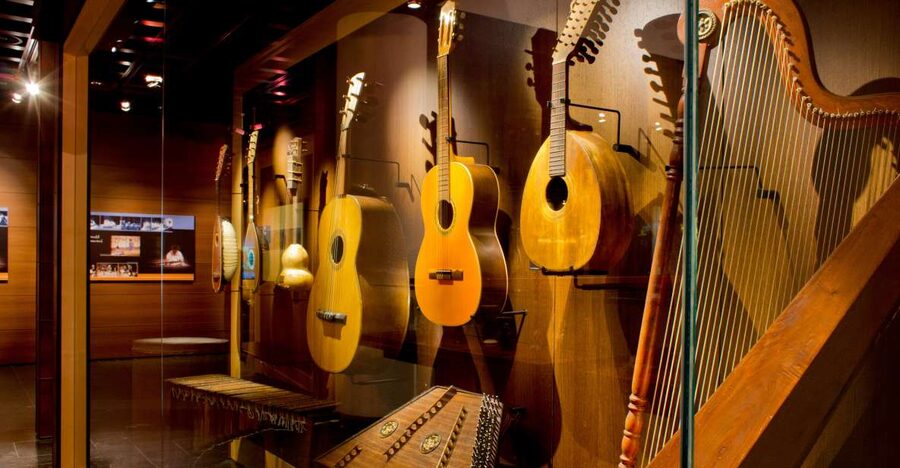
- Four floors of collections: The route covers European instruments, keyboards, traditional instruments from around the world, and electronic music.
- Old England building: Look up at the Art Nouveau ironwork and glass details before focusing only on the displays.
- Rare saxophone history: One highlight is the oldest preserved saxophone in the world.
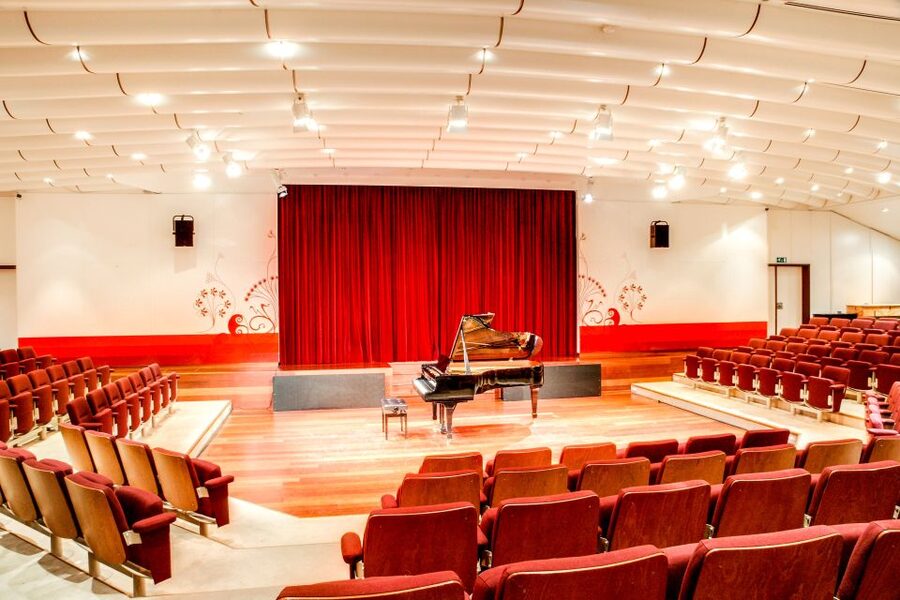
- Concerts cost extra: The museum’s neoclassical hall hosts live performances, but admission to a concert is not included.
- Easy ticket entry: The ticket includes skip-the-line access, and the QR code can be scanned at the entrance rather than taken to the ticket office.
Arriving at the Old England Building
The museum sits on Brussels’ famous Mont des Arts, a central site known for its cultural institutions and city views. Your visit begins with the building itself: the Old England structure is an Art Nouveau landmark, filled with intricate architectural details that reward a slow look.
I would give yourself a few minutes outside and in the entrance area before rushing toward the instruments. The metalwork, glass, and decorative lines are part of the experience, not just a frame around it. This is one of those museums where the setting helps prepare you for the subject. Music is about design, craft, rhythm, and pattern, and the building offers those ideas in visual form.
The entry process should be simple if you have the digital ticket. A useful practical tip is to scan the QR code at the entrance. There has been confusion when people took the code to the ticket office, where staff apparently mistook it for a Brussels Card. Going directly to the entrance can save time and avoid an unnecessary exchange.
The ticket provides skip-the-line entry, which matters most during busy periods. Exact starting times depend on availability, but admission is valid for one day, so you are not tied to a guided group schedule. That gives you room to fit the museum around other Mont des Arts sights.
More museums in Belgium:
- Brussels: Atomium Entry Ticket with Design Museum Ticket
★ 4.4 · 9,254 reviews - Choco-Story Brussels: Chocolate Museum Entrance with Tasting
★ 4.3 · 4,883 reviews - Bruges: Choco-Story Chocolate Museum Guided Tour w/Tastings
★ 4.2 · 1,379 reviews
Four Floors That Turn Instruments Into Stories
The museum’s four floors divide the collection into broad themes. You can see the history of musical instruments in Europe, a substantial keyboard collection, traditional instruments from different parts of the world, and electronic instruments.
That range is the museum’s main strength. You are not looking at one narrow family of instruments or one national tradition. Instead, you can move from African slit drums to Western keyboards, then onward to modern electronic sound. The comparison helps you notice how people in different places solve similar musical problems with very different materials and shapes.
I would not treat this as a quick room-by-room checklist. The displays make more sense when you pause to ask what each instrument was built to do. Some are shaped for control and precision. Others are made for rhythm, ceremony, social gatherings, or public performance. The museum gives you the objects, while the audio helps explain how those objects function as music rather than sculpture.
The European collection is a good place to consider how instruments changed over time. You might find familiar families such as keyboards and other Western instruments, but the displays also show how design, technology, and performance traditions developed together. Even if you do not play an instrument, the sound clips make the subject easier to follow.
The keyboard collection offers a different kind of appeal. Keyboards can look similar at first glance, but the collection lets you compare their forms and construction. The value here is visual as much as musical. You get a clearer sense of how an instrument can become a piece of furniture, a mechanical device, and a tool for composition all at once.
The Multimedia Device Is the Essential Extra
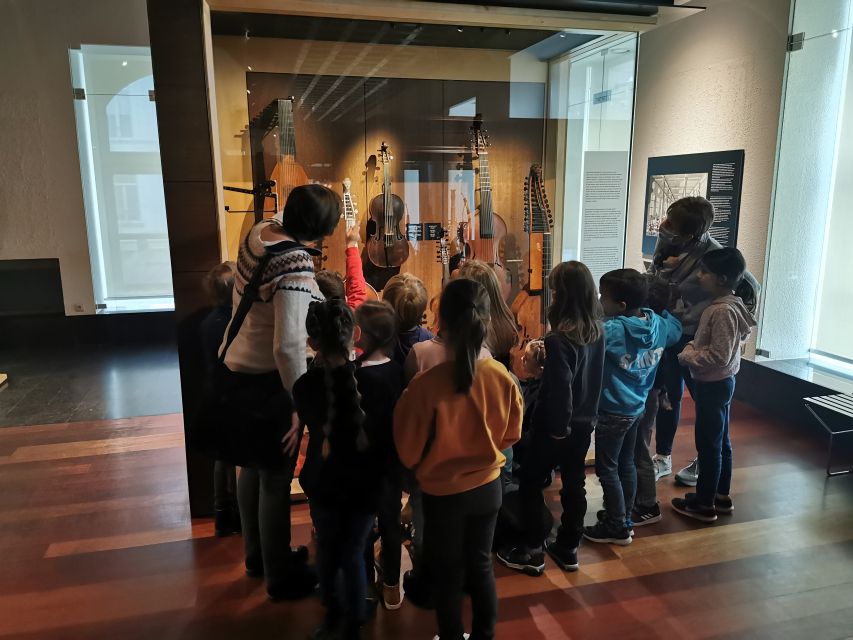
The included multimedia device changes the visit from a silent display of cases into a listening experience. You can hear nearly 300 musical clips as you move around the galleries, using the audio to connect each object with its sound.
I strongly recommend using it from the beginning. Without the audio, you may admire the workmanship but miss the basic question of what each instrument sounds like. With it, a carved drum, unusual string instrument, or old keyboard becomes easier to understand.
The audio guide is available in English, Dutch, and French. That makes the museum practical for international visitors and for anyone who wants more context than a quick label can provide. The sound clips also keep the visit active. You are not simply reading long panels. You are matching what you see with what you hear.
Still, you should keep your expectations realistic. The audio does not cover every instrument. One of the clearest limitations is that some displays have no accompanying sound, which can feel like a missed chance in a museum devoted to music. If you want a sample of every object, you will not get that here.
Even so, the audio receives strong praise because it makes the instruments feel lively and gives the galleries a more physical character. Some clips may even tempt you to move along with the rhythm. That is a better result than staring at a silent case and trying to imagine the sound.
From African Slit Drums to Electronic Instruments
The world collections broaden the visit beyond familiar European music. African slit drums are one example of the type of object you can encounter, and the traditional instrument rooms present music as part of community life and cultural practice.
I appreciate this section because it prevents the museum from becoming only a history of Western orchestral design. You get a chance to compare materials, shapes, and methods of producing sound across regions. The point is not simply that instruments look different. Their construction reflects different musical needs and traditions.
The electronic instrument exhibit brings the story into the modern era. After seeing objects made from wood, metal, skin, and other traditional materials, you can consider how electricity and technology changed the way sound is created and controlled. This gives the visit a useful arc without forcing the collection into a simple old-versus-new story.
The range can also be the museum’s challenge. Four floors cover a lot of ground, and not every section will hold your attention equally. I would spend extra time with the subjects that interest you most rather than trying to give every case the same amount of attention.
A few more trips and experiences worth a look
- Brussels: Entry Ticket to Mini-Europe
★ 4.5 · 2,870 reviews - Brussels: Autoworld Museum Ticket
★ 4.7 · 1,301 reviews - Brussels: Museum of Illusions Entry Ticket
★ 4.4 · 815 reviews - Bruges: Frietmuseum Entry Ticket
★ 4.2 · 652 reviews
The Oldest Preserved Saxophone in the World
The saxophone display gives the museum a memorable focal point. You can see what is described as the oldest preserved saxophone in the world, an object that connects invention, craftsmanship, and the development of modern musical styles.
A rare object like this is valuable because it gives a clear anchor to a larger story. Instead of thinking of the saxophone as a familiar modern instrument, you can consider its early form and place in musical history. The museum does not rely only on famous names or grand concert instruments. It also gives attention to the objects that helped shape later sounds.
Take time to use the audio near displays like this when a clip is available. The instrument’s design becomes easier to understand when you hear its role rather than seeing only its body and keys.
A Concert Hall Visit Requires a Separate Ticket
The museum includes a neoclassical concert hall where world-class music is performed. If a concert fits your schedule, it could make a strong second part to the visit, especially since you have already spent time looking at the tools of music-making.
The important catch is that the concert is not included in the museum entry ticket. You need to purchase a separate concert ticket, so check the cost and schedule before building your evening around it.
A live performance also changes the pace of the day. The galleries ask you to move from case to case and listen to short clips. A concert gives you the chance to sit still and hear music unfold at full length. That contrast can make the museum visit feel more complete, but it is an optional addition rather than part of the $17 admission.
How Long You Should Plan to Stay
A visit of about two hours works well if you keep moving and focus on the main collections. You can spend longer if you listen carefully to many of the nearly 300 clips or have a strong interest in instruments.
The museum is best suited to an unhurried indoor block rather than a rushed stop between sights. The four floors offer enough material for a longer visit, but the exact length depends on how much audio you use and how closely you examine the cases.
I would allow time for the building as well as the collections. If you rush through the entrance and galleries, you lose part of what makes this museum special. On the other hand, you do not need an entire day unless music, design, or museum collections are central interests for you.
The restaurant is currently closed for renovation, so plan food elsewhere. This is easy enough in central Brussels, but it means you should not count on a meal break inside the museum.
Is the $17 Ticket Good Value?
At $17, the ticket is fairly priced for four floors, a major collection of instruments, and an audio program with nearly 300 clips. The value is strongest if you actually use the multimedia device. If you skip the audio, the visit becomes more dependent on your personal interest in objects and labels.
The ticket also gives you a full day of validity and skip-the-line entry. Those features add flexibility, especially if you want to visit another museum or sight nearby and return to your plans without a fixed tour group.
The price is less attractive if you expected a concert to be included. It is not. The neoclassical hall is an appealing option, but live music requires a separate purchase.
I would call this good value for music fans, families with older children, design enthusiasts, and anyone looking for a thoughtful indoor activity in Brussels. It may be less rewarding if you want a short, highly guided attraction with constant interaction at every display.
Accessibility and Practical Restrictions
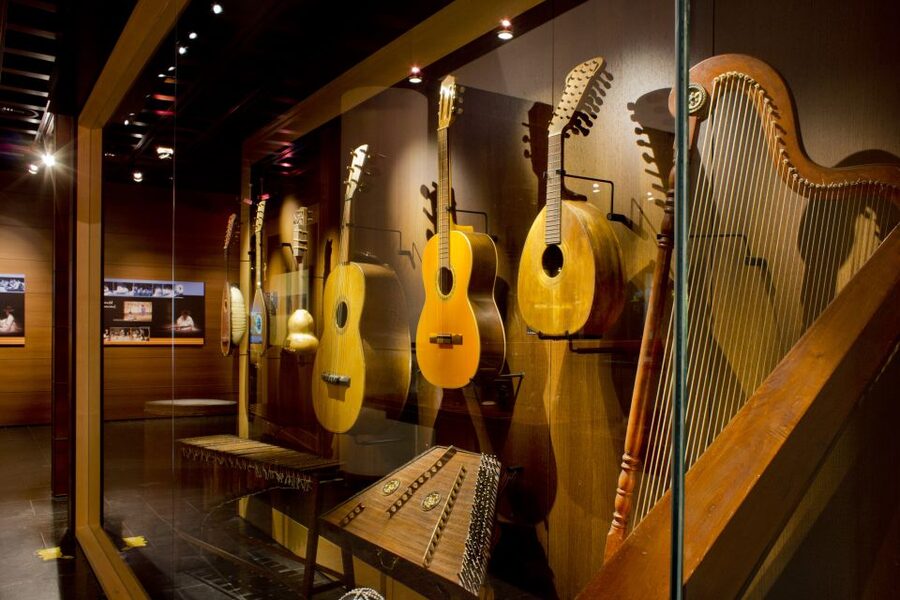
The museum is wheelchair accessible, which makes the four-floor collection easier to consider when planning your day. The included audio guide is offered in English, Dutch, and French.
Oversize luggage is not allowed, so do not arrive with large bags that you expect to carry through the galleries. Flash photography is also prohibited. Keep your camera use discreet and follow the museum’s rules around the displays.
Free cancellation is available up to 24 hours before the visit, and you can reserve now while paying later. Those options are useful if your Brussels schedule is still changing, though you should always check the current availability and entry details when booking.
Who Will Enjoy This Museum Most?
I would choose this museum if you enjoy listening as much as looking. The sound clips give the displays purpose, and the worldwide range keeps the visit from feeling like a narrow specialist collection.
It also suits anyone with an interest in architecture. The Old England building is a major part of the appeal, and you do not need to be a musician to appreciate the Art Nouveau details.
Families can use the audio to make the visit more active, particularly for children who may lose interest in long written labels. The ability to hear instruments can turn the collection into a kind of listening game, though the fact that not every instrument has a clip may cause some disappointment.
This is not the best pick if you have only a few minutes in Brussels or dislike museums that ask you to read, compare, and listen. The collection rewards attention rather than a quick photo stop.
Should You Book the Musical Instruments Museum?
Yes, if you want a reasonably priced museum that combines sound, design, and instruments from many cultures. I especially recommend it for the oldest preserved saxophone, the Art Nouveau building, and the multimedia device, which gives the visit its real energy.
Book it as a two-hour or half-day stop on the Mont des Arts, and scan your QR code at the entrance to avoid ticket-office confusion. Add a concert only if you are happy to pay separately and the schedule suits you.
Skip it if your priority is a live performance included with admission, a restaurant break inside the museum, or an audio clip for every single instrument. For most people with even a passing interest in music, though, the $17 ticket offers a useful and enjoyable look at how people have made sound across time and place.
FAQ
How much does entry to the Musical Instruments Museum cost?
The entry ticket costs $17 per person.
How long is the ticket valid?
The ticket is valid for one day. Starting times depend on availability when you book.
Is an audio guide included?
Yes. An included multimedia device provides nearly 300 sound clips, and the audio guide is available in English, Dutch, and French.
Is a concert included with museum admission?
No. Concerts in the museum’s neoclassical hall require a separate ticket.
Is the museum wheelchair accessible?
Yes. The museum is wheelchair accessible.
Can I bring oversize luggage or use flash photography?
Oversize luggage is not allowed, and flash photography is prohibited.
Just added around Belgium
- Guided E-kickscooter tour: The big five of Antwerp★ 5.0 · 3 reviews
- Antwerp: Help the Lost Boy – Self-Guided Mystery Walk★ 4.5 · 3 reviews
- Bruges Beer and Chocolate Walking Tour★ 4.5 · 3 reviews
- Discover the secrets of Brussels while playing★ 5.0 · 3 reviews
- Full day Brugge & Ghent: the gems of Flanders★ 5.0 · 3 reviews
- Private tour : Best of Brussels half day From Brussels★ 5.0 · 3 reviews
- Standard vehicle from Charleroi airport to city of Brussels★ 4.5 · 3 reviews
- Private: Discover Bruges beers & brewery with chocolate pairing by a young local★ 5.0 · 3 reviews
Museums, compared.
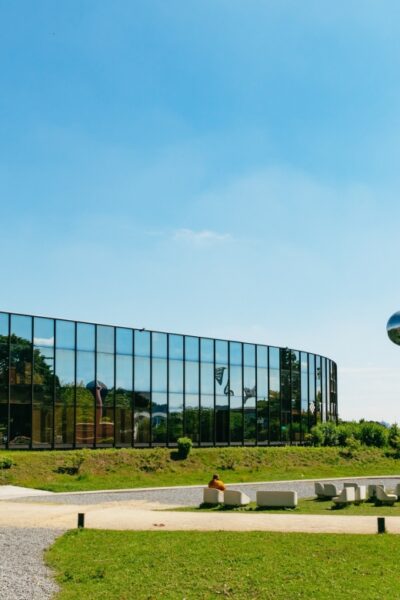
Atomium Entry Ticket with Design Museum Ticket
Read our review →
Choco-Story Brussels: Chocolate Museum Entrance with Tasting
Read our review →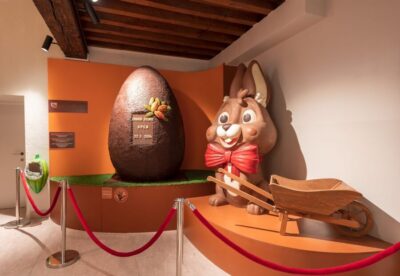
Choco-Story Chocolate Museum Guided Tour w/Tastings
Read our review →
2.5-Hour Chocolate Museum Visit with Workshop
Read our review →
The World of Banksy Museum Permanent Exhibition
Read our review →
Browse the lists this tour appears in