
Reviewed · PRIVATE
Brussels: Private Tour of the Upper and Lower City
Brussels reveals itself in layers. This private tour makes that easy to grasp by dividing the city into the Lower City and Upper City, linking grand squares, royal landmarks, museums, and local tastes. I like the clear historical route, and I like the chance to shape the guide’s style around your group. The main consideration is the price: $353 is good value for a larger group, but costly for only one or two people.
The walk covers plenty in three hours, including Grand Place, Manneken Pis, the cathedral, royal park, Sablon, and several cultural landmarks. It is also an uphill outing, with no transport, museum tickets, meals, or drinks included. Guide Emil received praise for balancing different periods of Brussels history, while Mr. Boeykens was noted for keeping the group engaged despite cold and wet weather.
In This Review
- Key points to know before booking
- Why splitting Brussels into Lower and Upper City works
- Grand Place and the start in Brussels’ Lower City
- Saint-Géry Island and the old river center
- Saint Catherine, De Brouckère, and Monnaie squares
- Saint-Hubert Royal Galleries and Brussels’ elegant side
- Climbing to the Upper City and the cathedral
- Royal Park, Place des Palais, and the seat of power
- Choosing between the Musical Instruments Museum and other cultural sights
- Petit Sablon and Grand Sablon
- How much value does $353 offer?
- Guide style, languages, and group comfort
- Who should book this private Brussels walk?
- Should you book it?
- FAQ
- How long does the Brussels private tour last?
- What areas of Brussels does the tour cover?
- Is hotel pickup available?
- Which languages can the guide speak?
- Are museum tickets, meals, or drinks included?
- Can the itinerary be adjusted for my group?
Key points to know before booking
- Two-part city plan: The route explains Brussels through its historic Lower City and more monumental Upper City.
- Grand Place is your anchor: You begin at Brussels’ famous central square and return there before heading uphill.
- A useful mix of icons and culture: The route includes Manneken Pis, Saint-Hubert Royal Galleries, the cathedral, royal park, and museum options.
- Private means adaptable: The tour can be adjusted for an entertaining, academic, or professional style.
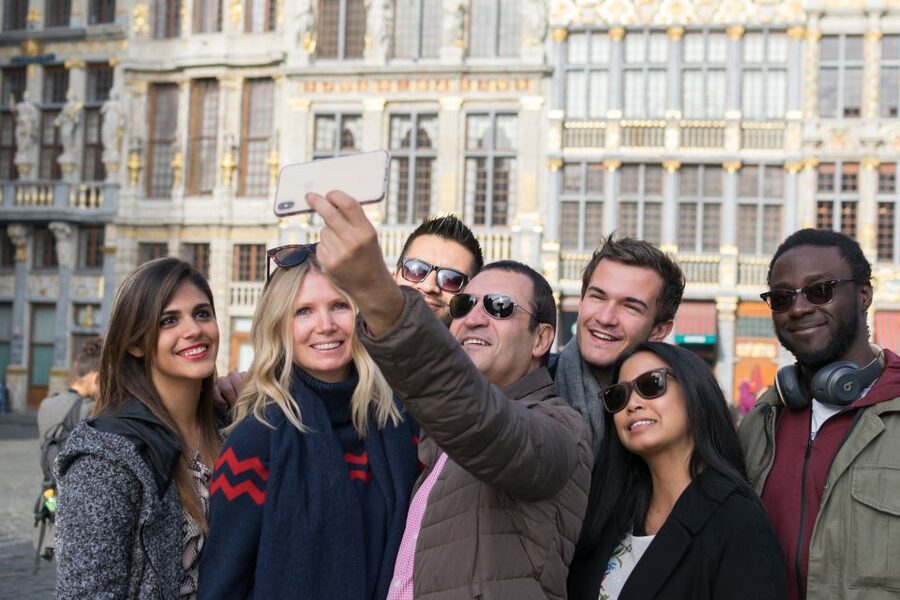
- Good for groups: The $353 price covers a group of up to 20, making the cost far more attractive when shared.
- Several languages are available: You can request English, French, Dutch, German, Spanish, Italian, Russian, or Portuguese.
Why splitting Brussels into Lower and Upper City works
Brussels can feel confusing on a first visit. Its streets rise from the old commercial center toward royal and cultural institutions, and the most famous sights are not all in one compact square. This tour gives you a simple mental map.
The Lower City follows the older urban core around the Senne river and Grand Place. Here, you see the city’s old commercial identity, narrow streets, public squares, shopping arcades, and famous symbols. The Upper City moves uphill toward the cathedral, royal park, palace area, museums, and Sablon.
I like this structure because it explains more than a string of disconnected photo stops. You are not just seeing Grand Place, then Manneken Pis, then a museum. You are learning how Brussels developed from a lower trading center into a seat of government, royalty, and culture.
The three-hour length also helps you get your bearings early in a Brussels stay. You will not have time for long museum visits or leisurely meals, but you can use the tour to decide where to return later.
A few more trips and experiences worth a look
- Brussels: Atomium Entry Ticket with Design Museum Ticket
★ 4.4 · 9,254 reviews - From Brussels: Guided Day Trip to Bruges and Ghent
★ 4.6 · 8,353 reviews - From Brussels: Bruges & Ghent Day Tour – 2 Fairytale Cities
★ 4.7 · 8,242 reviews
Grand Place and the start in Brussels’ Lower City
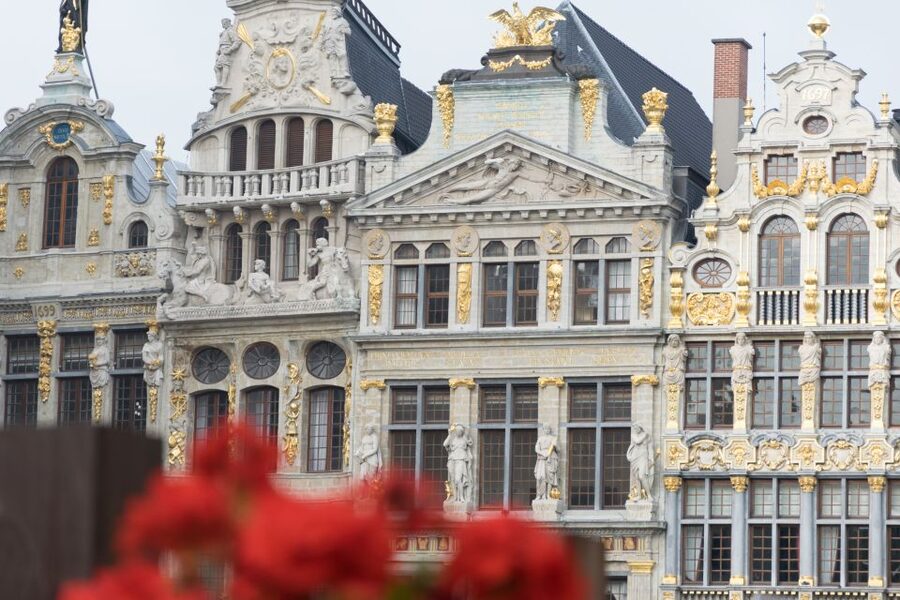
The tour begins at Grand Place, the central square and natural starting point for Brussels. This is the place to pause and look upward. The square is surrounded by ornate historic buildings, and its scale makes clear why it serves as the city’s main visual symbol.
A guide adds value here because the architecture can otherwise blur into a wall of decoration. You can ask how the square fits into Brussels’ development, how the commercial center grew, and which buildings mattered to civic life. The tour’s stated focus on origins and historic development gives this opening stop a clear purpose.
From Grand Place, you head to Manneken Pis, the small bronze figure that has become one of Brussels’ best-known emblems. The statue is much smaller than many first-time visitors expect, which is part of its charm. It is a quick stop, but a guide can place the figure within the city’s fondness for irreverence and public symbols.
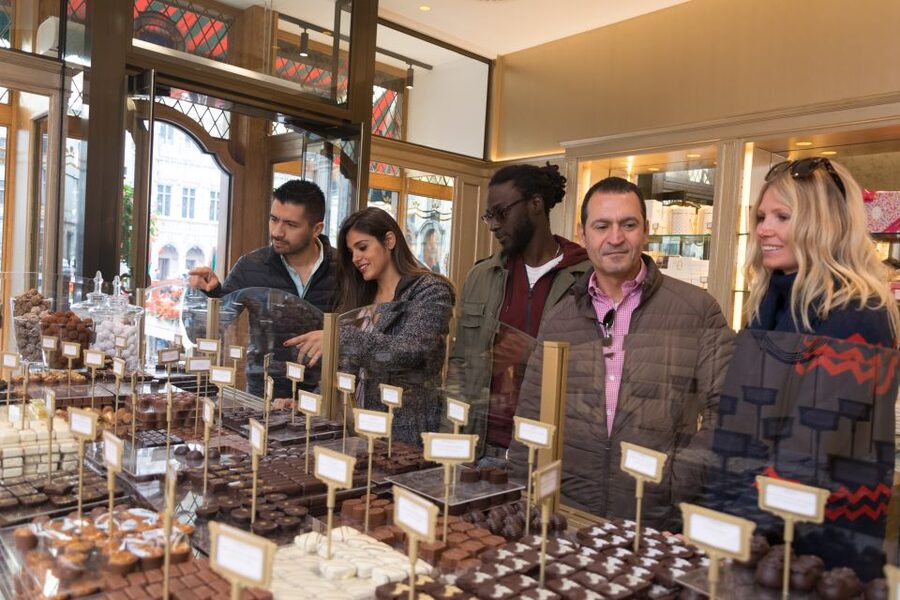
This is also a good moment to ask about Belgian beer, chocolate, and local customs. Those subjects are part of the tour’s cultural focus, though tastings are not included. You should think of the guide as an introduction to Brussels’ food and drink traditions, not as a tasting tour.
Saint-Géry Island and the old river center
The route continues toward Saint-Géry island, described as once the largest island in the Senne river. That detail gives you a glimpse of a Brussels shaped by water and settlement rather than only by grand government buildings.
This section should appeal to you if you prefer city stories that explain why neighborhoods developed as they did. The river and its islands are not just background scenery. They help make sense of Brussels’ earliest urban form and the relationship between commerce, streets, and public squares.
The itinerary does not promise a long stop or a specific interior visit here, so expect a guided walk rather than a detailed archaeological presentation. Still, the location helps break up the famous-sights circuit and adds a layer of context between Grand Place and the later squares.
Saint Catherine, De Brouckère, and Monnaie squares
Next comes Saint Catherine Square, followed by De Brouckère and Monnaie squares. These spaces show Brussels in several moods, from older neighborhood character to broad civic and cultural settings.
Saint Catherine gives the route another look at the Lower City beyond the postcard center. De Brouckère Square is a major urban meeting point, while Monnaie Square is tied to Belgium’s federal opera house. The changes in scale are useful. You move from the intimate feel of older streets to the larger spaces built for public life and performance.
The itinerary identifies the opera house as the spectacular federal opera house of Belgium. Even if you do not enter, this is a valuable exterior stop for understanding Brussels as a national capital with an active cultural role.
Do not expect tickets or a performance. Museum admission and other tickets are not included, and the experience is designed as a guided city walk. If the opera house or another cultural site catches your attention, note it for a later visit.
Something different, still within reach of Brussels:
- Choco-Story Brussels: Chocolate Museum Entrance with Tasting
★ 4.3 · 4,883 reviews - Bruges and Ghent – Belgium’s Fairytale Cities – from Brussels
★ 4.0 · 4,809 reviews - Brussels: Hop-On Hop-Off Bus Tour
★ 4.0 · 4,016 reviews - Brussels: Guided Walking Tour
★ 4.6 · 3,560 reviews
Saint-Hubert Royal Galleries and Brussels’ elegant side
The Lower City portion ends at the Saint-Hubert Royal Galleries, a group of glazed shopping arcades. This is one of the route’s most attractive transitions. After streets and open squares, you enter a refined covered passage where architecture and shopping meet.
The galleries are especially useful for understanding how Brussels presented itself as a polished European capital. The glass roofs, elegant storefronts, and carefully designed arcades make this more than a place to browse. It is an architectural stop with a practical side, since you can return later for chocolate shops and other Belgian specialties.
This is also one of the better places to connect the tour’s Art Nouveau theme to the city’s wider design culture. The route promises an introduction to Art Nouveau, but it does not list a dedicated Art Nouveau building visit. If that style matters to you, tell the guide early and ask how much attention can be given to it.
Climbing to the Upper City and the cathedral
The Upper City section begins at Grand Place again, then heads uphill toward the Cathedral of St. Michael and St. Gudula. The climb is important to understand before booking. The tour is wheelchair accessible, but the route still moves uphill, and you should confirm the practical details of the planned route if anyone in your group has limited mobility.
Inside the cathedral, you can admire the stained-glass windows. This is one of the tour’s strongest interior moments because it gives you a break from exterior sightseeing and lets you see Brussels’ religious architecture at close range.
The cathedral also changes the rhythm of the experience. Grand Place and the Lower City are linked to trade, streets, and civic life. Here, the focus turns toward worship, ceremony, and monumental design. A guide can help you notice details you might otherwise pass without understanding.
The exact amount of time inside is not specified, so you should not expect a full architectural study. Still, the inclusion of the stained glass makes this more than a quick outside photograph.
Royal Park, Place des Palais, and the seat of power
From the cathedral, the route continues to Place des Palais, the royal park, and the royal palace. This is where Brussels’ role as Belgium’s capital becomes most visible.
The royal park offers open space after the close streets of the historic center. The palace area, in turn, shifts your attention to the monarchy and the institutions of the Belgian state. You will see how the Upper City is arranged around formal spaces and national buildings rather than the commercial streets of the Lower City.
The tour does not include entry to the royal palace, so treat this as an exterior and urban-planning visit. That is not a serious flaw in a three-hour route. Entering the palace would require a separate schedule and would leave less time for the rest of the city.
I would use this stop to ask the guide how Brussels balances its royal, federal, and cultural roles. The advertised flexibility is useful here. Your guide can make the explanation more entertaining for families, more academic for students, or more professional for a work group.
Choosing between the Musical Instruments Museum and other cultural sights
The Upper City section includes a choice involving the Musical Instruments Museum, or a route passing the Magritte Museum and the Palace of Fine Arts before reaching Sablon.
This is one area where you should clarify the plan before the tour begins. The wording allows for different treatment of these cultural sites, but it does not promise admission or a full museum visit. Tickets are not included, and three hours is too short for a serious museum tour alongside all the walking.
The Musical Instruments Museum is a natural fit if you want an interior cultural stop and a subject that is easy to enjoy without specialist knowledge. The Magritte Museum offers a different direction, focused on one of Belgium’s best-known artists. The Palace of Fine Arts adds another major cultural building to the route, even if you only pass by.
I like having options, especially for a private group. A family may prefer a brisk exterior route, while an art-focused group may want to give more attention to Magritte or the Palace of Fine Arts. Just remember that a choice usually means you cannot give equal time to every site.
Petit Sablon and Grand Sablon
The walk finishes at Petit Sablon and Grand Sablon, two of Brussels’ most appealing upper-city squares. These stops provide a pleasant final chapter because they bring together public space, architecture, art, and the city’s well-known chocolate culture.
Petit Sablon is the more enclosed and decorative square, while Grand Sablon is a larger urban area with an elegant feel. The exact guide commentary will depend on your interests, but this is a good place to ask about Belgian chocolate and where to continue your own exploration afterward.
The ending also makes practical sense. Sablon is not simply a final landmark to photograph. It is an area you can revisit for cafés, shops, and further sightseeing. Since food and drinks are not included, you can make your own plans after the guide finishes.
How much value does $353 offer?
The price is $353 per group up to 20 people. That makes the arithmetic important. For a group of 10, it works out to about $35 per person. For 20, it is less than $18 per person. For two people, it is about $176.50 each, which is a much harder value call for a three-hour walking tour.
The price includes a professional guide, private group service, and possible pickup from your Brussels hotel. It does not include transport, museum tickets, drinks, or meals. You are paying mainly for interpretation, route planning, language support, and the ability to adjust the tour to your group.
I think the tour is best value for families, reunions, school groups, corporate groups, or several couples traveling together. A private guide can keep a large group moving and can adjust the emphasis instead of forcing everyone through a fixed public-tour script.
For a small group, compare the cost with a standard group walk before booking. The private format still has advantages, but the per-person price rises quickly.
Guide style, languages, and group comfort
The guide can lead the tour in Spanish, Dutch, English, French, German, Italian, Russian, or Portuguese. That broad language range is a real benefit for mixed-language families and international work groups.
The experience provider is Bravo Discovery. Emil was praised for finding a good balance between different periods in Brussels’ development. That is exactly the skill this itinerary needs, since it moves from medieval and commercial roots to royal institutions, museums, and modern cultural identity.
Mr. Boeykens was described as friendly and effective at keeping the group involved despite cold weather. That detail matters because much of the experience takes place outdoors. Brussels weather can change, and the tour does not become an indoor museum program when conditions turn unpleasant.
Wear comfortable shoes and bring suitable clothing for the forecast. You can request an entertaining, academic, or professional tone, so make that preference clear when arranging the tour.
Who should book this private Brussels walk?
I would recommend it to you if this is your first time in Brussels and you want a clear overview before exploring alone. It is also a strong choice if your group has different interests, since the route can give some attention to architecture, Art Nouveau, museums, beer, chocolate, and political history.
Families may appreciate the mix of famous sights and short walking segments. Culture-focused visitors will value the cathedral, opera house, galleries, and museum options. Large groups gain the most from the fixed group price and private format.
You may want something else if your main goal is eating and drinking. Belgian beers and chocolate are discussed, but tastings, meals, and drinks are not included. You should also choose another type of outing if you want long museum visits, since the route prioritizes city coverage.
The three-hour format is efficient, but not slow. You will see a lot of places and receive an overview rather than a detailed study of each one.
Should you book it?
Book this tour if you want a well-organized first look at Brussels with a guide who can adapt the tone and language to your group. It gives you a useful map of the Lower and Upper City, includes the major central sights, and ends in an area worth revisiting.
The best deal comes when several people share the $353 group price. Before booking, confirm the exact pickup point, which museum or cultural stop will receive attention, and how the uphill section will work for your party. If your group is small and budget matters, compare prices carefully. If you value privacy, flexibility, and a guide who can connect architecture with the city’s development, this is a sensible introduction to Brussels.
FAQ
How long does the Brussels private tour last?
The tour lasts three hours.
What areas of Brussels does the tour cover?
It covers the Lower City and Upper City, including Grand Place, Manneken Pis, Saint-Géry island, Saint Catherine Square, De Brouckère Square, Monnaie Square, Saint-Hubert Royal Galleries, the cathedral, Place des Palais, the royal park, and the Sablon area.
Is hotel pickup available?
Pickup is possible from your Brussels hotel. Transport during the tour is not included.
Which languages can the guide speak?
The available languages are Spanish, Dutch, English, French, German, Italian, Russian, and Portuguese.
Are museum tickets, meals, or drinks included?
No. Museum tickets, transport, drinks, and meals are not included.
Can the itinerary be adjusted for my group?
Yes. The itinerary can be arranged to suit entertaining, academic, professional, or other group preferences.
Just added around Brussels
- Discover the secrets of Brussels while playing★ 5.0 · 3 reviews
- Standard vehicle from Charleroi airport to city of Brussels★ 4.5 · 3 reviews
- Full day Brugge & Ghent: the gems of Flanders★ 5.0 · 3 reviews
- Private tour : Best of Brussels half day From Brussels★ 5.0 · 3 reviews
- Private Tour – Bruges and Ghent, our fairytale cities★ 5.0 · 3 reviews
- Floating in the clouds★ 5.0 · 3 reviews
- Full-Day City Tour of Ghent and Bruges from Brussels★ 4.5 · 3 reviews
- Brussels Private Walking Tour With A Professional Guide★ 4.5 · 3 reviews
Private, compared.
Private Historical Tour: The Highlights of Bruges
Read our review →
Brussels Highlights & Hidden Gems Private Tour with a Local Guide
Read our review →
Belgian Beer Tasting and Course at a Private Bar
Read our review →
Highlights & Hidden Gems With Locals: Best of Bruges Private Tour
Read our review →
The 10 Tastings of Bruges With Locals: Private Food Tour
Read our review →
From Bruges to Damme: Private Electric Scooter tour
Read our review →Browse the lists this tour appears in