
Reviewed · WALKING TOURS
Bruges Private 2-Hour Walking Tour
Bruges rewards slow looking. This private walking tour links the city’s grand squares, canals, churches, and medieval lanes in two focused hours, with a guide who can adjust the pace to your group. I like the personal format, priced at $223 for up to 20 people, and the strong choice of stops, especially Jan Van Eyck Square and the Princely Béguinage. The main drawback is time: two hours gives you a fine introduction, but not enough for every museum, church interior, or quiet corner.
I also like the practical pickup choices. You can meet at your historic-center hotel, Bruges train station, or the Tourist Office at ’t Zand. Guides speak English, French, Dutch, German, or Spanish. Just remember that entrance fees and meals are not included, so this is chiefly a guided orientation walk rather than a ticketed sightseeing package.
In This Review
- Key points at a glance
- Why a private two-hour walk works well in Bruges
- Starting at ’t Zand and St. Savior Cathedral
- The Market Square and the 83-meter Belfry
- Jan Van Eyck Square and Bruges as a trading power
- Burg Square, where Bruges shows its authority
- The Fish Market, Tanners Square, and Dijver
- St. Mary’s Church and St. John’s Hospital
- Ending at Minnewater and the Princely Béguinage
- Guides, pace, and the human side of the walk
- Who should book this Bruges walk?
- Should you book it?
- FAQ
- How long is the Bruges private walking tour?
- How much does the private tour cost?
- Where can the tour begin?
- Which languages are available?
- Are entrance fees included?
- Are meals included?
- Can I cancel for a full refund?
Key points at a glance
- A private price for up to 20 people: The $223 group rate can make good sense for families or larger parties traveling together.
- A walk from ’t Zand to Minnewater: The route crosses Bruges from its modern arrival square to one of its prettiest waterside areas.
- Jan Van Eyck Square adds real context: You see where Hanseatic merchants once handled the business of northern Europe.
- The Burg packs in major landmarks: City Hall, the Basilica of the Holy Blood, and the former courthouse all sit close together.
- The guides personalize the experience: Jan, Dirk, Paul, Theo, Erik, Daniel, and others have been praised for history, flexibility, local advice, and patience.
- A strong first visit choice: The 4.7 rating from 296 ratings points to consistently good guiding, though a late start was noted once.
Why a private two-hour walk works well in Bruges
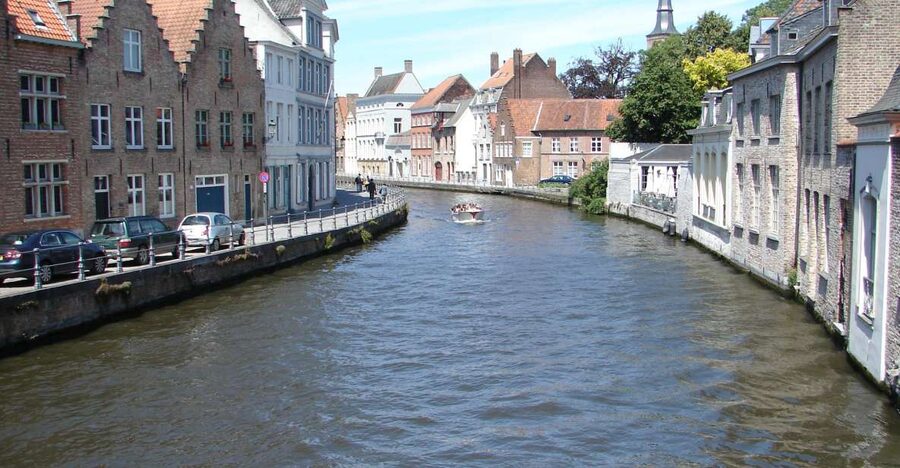
Bruges is compact, but its story is not. A postcard view of a canal tells you little about why the city became wealthy, why its trade later faded, or how its churches and civic buildings fit together. A good guide turns those pretty scenes into a readable story.
The private format matters most if your group has its own rhythm. You can ask questions, pause for photographs, or request more detail about art, religion, trade, or daily life. Nouf described the experience as smooth and shaped to the group’s pace, which is exactly the advantage of booking privately rather than joining a fixed public walk.
The price is $223 per group, not per person, for as many as 20 people. For two people, that is a sizable outlay. For a family or group of friends, the cost can be quite reasonable, particularly if you value having the guide to yourselves. A group of 10 would pay about $22 per person, before any entrance fees.
This is not a museum tour with admission included. It is a guided walk through the UNESCO-listed historic center, with the city itself providing the scenery. You will want comfortable shoes, and you should think of the tour as a framework for the rest of your day. It shows you where to return for a longer look.
More Walking Tours in Bruges
- Bruges: Small Group Boat Cruise and Guided Walking Tour
★ 4.8 · 4,102 reviews - Bruges: Walking Tour, Canal Boat Trip w/Beer Tasting Option
★ 4.4 · 2,759 reviews - Historical Walking Tour: Legends of Bruges
★ 5.0 · 2,541 reviews
Starting at ’t Zand and St. Savior Cathedral
The sample route begins at ’t Zand, beside the Concert Hall. This is a practical meeting point because it is a clear central landmark and is also the address of the Tourist Office, at ’t Zand 34. If you are staying in the historic center, pickup at your hotel lobby is available. Otherwise, the train station or Tourist Office gives you a fixed place to meet.
From ’t Zand, the walk follows the main shopping street toward the Market Square. That opening stretch helps you get oriented. You move from a broad, modern city space into the older core, with shops and historic buildings gradually leading toward the symbols most people associate with Bruges.
The first major stop is St. Savior Cathedral. It is one of the city’s important religious buildings and gives the tour an early chance to explain Bruges beyond canals and chocolate. The cathedral is a useful reminder that this was a serious medieval city, with institutions and wealth to match its commercial power.
Because the tour lasts only two hours, the exact amount of time spent at St. Savior may depend on your guide and your questions. Entrance fees are not included, so you should not assume that a full interior visit is part of the price. Ask your guide what is open and what can fit before you pay for admission elsewhere.
The Market Square and the 83-meter Belfry
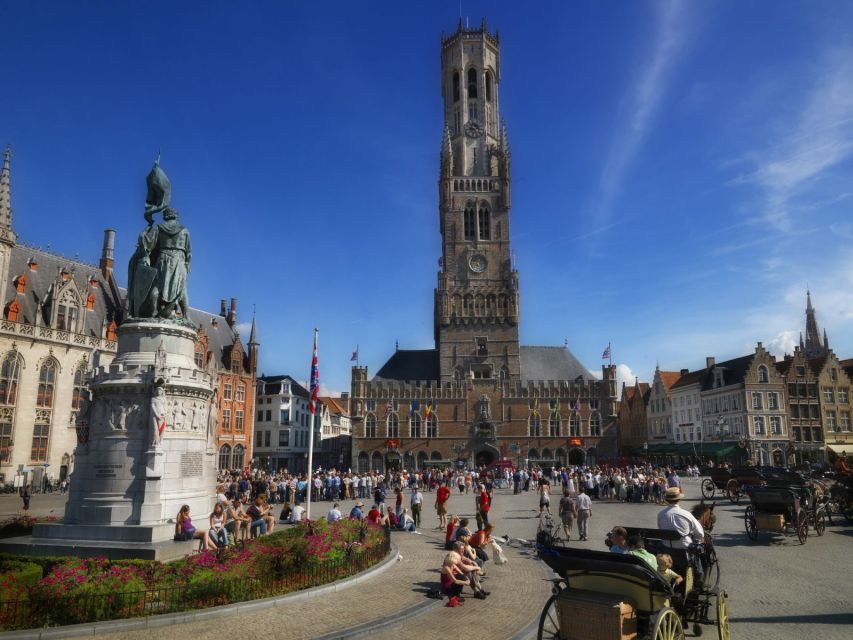
The Market Square is Bruges at full volume visually, even when the streets are quiet. Its great landmark is the 83-meter Belfry, a tall medieval tower that has watched over the city for centuries. You will see it from below during this walk, but climbing it is a separate activity and not included.
The square is an ideal place for your guide to explain the city’s public life. This was the setting for commerce, civic business, and major gatherings. The Belfry also represents the independence and confidence of a wealthy Flemish town, rather than simply serving as a photogenic tower.
I would pay attention to how your guide handles the square. A weaker walk can become a list of dates and building names. The best guides connect the architecture to the people who used it. Paul, for example, has been praised for shaping his explanations around questions and personal stories, while Jan was singled out for keeping teenage children interested.
That kind of delivery matters here. The Market Square is easy to photograph on your own. The guide’s value is in helping you understand why the buildings look as they do and why this particular space mattered.
Jan Van Eyck Square and Bruges as a trading power
Jan Van Eyck Square is one of the most worthwhile stops because it adds economic context to Bruges. From the 13th through the 15th century, this area was the financial and commercial center of Flanders. It was also tied to Hanseatic trade, linking Bruges to a much wider network of northern European merchants.
The square’s impressive houses are not just decorative façades. They recall the city’s years as a major trading center, when merchants, brokers, shipowners, and officials gathered here to conduct business. This is where the tour moves beyond the familiar image of Bruges as a preserved medieval town and explains the money that made much of that architecture possible.
Along the way, you pass the city theater, the Saaihalle from 1399, Huis ter Beurze, and the Toll House. Each stop adds a piece to the commercial story. Huis ter Beurze is especially interesting because it is linked to the origins of the word bourse, used for a stock exchange in several languages.
You may find this section more rewarding than the standard photo stops. The buildings are visually strong, but the real payoff is seeing Bruges as a working port and financial center. If trade history is not your favorite subject, tell your guide. The private setup should allow the explanation to be adjusted rather than delivered as a fixed speech.
Something different, still within reach of Bruges:
- Bruges: Choco-Story Chocolate Museum Guided Tour w/Tastings
★ 4.2 · 1,379 reviews - From Bruges: Great War Flanders Fields Minibus Tour w/ Lunch
★ 4.9 · 1,257 reviews - Bruges: Guided Rickshaw Tour
★ 4.9 · 1,199 reviews - Round-Trip Shuttle Service from Zeebrugge to Bruges
★ 4.0 · 1,143 reviews
Burg Square, where Bruges shows its authority
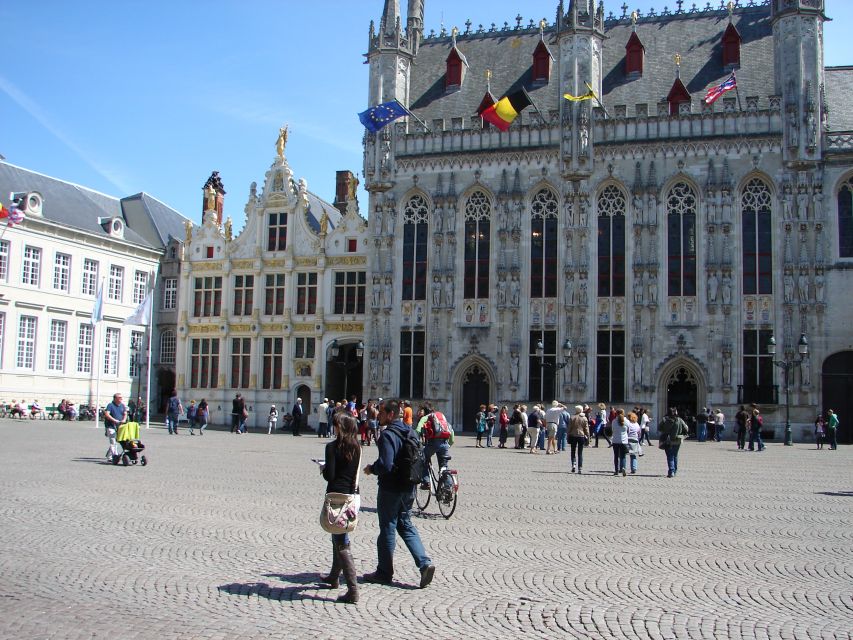
A short distance farther brings you to Burg Square, one of Bruges’s most handsome civic spaces. Here the concentration of major buildings is remarkable. You see Gothic City Hall, the Basilica of the Holy Blood, and the Liberty of Bruges, a former courthouse that now holds the Municipal Archives.
City Hall is the visual star. Its Gothic façade reflects the wealth and civic pride of medieval Bruges. Your guide can help you read the building as a statement of power: this was a city that wanted its government to look permanent, prosperous, and important.
The Basilica of the Holy Blood brings a different layer. It is a religious site connected with a relic believed to be a fragment of Christ’s blood. The tour information identifies the basilica as a stop, but admission is not included, so confirm whether an interior visit fits your schedule and whether a fee applies on the day.
One past tour also included the lower Romanesque chapel and the relic itself, showing how a private guide can respond to a group’s priorities when time and opening conditions allow. Do not treat that possibility as guaranteed, but it is worth asking if the basilica is high on your list.
The Liberty of Bruges gives the square a civic counterpoint. Its former courthouse role helps show that Burg was not merely a church precinct. It was a center of law, government, and administration.
The Fish Market, Tanners Square, and Dijver
After Burg Square, the route turns toward smaller spaces with a more intimate feel. You pass through the Fish Market and Tanners Square before reaching the Dijver. These stops help break up the grand architecture with places tied to trade and ordinary city activity.
Tanners Square is particularly useful for understanding how medieval commerce could shape an entire neighborhood. Even without entering a building, the setting gives you a sense of specialized work and the close relationship between business, water, and urban life.
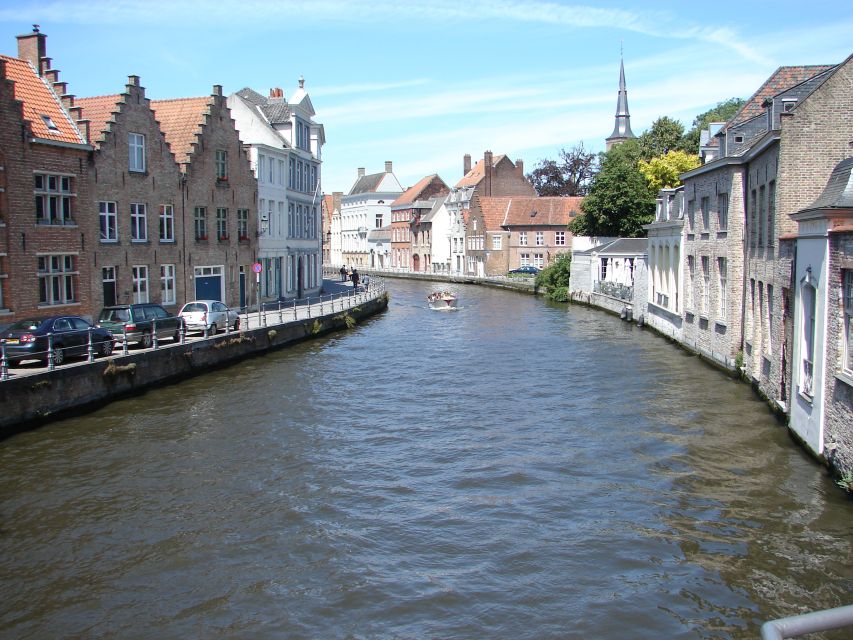
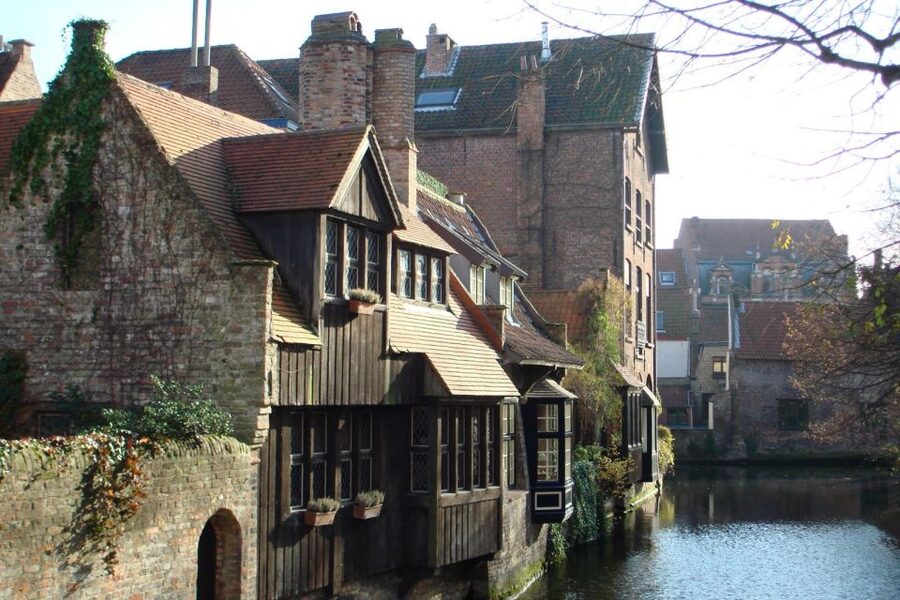
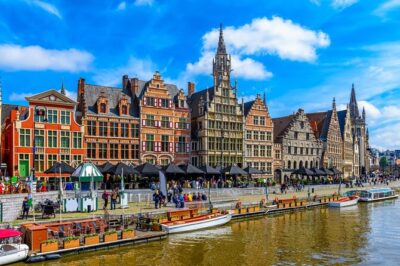
Dijver is one of the prettiest portions of the walk. The canal, old façades, and waterside views offer the Bruges scene many people came to see, but now you have some context for it. This is also a good part of the route for photographs. One group specifically appreciated having time to photograph swans along the canal.
You should expect a walking tour, not a leisurely canal cruise. The guide will keep moving to cover the route, although a private group can usually request a brief pause. If you want canal photos, say so early instead of hoping the guide notices.
St. Mary’s Church and St. John’s Hospital
The route continues past St. Mary’s Church and then stops briefly at St. John’s Hospital, one of Europe’s oldest preserved hospital buildings. These two places bring art, religion, and charitable care into the story of Bruges.
St. Mary’s is especially important for art lovers because it is associated with Michelangelo’s Madonna and Child. A past group arranged its priorities around seeing the sculpture, then continued to the hospital and the Groeningemuseum. That example shows the benefit of telling your guide what matters most at the start.
Still, you should keep expectations sensible. The official two-hour walk does not include museum admission, and a full art-focused visit could easily take longer than the general route. If Michelangelo or the Groeningemuseum is a priority, ask whether the guide can point you toward the entrance and leave you there for independent exploration.
St. John’s Hospital is valuable even from the outside because its age and purpose add human scale to the city’s grand story. It was a place for sick and needy people, not just merchants and magistrates. The brief stop can help you see Bruges as a lived-in town rather than an open-air display of façades.
Ending at Minnewater and the Princely Béguinage
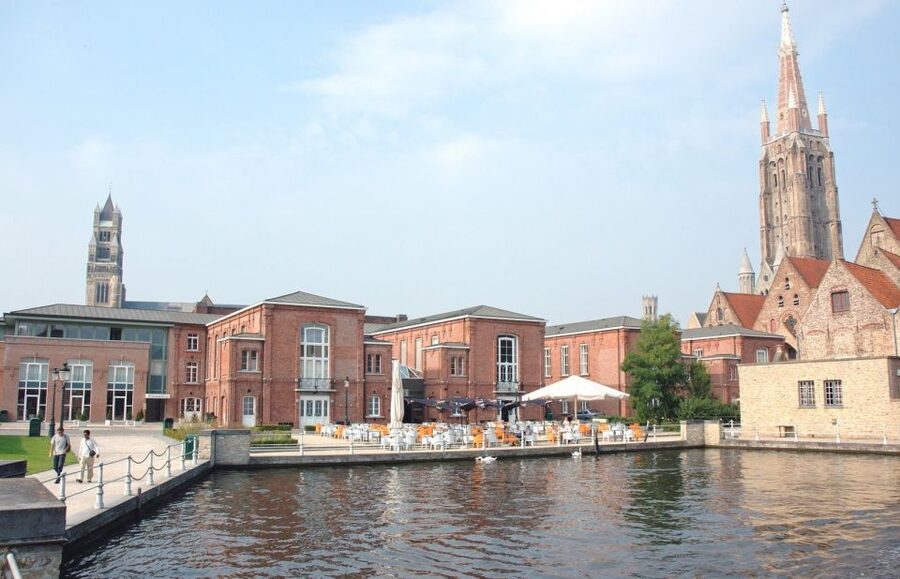
The walk ends at Minnewater and the Princely Béguinage. This is a satisfying change of mood after the commercial center, civic squares, and religious buildings. The Minnewater area is associated with calm waterside scenery, while the Béguinage offers a quieter historic setting.
The Princely Béguinage dates from the 13th century. Beguines were women who lived in religious communities without taking formal monastic vows in the same way as nuns. The setting gives your guide a chance to explain a distinctive form of urban religious life and women’s communities in medieval Flanders.
Ending here works well because you finish away from the busiest central squares. You can continue exploring from Minnewater, return toward the center, or use the route as a guide for a later visit. The experience does not include a return transfer, so plan your next stop before you set off.
The final stretch also makes the walk feel like a complete crossing of Bruges. You begin at ’t Zand, move through the main historic and commercial core, and finish near water and the Béguinage. That sense of progression is one of the tour’s practical strengths.
Guides, pace, and the human side of the walk
The most praised part of this experience is the guiding. Jan was credited with strong historical explanations and the ability to engage teenagers. Theo received similar praise, while Paul was valued for combining monument-based history with personal stories and answers shaped around the group.
Dirk appears repeatedly in the feedback, with praise for his flexibility, local knowledge, and pleasant manner. He also adapted well to a mother with mobility issues. Erik picked up a group at its hotel and shared his clear familiarity with Bruges as his home city.
Daniel offered practical food advice, including a recommended waffle place near Burg, along with suggestions for fries and chocolate. Those small tips can be as useful as another date from a history book, especially when you have limited time after the tour.
One group used the tour to see the Holy Blood relic, the Romanesque chapel, St. Mary’s, Michelangelo’s sculpture, St. John’s Hospital, and part of the Groeningemuseum. Another guide kept most of a rain-soaked walk under cover. These examples suggest that the guides are willing to shape the experience around weather, interests, and physical needs.
The balance is important: guide quality can vary from person to person, and the walk is only two hours. One booking began late, though Jan still provided the full two hours and more. The overall score of 4.7 from 296 ratings is reassuring, but you should still state your priorities clearly at the meeting point.
Who should book this Bruges walk?
I would recommend it most strongly to first-time visitors who want a clear introduction without spending half a day in a large group. Families benefit from the private pace, especially if children or teenagers need variety. Larger groups can also get good value from the flat group rate.
It suits history lovers, architecture fans, and people who want local recommendations for food and further sightseeing. It also makes sense for anyone arriving by train, since pickup at Bruges station is available and the walk covers the main center on foot.
You may want something else if you prefer a slow museum visit, a canal boat, or a tour built around food tastings. Entrance fees and meals are extra, and two hours leaves little room for extended interior visits. People with mobility concerns should discuss the route and preferred pace in advance, although past guiding has included helpful adjustments for a wheelchair.
Cancellation is flexible up to 24 hours before the tour for a full refund, and you can reserve now and pay later. Starting times depend on availability, so check the schedule before building the rest of your Bruges day around it.
Should you book it?
Book this tour if you want the main Bruges sights tied together by a real story, with a guide who can respond to your group instead of following a rigid script. The strongest reasons are the private format, the thoughtful route from ’t Zand to the Béguinage, and the repeated praise for guides such as Jan, Dirk, Paul, Erik, and Daniel.
Skip it if you already know Bruges well or want several hours inside museums and churches. For everyone else, especially a family or group that can share the $223 cost, it is a useful first walk. Tell the guide your top priority, bring shoes suited to city streets, and treat the final stop as the beginning of your next Bruges adventure.
FAQ
How long is the Bruges private walking tour?
The tour lasts two hours.
How much does the private tour cost?
The price is $223 for a private group of up to 20 people.
Where can the tour begin?
Pickup is available from a hotel lobby if the hotel is in Bruges’s historic center, Bruges train station, or the Tourist Office In & Out at ’t Zand 34.
Which languages are available?
The live guide service is available in Spanish, Dutch, English, French, and German.
Are entrance fees included?
No. Entrance fees are not included in the tour price.
Are meals included?
No. Meals are not included.
Can I cancel for a full refund?
Yes. You can cancel up to 24 hours in advance for a full refund. You can also reserve and pay later.
More 2-Hour Experiences
- 2-Hour Historical Walking Tour in Bruges with Praline Included
★ 5.0 · 291 reviews - 2-Hour Medieval Walk and Chocolate Tasting in Bruges
★ 5.0 · 48 reviews - 2-Hour Private Walking Tour of Bruges
★ 5.0 · 13 reviews - Guided Bike Tour: 2 Hours Highlights of Antwerp
★ 5.0 · 347 reviews
Just added around Bruges
- Bruges Beer and Chocolate Walking Tour★ 4.5 · 3 reviews
- Best of Brussels Private Tour from Zeebrugge or Bruges★ 4.0 · 3 reviews
- Private: Discover Bruges beers & brewery with chocolate pairing by a young local★ 5.0 · 3 reviews
- Visit of Bruges in 1 day private tour from Paris★ 5.0 · 3 reviews
- Brussels: Private & Customizable Day Trip to Bruges★ 5.0 · 3 reviews
- Explore the Instaworthy Spots of Bruges with a Local★ 5.0 · 3 reviews
- Bruges: Ticket Volkskundemuseum (Folk Museum)★ 5.0 · 3 reviews
- Bruges; private walking tour with the Beardbarian★ 5.0 · 3 reviews
Walking Tours, compared.
Small Group Boat Cruise and Guided Walking Tour
Read our review →
Walking Tour, Canal Boat Trip w/Beer Tasting Option
Read our review →
Historical Walking Tour with Chocolate & Waffle Tasting
Read our review →
Brussels Walking and Tasting Tour (Beers,Chocolates&Fries/Waffle)
Read our review →Browse the lists this tour appears in