
Reviewed · 1-DAY TOURS
From Brussels: Bruges and Ghent Full-Day Trip by Train
Two medieval cities, one long day. This Sunday-only trip from Brussels makes a strong case for seeing Bruges and Ghent together, especially if you have limited time in Belgium. You travel by train with a live guide, then explore both city centers on foot, with free time for food, shopping, and optional activities.
I like the mix of famous sights and real city streets. Bruges gives you canals, quiet lanes, old almshouses, and postcard squares, while Ghent feels larger and more lived-in, with a working old port and the great Castle of Gravensteen. The main drawback is simple: the day is tiring, and you cannot properly explore every museum, take every ride, or linger over both cities.
In This Review
- Key points before you book
- The basic plan from Brussels
- Bruges begins with the Lake of Love
- Bruges churches, hospitals, and a working brewery
- Fishmarket, Burg Square, and the heart of Bruges
- Is the Bruges canal boat worth €8?
- Ghent and the power of Saint Bavo Cathedral
- Ghent’s city center, towers, and old port
- Gravensteen, Patershol, and the Great Butchers’ Hall
- The walking load is the real price of the day
- What the guide adds to the experience
- Who should book this Sunday trip?
- FAQ
- How long does the tour last?
- What day does the tour depart?
- Where is the meeting point?
- What languages are available?
- Is transportation included?
- Is the Bruges canal boat included?
- Is the Van Eyck altarpiece included?
- What should I wear?
- Should you book it?
Key points before you book
- Two cities in one 10-hour day: You see the main historic centers of Bruges and Ghent without arranging Belgian train tickets yourself.
- Bruges gets about 4.5 hours: The plan includes a 2.5-hour guided walk and roughly two hours of free time.
- Ghent is more tightly paced: The guide leads you past Saint Bavo Cathedral, Graslei, Gravensteen, Patershol, and other major sights.
- Walking shoes matter: Expect long stretches on foot and uneven surfaces.
- Extra costs are modest but easy to miss: The Bruges canal boat costs €8, and the Ghent altarpiece costs €4.
- Guide quality can shape the day: Past guides such as Louisa and Heloise earned strong praise for warmth, humor, history, and patience.
The basic plan from Brussels
The meeting point is in front of the Tourist Information Office on Brussels’ Grand Place. Look for a guide with a white umbrella. The meeting information gives 8:30 AM, while the stated Sunday departure is 9:30 AM, so I would confirm the exact meeting and train time before the day of departure.
The tour runs only on Sunday according to the supplied schedule. Transportation to and from Brussels by train is included, as is the guide. The journey gives you a break between walking sections, but this is not a leisurely rail trip with long stops. Most of the useful sightseeing time comes once you reach the city centers.
The guide may speak English, Spanish, or French. If the group is multilingual, explanations can take longer. One visitor specifically found that switching between English and French slowed the day, though the experience remained worthwhile. That is a fair trade-off for a multilingual tour, but it helps explain why the schedule can feel tight.
The planned return train leaves at 5:00 PM, with arrival in Brussels around 6:00 PM. In a small group, you may be offered the choice of returning with the guide at the planned time or staying longer and making your own way back. Do not count on the later option unless the guide confirms it that day.
A few more trips and experiences worth a look
- Brussels: Train World Museum Entrance Ticket
★ 4.7 · 524 reviews - Brussels Train World Museum Entrance Ticket
★ 4.5 · 220 reviews - Bruges: 2.5-Hr Walking Tour from train station to Markt
★ 4.6 · 44 reviews
Bruges begins with the Lake of Love
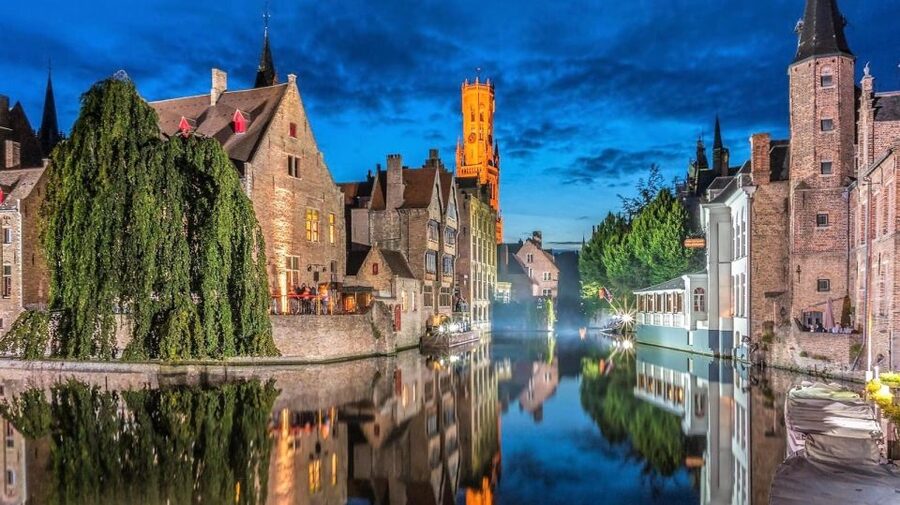
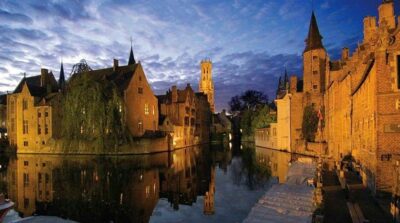
Bruges starts in the old city wall park at the Lake of Love, or Minnewater. This calm stretch of water forms part of the canal system that helped give Bruges its famous nickname, the Venice of the North.
The setting is a good opening to the city. You begin away from the busiest squares, with water, trees, and remnants of the medieval walls before moving into the denser center. I like this approach because Bruges is easier to understand when you first see how its waterways and walls shaped the city.
From here, the route continues to the Beguinage. This enclosed medieval community was a place where women could live together without joining a conventional religious order. The whitewashed buildings and quiet courtyard give you a calmer view of Bruges than the grand squares do.
You should treat this stop as a place for close looking rather than a quick photograph. The value is in the layout: a gated community, shared space, and small homes arranged around a central area. It is one of the clearest reminders that medieval cities were not only made of churches and merchant halls.
Bruges churches, hospitals, and a working brewery
The route passes Brewery De Halve Maan, the only brewery still operating in Bruges city center. It gives the tour a useful connection to modern Belgian life. Beer here is not just a souvenir theme. Brewing was part of the city’s economy, and the brewery remains an active presence among the old streets.
Next comes Old St. John’s Hospital, one of Europe’s oldest hospitals. Its buildings show about 800 years of European architecture, and the site also houses a museum connected with Hans Memling. The museum visit is optional, so the available time matters. If you want art and architecture rather than shopping, this is one of the places where your free time could disappear quickly.
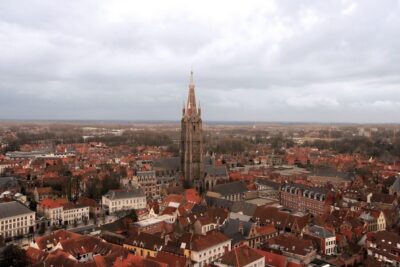
The Church of Our Lady is another major stop. Its brick tower is among the tallest brickwork towers in the world, and the church holds important art, including Michelangelo’s Madonna with the Child. The art treasures are optional attractions, so check whether an entrance charge or extra time applies before you commit.
This part of Bruges works well for anyone who likes seeing how art, worship, medicine, and trade occupied the same compact city. It can feel rushed for museum fans, though. The guided walk gives you the setting and the main facts, but it does not provide the time for a slow study of every interior.
Fishmarket, Burg Square, and the heart of Bruges
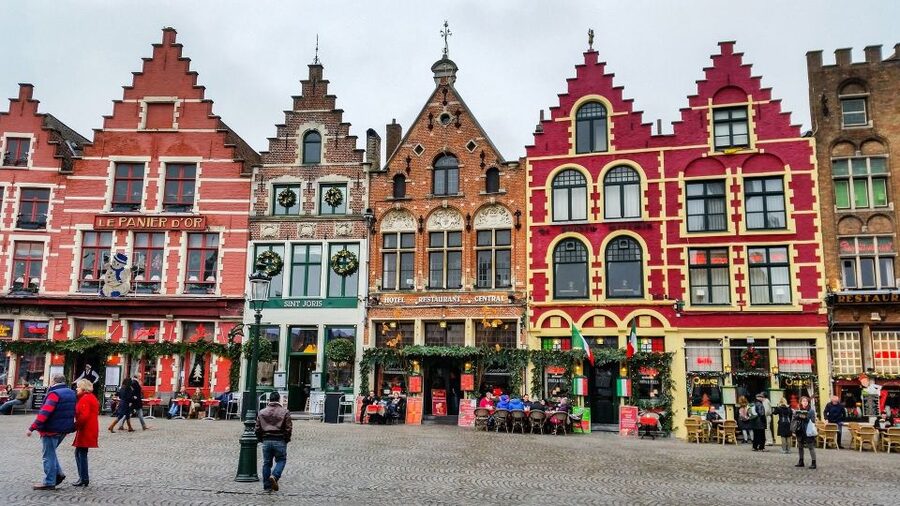
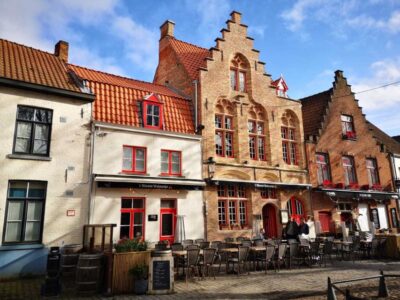
The VisMarkt, or fish market, and Tanners’ Square are two of the oldest squares in Bruges. Their guildhalls and cafés show the city at a smaller scale, with narrow spaces built around trade and food rather than monumental ceremony.
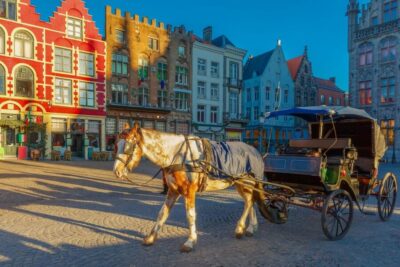
You then reach the Groeninge Museum, Burg Square, and Markt Square. Markt is the economic heart of Bruges, framed by guildhalls and the famous Belfort tower. The tower is one of Belgium’s best-known Gothic buildings and gives the square its unmistakable profile.
The guide-led walk lasts about 2.5 hours. That is enough to connect the major sights and understand their place in the city, but not enough to visit every building. Take photographs as you go, then save your free time for the one activity that matters most to you.
The two hours of free time can cover lunch, Belgian chocolate, souvenirs, or a canal boat. You may also want to sample moules frites and Belgian beer, but food and drinks are not listed as included. Budget separately for lunch and snacks.
Something different, still within reach of Brussels:
- Brussels: Atomium Entry Ticket with Design Museum Ticket
★ 4.4 · 9,254 reviews - From Brussels: Guided Day Trip to Bruges and Ghent
★ 4.6 · 8,353 reviews - From Brussels: Bruges & Ghent Day Tour – 2 Fairytale Cities
★ 4.7 · 8,242 reviews - Choco-Story Brussels: Chocolate Museum Entrance with Tasting
★ 4.3 · 4,883 reviews
Is the Bruges canal boat worth €8?
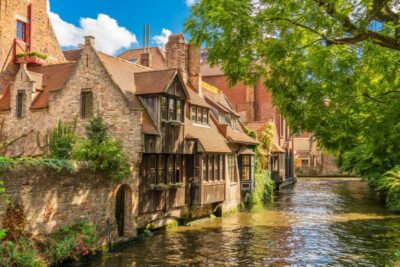
The optional canal cruise costs €8 per person, paid when you board. It is one of the best ways to see Bruges because the water offers a different angle on the old houses, bridges, and narrow streets.
The catch is timing. Bruges gives you about two hours of free time, and that same window may be your only chance to eat, shop, and take the boat. If the cruise has a long wait, you may need to choose.
I would put the canal boat ahead of casual souvenir shopping if the weather is pleasant. You already see the city from street level during the walking tour. The boat adds a second view and makes better use of Bruges’ defining feature, its canals. If museums or a long lunch matter more, skip it without guilt.
Ghent and the power of Saint Bavo Cathedral
After Bruges, the train takes you to Ghent, a port city where the Leie and Scheldt Rivers meet. Ghent feels broader and more substantial than Bruges. It has the same medieval bones, but with larger civic buildings, churches, riverfront guildhalls, and a castle that gives the city a more dramatic edge.
The tour begins at Saint Bavo Cathedral. Inside, you see Gothic structure, Baroque decoration, a marble choir, private chapels, a Rococo pulpit, and frescoes in the Romanesque crypt. This is a compact lesson in changing styles, with several centuries of religious architecture gathered in one building.
The major optional extra is the altarpiece The Adoration of the Mystic Lamb by the Van Eyck brothers. Entrance costs €4. It is one of the most important medieval works of art in Europe, so art lovers should seriously consider paying the extra fee.
Still, the choice depends on your priorities. A €4 entrance fee is small, but the time cost matters more on this tour. If you stop for the altarpiece, you may have less time for the streets, riverfront, and castle area. If this artwork is high on your list, tell the guide early so you can plan your stop.
Ghent’s city center, towers, and old port
The route continues to City Hall, whose Gothic, Renaissance, and Baroque sections reflect the city’s long growth. The mix is not as tidy as a single-period monument, but that is part of its appeal. You see a city that kept adding to itself rather than rebuilding everything in one style.
At the Market Hall, you get views of the Belfort Tower and the covered market. Nearby, the churches of Saint Nicholas, Saint James, and Saint Michael mark the medieval center. Each adds another layer to the city’s skyline and helps explain why Ghent can feel grand even when you are simply walking between squares.
Graslei is the visual high point. This old port along the Leie has attractive guildhalls, river views, and a strong sense of the city’s trading past. The stop is especially useful after Saint Bavo Cathedral because you move from religious power to commercial power within a short walk.
Give yourself time to look across the river rather than only at the buildings in front of you. The best views often come from the opposite bank, where the guildhalls line up beside the water. The guide’s explanation adds context, but the scene itself is easy to enjoy without a speech.
Gravensteen, Patershol, and the Great Butchers’ Hall
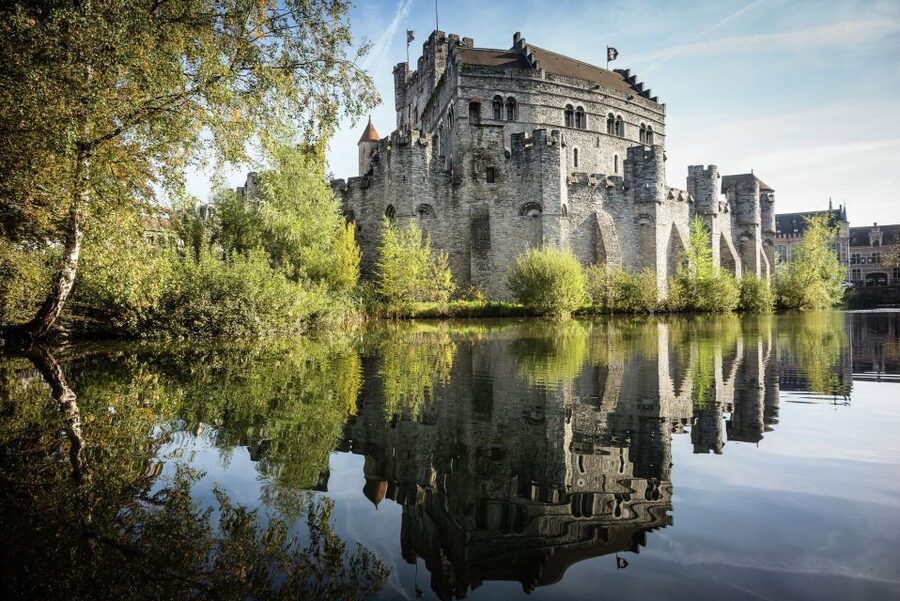
The medieval Castle of Gravensteen was once home to the Counts of Flanders. Its presence changes the mood of Ghent. Instead of another church or merchant building, you get a fortified residence in the middle of the city.
The schedule takes you to the castle, but the supplied details do not specify a separate castle admission. Ask the guide what is included if you want to enter. If the visit is mainly outside, you can still appreciate the towers, walls, and position beside the old streets.
Nearby Patershol has brick buildings, cafés, and restaurants serving Flemish food. This is a good place to think about dinner, though the tour returns to Brussels the same day, so your actual meal options depend on the pace and train schedule.
The final major stop is the 15th-century Great Butchers’ Hall, one of Europe’s oldest meat markets. It connects the polished historic center with everyday food culture. Belgian chocolate, beer, and moules frites are tempting choices during the day, but the tour does not include a formal tasting program or meal.
The walking load is the real price of the day
The advertised price is $82 per person. For that fee, you get a guide, local commentary, and round-trip train transportation from Brussels. That is a fair deal if you want to cover both cities without organizing separate train journeys, maps, and sightseeing plans.
You still pay for the optional canal boat, the Van Eyck altarpiece, food, drinks, and souvenirs. The extras are not large, but they can add up. The bigger cost is your time and energy.
Expect a lot of walking on uneven surfaces. Several people found the day tiring, and one direct assessment was that comfortable shoes are a must. I would wear supportive walking shoes and avoid building another major activity into the evening in Brussels.
The tour is marked wheelchair accessible, but the walking requirement and uneven surfaces deserve a direct check before booking. Accessibility can vary between streets, stations, historic interiors, and optional activities. If you need a slower pace or regular seating, ask the provider about the current route.
What the guide adds to the experience
A good guide matters here because the day contains many churches, squares, towers, and guildhalls. Without context, Bruges can become a string of pretty views and Ghent can become a list of names.
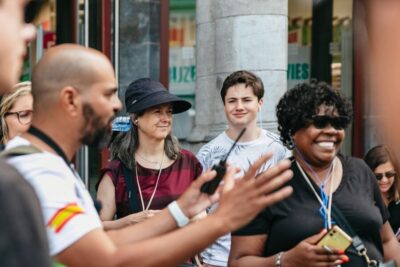
The strongest guide praise centered on Louisa, also called Louise in some comments, and Heloise. Louisa was described as funny, patient, and especially strong on the history of both cities. She also stopped for photographs and helped families with children keep pace. That kind of practical care can make a long walking day much easier.
The group experience can vary. One account described a friendly international group, while another noted that some people kept leaving the group and created a challenge for the guide. Stay close, listen for regrouping instructions, and keep the guide in sight near busy squares and train stations.
A multilingual tour may be slower than an English-only walk. The trade-off is that you can join the experience in English, Spanish, or French. If clear explanations matter more to you than speed, this format should work well.
Who should book this Sunday trip?
I would choose this tour if you are staying in Brussels for a short time and want a first look at both Bruges and Ghent. It is also useful if train planning feels like a chore or if you prefer a guide to connect the sights rather than wandering without context.
It suits active visitors who can walk for much of the day and are happy to make choices. You need to decide between the canal boat, museums, a longer lunch, extra photographs, and unhurried streets. You cannot do everything in one day.
I would not choose it for a slow, art-focused visit. If you want the full Van Eyck experience, several museums, a castle interior, horse rides, canal time, and long meals, plan separate days in Bruges and Ghent. One day gives you an excellent overview, not a complete stay.
The Sunday-only schedule also limits flexibility. Check the date carefully, arrive at the stated meeting point early, and confirm the departure time because the supplied details list both 8:30 AM and 9:30 AM.
FAQ
How long does the tour last?
The experience lasts about 10 hours. The planned return to Brussels is at 5:00 PM, with arrival around 6:00 PM.
What day does the tour depart?
The stated program departs from Brussels on Sunday only.
Where is the meeting point?
Meet in front of the Tourist Information Office at Brussels’ Grand Place. The guide should be holding a white umbrella.
What languages are available?
The live guide may lead the tour in English, Spanish, or French.
Is transportation included?
Yes. Round-trip train transportation between Brussels, Bruges, and Ghent is included, along with the guided tour and local guide.
Is the Bruges canal boat included?
No. The optional canal boat costs €8 per person, paid while boarding.
Is the Van Eyck altarpiece included?
No. Entry to see The Adoration of the Mystic Lamb costs an additional €4.
What should I wear?
Wear comfortable shoes. The tour involves a lot of walking on uneven surfaces.
Should you book it?
Book this trip if your goal is to see the essential Bruges and Ghent in one day and return to Brussels with the planning handled. The guides can add real value, especially when explaining the churches, guildhalls, canals, and trade that shaped both cities.
Skip it if you want museums, long meals, canal time, and quiet exploration. For everyone else, $82 is a reasonable price for two major Belgian cities, train transport, and a full day of focused sightseeing. Just bring good shoes, keep your expectations realistic, and choose your optional stops before the clock starts.
More 1-Day Tours
- Luxembourg and Dinant Day Trip from Brussels
★ 4.0 · 1,474 reviews - From Brussels: Bruges Day Trip with Boat Tour Option (ENG)
★ 4.6 · 1,352 reviews - From Brussels: Bruges Day Trip with Boat Tour Option (ES)
★ 4.7 · 1,171 reviews - Bruges and Ghent Day Trip from Brussels
★ 4.5 · 784 reviews
Just added around Brussels
- Discover the secrets of Brussels while playing★ 5.0 · 3 reviews
- Standard vehicle from Charleroi airport to city of Brussels★ 4.5 · 3 reviews
- Full day Brugge & Ghent: the gems of Flanders★ 5.0 · 3 reviews
- Private tour : Best of Brussels half day From Brussels★ 5.0 · 3 reviews
- Private Tour – Bruges and Ghent, our fairytale cities★ 5.0 · 3 reviews
- Floating in the clouds★ 5.0 · 3 reviews
- Full-Day City Tour of Ghent and Bruges from Brussels★ 4.5 · 3 reviews
- Brussels Private Walking Tour With A Professional Guide★ 4.5 · 3 reviews
1-Day Tours, compared.
Day Trip to Bruges with Optional Seasonal Cruise
Read our review →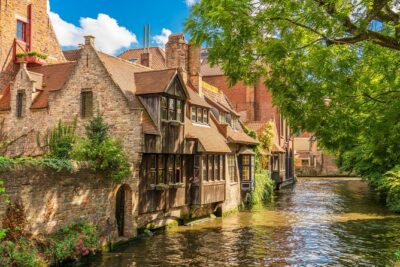
Browse the lists this tour appears in