
Reviewed · HISTORICAL WALKING TOURS
2-Hour Historical Walking Tour in Bruges with Praline Included
Bruges rewards a closer look. This two-hour walk links the city’s grand squares, canals, churches, breweries, and chocolate shops with stories that make the stones easier to understand. I like the small maximum of six people and the way guides Peter and Joost mix facts with humor. The low listed price is appealing, though you should know the experience is tip-supported in practice.
I also like the route’s useful shape. You begin and end at Markt 4, cover the main old center, and finish with clear ideas about where to eat, drink, or return for a longer visit. The main tradeoff is pace: with roughly 18 stops in two hours, several places receive only a few minutes.
In This Review
- Key points to know before you book
- Why this two-hour Bruges walk works
- Burg Square begins and ends the story
- Markt, the Belfry, and Bruges at work
- Gruuthuse, beer, and the church of Our Lady
- Canals, the brewery, and Bruges after dark
- Chocolate, waffles, fries, and hard times
- Boniface Bridge and the best canal views
- Dijver and the famous Rosary Quay view
- Tanners, fish sellers, and the final return to Burg
- Is $3.63 really the full cost?
- Pace, weather, and who will enjoy it
- My verdict on the storytelling
- Should you book this Bruges walking tour?
- FAQ
- Where does the tour start?
- Where does the tour finish?
- How long does the walking tour last?
- Is the tour offered in English?
- Is a praline included?
- Does the tour include entry to the museums or Belfry?
- How large is the group?
- Can I cancel for a refund?
Key points to know before you book
- A compact route through Bruges: You see Burg Square, Markt, the Belfry, the canals, Boniface Bridge, the Beguinage area, and the city’s main art and church landmarks.
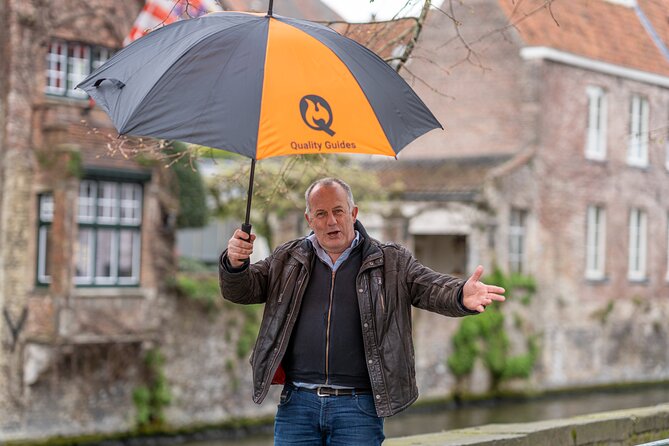
- Local storytelling is the main attraction: Peter and Joost are praised for humor, clear English, strong city knowledge, and useful food and drink advice.
- A Guild of Bruges Chocolatiers praline is included: This depends on the relevant shop being open when your walk passes by.
- The tour is tip-supported: The listed price is only $3.63 per person, but the guide’s income depends on tips, so budget for a fair gratuity.
- Expect gentle walking with many stops: The route suits most ages and abilities, but you still cover plenty of ground on foot.
- The group is intended to stay small: The stated maximum is six people, though one experience was described as larger, so confirm the arrangement when booking.
Why this two-hour Bruges walk works
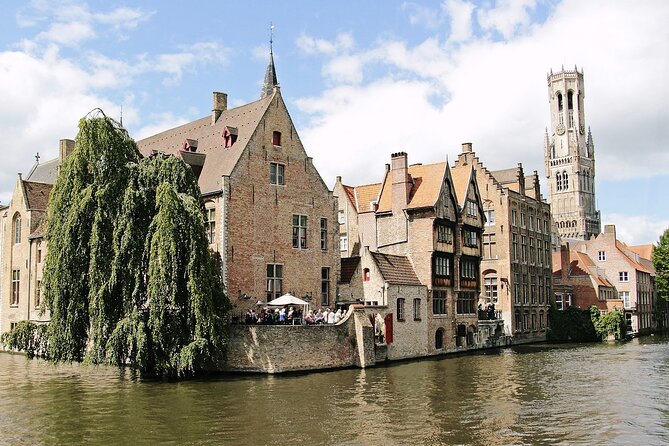
Bruges can feel almost too pretty at first. Canal reflections, stepped gables, horse carriages, and polished squares make it easy to stroll without grasping how the city earned its wealth or why it later faded.
This walk gives you that structure. You move from the seat of civic power to the cloth trade, religious art, medieval medicine, brewing, chocolate, war, and the less tidy corners of city life. I like that mix. Bruges is not presented as a fairy-tale backdrop only. You hear about money, disease, sanitation, war, class, and the habits that shaped daily life.
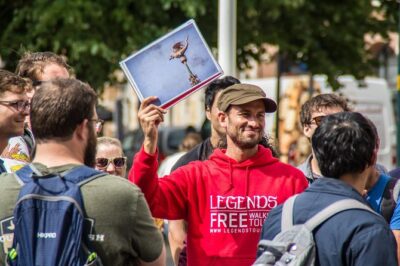
The guides are a major part of the appeal. Peter is praised for quick humor, excellent English, local knowledge, and an easy pace. He grew up in Bruges, and that matters when he recommends places to eat or drink. Joost receives similar praise for clear explanations, good energy, and storytelling.
You should also expect a personal style rather than a formal lecture. Several comments describe the walk as entertaining and easy to follow. That is useful in Bruges, where a long list of dates can blur together quickly.
More Historical Walking Tours in Bruges
- Historical Walking Tour: Legends of Bruges
★ 5.0 · 2,541 reviews - Historical Walking Tour: The Story of Bruges – by Legends
★ 4.7 · 483 reviews - Private Historical Tour: The Highlights of Bruges
★ 5.0 · 315 reviews
Burg Square begins and ends the story
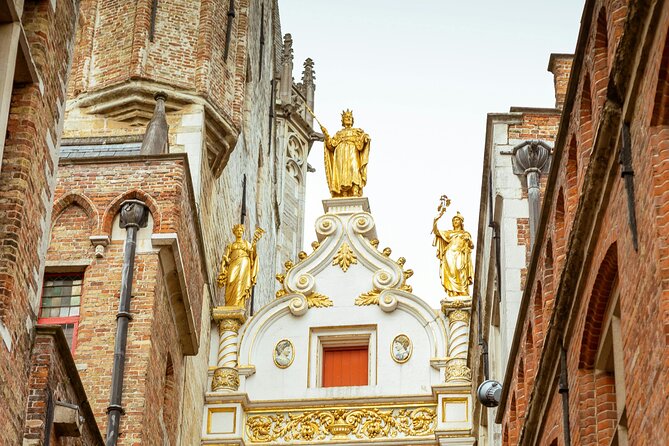
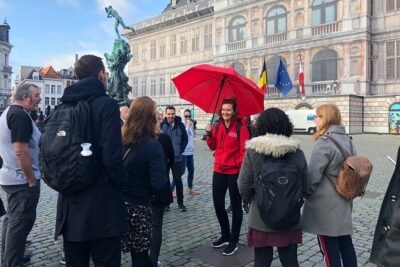
The walk starts at Burg Square, where Bruges’ civic story begins. You will see a group of important buildings gathered in one place, including the town hall, the Basilica of the Holy Blood, and the courthouse.
The guide uses the square to explain how political and religious power shared this small patch of ground. It is a good opening because you immediately get a sense of Bruges as a city shaped by institutions, trade, and ceremony.
The final stop returns to Burg Square for a closer look at its mixed styles and some stronger historical stories. This circular plan is practical. You do not finish in an unfamiliar corner, and you can easily continue to dinner or revisit a building after the walk.
Markt, the Belfry, and Bruges at work
From Burg, the route moves to Markt, the large central square. Its medieval buildings, cloth halls, water halls, and Belfry show how trade once drove the city.
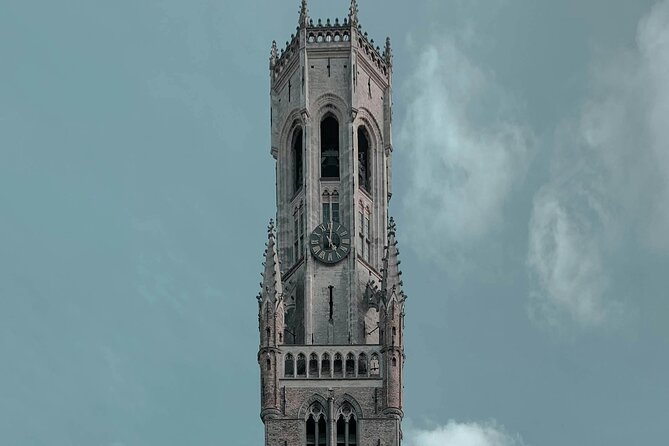
You will not receive a full tower visit during this walk. The short stop at the Belfry focuses on its origins, the wealth tied to the cloth halls, and present-day concerns affecting the structure. That makes this a viewing and storytelling stop, not an admission-ticket attraction.
This distinction matters. If climbing the Belfry is high on your list, you will need separate time for it. The tour gives you context and a good orientation, but the itinerary does not include entry to the tower.
The route then touches on Praalboog Pro Patria, where the guide explains Bruges during the First and Second World Wars and the independence of Belgium. This adds a needed modern layer. The city may look medieval, but its story did not stop in the fifteenth century.
Gruuthuse, beer, and the church of Our Lady
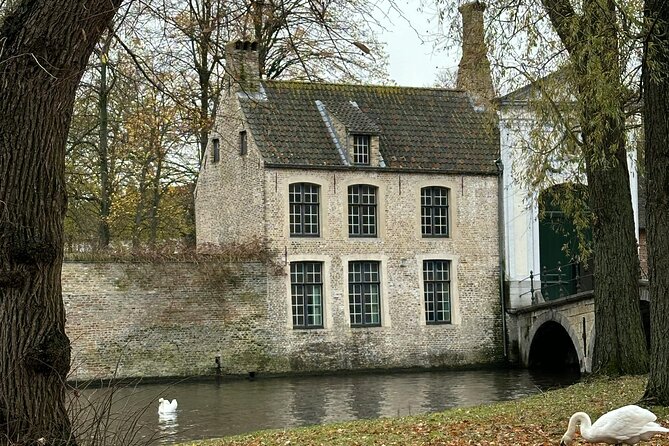
At the Gothic gate of Gruuthuse, you hear about the old companies that now operate canal tours. The stop is brief, but it helps connect the city’s grand buildings with the commercial activity still visible on its waterways.
Inside the courtyard of the Gruuthuse Museum, the focus shifts to beer. The story concerns the resident’s wealth from Gruut, and why brewing later moved from gruit, a medieval herb mixture, toward hops. This is the kind of small subject that can make a city feel more real. You are not just looking at a handsome Gothic residence. You are hearing how taste, trade, and regulation affected money.
The walk continues to Our Lady’s Church, known for works including the Pietà and other valuable art. The stop is not a full museum visit, so treat it as an introduction. If a particular painting or sculpture catches your attention, mark it for a later return.
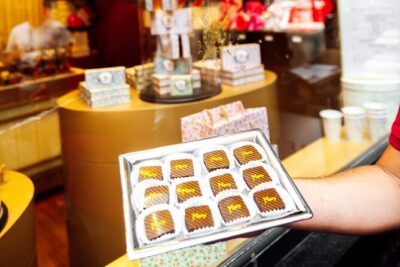
At Saint John’s Hospital, the guide connects medieval medicine with the creation of pralines. That is a pleasing Bruges combination: illness, hospitals, and chocolate in one story. The included praline from the Guild of Bruges Chocolatiers adds a small edible touch, though it is available only if the shop is open.
More Walking Tours in Bruges
- Bruges: Small Group Boat Cruise and Guided Walking Tour
★ 4.8 · 4,102 reviews - Bruges: Walking Tour, Canal Boat Trip w/Beer Tasting Option
★ 4.4 · 2,759 reviews - Guided boat trip and walk
★ 4.5 · 703 reviews - Bruges: Guided Walking Tour
★ 4.5 · 682 reviews
Canals, the brewery, and Bruges after dark
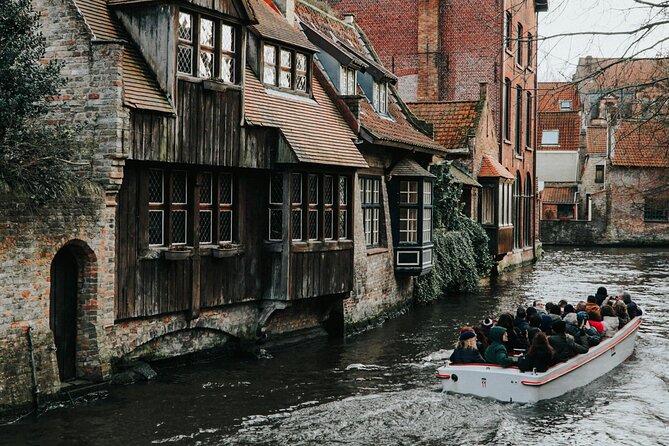
The water-side stop at Sint-Janskaai is designed partly for a photograph. You pause with a medieval backdrop and have a chance to take in Bruges from the canal edge.
At Walplein, you see Huisbrouwerij De Halve Maan, the well-known brewery with a pipeline running beneath the city. The stop does not include a brewery visit or tasting, but it gives you a useful landmark and a bit of modern infrastructure beneath the old streets.
Then the tone changes at Stoofstraat, described as Bruges’ medieval red-light district. It is also the city’s smallest street, and the guide uses it to explain customs and the less wholesome side of the famous swans.
I appreciate this part of the route because it resists the polished postcard version of Bruges. Medieval cities had pleasure districts, foul smells, social rules, and uncomfortable habits. You get some of that here, usually with the humor that the guides are praised for using.
Chocolate, waffles, fries, and hard times

Katelijnestraat brings you into modern Bruges’ food corridor. You will find chocolate, waffles, and fries, but the guide also discusses plague and the city’s darker periods.
This is one of the most useful stops for planning the rest of your day. You can note which foods interest you, then return after the walk rather than stopping impulsively in the first shop you see.
The praline is a sample, not a food tour. It gives you a taste and a connection to the city’s chocolate trade, but you should not book this experience expecting multiple tastings or a sit-down meal.
Boniface Bridge and the best canal views
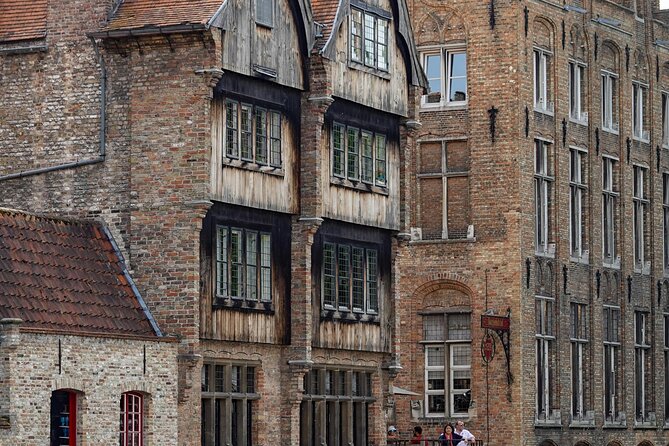
The Boniface Bridge is one of the prettiest points on the route. It is framed as a bridge of love, though the guide also explains its more doubtful associations.
You pause in the medieval gardens around it, and this is one of the places where the walk slows down for photographs. If you want romantic Bruges, this is the scene you came for. If you prefer blunt history, the guide’s less sentimental details keep the stop from becoming too sugary.
The nearby Groeningemuseum introduces the Flemish Primitives, including Jan van Eyck, Hans Memling, Hugo van der Goes, and Gerard David. Again, the tour does not include museum admission. Instead, you receive a short explanation of why these fifteenth-century paintings matter and which artists you may want to see inside.
That approach works well for a first visit. You learn what deserves your time before paying for another attraction.
Dijver and the famous Rosary Quay view
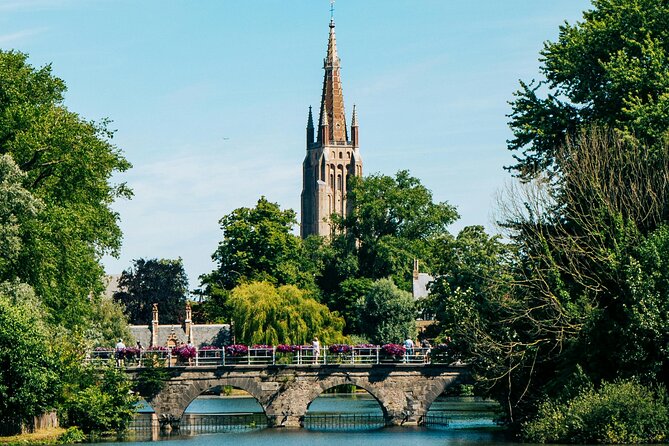
At Dijver, the guide talks about Bruges’ oldest port and the Vikings who loaded their spoils for transport to Scandinavia. You also get a view toward one of the city’s well-known terraces.
The story helps explain why waterways mattered so much here. Bruges’ canals are attractive today, but they were once working routes for goods, people, and power.
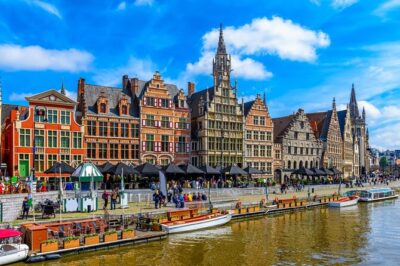
Then comes Rosary Quay, perhaps the most camera-ready point of the walk. From here, you can frame the Belfry and Our Lady’s Church together, with the hotel linked to the film In Bruges in the scene.
You should expect a short pause rather than unlimited photography time. Still, this is exactly the kind of orientation stop that helps you return later when the light is better or the crowds are thinner.
Tanners, fish sellers, and the final return to Burg
At Huidenvettersplein, you hear about the tanners, whose work made the square one of the dirtiest and worst-smelling places in medieval Bruges. Today, restaurants and cafés occupy the area, making the contrast easy to appreciate.
The guide then brings you to Vismarkt, where two fish markets once served different groups of people. The square also leads toward the central area where Gothic, Renaissance, and Classicist styles meet.
These final stops are strong because they return you to everyday life. You have seen palaces and churches, but now you are thinking about food, labor, smells, social divisions, and changing architecture.
The walk ends back at Burg Square, with the town hall, Holy Blood chapel, and courthouse gathered around you. By this point, you should have a mental map of the old center and a shortlist of places to revisit.
Is $3.63 really the full cost?
The listed price of $3.63 per person is remarkably low for a two-hour guided walk. On paper, it is excellent value. You receive a local guide, a broad route, rest stops, access to drinking water and public toilets along the way, and a praline when the participating shop is open.
There is an important catch. The guide’s income is tip-based, and the low booking price does not tell the whole financial story. One person was surprised by this arrangement, while another noted that the tour remains a bargain even after leaving a decent tip.
I would treat the $3.63 as a small booking charge, not the final value of the guide’s work. If you enjoy the experience, plan to tip fairly. That also makes the price easier to judge: you are paying for two hours of local interpretation, not simply buying a cheap ticket.
The stated maximum is six people, which should make it easier to hear the guide and ask questions. One account describes a larger group, so group size may vary by departure. If a very small group matters to you, confirm it before relying on that feature.
Pace, weather, and who will enjoy it
The walk is described as suitable for most ages and abilities, with a moderate fitness level requested. The pace is generally gentle, and one account specifically found it comfortable for older people. You still cover plenty of steps, so comfortable shoes are sensible.
Rest stops, drinking water, and public toilets are provided along the way. You should also prepare for rain regardless of the forecast. Bruges weather can change, and an umbrella is easy to buy along the route if needed.
Families can make this work. A guide allowed a family group to step away briefly when a sixteen-month-old needed movement. Still, two hours of stops and stories may be more than a very young child can enjoy without breaks.
This is a good first activity if you have only a short stay. It gives you geography, background, photographs, and food ideas without taking an entire day. It also suits solo visitors because a lively guide and a small group can make the city easier to approach.
You may want something else if you prefer extended museum time, canal transportation, or a quiet architectural tour. The experience is broad rather than slow. You see many places, but the shorter stops are introductions.
My verdict on the storytelling
The strongest feature is the delivery. Peter is repeatedly praised for humor, clear English, useful recommendations, and the ability to make two hours pass quickly. Joost is described in much the same way, with strong energy and a gift for turning city facts into memorable stories.
That matters more here than a long list of dates. Bruges is compact, but its buildings can begin to look alike if nobody explains the trade behind them. A good guide shows you how cloth, beer, medicine, chocolate, religion, war, and sanitation fit into the same city.
The tour also appears comfortable for people who do not want a stiff presentation. You can ask questions, hear amusing details, and still leave with a solid overview.
Should you book this Bruges walking tour?
Book it if you want a lively orientation before exploring Bruges on your own. It is especially useful for a first visit, a short stay, a cruise stop, solo sightseeing, or anyone who wants restaurant and drink suggestions from someone connected to the city.
Keep your expectations clear. This is not a full museum tour, a Belfry climb, a canal cruise, or a chocolate tasting session. It is a fast-moving introduction with many stops, a local guide, a praline when available, and a tip-supported price that deserves a fair gratuity.
I would book it early if your schedule is fixed, since the experience is commonly reserved about 19 days ahead. Cancel at least 24 hours before the start time if plans change, since later cancellations and changes are not refunded. For most people wanting to get their bearings fast, this is a smart and inexpensive beginning in Bruges.
FAQ
Where does the tour start?
The meeting point is Markt 4, 8000 Brugge, Belgium.
Where does the tour finish?
The walk ends back at the meeting point in Bruges.
How long does the walking tour last?
The tour lasts approximately two hours.
Is the tour offered in English?
Yes. The experience is offered in English and includes a local expert guide.
Is a praline included?
Yes. A praline crafted by the Guild of Bruges Chocolatiers is included, but it is available only if the relevant shop is open.
Does the tour include entry to the museums or Belfry?
The stated stops have free admission, and the experience provides outdoor explanations of places such as the Belfry, Gruuthuse Museum, Groeningemuseum, Our Lady’s Church, and Saint John’s Hospital. Separate attraction admission is not listed as included.
How large is the group?
The stated maximum is six people. One account describes a larger group, so you may wish to confirm the group arrangement before booking.
Can I cancel for a refund?
You can cancel at least 24 hours before the experience start time for a full refund. Cancellations or changes made less than 24 hours before the start time are not accepted for a refund.
More 2-Hour Experiences
- Bruges Private 2-Hour Walking Tour
★ 4.7 · 296 reviews - 2-Hour Medieval Walk and Chocolate Tasting in Bruges
★ 5.0 · 48 reviews - 2-Hour Private Walking Tour of Bruges
★ 5.0 · 13 reviews - Guided Bike Tour: 2 Hours Highlights of Antwerp
★ 5.0 · 347 reviews
More Historical Tours in Bruges
- THE Storytelling Tour of Bruges | First Day Must | History & Tips
★ 5.0 · 925 reviews - Bruges: Private Historical Highlights Walking Tour
★ 4.7 · 191 reviews - Bruges: Nightly Tales and Untold History Walking Tour
★ 4.9 · 87 reviews - Bruges: History, Chocolate and Beer Walking Tour
★ 4.9 · 65 reviews
Just added around Bruges
- Bruges Beer and Chocolate Walking Tour★ 4.5 · 3 reviews
- Private: Discover Bruges beers & brewery with chocolate pairing by a young local★ 5.0 · 3 reviews
- Best of Brussels Private Tour from Zeebrugge or Bruges★ 4.0 · 3 reviews
- Visit of Bruges in 1 day private tour from Paris★ 5.0 · 3 reviews
- Brussels: Private & Customizable Day Trip to Bruges★ 5.0 · 3 reviews
- Explore the Instaworthy Spots of Bruges with a Local★ 5.0 · 3 reviews
- Bruges: Ticket Volkskundemuseum (Folk Museum)★ 5.0 · 3 reviews
- Bruges; private walking tour with the Beardbarian★ 5.0 · 3 reviews
Historical Walking Tours, compared.
Historical Walking Tour with Chocolate & Waffle Tasting
Read our review →
Historical Tour with Chocolate & Waffle Tasting
Read our review →
Historical Walking Tour: The Story of Bruges – by Legends
Read our review →
Browse the lists this tour appears in