
Reviewed · MUSEUMS
Bruges: Ticket Volkskundemuseum (Folk Museum)
Step into Bruges before smartphones. The Volkskundemuseum recreates ordinary life through restored workers’ homes, an old classroom, a pharmacy, and small shops packed with objects from the 19th and early 20th centuries. I like the close-up look at daily work and the surprising collection of tobacco goods, pipe heads, games, and baking molds. I also like that your ticket includes the temporary exhibitions, so this is more than a quick walk through old rooms.
The main consideration is scale. This is a focused museum, not a full-day attraction with a long route of major sights. Some rooms may appeal more to adults who enjoy social history than to children, although the folk games and shop displays help keep younger minds busy.
In This Review
- Key things to know before you go
- Why Bruges Folk Museum feels different
- Entering the restored laborers’ homes
- An old classroom and the shape of early education
- From pharmacy to tailor’s workshop
- The confectionery and grocery store
- The small objects that reward close looking
- Upstairs exhibitions and activities
- Folk games and the indoor gardens
- Sweet-making afternoons and the Mid-winter Festival
- Is the $9 ticket good value?
- Practical limits to keep in mind
- Who will enjoy the Folk Museum most?
- Should you book the Volkskundemuseum?
- FAQ
- Where is the Volkskundemuseum located?
- How much does admission cost?
- How long is the ticket valid?
- Are temporary exhibitions included?
- Can children enter for free?
- Are luggage, pets, or flash photography allowed?
Key things to know before you go
- Workers’ homes become the main exhibit: Restored laborers’ dwellings show how ordinary Bruges households once looked and worked.
- Several period shops sit under one roof: Look for the vintage pharmacy, tailor’s workshop, confectionery, and grocery store.
- Small objects tell the bigger story: Tobacco products, pipe heads, pilgrimage pennants, children’s games, and cake molds reveal daily habits better than grand monuments can.
- The ticket includes temporary exhibitions: Head upstairs after the historic rooms to see changing displays and activities.
- Sweet-making adds a seasonal treat: A sweet maker has appeared on the first and third Thursday afternoons, with a planned return after the 2023 season.
- The $9 price is family-friendly: Children under 13 can receive a free ticket at the box office, making this an easy add-on in Bruges.
Why Bruges Folk Museum feels different
Bruges is famous for canals, medieval brickwork, and ornate public buildings. The Volkskundemuseum shifts your attention to the people who cooked, taught, stitched, sold, smoked, prayed, and played in the city.
That change of scale matters. Instead of looking at a grand church or historic square, you look at the objects used by working families. A cake mold can tell you about home baking. A shop counter suggests how people bought everyday goods. A child’s game hints at how free time worked before television and digital screens.
I find this kind of museum useful because it fills in the background of Bruges. It shows that the city was not only a pretty medieval center. It was also a place of trade, labor, family routines, small businesses, and neighborhood life.
The museum’s tone is friendly and approachable. You do not need a specialist’s knowledge of Belgian history to understand what you are seeing. The rooms do much of the explaining through their arrangement, objects, and period details.
More Museums in Bruges
- Bruges: Choco-Story Chocolate Museum Guided Tour w/Tastings
★ 4.2 · 1,379 reviews - Choco-Story: The Chocolate Museum in Bruges
★ 4.0 · 544 reviews - Bruges: Chocolate Making Workshop and Chocolate Museum Entry
★ 4.6 · 395 reviews
Entering the restored laborers’ homes
The historic interiors form the heart of the visit. You move through carefully restored workers’ dwellings designed to suggest daily life during the 19th and early 20th centuries.
These are not grand merchant houses. That is the point. The rooms focus on modest domestic life, where space, work, and household tasks were closely connected. You get a sense of how much activity took place in a small home and how many objects were made to serve more than one purpose.
I would slow down here rather than rush toward the shop displays. Look at the arrangement of the rooms and notice what is absent as well as what is present. The museum is strongest when you consider the limits of earlier life: fewer possessions, more handwork, and a closer link between home and occupation.
The restored interiors also help younger children understand the past. A period room can be easier to grasp than a wall of dates. Children can see where people worked and what kinds of items they handled, even if they do not yet understand the wider social setting.
An old classroom and the shape of early education
The old classroom offers another useful look at ordinary life. It is a compact setting, but it gives you a feel for the formal side of childhood in an earlier era.
For children, the classroom can turn history into a visual puzzle. They can compare it with their own school and notice how many things have changed. For adults, it provides a reminder that education once took place with different tools, routines, and expectations.
The museum does not need a long lecture to make this room work. Its value comes from seeing the setting directly. If you are visiting with family, ask your children what they think the room was used for and which objects they recognize. That simple conversation can make the stop more memorable.
From pharmacy to tailor’s workshop
The period pharmacy and tailor’s workshop show two very different kinds of work. One connects to health and household remedies. The other reflects clothing, repair, and skilled handwork.
Together, they help you see how many services were once carried out in small local businesses. A pharmacy was more than a place to collect a modern prescription. A tailor’s workshop was more than a shop selling finished clothing. Both depended on specialized knowledge and personal service.
The displays are especially useful for anyone interested in old trades. You can look at the tools and work settings and think about the time required to make, mend, prepare, or sell something. Modern life often hides that labor. Here, it sits in plain view.
These rooms may appeal most to adults and older children. Younger children could move through them quickly, so I would connect them to the more visual shop displays that follow.
Something different, still within reach of Bruges:
- Bruges: Small Group Boat Cruise and Guided Walking Tour
★ 4.8 · 4,102 reviews - Bruges: Walking Tour, Canal Boat Trip w/Beer Tasting Option
★ 4.4 · 2,759 reviews - Historical Walking Tour: Legends of Bruges
★ 5.0 · 2,541 reviews - From Bruges: Great War Flanders Fields Minibus Tour w/ Lunch
★ 4.9 · 1,257 reviews
The confectionery and grocery store
The confectionery store is one of the museum’s most charming stops. It brings food, display, and old-fashioned retail together in a way that is easy to understand.
Look for the cake and chocolate molds. They are small, but they show how sweets were shaped and prepared before today’s industrial packaging became normal. The objects also add a touch of playfulness to the visit, especially for children who respond quickly to anything connected with candy and chocolate.
The grocery store gives you another view of shopping in Bruges. Rather than walking through a modern supermarket with identical aisles, you see the idea of a neighborhood store built around personal service and individual goods.
Tobacco products are also part of the collection. You may see finely crafted pipe heads and other tobacco-related items. They are not simply decorative curiosities. They point to habits, materials, and forms of craftsmanship that once had a regular place in daily life.
One word fits the confectionery displays nicely: Schitterend, or splendid. The collection has a gentle charm rather than a grand theatrical effect, and that is exactly why it works.
The small objects that reward close looking
The museum’s best discoveries are often the items you might pass at first glance. Pilgrimage pennants, vintage children’s games, tobacco goods, pipe heads, and baking molds each offer a brief look into a particular habit or custom.
Pilgrimage pennants connect everyday life with religious travel and local devotion. Children’s games reveal how entertainment could be made from simple materials. Pipe heads show that useful objects could also receive careful artistic treatment.
I recommend taking your time with the cases and shelves. The museum is not only about large rooms. It is also about the accumulated details of ordinary life.
If you enjoy flea markets, antiques, craft traditions, or social history, you will probably get more from these displays than someone who wants only major architectural sights. The museum rewards curiosity. You do not need to know what every object is immediately. Sometimes the fun comes from guessing its purpose before reading the explanation.
Upstairs exhibitions and activities
After the historic interiors, continue to the upper floor. This area contains temporary exhibitions and other activities, so the exact content can change over time.
That changing program gives you a reason to return if you are spending more than one day in Bruges. It also keeps the museum from feeling fixed in one period. The permanent rooms offer a stable look at local life, while the upper floor can introduce a different theme or set of objects.
The temporary exhibitions are included with admission, which improves the value of the $9 ticket. You are not paying separately for a second attraction inside the same building.
The museum also offers engaging activities, though the details may vary. I would treat the upper floor as part of the main visit rather than an optional extra. It can be particularly helpful for families, since an activity gives children something active to do after the quieter period rooms.
Folk games and the indoor gardens
The indoor gardens provide space for folk games in a welcoming setting. This is an important feature if you are visiting with children, because it gives the museum a more relaxed rhythm.
Historic rooms ask you to look carefully and move quietly. Folk games let you participate. That contrast can make the visit easier for a family group, especially when different people have different levels of interest in museum displays.
The games also fit the museum’s main idea. The institution is not only preserving objects in glass cases. It is helping you understand how people spent their time and shared traditions.
I would not plan the entire day around this feature, since the museum remains a compact attraction. But it is a welcome break within the visit and a good reason to give children a little freedom to explore.
Sweet-making afternoons and the Mid-winter Festival
The museum has offered live sweet-making on the first and third Thursday afternoons of the month. The activity filled the rooms with the smell of freshly made treats and was scheduled through September 21, 2023, with the sweet baker expected to return in 2024.
Because those dates are tied to a particular program period, check the current schedule before planning your visit around it. If the demonstration is running, it adds a useful sensory layer to the confectionery displays. You are not only looking at molds and old shop fittings. You are also connecting them with the making of sweets.
In December, the Mid-winter Festival brings a seasonal event to the museum. The festival offers a festive way to encounter folk traditions and may be a good choice if your Bruges visit falls during the holiday period.
These programs are not required for a worthwhile visit. The permanent rooms remain the main reason to come. Still, a live demonstration or seasonal event can make the museum feel more active and memorable.
Is the $9 ticket good value?
At $9 per person, the museum is reasonably priced for Bruges. The ticket covers the permanent museum and temporary exhibitions, so you are getting more than a single themed display.
The value depends on what you want from your day. If you are looking for a large attraction that occupies several hours, this may feel too small. If you want a calm, affordable cultural stop between Bruges’ major sights, it makes good sense.
Families receive an extra advantage. Children under 13 can obtain a free ticket at the box office. That makes the museum a practical choice for parents who want an educational activity without adding another full-price admission for every child.
The ticket is valid for one day, and you can check available starting times when booking. Free cancellation is available up to 24 hours ahead for a full refund, and reserve-now, pay-later booking keeps your schedule flexible.
You can also skip the ticket line, which matters on a busy day in central Bruges. The museum is not a substitute for the city’s major landmarks, but its modest price makes it easy to add without much financial risk.
Practical limits to keep in mind
Large bags and luggage are not allowed. Plan to visit without bulky items, or arrange storage before arriving. Pets are also not permitted, except for assistance dogs.
Flash photography is forbidden. That protects the historic displays and keeps the rooms calmer. If you want photographs, use available light and follow any posted museum directions.
The available information does not provide a detailed visit length, so I would leave room in your schedule rather than assign it a fixed number of hours. The duration is listed as one day because the ticket is valid for that period, not because you need to spend an entire day inside.
The museum suits a flexible itinerary. You can combine it with other Bruges sights, return to the upper-floor exhibitions, or use it as a quieter change of pace after outdoor sightseeing.
Who will enjoy the Folk Museum most?
I recommend this museum to:
- Families looking for a child-friendly cultural stop
- Adults interested in antiques, domestic life, and old trades
- Anyone who enjoys restored interiors and small historical objects
- Visitors who want more context about ordinary life in Bruges
- People looking for an affordable attraction with temporary exhibitions included
You may enjoy it less if you want dramatic art, a large architectural complex, or a long guided experience. There is no guide name or fixed guided route provided, so you should expect to explore the rooms at your own pace.
The museum’s appeal is quiet and specific. It does not try to impress you with scale. It shows how much history can fit into a classroom, a shop counter, a pipe head, or a chocolate mold.
Should you book the Volkskundemuseum?
Book it if you want to see the everyday side of Bruges, especially if you are traveling with children or enjoy old shops and household objects. The $9 admission, included temporary exhibitions, folk games, and free entry for children under 13 make it an easy-value choice.
Skip it if your Bruges schedule is extremely tight and you only have time for the city’s major landmarks. Otherwise, I would add it to your plan, particularly on a rainy day or during a seasonal program. Its strongest quality is simple: it makes ordinary life interesting, and it does so without asking much time or money.
FAQ
Where is the Volkskundemuseum located?
The Volkskundemuseum is in Bruges, in Flanders, Belgium.
How much does admission cost?
Admission costs $9 per person.
How long is the ticket valid?
The ticket is valid for one day. Available starting times can be checked when booking.
Are temporary exhibitions included?
Yes. Admission includes entry to the museum and its temporary exhibitions.
Can children enter for free?
Children under 13 can obtain a free ticket at the box office.
Are luggage, pets, or flash photography allowed?
Large bags and luggage are not allowed. Pets are not permitted, although assistance dogs are allowed. Flash photography is also not allowed.
Just added around Bruges
- Bruges Beer and Chocolate Walking Tour★ 4.5 · 3 reviews
- Private: Discover Bruges beers & brewery with chocolate pairing by a young local★ 5.0 · 3 reviews
- Best of Brussels Private Tour from Zeebrugge or Bruges★ 4.0 · 3 reviews
- Visit of Bruges in 1 day private tour from Paris★ 5.0 · 3 reviews
- Brussels: Private & Customizable Day Trip to Bruges★ 5.0 · 3 reviews
- Explore the Instaworthy Spots of Bruges with a Local★ 5.0 · 3 reviews
- Bruges; private walking tour with the Beardbarian★ 5.0 · 3 reviews
- Bruges Photo Session By a Pro★ 5.0 · 3 reviews
Museums, compared.
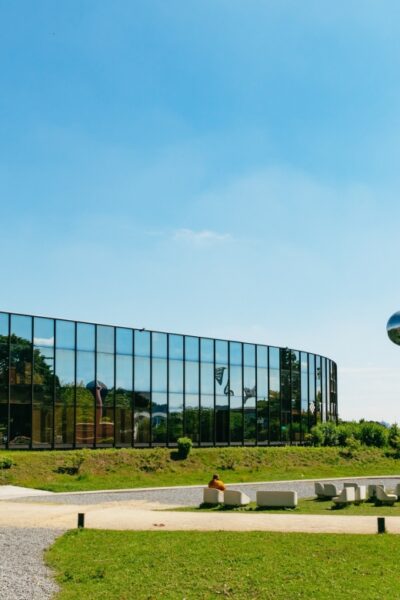
Atomium Entry Ticket with Design Museum Ticket
Read our review →
Choco-Story Brussels: Chocolate Museum Entrance with Tasting
Read our review →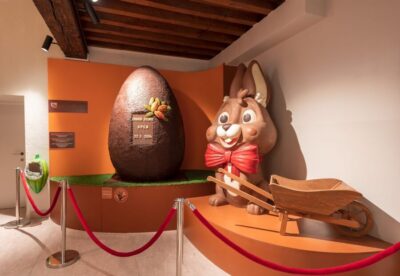
Choco-Story Chocolate Museum Guided Tour w/Tastings
Read our review →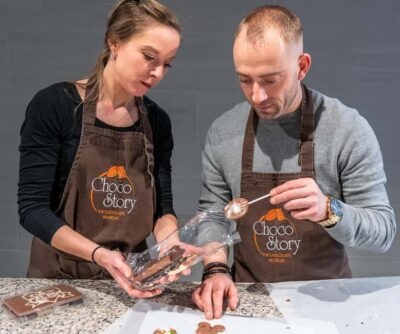
2.5-Hour Chocolate Museum Visit with Workshop
Read our review →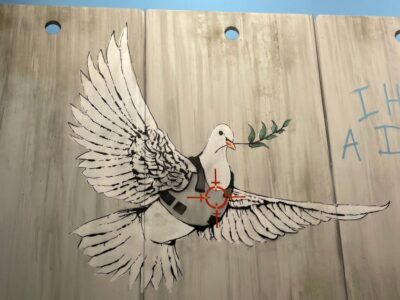
The World of Banksy Museum Permanent Exhibition
Read our review →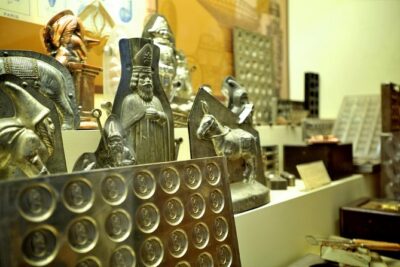
Browse the lists this tour appears in