
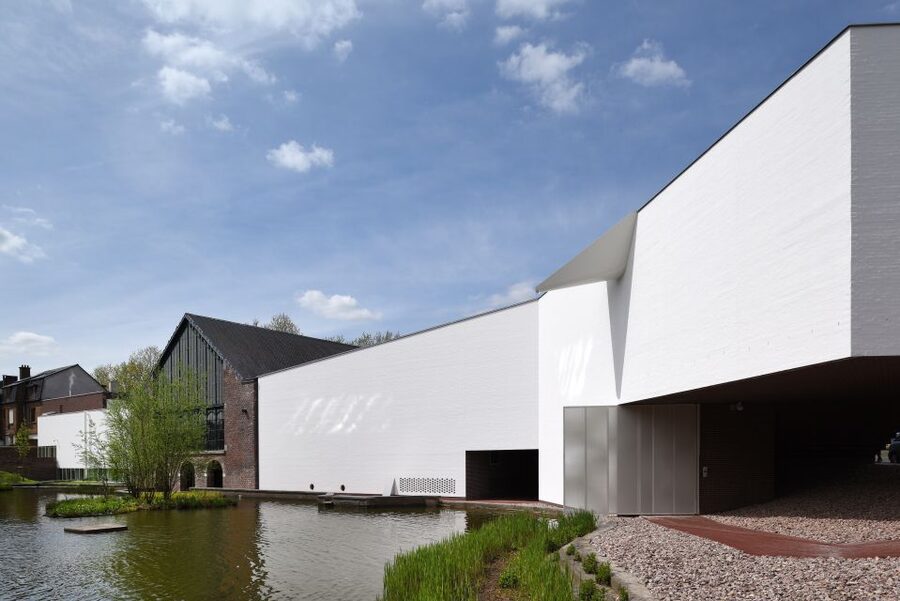
Reviewed · MUSEUMS
Mons : the Mons Memorial Museum
War feels different when you see the bread ration, the letter home, and the bomb that fell nearby. Mons Memorial Museum makes military history personal by pairing weapons and battlefield objects with the daily lives of soldiers and civilians from the Middle Ages through World War II. I like the human stories, especially the diaries, postcards, letters, and recorded veteran interviews. I also like the way the museum asks hard questions about how military and civilian life affect each other.
The main drawback is that your $11 ticket does not include a guided tour or audio guide. You need to take in the displays on your own, so readers who prefer a clear spoken explanation may find the visit less direct. Still, the friendly staff and accessible layout make this a useful stop in Mons, especially if you want more than a collection of old weapons.
In This Review
- Key Points Before You Go
- Why Mons Memorial Museum Is Worth Your Time
- Starting in the Middle Ages
- The Daily Life of Soldiers Far From Home
- Civilians Under War and Occupation
- The One-Tonne German Bomb and Other World War I Objects
- Veteran Interviews, Diaries, and Letters
- How Much Time Should You Allow?
- Price, Practical Details, and Access
- Who Will Get the Most From This Museum?
- Should You Book Mons Memorial Museum?
- FAQ
- Where is Mons Memorial Museum located?
- How much does admission cost?
- How long does the experience last?
- What does the ticket include?
- Is a guided tour included?
- Is an audio guide included?
- Which languages are available?
- Is the museum wheelchair accessible?
- How do I receive the entry ticket?
- Can I cancel my booking?
Key Points Before You Go
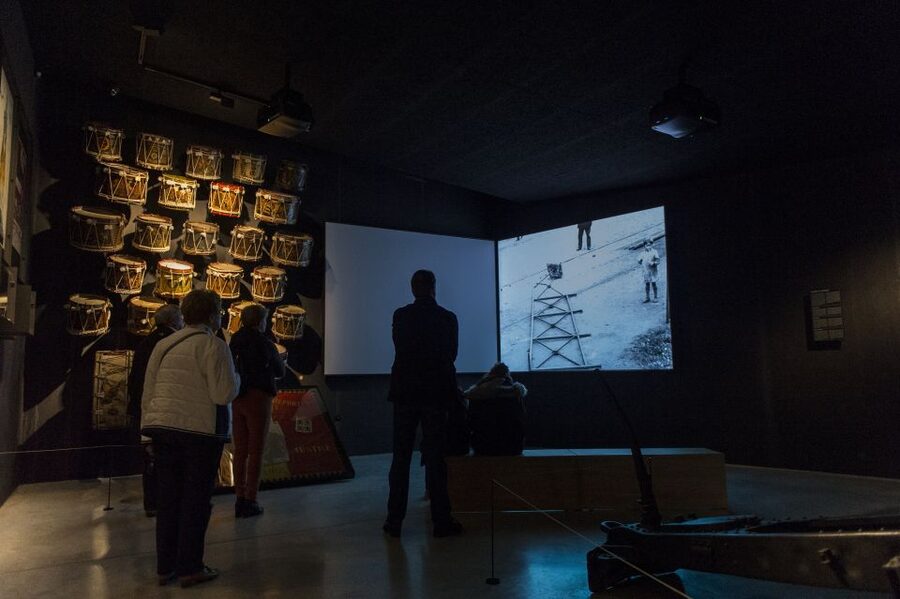
- Personal wartime records: Read soldiers’ diaries, postcards, and letters to loved ones instead of seeing war only through dates and battles.
- A long time span: Follow the effects of war from the Middle Ages through World War II.
- Civilian life matters: Exhibits look at occupation, daily routines, and the relationship between military and civilian populations.
- Unusual World War I objects: See preserved bread rations and the first one-tonne German bomb from 1917.
- Veterans’ voices: Recorded interviews add direct testimony to the museum’s displays.
- Simple admission: The $11 entry covers the museum itself, with no guide or audio guide included.
Why Mons Memorial Museum Is Worth Your Time
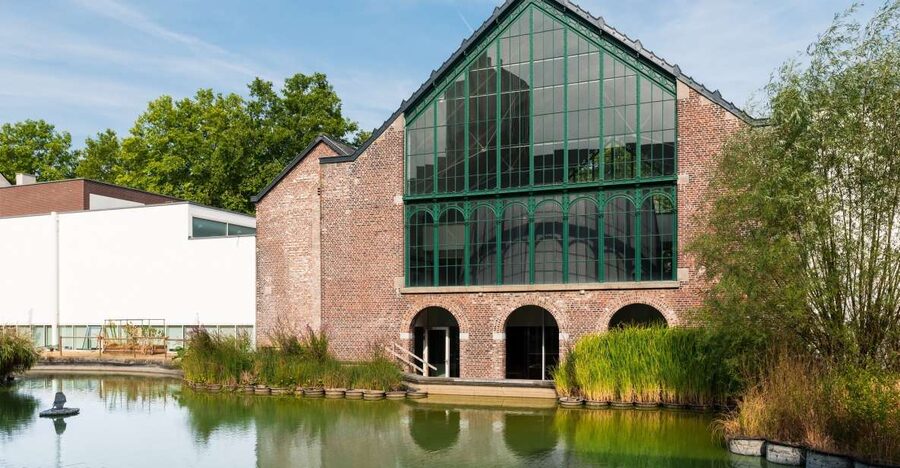
Mons has plenty of military history, but this museum does not treat war as a parade of generals, dates, and equipment. Its focus is broader. You are asked to consider what war does to ordinary people, both those carrying weapons and those trying to live around them.
That approach gives the visit its value. A weapon tells you what a soldier could do. A diary or letter tells you what that soldier feared, missed, or tried to explain to someone at home. A civilian object shows how conflict reached people who never chose to fight.
I find that combination more useful than a display made up only of uniforms and machinery. The museum connects major events to small, familiar details. Food, family, work, occupation, and distance all become part of the story.
The visit covers a long stretch of time, beginning in the Middle Ages and ending with World War II. That range lets you compare different forms of warfare and see how weapons, armies, and civilian life changed. It also means you should not expect a narrow museum devoted only to the First or Second World War.
More museums in Belgium:
- Brussels: Atomium Entry Ticket with Design Museum Ticket
★ 4.4 · 9,254 reviews - Choco-Story Brussels: Chocolate Museum Entrance with Tasting
★ 4.3 · 4,883 reviews - Bruges: Choco-Story Chocolate Museum Guided Tour w/Tastings
★ 4.2 · 1,379 reviews
Starting in the Middle Ages
The museum begins with the effects of war in the Middle Ages. This opening gives you a useful frame for the displays that follow. Long before industrial weapons and modern armies, conflict could still disrupt homes, communities, and the daily work of civilians.
You may find this first section less immediately familiar than the World War I material later on. That is part of its purpose. Instead of dropping you straight into a modern battlefield, the museum asks you to think about war as a recurring human problem with changing tools and methods.
The medieval material also helps explain why the museum is interested in more than combat. War is not only what happens when armies meet. It can affect food, movement, safety, property, and family life. Those ideas carry through the rest of the visit.
Because the museum covers several centuries, you will want to pace yourself. The broad story is more important than trying to memorize every object. Look for the changes in how soldiers fought and how civilians experienced the consequences.
The Daily Life of Soldiers Far From Home
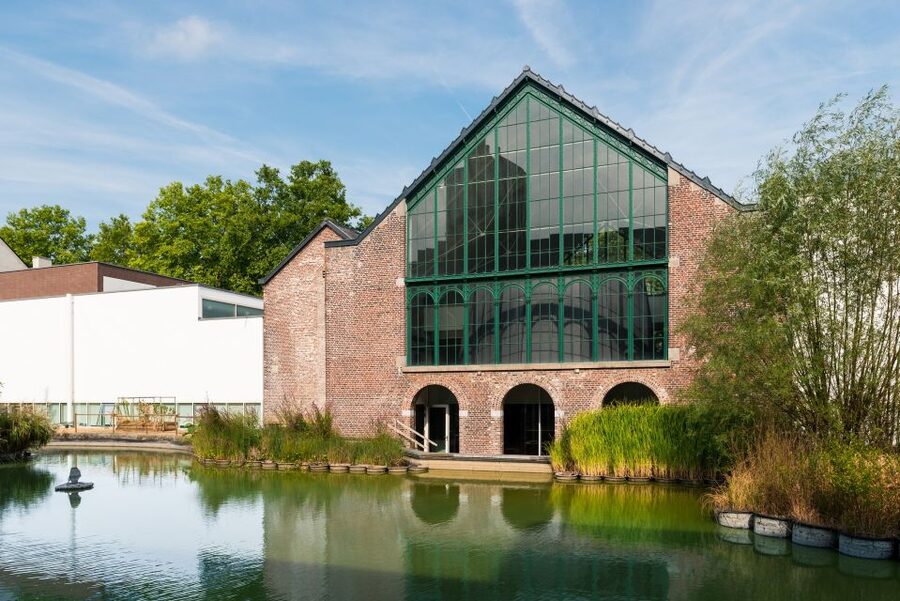
The strongest part of the museum is its attention to the soldier as a person. The displays focus on everyday life in peace, war, and occupation, rather than showing combat as a series of grand moments.
A soldier far from home had to deal with routine, uncertainty, separation, and basic needs. The museum brings those concerns into view through personal documents and objects. This makes the experience easier to understand, even if you do not know much about military history.
The diaries are especially important. A diary can reveal what official records leave out: boredom, worry, homesickness, and the effort to keep a sense of normal life. The postcards and letters to sweethearts back home offer another angle. They show how people tried to maintain relationships across distance and danger.
You should allow time for these written records. They are not simply decoration around the larger objects. They are among the clearest ways to understand the emotional cost of fighting far from home.
The preserved piece of soldier’s bread ration is a small object, but it carries a lot of meaning. Food is a basic part of daily life, and this fragment makes the soldier’s routine physical and immediate. It also reminds you that museum history often works best through modest things.
Civilians Under War and Occupation
The museum gives civilians a place in the story. That matters because military displays can easily make war look like something that happens only to armies. Here, you are encouraged to think about people living under occupation and trying to carry on with daily tasks.
The exhibits examine the connection between civilian and military populations. That relationship is not simple. Civilians may provide food, labor, shelter, or information. They may also face restrictions, fear, loss, and pressure from competing sides.
You will not get only a battlefield view of the past. The museum’s questions reach into homes and communities. What does it mean to live in a place controlled by an occupying force? How does an army depend on civilians? What happens when military needs and civilian safety collide?
These questions give the museum a serious tone, but the personal material keeps it from becoming abstract. The letters and interviews help you see the people behind the broad terms.
This section may be especially useful for families and younger visitors who need help connecting military events with ordinary life. It gives you talking points beyond who won a battle or which weapon was used.
Something different, still within reach of Belgium:
- From Brussels: Guided Day Trip to Bruges and Ghent
★ 4.6 · 8,353 reviews - From Brussels: Bruges & Ghent Day Tour – 2 Fairytale Cities
★ 4.7 · 8,242 reviews - Ghent: 50-Minute Medieval Center Guided Boat Trip
★ 4.5 · 5,637 reviews - Bruges and Ghent – Belgium’s Fairytale Cities – from Brussels
★ 4.0 · 4,809 reviews
The One-Tonne German Bomb and Other World War I Objects
The museum’s World War I objects provide some of its most memorable visual moments. The first one-tonne German bomb from 1917 is hard to ignore. Its scale gives you an immediate sense of the destructive power that modern warfare brought to the period.
The bomb is not just a large object for a quick photograph. It helps show how weapons changed the relationship between battle zones and civilian areas. As destructive capacity grew, people farther from the front could still feel the effects of war.
The preserved bread ration offers a sharp contrast. One object represents industrial force. The other represents a soldier’s meal. Together, they show two sides of the same conflict: the machinery that causes destruction and the daily needs of the person caught inside it.
You will also see different weapons used throughout history. The displays are most useful when you look beyond the hardware and consider the men who wielded the weapons. The museum keeps returning to that question: who used these objects, and what did their use mean for everyone nearby?
If you have limited time, do not rush past the World War I section. It combines striking objects with the museum’s strongest theme, the link between military technology and personal experience.
Veteran Interviews, Diaries, and Letters
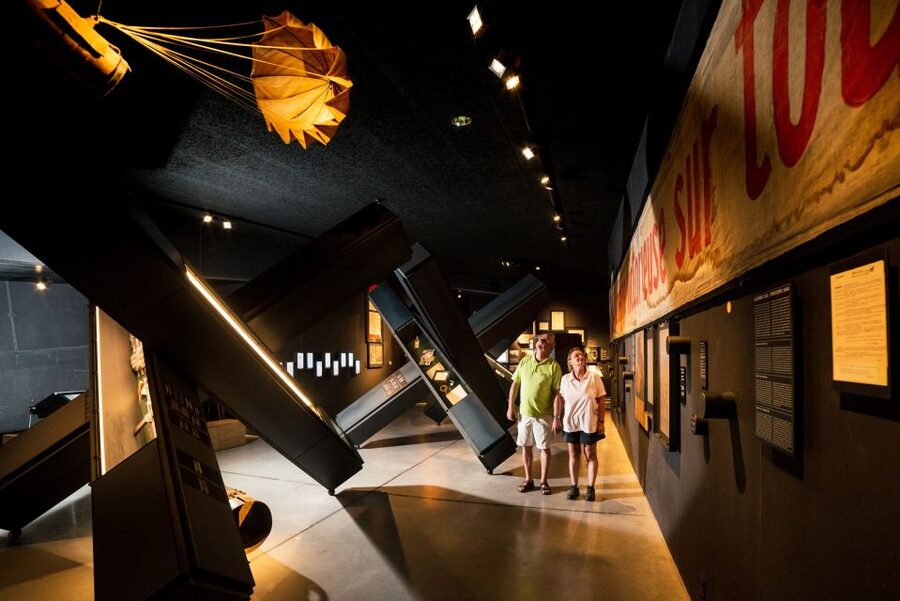
Near the end of the visit, recorded interviews with veterans add spoken testimony to the written material. Hearing veterans describe their experiences gives the museum a different pace. Objects can suggest what happened, but a recorded voice can make the past feel more direct.
The interviews work well alongside the diaries and letters. A diary captures private thoughts at the time. A later interview may bring memory, reflection, and a wider view of events. The two forms do not always give the same kind of truth, and that difference is worth noticing.
The collection of postcards and letters to loved ones is also a strong closing section. These documents show people trying to communicate affection and reassurance while separated by war. They remind you that history is made up of personal relationships as well as public events.
I would save enough time for this final part rather than treating it as an optional extra. It is where the museum’s central idea comes together most clearly. War is shown through the people who endured it, not only through the governments and armies that directed it.
A temporary exhibition by Didier Mahieu was praised as moving in one of the recent visitor comments. Since exhibitions can change, you should not count on seeing that particular display, but it suggests that the museum also makes room for emotional and artistic responses to war.
How Much Time Should You Allow?
The activity is listed as lasting one day, but that refers to the admission period rather than a fixed guided program. You choose an available time slot and visit at your own pace.
No official visit length is provided, so I would plan around your interest in the documents and interviews. If you read every diary, letter, and panel carefully, you will need more time than someone making a quick stop for the major objects.
The museum covers several historical periods, so this is not the kind of place to squeeze into a few rushed minutes. Give yourself room to pause at the personal material. The value comes from making connections between the objects, not from simply walking past them.
Since there is no guided tour or audio guide included, your pace will depend on how much explanation you want from the written displays. If you enjoy setting your own route, that is a benefit. If you want a detailed spoken narrative, it is a limitation.
Price, Practical Details, and Access
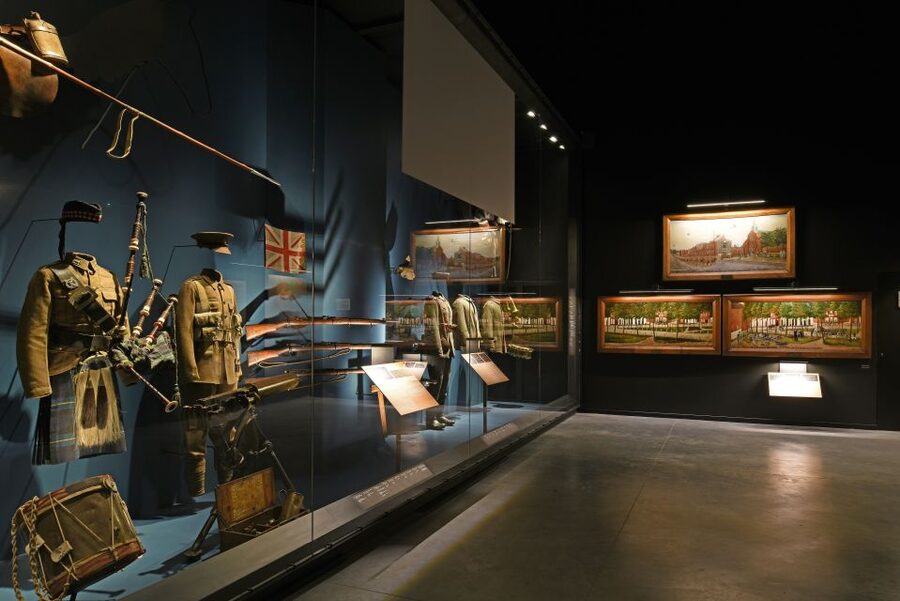
At $11 per person, the museum offers good value for an independent history visit. The ticket includes entry to Mons Memorial Museum, and the wide time span, personal records, weapons, and veteran interviews give you plenty to examine.
The price is less attractive if you expect a guided experience. A guide or audio commentary is not included, so you are paying for access to the exhibits rather than a fully led tour.
The host or greeter languages are French, English, and Dutch. Those are also the listed museum languages, making the visit workable for a broad range of visitors. You should present the ticket sent to you by email at the museum reception.
You need to appear during the time slot you selected. That detail matters if your day in Mons includes several fixed appointments. The experience is wheelchair accessible, which makes it easier to include in a practical city itinerary.
You can cancel up to 24 hours in advance for a full refund, and a reserve now, pay later option is available. Those policies are useful if your plans around Mons are still shifting.
Who Will Get the Most From This Museum?
I would recommend the museum to anyone interested in World War I, World War II, occupation, military history, or the civilian experience of conflict. It also suits people who prefer documents and personal testimony to a display made up only of large objects.
Families can use the museum to discuss how war changes daily life. The bread ration, bomb, letters, and interviews provide clear entry points for questions. The subject is serious, so parents should decide how much detail is suitable for younger children.
You will probably appreciate the visit most if you are willing to read and reflect. This is not presented as a fast entertainment stop. The museum asks you to consider difficult questions, and its strongest material may be easy to miss if you only look for dramatic artifacts.
The museum may be less satisfying if you need a guide to explain every period. Since no audio guide or guided tour comes with admission, you should be comfortable learning from the displays at your own speed.
The friendly staff are another plus. One recent five-star comment singled out their kindness, while another called the museum extraordinary but not widely known. That combination fits the experience well: it offers serious material without the pressure or crowds associated with some larger war museums.
Should You Book Mons Memorial Museum?
Book it if you want a thoughtful, personal look at war in Mons. The preserved bread ration, one-tonne German bomb, veterans’ interviews, diaries, and letters give the subject a human scale. I especially recommend it if you want to understand how civilians and soldiers were connected during war and occupation.
Skip it only if you are looking for a guided tour or a narrowly focused military collection. The $11 price is fair for the admission, but you will need to guide yourself through the displays. Choose your time slot, bring the emailed ticket, and allow enough time to read the personal records rather than rushing from object to object.
FAQ
Where is Mons Memorial Museum located?
The museum is in Mons, Wallonia, Belgium.
How much does admission cost?
The listed price is $11 per person.
How long does the experience last?
The activity duration is listed as one day. You choose an available starting time and visit during your selected time slot.
What does the ticket include?
The ticket includes entry to Mons Memorial Museum.
Is a guided tour included?
No. A guided tour is not included.
Is an audio guide included?
No. An audio guide is not included.
Which languages are available?
French, English, and Dutch are listed as available languages.
Is the museum wheelchair accessible?
Yes, the museum is wheelchair accessible.
How do I receive the entry ticket?
You receive the ticket by email and present it at the museum reception.
Can I cancel my booking?
Yes. You can cancel up to 24 hours in advance for a full refund. A reserve now, pay later option is also available.
Just added around Belgium
- Guided E-kickscooter tour: The big five of Antwerp★ 5.0 · 3 reviews
- Antwerp: Help the Lost Boy – Self-Guided Mystery Walk★ 4.5 · 3 reviews
- Bruges Beer and Chocolate Walking Tour★ 4.5 · 3 reviews
- Discover the secrets of Brussels while playing★ 5.0 · 3 reviews
- Full day Brugge & Ghent: the gems of Flanders★ 5.0 · 3 reviews
- Private tour : Best of Brussels half day From Brussels★ 5.0 · 3 reviews
- Standard vehicle from Charleroi airport to city of Brussels★ 4.5 · 3 reviews
- Private: Discover Bruges beers & brewery with chocolate pairing by a young local★ 5.0 · 3 reviews
Museums, compared.
Atomium Entry Ticket with Design Museum Ticket
Read our review →
Choco-Story Brussels: Chocolate Museum Entrance with Tasting
Read our review →
Choco-Story Chocolate Museum Guided Tour w/Tastings
Read our review →
2.5-Hour Chocolate Museum Visit with Workshop
Read our review →
The World of Banksy Museum Permanent Exhibition
Read our review →
Browse the lists this tour appears in