
Reviewed · DARK SIDE & LEGENDS TOURS
Private Tour: The Dark Side of Brussels
Dark stories suit Brussels. This private walk pairs Gothic churches and grand squares with tales of crime, punishment, and beheadings, giving you a sharper view of the Belgian capital than a standard postcard tour. I like the route’s mix of famous sights and lived-in neighborhoods, and I like that your guide can shape the conversation around your interests.
I also like the small private-group format, which makes it easier to ask questions and keep a good pace. The main drawback is the price: at $105.02 per person, this is a serious spend for roughly two hours, especially if you are traveling alone or as a couple.
In This Review
- Key points about Brussels’ darker walking tour
- Why this private Brussels tour feels different
- Grand Sablon: a polished start with market flavor
- Place Saint-Jean and the city’s older layers
- Tour Anneessens and modern Brussels
- Rue de Rollebeek: a short street with a lot of character
- Notre Dame du Sablon and Gothic detail
- Palais de Justice: the biggest visual stop
- Petit Sablon and its bronze guild figures
- Place du Jeu de Balle and the Marolles
- Kapellekerk gives the walk a fitting finish
- What the two-hour format means for you
- Is $105.02 per person a fair price?
- Who should book The Dark Side of Brussels?
- My verdict: a sharp, focused walk for the right audience
- FAQ
- Where does The Dark Side of Brussels tour begin?
- Where does the tour end?
- How long does the private tour last?
- Is this a private activity?
- What language is offered?
- Is an admission ticket included?
- What is the cancellation policy?
Key points about Brussels’ darker walking tour
- A private English-language walk lets only your group take part, with guide attention throughout.
- The route covers nine stops, from Grand Place to the Marolles and Kapellekerk.
- Sebastian and Dan have both earned strong praise for clear explanations, friendly conversation, and flexible guiding.
- Dark history is balanced with architecture, including Notre Dame du Sablon and the Palais de Justice.
- The tour ends in the Marolles, near the daily Place du Jeu de Balle flea market.
- The price is easier to justify for a small group, since group discounts may be available and the guide is private.
Why this private Brussels tour feels different
Most first walks through Brussels focus on chocolate, Art Nouveau, comic art, beer, and the glittering Grand Place. Those subjects are good fun, but this tour takes another path. It uses squares, churches, streets, and court buildings to tell a less polished story of the city.
That gives the walk a useful edge. You are not just moving from one pretty stop to the next. You are looking at places where religion, law, class, trade, and punishment shaped daily life. The tour title promises a darker side, but the route does not appear to rely on grim stories alone. You also get gardens, cafes, church interiors or exteriors, market life, and broad city views.
Because the activity is private, I would expect a more conversational experience than a large walking group allows. You can ask why a church matters, pause over a detail, or request more background on a neighborhood. The guides praised in the tour feedback, Sebastian and Dan, are described as friendly, entertaining, and willing to tailor the visit.
The tradeoff is simple. Two hours passes quickly across nine stops, so you should expect an overview rather than a long visit inside every building. If you want extensive museum time or detailed architectural study, this is not the right format. If you want a strong introduction with a memorable theme, the length works well.
More evening legend walks in Brussels:
- Evening Tour: The Dark Side of Brussels
★ 4.5 · 435 reviews - Historical Walking Tour: The Story of Brussels – by Legends
★ 5.0 · 164 reviews - Brussels: 2-Hour Dark Side of Brussels Private Tour
★ 4.8 · 11 reviews
Grand Sablon: a polished start with market flavor
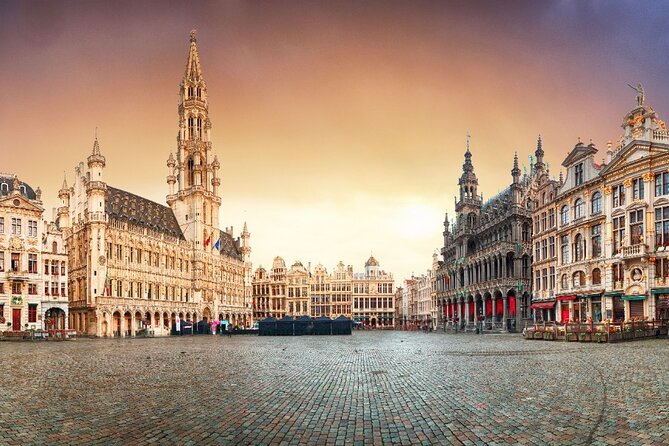
The walk begins at Grand Place, then takes you to Place du Grand Sablon. The meeting point is Grand Place, also called Grote Markt, at 1000 Brussels. That makes arrival fairly straightforward if you are already exploring the central city.
Place du Grand Sablon brings together market life, architecture, cafes, and specialty shops. The supplied description presents it as a place for fresh produce, handmade goods, and local flavors. I would treat this first stop as an orientation point rather than a full market visit. You have about 10 minutes here, so there is time to understand the setting, not time for a serious shopping trip.
This is a good opening for the tour’s theme. The square offers an attractive public face, while the guide can start shifting your attention toward the people and events behind Brussels’ grand buildings. If you arrive early, give yourself extra time around Grand Place and Sablon, since the official stop is brief.
Place Saint-Jean and the city’s older layers
Place Saint-Jean is another 10-minute stop. The square is described as a calm historic setting with cafes, attractive buildings, and the Church of St. John the Baptist as its focal point.
Here, the value comes from contrast. Brussels can feel crowded around its major sights, but a smaller square gives you room to notice how religious buildings organize urban life. The church adds a solemn note, which fits the tour’s subject without turning the entire experience into a procession of gloomy anecdotes.
I would listen for the guide’s explanation of how the square connects to Brussels’ past. Since the tour is private, you can ask for more detail if this part interests you. If your group prefers architecture to stories of punishment, this is also a natural place to steer the discussion in that direction.
Tour Anneessens and modern Brussels
The third stop, Tour Anneessens, lasts about 10 minutes. The area is presented as a district with a mixed population, lively streets, older landmarks, and several architectural styles.
This section matters because it keeps the tour from becoming a parade of monuments. You get a sense of Brussels as a working city with different communities and changing streets, not only a capital dressed for visitors. The combination of older structures and present-day life helps connect the darker stories to the city people live in now.
The description is less specific here than at the churches and courthouse, so the guide’s role becomes especially important. Sebastian is praised for making facts interesting and adding humor, while Dan is praised for adapting the visit when a general city tour was not possible. Those details suggest that the quality of the conversation can shape this stop.
A few more trips and experiences worth a look
- Brussels: Atomium Entry Ticket with Design Museum Ticket
★ 4.4 · 9,254 reviews - From Brussels: Guided Day Trip to Bruges and Ghent
★ 4.6 · 8,353 reviews - From Brussels: Bruges & Ghent Day Tour – 2 Fairytale Cities
★ 4.7 · 8,242 reviews - Choco-Story Brussels: Chocolate Museum Entrance with Tasting
★ 4.3 · 4,883 reviews
Rue de Rollebeek: a short street with a lot of character
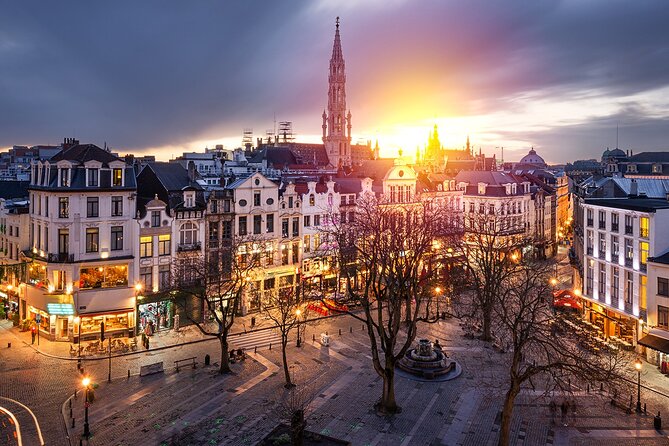
Rue de Rollebeek receives another 10 minutes. Cobblestones, cafes, and small shops give it an old Brussels feel, with a mix of older design and newer businesses.
I like this kind of stop because it gives your feet a break from major sights. A street often tells you more about scale and everyday life than a monumental square does. You can notice how narrow routes, local businesses, and historic buildings fit together.
Do not expect a long cafe stop. The tour continues at a steady pace, and the allotted time is short. Think of Rue de Rollebeek as a visual pause and a chance to hear how ordinary streets can carry stories just as effectively as churches or palaces.
Notre Dame du Sablon and Gothic detail
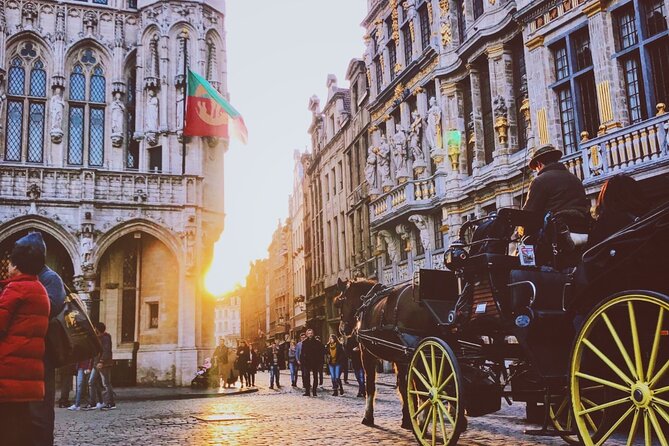
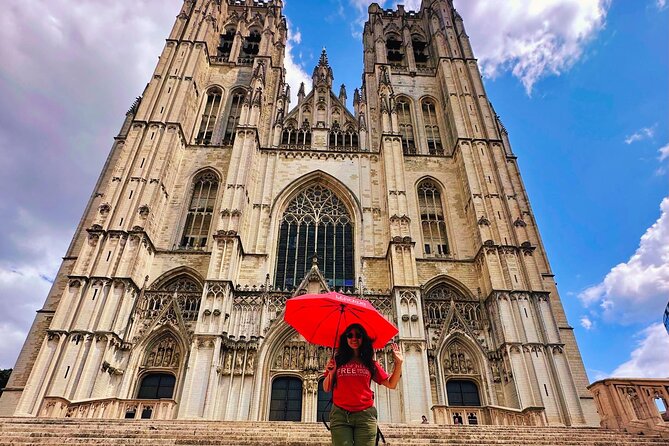
Notre Dame des Victoires au Sablon, commonly called Notre Dame du Sablon, is one of the route’s strongest architectural moments. The church is Gothic, with detailed decoration and stained-glass windows, and it provides a quiet counterpoint to the darker material.
This is where the tour’s themes can work especially well together. Religious buildings are not only beautiful spaces. They also help explain the values, fears, ceremonies, and power structures of earlier Brussels. A good guide can use the building’s design to show how belief and public life were connected.
You have around 10 minutes here. That is enough to appreciate the exterior and hear a focused explanation, but it may not satisfy you if you want to examine every window or linger in silence. I would keep your expectations realistic and let the guide lead you to the most important details.
Palais de Justice: the biggest visual stop
The Palais de Justice is likely the route’s most imposing landmark. This huge courthouse sits high above Brussels and is known for its neoclassical design, legal role, and views across the city.
The building gives the tour a natural setting for stories about law, authority, and punishment. Its scale can feel almost theatrical, which suits a walk called The Dark Side of Brussels. You do not need to enter the courthouse for the stop to work. Its exterior and position above the city already make a strong impression.
The panoramic outlook is another reason this stop earns its place. A tour about difficult subjects benefits from occasional changes in mood, and the view gives you that pause. You can look over Brussels, get your bearings, and understand how the city’s districts relate to one another.
Again, the scheduled time is about 10 minutes. That limits the depth of the visit, but it also keeps the walk moving. If the Palais de Justice is your main interest, plan to return later rather than expecting this short stop to cover the whole complex.
Petit Sablon and its bronze guild figures
Square du Petit Sablon offers the tour a greener, more decorative interlude. The garden is surrounded by 48 small bronze statues representing medieval guilds, with carefully arranged plantings and paths.
This square gives you something specific to look at while the guide explains Brussels’ social and working life. The guild figures are a useful reminder that the city was shaped by craftspeople and trades, not just rulers and church officials.
I would take a moment to scan the statues rather than treating the garden as a quick photo stop. Ten minutes is not long, but the compact setting makes it possible to see the main details. This is also one of the easier parts of the route for anyone who needs a calmer stretch between heavier stories.
Place du Jeu de Balle and the Marolles
The route then heads to Place du Jeu de Balle, the heart of the Marolles neighborhood. A flea market operates here every day, selling old photographs, used clothing, vintage furniture, trinkets, and other second-hand goods.
This is one of the most useful stops for understanding present-day Brussels. The market has a welcoming, informal feel, and the objects on sale give the square a sense of memory and change. You might spot something odd, charming, or completely useless, which is part of the fun.
The tour allows about 10 minutes. That is enough to take in the atmosphere, but not enough for serious browsing. If you want to shop, return another day and give yourself more time. The daily market also means the setting may change from one visit to the next, so the square feels less staged than a fixed museum display.
The Marolles adds needed balance to the darker material. Here, Brussels feels social and ordinary. The tour does not leave you with only courts, churches, and grim tales. It ends among neighborhood streets and market stalls.
Kapellekerk gives the walk a fitting finish
The final stop is the Church of Our Lady of the Chapel, or Kapellekerk. The Gothic church is in the Marolles and traces its name to a chapel founded here in 1134.
At around five minutes, this is a brief closing stop. Its role is less about a long visit and more about giving the route a final historic marker. After the grand scale of the Palais de Justice and the open market at Place du Jeu de Balle, the church brings the walk back to an older, quieter Brussels.
The official end point is Brux.-Chap or Brus.-Kap, near Rue des Ursulines. The location is useful because you finish in a popular neighborhood rather than being returned to the starting square. You can continue exploring the Marolles, browse the flea market if it is operating, or make your own way onward from there.
What the two-hour format means for you
Nine stops in roughly two hours means this is a brisk walking overview. Most stops last 10 minutes, with five minutes at Kapellekerk. That rhythm keeps the experience focused, but it leaves little room for long interior visits, shopping, or unscheduled pauses.
I would wear comfortable shoes and arrive ready to walk. The route includes squares, cobbled streets, church areas, and the hilltop setting around the Palais de Justice. The supplied details do not state a total walking distance, so you should not assume a specific mileage.
The meeting point is close to Brussels’ central sights, and the tour is near public transportation. A mobile ticket makes access simple. Service animals are allowed, and most people can participate. Since only your group joins, you have more control over questions and pace than on a standard shared tour.
English is the offered language. Confirmation arrives when you book, and free cancellation is available if you cancel at least 24 hours before the start time. Changes or cancellations inside that window are not accepted for a refund.
Is $105.02 per person a fair price?
At $105.02 per person, the cost is high for a two-hour walk if you are paying for just one or two people. The price includes a professional guide, but not admission tickets. The stops listed here are free, so you are mainly paying for the guide’s time, planning, storytelling, and private access to the experience.
The value improves for a small group, especially since group discounts may be offered. Four friends or family members can share the private format, making the cost easier to justify than it is for a solo visitor. I would also compare it with the cost of booking a general city tour and then seeking out the Marolles and Palais de Justice alone.
The strongest reason to pay more is the subject. A standard orientation walk may mention these areas, but this experience is built around a particular angle. If stories of crime, executions, Gothic churches, and legal power appeal to you, the focused format can make Brussels feel more layered.
If you mainly want chocolate shops, beer advice, or a broad first look at every major landmark, spend your money elsewhere. This tour is specialized, and its value depends on your interest in the subject.
Who should book The Dark Side of Brussels?
I would recommend it to couples, families with older children, friends, and small groups who want a private walk with a clear theme. It also suits anyone who has already seen the central highlights and wants to move beyond the usual Grand Place circuit.
History fans should enjoy the combination of religion, law, public squares, and neighborhood life. Architecture fans will find plenty to see, especially at Notre Dame du Sablon, Petit Sablon, Kapellekerk, and the Palais de Justice. The route also works for people who like unusual city stories but do not want a full museum visit.
I would think twice if you dislike macabre subjects or want a slow, restful stroll. The route is short but active, and the title accurately signals that some stories may concern executions and other grim events. The guide’s humor can make the material easier to handle, but it will not turn the subject into a light sightseeing loop.
The guide matters greatly here. Sebastian is praised for his friendly personality, clear facts, and ability to make the stories fun. Dan is described as a solid guide who tailored the visit to the group. When you book, it is sensible to mention the subjects you most want covered, since the private setup allows room for adjustment.
My verdict: a sharp, focused walk for the right audience
I like this tour because it treats Brussels as more than a pretty capital. The route connects grand churches and court buildings with market streets and the Marolles, giving you both formal history and ordinary city life.
The price is the clear concern, and two hours is not enough for deep visits at every stop. Still, if you can share the cost and want a private English-language walk with unusual stories, strong guiding, and a route that ends in a lively neighborhood, I would book it. If your main goal is basic orientation or low-cost sightseeing, choose a broader group tour instead.
FAQ
Where does The Dark Side of Brussels tour begin?
It begins at Grand Place, also called Grote Markt, at 1000 Brussels, Belgium.
Where does the tour end?
The walk ends at Kapellekerk, listed as Brux.-Chap or Brus.-Kap, near Rue des Ursulines in Brussels.
How long does the private tour last?
The tour lasts approximately two hours.
Is this a private activity?
Yes. Only your group participates in the tour.
What language is offered?
The experience is offered in English.
Is an admission ticket included?
No admission tickets are listed as included. The tour includes a professional guide, and the stated stops have no admission charge.
What is the cancellation policy?
You can cancel at least 24 hours before the start time for a full refund. Cancellations or changes made less than 24 hours before the start time are not accepted for a refund.
Just added around Brussels
- Discover the secrets of Brussels while playing★ 5.0 · 3 reviews
- Standard vehicle from Charleroi airport to city of Brussels★ 4.5 · 3 reviews
- Full day Brugge & Ghent: the gems of Flanders★ 5.0 · 3 reviews
- Private tour : Best of Brussels half day From Brussels★ 5.0 · 3 reviews
- Private Tour – Bruges and Ghent, our fairytale cities★ 5.0 · 3 reviews
- Floating in the clouds★ 5.0 · 3 reviews
- Full-Day City Tour of Ghent and Bruges from Brussels★ 4.5 · 3 reviews
- Brussels Private Walking Tour With A Professional Guide★ 4.5 · 3 reviews
Dark Side & Legends Tours, compared.
Historical Walking Tour: The Story of Bruges – by Legends
Read our review →
Browse the lists this tour appears in