
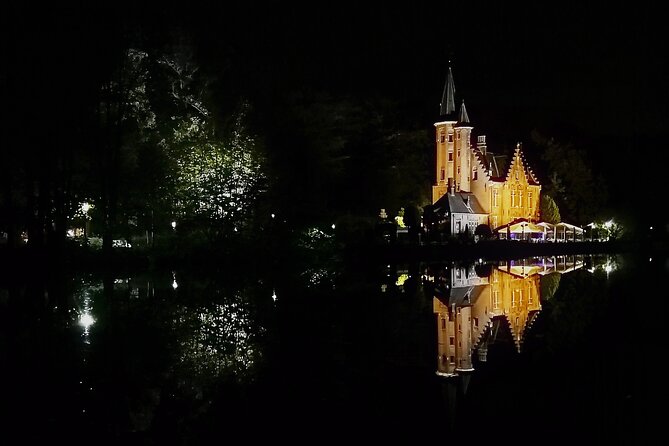
Reviewed · 3-HOUR EXPERIENCES
BRYGGJA ROMANTICA – 3 Hour Romantic Tour in Bruges
Bruges rewards slow looking. This three-hour outing pairs quiet backstreets with the city’s best-known views, then finishes with a 30-minute canal ride. I like the small group limit of 12, which gives you a better chance to hear the guide and ask questions. I also like the unusual stops, from the smallest street to the spot Winston Churchill painted. The main consideration is weather: this is an outdoor walking tour, and rain or strong wind can affect the experience.
The route is led in English and costs $54.07 per person. I would choose it if you want more than the standard postcard circuit, especially if a guide who tells stories and points out easily missed details matters to you. Just note that entry fees for the Gruuthusemuseum and Poorters Loge are not included, and the stop at the diamond house needs confirmation about what, if anything, you enter.
In This Review
- Four things that make this Bruges tour different
- Starting at Markt and slipping away from the crowds
- Staminee De Garre and Bruges’s smallest street
- The diamond house and a useful point to confirm
- Burg Square’s familiar buildings and one odd surprise
- Poorters Loge and the beginnings of office life
- Jan Van Eyckplein and a quieter medieval center
- Sint-Annakerk and the largest painting in Bruges
- The second-oldest bridge and the oldest bridge
- Steenhouwersdijk, where Churchill painted
- Vismarkt and the changing trade of the city
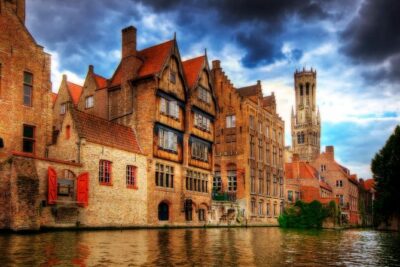
- Rozenhoedkaai and the essential Bruges photograph
- Dijver and the transition to the canal boat
- A surprising church connection and Gruuthusemuseum
- Boniface Bridge and the final question
- Is $54.07 a fair price?
- Timing, weather, and who should book
- Final verdict: book it for the guide and the route
- FAQ
- How long is the BRYGGJA ROMANTICA tour?
- Where does the tour start?
- What time does the tour begin?
- Where does the tour end?
- Is the canal boat ride included?
- Are museum admission fees included?
- Can I cancel for a full refund?
Four things that make this Bruges tour different
- It avoids the busiest paths: You spend much of the walk on quieter streets where the crowds can thin out.
- The group is capped at 12 people: That is a useful size for a walking tour, particularly when the guide is explaining small architectural details.
- The 30-minute canal trip is included at the end: You receive the boat tickets after the walking portion.
- The route favors odd details and overlooked places: Expect the smallest street, old trading sites, a surprising sight near Burg Square, and Bruges bridges.
- Guide Ivan gets strong praise: His storytelling, friendly manner, and ability to spot details were repeatedly singled out.
- You receive the BRUGORAMA: This downloadable photo show can be viewed on your phone or television after the tour.
Starting at Markt and slipping away from the crowds
The tour begins at Historium Bruges on Markt at 1:30 pm. That is an easy meeting point in the center, but it also places you in one of Bruges’s most visited squares. Arrive with enough time to find the guide, since the tour is limited to 12 people and the group needs to leave together.
The smart part of this outing is what happens after the central meeting point. Rather than lingering only around the biggest squares, the guide takes you through smaller streets and less obvious corners. I like this approach because Bruges can feel very different once you move a few minutes away from its main photo stops.
The route is not simply a march from one monument to the next. Several pauses are short, around four or five minutes, while other stops receive ten to fifteen minutes. That rhythm keeps the walk moving, but it also means you should not expect a long, formal visit inside every building.
A few more trips and experiences worth a look
- Bruges: 3-Hour Beer and Chocolate Tasting Private Tour
★ 4.9 · 8 reviews - Private 3-hour walking tour of Bruges with official tour guide
★ 4.0 · 3 reviews - Brussels 3-Hour Guided Art Nouveau Tour
★ 4.0 · 282 reviews
Staminee De Garre and Bruges’s smallest street
The first stop is Staminee De Garre, a pub in the city’s smallest street. The point here is not just beer. The narrow lane has a historical and practical reason for its unusual shape, and the guide uses it to explain how old Bruges was organized.
You receive about five minutes at this stop, with no admission charge. It is a quick introduction to the tour’s style: look closely, ask why something was built that way, and do not assume the grandest building is the most interesting sight.
The pub is described as a pleasant place for excellent beer, but the tour information does not say that a drink is included. If you want to taste something here, plan to pay separately and keep the stop brief.
The diamond house and a useful point to confirm
The second stop is listed at Brugs Diamanthuis on Cordoeaniersstraat. It has a five-minute duration and no admission charge is stated. The information does not make clear if the group enters the building or simply views it from outside, so I would confirm that point before booking if this stop is especially important to you.
That uncertainty does not ruin the route, but it matters if you are expecting a full museum visit. A five-minute pause suggests a short explanation rather than a lengthy display of diamond-related history.
Burg Square’s familiar buildings and one odd surprise
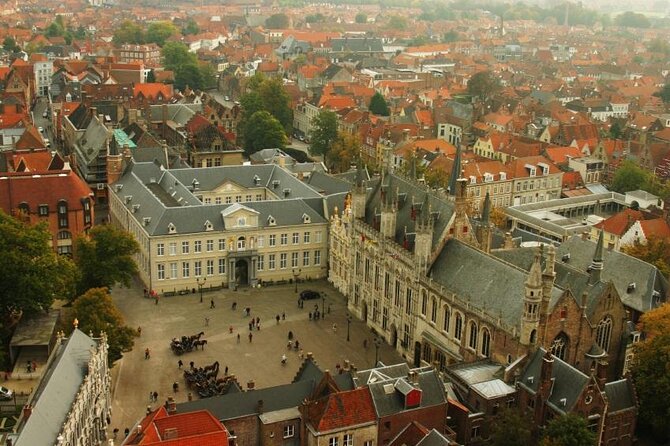
Burg Square brings you to two of Bruges’s major landmarks, the Chapel of the Holy Blood and the City Hall. You will not be spending hours inside either one on this tour. Instead, the guide uses the square as a base for a ten-minute look at a sight that many people, including some residents, have never noticed.
The description promises something humorous here. That little bit of mischief is part of the appeal. Bruges is full of famous façades, but a good local guide can make you stop looking at the obvious view and notice the detail beside it.
I would value this stop most if you enjoy stories that connect architecture with everyday life. If you want an extended visit inside the chapel or City Hall, you will need separate time before or after the tour.
Something different, still within reach of Bruges:
- Bruges: Small Group Boat Cruise and Guided Walking Tour
★ 4.8 · 4,102 reviews - Bruges: Walking Tour, Canal Boat Trip w/Beer Tasting Option
★ 4.4 · 2,759 reviews - Historical Walking Tour: Legends of Bruges
★ 5.0 · 2,541 reviews - Bruges: Choco-Story Chocolate Museum Guided Tour w/Tastings
★ 4.2 · 1,379 reviews
Poorters Loge and the beginnings of office life
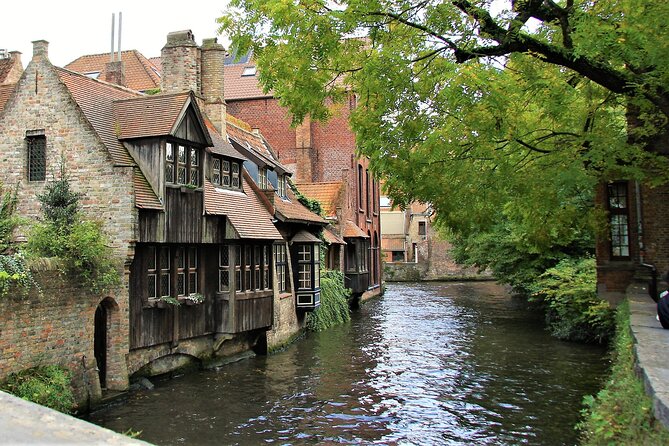
At Poorters Loge, the guide presents the building as one of the first office buildings in history. The stop lasts about five minutes, and admission is not included.
That short visit is enough to understand the building’s role, but not enough for a full museum-style examination. The value comes from the context. Bruges was a serious center of commerce, and this stop shifts the focus from churches and canals to the practical business systems that helped the city function.
Because entry is excluded, you should treat the stop as an exterior visit unless the guide tells you otherwise. If you want to go inside, ask about the admission arrangements at the start.
Jan Van Eyckplein and a quieter medieval center
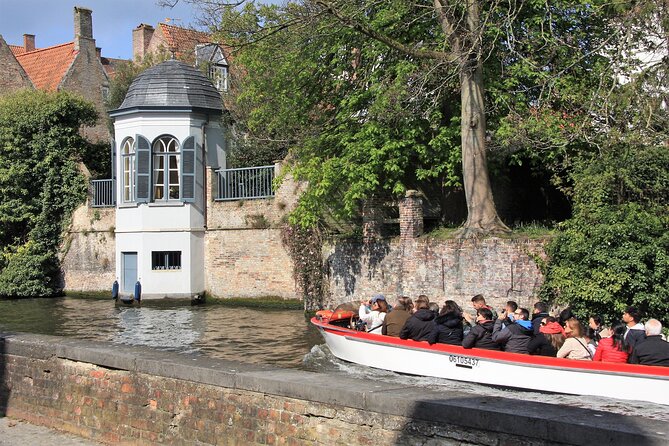
Jan Van Eyckplein receives about ten minutes. The square is tied to Bruges’s commercial past, and the guide uses it to explain why a place that can feel calm today was once very busy during the Middle Ages.
That contrast is one of the better ideas in the tour. Modern Bruges can seem almost too polished and peaceful, yet its old squares were working spaces filled with trade and movement. I like seeing the city through that change over time rather than treating it as a collection of pretty views.
The tour information does not list an admission fee here, so this is a free stop. You can expect explanation and viewing rather than a ticketed visit.
Sint-Annakerk and the largest painting in Bruges
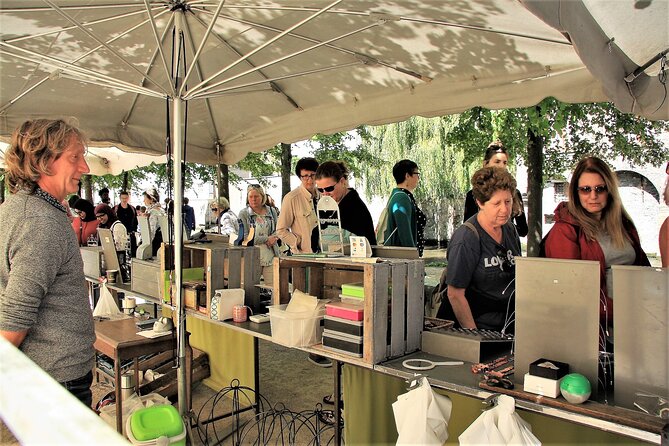
Sint-Annakerk appears to be the smallest church on the route, but it contains what is described as the largest painting in Bruges. The contradiction makes this a memorable stop.
You spend about ten minutes here, with no admission charge listed. This is exactly the sort of detail that a large group can miss. From the street, the church’s size may suggest a quick glance is enough. Inside, the painting changes the scale of the visit.
The church is also part of the tour’s larger theme: Bruges is not only about its main square and canal photograph. Smaller religious buildings can hold some of the city’s strongest visual surprises.
The second-oldest bridge and the oldest bridge
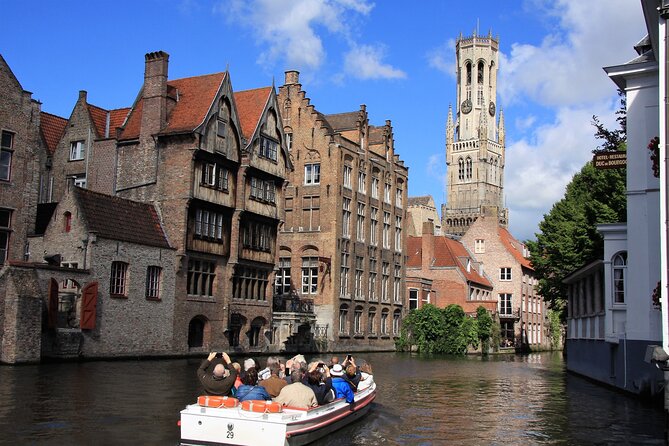
The route then moves across two historic bridges, described as the second oldest and oldest in Bruges. The itinerary does not give each bridge a separate number or duration, so the guide likely folds these into the walking section between the church and Steenhouwersdijk.
These stops should appeal to anyone who likes the city’s physical details. Bridges here are not just crossing points. They frame water, stone houses, and narrow lanes, giving you a sense of how the city’s waterways shaped movement through the center.
Do not expect a long pause at each bridge. The walking tour has a broad route to cover, and the bridges are likely quick viewing points rather than formal stops.
Steenhouwersdijk, where Churchill painted
Steenhouwersdijk is one of the tour’s most romantic pauses. You spend about four minutes at the spot associated with Winston Churchill’s painting.
The stop works because it gives you a reason to look beyond the standard Rozenhoedkaai photograph. Churchill’s connection to the view adds a personal, artistic layer, but the guide’s main job is to show why the scene works visually: water, old buildings, and a quiet stretch of Bruges that can feel far removed from the central crowds.
Four minutes is short, so have your camera ready. This is a place to frame quickly, listen to the explanation, and keep moving.
Vismarkt and the changing trade of the city
Vismarkt, the fish market, receives about five minutes. The name points to an earlier working role, but the tour also connects the area with lace, showing how the character of the place has changed.
I like stops such as this because they make Bruges more than a preserved medieval postcard. Markets tell you what people bought, sold, and needed. Fish and lace may seem unrelated, yet both belong to the city’s long commercial story.
There is no admission fee listed. This is another exterior stop, so the experience depends on the guide’s explanation and your willingness to look around rather than enter a museum.
Rozenhoedkaai and the essential Bruges photograph
Rozenhoedkaai is the tour’s most predictable stop, and that is not a criticism. The guide calls it the picture you need to make if you are in Bruges.
You get about five minutes here. The view is famous for good reason, and the short pause gives you a chance to take the classic image without allowing the whole tour to become a photo session.
The timing may feel tight if the area is crowded or you want several careful shots. Still, including the city’s best-known viewpoint makes sense. A tour that avoids crowds should not avoid Bruges’s signature view altogether.
Dijver and the transition to the canal boat
Dijver is listed as a 15-minute stop and is where the boat trip begins at the end of the walking tour. It is also only about five minutes from the original starting area, according to the tour details.
This is the point where the outing changes pace. After streets, churches, bridges, and squares, you sit back and see Bruges from the water. The canal ride lasts 30 minutes, and you receive the tickets at the end of the walking portion.
The wording suggests that the boat trip is a separate final segment rather than a guide-led continuation. Confirm the exact boarding procedure with your guide, especially since the tour ends at Gruuthusestraat 17 rather than back at Markt.
A surprising church connection and Gruuthusemuseum
Before the final bridge, the route includes a stop described as a surprising link between a church and something else. The details are not fully specified, so I would treat this as one of the guide’s discovery moments rather than a listed attraction with a fixed name.
The Gruuthusemuseum follows, with about ten minutes. The Lords of Gruuthuse are introduced through their motto, Plus est en vous, meaning there is more in you. That idea fits the tour’s method: look past the surface of Bruges and search for the extra layer behind each place.
Admission to the museum is not included. Ten minutes is also too short for a full museum visit, so you should not book this tour expecting an extended indoor collection. If Gruuthusemuseum is high on your Bruges list, return later with separate admission and more time.
Boniface Bridge and the final question
The last listed walking stop is Boniface Bridge. You spend about five minutes asking whether it is one of the oldest bridges in the city.
That question is a fitting finish for a route built around small claims, old stones, and local explanations. The bridge is photogenic, but the point is not only to take another picture. You are encouraged to question what you see and how Bruges presents its past.
The tour ends at Gruuthusestraat 17. Since the canal tickets are provided at the end of the walk, make sure you understand how the boat portion connects with the listed ending point.
Is $54.07 a fair price?
At $54.07 per person, this is not the cheapest way to walk around Bruges. The value depends on what you want from a guide.
You are paying for roughly three hours, a small group capped at 12, a route that reaches less obvious corners, a local English-speaking guide, and a 30-minute canal trip. That package compares well with paying separately for a basic walking tour and a canal ticket, though the exact ticket breakdown is not provided.
The price does not include admission to Poorters Loge or Gruuthusemuseum. The diamond house stop also needs clarification about entry. If you plan to visit those places inside, budget extra and allow more time on another day.
I see the strongest value in the guide’s local detail. Ivan is praised for being friendly, engaging, and able to point out things a large group might miss. His ability to keep the tour enjoyable in wind, rain, and cold is also a good sign, though poor weather can still make three hours outdoors tiring.
Timing, weather, and who should book
The 1:30 pm start gives you a full morning for independent sightseeing, then places the tour in the afternoon. The experience requires good weather, and it can be canceled if conditions are poor. In that case, you are offered another date or a full refund.
Bring shoes suitable for walking and clothing that can handle changing conditions. The information does not specify the total walking distance, but the route links many stops across central Bruges before the canal ride.
I would recommend this tour for:
- First-time visitors who want orientation plus unusual details
- Couples seeking a slower, scenic afternoon
- People who prefer a group of 12 or fewer
- Visitors who enjoy local stories more than long indoor visits
- Anyone who wants a canal ride included in the same booking
I would choose something else if you want a museum-heavy tour, a private guide, or a detailed visit inside every church and historic building. The short stop times favor variety over depth.
Final verdict: book it for the guide and the route
I would book BRYGGJA ROMANTICA if you want Bruges to feel less like a checklist of famous views. The strongest parts are the quieter streets, the old bridges, the unusual details around Burg Square, and the guide’s personal storytelling style.
The 30-minute canal trip adds a useful change of pace, and the BRUGORAMA photo show gives you something to keep after the afternoon ends. Just confirm the diamond house arrangements, remember that two admission fees are extra, and watch the forecast.
For a first visit, a romantic afternoon, or a second look at Bruges after seeing the main sights, this tour offers solid value. It is best for curious walkers who want the city’s backstory, not just its prettiest photograph.
FAQ
How long is the BRYGGJA ROMANTICA tour?
The experience lasts approximately three hours. The walking route is followed by a 30-minute boat trip on Bruges’s canals.
Where does the tour start?
It starts at Historium Bruges, Markt 1, 8000 Brugge, Belgium.
What time does the tour begin?
The scheduled start time is 1:30 pm.
Where does the tour end?
The listed end point is Gruuthusestraat 17, 8000 Brugge, Belgium. You receive tickets for the 30-minute canal boat trip at the end of the walking tour.
Is the canal boat ride included?
Yes. At the end of the tour, you receive tickets to board a 30-minute boat trip on the canals.
Are museum admission fees included?
No. Admission to Poorters Loge and Gruuthusemuseum is listed as not included. The diamond house stop has no admission fee stated, but the entry arrangements should be confirmed.
Can I cancel for a full refund?
Yes, if you cancel at least 24 hours before the experience start time. Cancellations or changes made less than 24 hours before the start are not refunded or accepted. If poor weather causes the tour to be canceled, you are offered another date or a full refund.
Just added around Bruges
- Bruges Beer and Chocolate Walking Tour★ 4.5 · 3 reviews
- Private: Discover Bruges beers & brewery with chocolate pairing by a young local★ 5.0 · 3 reviews
- Best of Brussels Private Tour from Zeebrugge or Bruges★ 4.0 · 3 reviews
- Visit of Bruges in 1 day private tour from Paris★ 5.0 · 3 reviews
- Brussels: Private & Customizable Day Trip to Bruges★ 5.0 · 3 reviews
- Explore the Instaworthy Spots of Bruges with a Local★ 5.0 · 3 reviews
- Bruges: Ticket Volkskundemuseum (Folk Museum)★ 5.0 · 3 reviews
- Bruges; private walking tour with the Beardbarian★ 5.0 · 3 reviews
3-Hour Experiences, compared.

Beer Tasting and Scavenger Hunt in Brussels – About 3 Hours
Read our review →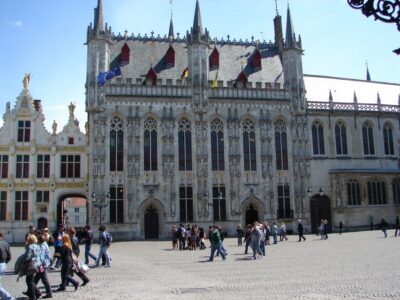
Private 3-hour walking tour of Bruges with official tour guide
Read our review →Browse the lists this tour appears in