
Reviewed · GUIDED
Guided tour of Bruges
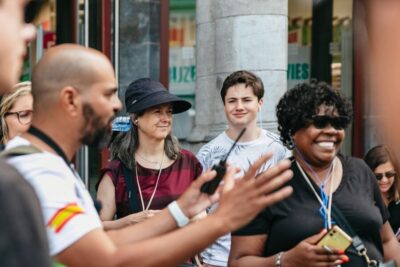
Bruges rewards a slow, story-filled walk. This Spanish-language tour makes the medieval center easier to read, and I like its two strongest touches: a stop at the peaceful Beguinage and a Belgian chocolate tasting at the end. The small group limit of 24 also gives the guide a fair chance to speak with you.
The main caution is meeting-point communication. One customer had trouble finding the local guide and received confusing help, so arrive early and confirm the start point carefully. The tour is advertised at about two hours, though the provider notes it can last closer to two and a half.
In This Review
- Key points at a glance
- Why this Spanish tour works well in Bruges
- Starting at Minnewater and the Beguinage
- Walplein beer stories and medieval houses on Stoofstraat
- Gruuthuse Palace and St John’s Hospital
- Our Lady’s Church and Michelangelo’s Madonna
- Guilds at Tanners’ Square
- The prettiest bridge and the Rozenhoedkaai canal
- Burg Square, Bruges’ political center
- A Belgian chocolate finish at Chocolalino
- Timing, group size, and headphones
- Is $22.51 a fair price?
- Who should book this walk?
- Should you book the Bruges guided tour?
- FAQ
- What language is the tour conducted in?
- How long does the Bruges tour last?
- Where does the tour begin?
- Where does the tour end?
- Is chocolate tasting included?
- Are meals and drinks included?
- Does the tour include museum or church admission?
- Is a canal boat ride included?
- How large is the group?
- Do I need headphones?
- Can I cancel for a full refund?
Key points at a glance
- Spanish-language storytelling: A local guide explains Bruges landmarks, customs, beer, guilds, churches, and chocolate in Spanish.
- A smart route through the old center: You walk from Minnewater and the Beguinage toward Markt Square, passing canals, bridges, churches, and medieval streets.
- Chocolate tasting included: The tour ends at Chocolalino, a certified artisan shop where you taste chocolates and learn how handmade products differ from industrial ones.
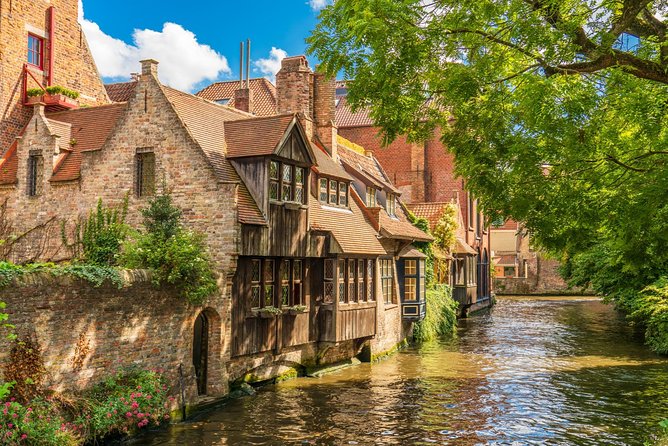
- Good photo stops: St Bonifacius Bridge and the Rozenhoedkaai canal offer two of the prettiest views on the route.
- Useful local advice: Your guide points out places to eat, drink, and buy traditional chocolate.
- Low-cost introduction: At $22.51 per person, this is a modest way to get context before exploring Bruges on your own.
Why this Spanish tour works well in Bruges
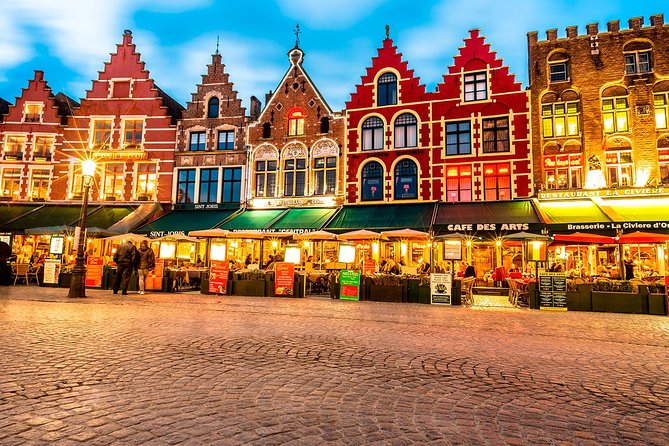
Bruges is easy to admire and surprisingly easy to misunderstand. You can walk past a grand church, a quiet canal, or a narrow medieval house without knowing what made that spot important.
This tour gives you a basic historical thread. You start near the old waterway, pass through religious and commercial parts of the city, then finish at the political heart of Bruges. That sequence helps you see the city as a working medieval town, not just a pretty collection of postcard views.
I especially like the language focus. If Spanish is your preferred language, you can spend less effort translating and more time watching the buildings and listening to the stories. The guide also offers suggestions for food, drinks, and chocolate, which is useful because Bruges has plenty of tourist-oriented choices near its central squares.
The tour does not include entry into the museums or churches listed along the route. Most stops are outdoor explanations, so you should think of this as a walking orientation with sightseeing, not a museum tour.
A few more trips and experiences worth a look
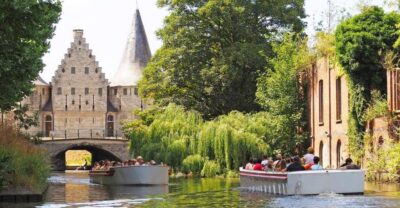
- Bruges: Small Group Boat Cruise and Guided Walking Tour
★ 4.8 · 4,102 reviews - Bruges: Walking Tour, Canal Boat Trip w/Beer Tasting Option
★ 4.4 · 2,759 reviews - Historical Walking Tour: Legends of Bruges
★ 5.0 · 2,541 reviews
Starting at Minnewater and the Beguinage
The meeting point is Bargeplein, by Katelijneparking on Bargeweg. From there, the walk begins at Minnewater, often called the Lake of Love.
The explanation here is more interesting than the romantic name suggests. The Dutch word minne can mean love, but it can also refer to something common or shared. In this context, the water was connected to Bruges’ old port and to the daily life of the city’s residents.
That is a useful opening because it places the water in a practical setting. Bruges did not grow only from beautiful canals and wealthy homes. Its waterways helped support trade and movement.
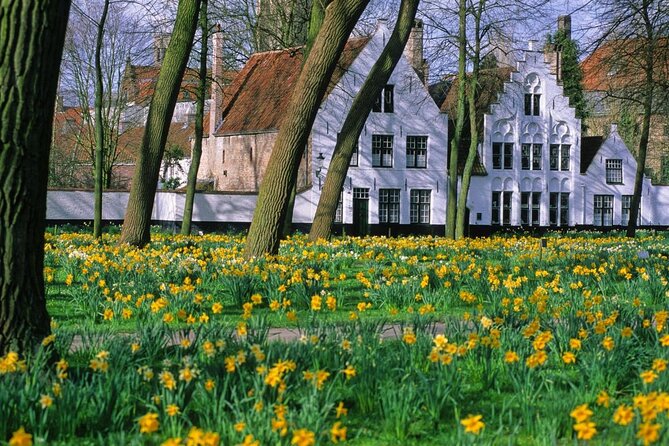
You then reach the Princely Beguinage Ten Wijngaarde, one of the city’s most peaceful sites. This enclosed complex was associated with beguines, religious women who lived in a community without belonging to a conventional convent.
The guide explains the Beguinage as part of the medieval character of Bruges. It is also recognized by UNESCO as a World Heritage Site. Expect about ten minutes here, enough for an introduction and a look around, but not a long historical lecture.
The small bridge nearby is a good photo point. I would keep your camera ready, but remember that this is a quiet place. The calm is part of its appeal, so the guide’s explanation should be balanced with a respectful pause.
Walplein beer stories and medieval houses on Stoofstraat
At Walplein, the subject shifts from religious life to beer. Your guide explains the history of Bruges beer and how it fits into local culture.
This is a short stop, listed at about five minutes, so do not expect a brewery visit or a tasting. The value is the context. Beer has long been part of Belgian social and commercial life, and a brief explanation can help you understand why it appears so often in local restaurants and shops.
Next comes Stoofstraat, a narrow street where the guide points out original medieval houses. This is one of the more useful parts of the walk because old buildings can look deceptively similar to modern reconstructions.
Look up at the façades and rooflines while the guide speaks. The point is not simply to take a picture of a quaint street. You are learning how to notice which features suggest genuine medieval construction and which parts may have been restored or changed.
The short timing works here. Stoofstraat is compact, and a focused explanation is more helpful than a long pause in a narrow passage.
Gruuthuse Palace and St John’s Hospital
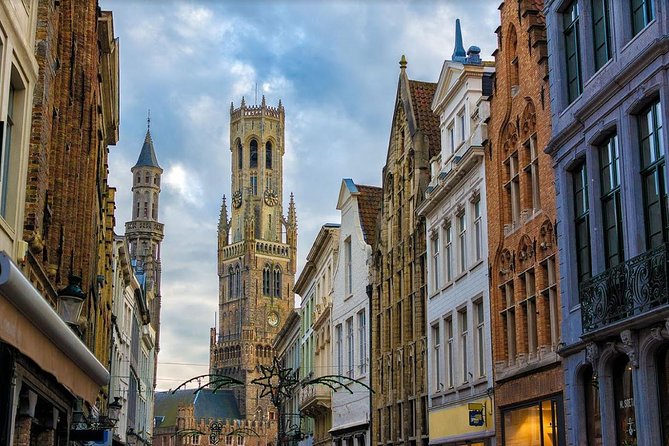
At the Gruuthusemuseum, the guide introduces the Gruuthuse family, one of Bruges’ most powerful families during the 17th and 18th centuries.
The stop takes place outside. You will not tour the museum as part of this experience, but the exterior gives the guide a good setting for explaining wealth, status, and the people who shaped Bruges.
This is an important distinction when comparing city tours. If you want detailed museum collections, you will need separate admission and time. If you want a quick explanation before deciding which sites deserve your own visit, this stop is useful.
The walk continues to the old St John’s Hospital. Here, the guide explains how medical care worked in medieval Bruges.
The hospital is a strong stop because it connects grand architecture with ordinary human needs. Medieval cities depended on institutions that cared for the sick, poor, and vulnerable, though the methods and standards were very different from those used today.
You spend about eight minutes here. That is enough for the broad idea, but anyone interested in medieval medicine should treat this as an introduction rather than a full account.
Something different, still within reach of Bruges:
- Bruges: Choco-Story Chocolate Museum Guided Tour w/Tastings
★ 4.2 · 1,379 reviews - From Bruges: Great War Flanders Fields Minibus Tour w/ Lunch
★ 4.9 · 1,257 reviews - Bruges: Guided Rickshaw Tour
★ 4.9 · 1,199 reviews - Round-Trip Shuttle Service from Zeebrugge to Bruges
★ 4.0 · 1,143 reviews
Our Lady’s Church and Michelangelo’s Madonna
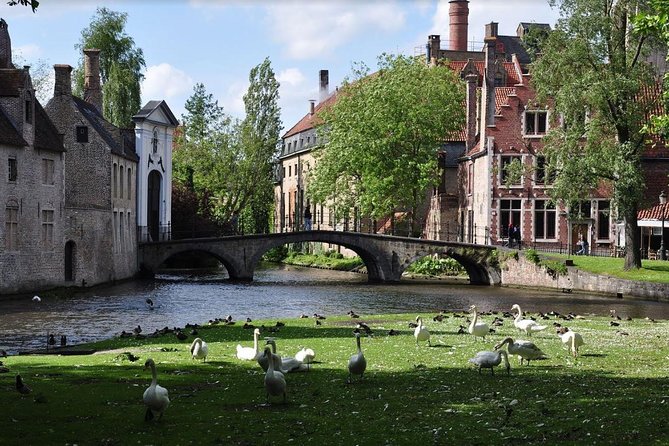
Outside the Church of Our Lady, the guide discusses the white marble Virgin and Child by Michelangelo, located inside the church.
The tour does not include an interior visit, so you will hear about the sculpture without seeing it during the guided portion. If viewing the work matters to you, plan time to return independently and check the church’s visiting conditions.
Even from the outside, the church adds an important layer to the route. Bruges is not only a city of canals and merchant houses. Its churches reflect the money, faith, and artistic ambition that accumulated over centuries.
I appreciate that the guide points out a specific work rather than giving only a general description of the building. That kind of detail gives you a reason to look closer.
Guilds at Tanners’ Square
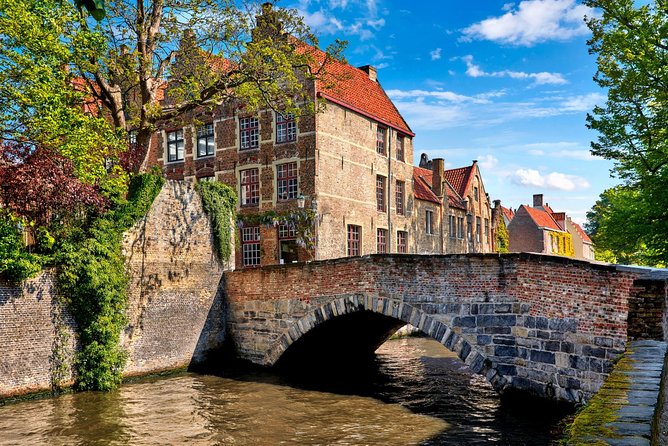
Huidenvettersplein, or Tanners’ Square, brings the tour back to trade. The square is linked to the old craft guilds that helped organize medieval business.
A guild was more than a shopkeeper’s association. It helped regulate a trade, protect members, and shape civic life. Your guide explains the square within that wider setting.
This stop is listed at about ten minutes. It is a good place to ask questions if you want to understand how craftsmen and merchants fit into Bruges society.
The square also gives you a break from the larger monuments. I like stops such as this because they show how the city worked at street level. The grand buildings are impressive, but guilds, hospitals, and markets explain how people actually lived and earned money.
The prettiest bridge and the Rozenhoedkaai canal
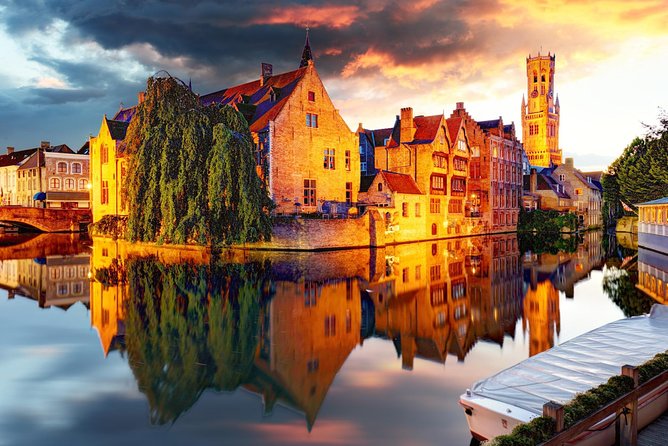
St Bonifacius Bridge is one of the most charming places on the route. The guide tells you the local legend connected with the bridge and allows time for photographs.
You will probably want to pause here, since the setting is designed for the classic Bruges view: old stone, water, and tightly packed historic buildings. The five-minute stop is brief, so take your photos promptly and listen for the story before the group moves on.
The route then reaches Quai du Rosaire, also called Rozenhoedkaai. This canal-side view is among the most recognizable scenes in Bruges.
The description of the spot is especially useful for timing. The guide suggests approaching in the late afternoon or after dinner for memorable views. The organized walk may not take place at that exact hour, but you can note the advice and return later.
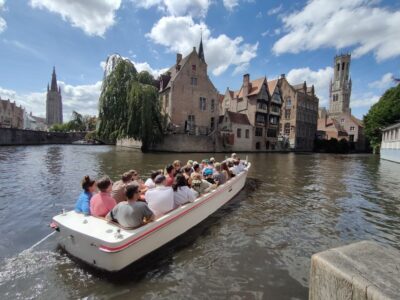
Canal boats are not included. You may see the departure area and decide if a boat ride suits your schedule and budget. The walking tour is valuable here because the guide gives you the setting and the history before you choose how else to experience the canals.
Burg Square, Bruges’ political center
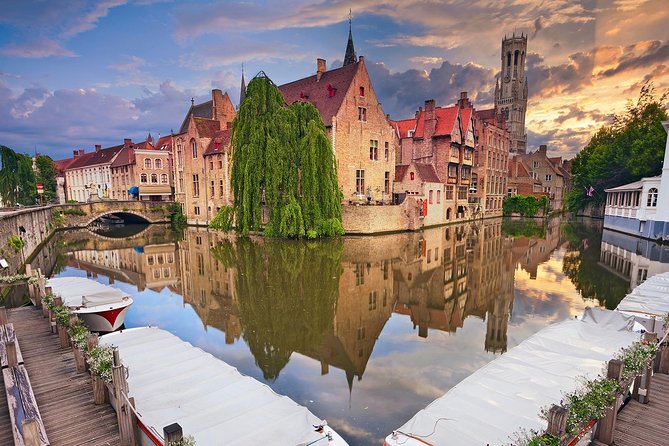
Burg Square is the final major sightseeing stop before chocolate. The guide explains the buildings around the square and shows how it became Bruges’ political center.
Architecture fans will find the variety rewarding. Buildings from different periods and styles occupy a compact space, reflecting more than a thousand years of civic development.
The scheduled stop lasts about 15 minutes, the longest pause on the route. That makes sense. Burg is a place where the guide can tie together religion, government, commerce, and architecture.
You also receive practical suggestions here for restaurants, bars, and shops selling traditional chocolate. Since the tour ends in the center, these tips are easy to use immediately.
The end point is Markt 20, in the heart of Bruges. You are not sent back to the starting point, which is convenient if you plan to keep exploring after the walk.
A Belgian chocolate finish at Chocolalino
The tour ends at Chocolalino, described as one of the few certified artisan chocolate shops on the route. You taste artisan Belgian chocolates and hear how to tell handmade chocolate from industrial products.
This is a well-chosen finish. Chocolate is closely tied to Belgium’s food culture, but the label alone does not tell you much about quality. A guide’s explanation can help you shop with a little more care instead of buying the first attractive box near Markt Square.
Food and drinks beyond the chocolate tasting are not included. You should also treat the tasting as a sample, not a full dessert stop or meal replacement.
If you want to buy chocolate, the guide can point you toward suitable shops. The advice is one of the tour’s practical strengths, especially if you have limited time and want to bring home a traditional product.
Timing, group size, and headphones
The experience is described as about two hours, with a note that it may run to roughly two and a half hours depending on the guide and group. That extra time matters if you have a train, meal booking, or another timed activity afterward.
The route includes around 12 stops, with several short explanations of five to ten minutes. The total time also includes walking between locations, photography, and the chocolate stop.
The maximum group size is 24 people. That is not a private tour, but it is more manageable than a large coach group.
Bruges has tourist regulations that may require radios and headphones. Groups of more than 24 must use headphones, though the stated maximum for this activity is 24. If the guide provides equipment, or if headphones are needed, the cost is €1 per pair. You may use your own headphones if they are compatible with the system.
The mobile ticket is convenient, but it does not remove the need to check the exact meeting point. I would arrive at Bargeplein early, keep the booking confirmation accessible, and watch for the Spanish-speaking guide.
Is $22.51 a fair price?
At $22.51 per person, I consider this a good value if you want a guided introduction in Spanish.
You are paying for a local professional guide, a structured walk through the city center, explanations at major landmarks, local food and drink advice, and an artisan chocolate tasting. The tour also saves you from piecing together the route yourself.
The value is lower if you already know Bruges well or want lengthy interior visits. You will not receive museum admission, church admission, a canal cruise, a full meal, or a beer tasting.
For a first visit, I like the balance. You get the major sights without spending a full day in a formal tour. Afterward, you can return to the church, museum, canal, or square that caught your attention.
The tour has a 4.6 rating from 54 ratings, with 91 percent recommending it. That suggests a generally strong experience, but the one serious complaint about finding the guide deserves attention. Clear communication at Bargeplein is the main thing you can control.
Who should book this walk?
I would recommend it to Spanish-speaking visitors who want history explained in plain terms and prefer a short walking tour to a long lecture.
It also suits first-time visitors who want help identifying the city’s key squares, churches, canals, bridges, and old houses. The route is broad enough to give you a useful first look, while the central finish leaves you free to continue sightseeing.
You may want something else if you need wheelchair-specific information, extensive interior access, a private guide, or a food-focused tour. The supplied details do not provide accessibility information, so contact the provider before booking if that is important for you.
The experience requires good weather and a minimum number of participants. If the operator cancels for either reason, you can choose another date or receive a full refund. You can also cancel for a full refund up to 24 hours before the start time, but cancellations within 24 hours are not refunded.
Should you book the Bruges guided tour?
Book it if you want a low-cost, Spanish-language overview that combines major sights with useful local advice.
I especially like the Beguinage, the guild history at Tanners’ Square, the canal views, and the chocolate lesson at Chocolalino. The tour gives Bruges a human scale, moving from old port waters to religious communities, hospitals, guilds, political buildings, and food traditions.
Just protect yourself against the main weakness: arrive early at Bargeplein and make sure you can identify the guide. If you need more time inside museums or churches, use this walk as your orientation, then explore those places on your own.
FAQ
What language is the tour conducted in?
The tour is conducted in Spanish by a local professional guide.
How long does the Bruges tour last?
It is advertised at about two hours, though the provider notes that it may last around two and a half hours depending on the guide and group.
Where does the tour begin?
The meeting point is Bargeplein, at Katelijneparking on Bargeweg, 8000 Brugge, Belgium.
Where does the tour end?
The tour ends at Markt 20 in central Bruges, close to restaurants, bars, and shops.
Is chocolate tasting included?
Yes. The tour ends at Chocolalino, a certified artisan chocolate shop where you taste artisan Belgian chocolates.
Are meals and drinks included?
No. Food and drinks are not included, but the guide can recommend places to eat and drink.
Does the tour include museum or church admission?
No admission tickets are included. The guide explains sites such as Gruuthusemuseum and the Church of Our Lady from outside.
Is a canal boat ride included?
No. The tour visits Rozenhoedkaai, but a canal boat ride is not included.
How large is the group?
The activity has a maximum of 24 participants.
Do I need headphones?
Due to Bruges tourist regulations, radios and headphones may sometimes be used. If headphones are required, they are available from the guide for €1 per pair, and you may use your own headphones.
Can I cancel for a full refund?
Yes. You can cancel at least 24 hours before the start time for a full refund. Cancellations or changes made less than 24 hours before the start time are not refunded.
Just added around Bruges
- Bruges Beer and Chocolate Walking Tour★ 4.5 · 3 reviews
- Private: Discover Bruges beers & brewery with chocolate pairing by a young local★ 5.0 · 3 reviews
- Best of Brussels Private Tour from Zeebrugge or Bruges★ 4.0 · 3 reviews
- Visit of Bruges in 1 day private tour from Paris★ 5.0 · 3 reviews
- Brussels: Private & Customizable Day Trip to Bruges★ 5.0 · 3 reviews
- Explore the Instaworthy Spots of Bruges with a Local★ 5.0 · 3 reviews
- Bruges: Ticket Volkskundemuseum (Folk Museum)★ 5.0 · 3 reviews
- Bruges; private walking tour with the Beardbarian★ 5.0 · 3 reviews
Guided, compared.
Small Group Boat Cruise and Guided Walking Tour
Read our review →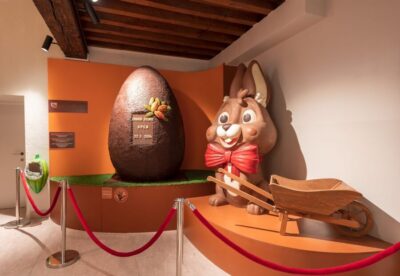
Choco-Story Chocolate Museum Guided Tour w/Tastings
Read our review →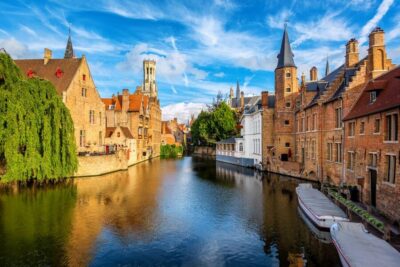
Browse the lists this tour appears in