
Reviewed · PRIVATE
Australian Battlefields Private Tour in Flanders from Bruges
The ground still carries the story. This long private day from Bruges follows Australian troops through Fromelles, Messines, Polygon Wood, Passchendaele, and Ypres, joining battle sites with cemeteries, museums, and the Last Post ceremony at Menin Gate. I especially like the private minivan and the chance to shape the day around your interests. I also like that lunch, hotel pickup, and entrance fees are included. The main drawback is the length: roughly 12 hours, with a lot of driving and emotionally heavy stops.
Claude Verhaeghe is the guide named in the tour information, and his clear explanations of battle geography receive repeated praise. The day suits anyone with a strong interest in Australian military history, but it may feel too focused for someone who wants a relaxed sightseeing day around Bruges.
In This Review
- Key points at a glance
- Why this 12-hour Flanders day works
- Fromelles, where the day becomes personal
- Armentières, Ploegsteert, and the road south
- Messines Ridge and Hill 60
- Polygon Wood and the ANZAC connection
- The Passchendaele Museum adds indoor context
- Tyne Cot, the largest Commonwealth cemetery
- Ypres and the Last Post at Menin Gate
- Lunch and the practical rhythm of the day
- Claude’s guiding style
- Who will get the most from this tour?
- Booking, cancellation, and access notes
- Should you book this Australian battlefield tour?
- FAQ
- Where does the Australian Battlefields Private Tour begin?
- How long does the tour last?
- Is this a private tour?
- What is included in the price?
- Is lunch included?
- Which Australian World War I sites are visited?
- Can I cancel for a full refund?
Key points at a glance
- Fromelles tells a personal story: See the museum, Pheasant Wood Cemetery, and the former German lines linked to the disastrous attack of 19 July 1916.
- The private format matters: Only your group travels together, so you can ask questions and request emphasis on particular battles or family connections.
- Australian sites are central: The route includes VC Corner, Messines Ridge, Hill 60, Polygon Wood, and the 5th Australian Division Memorial.
- Passchendaele adds museum context: The Passchendaele Museum gives you an indoor hour among outdoor cemeteries and former battlefield positions.
- Lunch is part of the day: A meal is included, with the Brothers in Arms restaurant praised as an enjoyable and interesting stop.
- Menin Gate provides a powerful finish: The Last Post ceremony follows free time in Ypres and gives the day a solemn closing moment.
Why this 12-hour Flanders day works
This is not a quick battlefield photo stop. It is a full-day attempt to connect military movements, burial places, tunneling work, ruined towns, and the continuing remembrance of Australian service in Belgium and northern France.
You leave Bruges at about 9:00 a.m. in an air-conditioned minivan with a private driver-guide. Hotel pickup and drop-off remove the need to find a station, rent a car, or work out how several scattered sites fit together. That convenience has real value in a region where battlefields and cemeteries sit across the French-Belgian border.
The private setup also changes the tone. You are not trying to hear a guide over a large group, and you can ask for more detail about a particular regiment, battlefield, or family story. The itinerary is already packed, but the tour allows flexibility to shape it around your interests.
The advertised price is $545.94 per person. That is a serious amount, especially for two people, but the price covers a private vehicle, guide, hotel transport, lunch, bottled water, local taxes, and entrance fees. If you value personal guiding and do not want to drive, the cost can make sense. A solo visitor cannot book this experience alone because a minimum of two people is required.
A few more trips and experiences worth a look
- Bruges: Small Group Boat Cruise and Guided Walking Tour
★ 4.8 · 4,102 reviews - Bruges: Walking Tour, Canal Boat Trip w/Beer Tasting Option
★ 4.4 · 2,759 reviews - Historical Walking Tour: Legends of Bruges
★ 5.0 · 2,541 reviews
Fromelles, where the day becomes personal
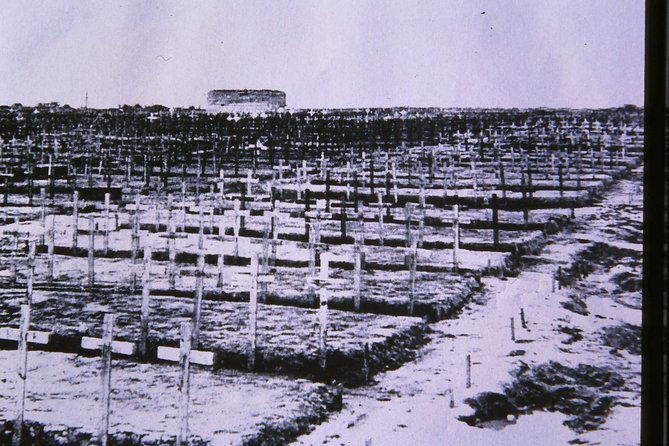
The first major stop is the Museum of the Battle of Fromelles. You get about 45 minutes inside, learning about the battle and the later exhumation and reburial of 250 soldiers.
Fromelles is a useful opening because it connects battlefield events with the long work of identifying and honoring the dead. The subject is not only the attack itself. It is also what happened many decades later, when the 250 soldiers were recovered and given proper burials.
You then visit Pheasant Wood Military Cemetery for about 30 minutes. The cemetery is where those soldiers now rest, giving the museum story a quiet physical place. I would expect this to be one of the more affecting sections of the day, so allow yourself time to pause rather than treating it as another quick stop.
At Australian Memorial Park, you look from the former German lines toward no man’s land, where Australian troops launched their attack on 19 July 1916. The value here is geographic. Claude can help connect the visible ground to the direction and conditions of the assault, something that is difficult to understand from a book alone.
The route continues to VC Corner Australian Cemetery, described as the only cemetery in France exclusively for Australians. Another half-hour stop at Rue Pettilon Military Cemetery brings you back to the human cost of the fighting, with many Australian soldiers buried there.
These cemetery visits ask for respectful behavior and a slower pace. They are not attractions in the usual sense, and the experience depends heavily on your willingness to listen, read names, and think about what the guide is explaining.
Armentières, Ploegsteert, and the road south
Between the principal stops, the minivan passes through Armentières and the place associated with the pub in the song Mlle from Armentières. This is a small detail, but it gives the drive a welcome link to popular wartime culture.
The route also passes near the Ploegsteert Memorial and Hill 63 before reaching Messines. These drive-by views are not presented as full stops in the schedule, so you should not expect extended time at every location you pass. Still, the movement through the area helps show how close many of these sectors were to one another.
This is one reason a private vehicle is useful. The day is not built around a single museum or one cemetery. It is a chain of locations spread through a broad area, and the guide provides the thread connecting them.
Messines Ridge and Hill 60
At Messines Ridge, you spend about 30 minutes at the ground where Australian forces attacked in June 1917. The stop adds a different phase of the war to the Fromelles story, showing how the Australian role continued across several major operations.
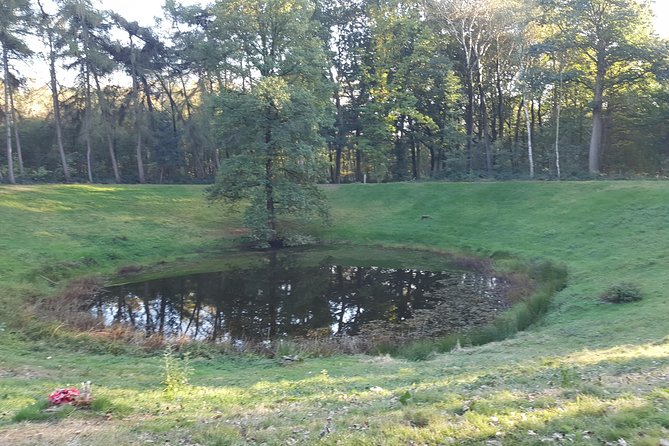
Hill 60 receives about 45 minutes. Here you see the Caterpillar Mine Crater and the memorial dedicated to the 1st Australian Tunnelling Company. The crater is a striking reminder that the war took place below ground as well as across open fields.
This stop should be especially worthwhile if you are interested in engineering and siege work. The mine crater gives physical form to the effort required to undermine enemy positions, while the memorial brings attention to the men who carried out that dangerous work.
The guide’s role is important here. A crater and a memorial can be easy to view without grasping their purpose. Claude is praised for explaining the geography and the harsh conditions faced by soldiers, which should help you read the site rather than simply photograph it.
Something different, still within reach of Bruges:
- Bruges: Choco-Story Chocolate Museum Guided Tour w/Tastings
★ 4.2 · 1,379 reviews - From Bruges: Great War Flanders Fields Minibus Tour w/ Lunch
★ 4.9 · 1,257 reviews - Bruges: Guided Rickshaw Tour
★ 4.9 · 1,199 reviews - Round-Trip Shuttle Service from Zeebrugge to Bruges
★ 4.0 · 1,143 reviews
Polygon Wood and the ANZAC connection
At Polygon Wood, you see the memorial to the 5th Australian Division and the New Zealand Memorial. The stop lasts about 30 minutes and carries an extra layer of importance because it is the place where the ANZAC Day dawn service takes place.
For Australians and New Zealanders, that connection can make Polygon Wood one of the most meaningful stops of the day. For other visitors, it provides useful context about how remembrance continues long after the fighting ended.
The schedule moves quickly here, so think of this as a focused visit rather than a long walk through the area. You will have time to see the memorials and hear the explanation, but the complete day does not leave much room for wandering without affecting later stops.
The Passchendaele Museum adds indoor context
The Passchendaele Museum receives a full hour and is described as one of the most interesting World War I museums in Belgium. After several outdoor battlefield and cemetery visits, an indoor museum gives you a chance to organize what you have seen.
That balance matters. Cemeteries and memorials tell one kind of story, while a museum can provide objects, displays, and a broader account of the battle. The hour is long enough to make this more than a hurried entrance, though your exact time inside may depend on the day’s traffic and the pace of your group.
Passchendaele is also a demanding subject. The museum stop may be where the scale and conditions of the fighting become clearest, so it helps to approach it with enough energy left for the final cemetery and Ypres.
Tyne Cot, the largest Commonwealth cemetery
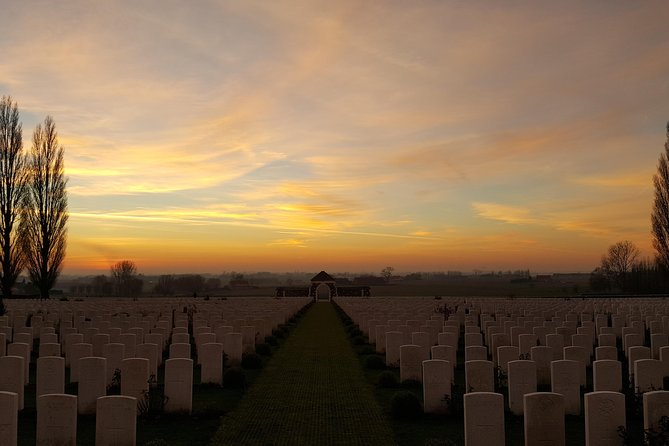
Tyne Cot Cemetery is another 30-minute stop. It is the largest Commonwealth War Graves Commission cemetery, and its memorial carries the names of 35,000 soldiers who have no known grave.
The numbers are enormous, but the setting works through individual names and ordered rows rather than statistics alone. Give yourself a few quiet minutes here. You do not need to know every battle detail to understand why this place matters.
Because the visit is limited to half an hour, you will not have time to read every name or explore every part of the cemetery. The short visit is enough for an introduction, but anyone wanting extended time at Tyne Cot may wish to ask Claude how the private format can accommodate that interest.
Ypres and the Last Post at Menin Gate
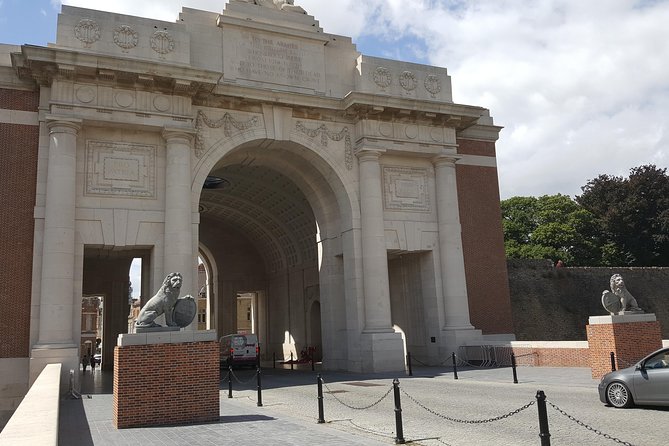
The tour then reaches Ypres, where you have about an hour around the Cloth Hall, the cathedral, and the main square. This is your free time in town, and it provides a useful change from military sites.
Ypres gives you a sense of the civic center behind the battlefields. The Cloth Hall and cathedral also help explain the scale of wartime destruction and reconstruction in the city. Keep an eye on the clock, since the day ends with a set ceremony rather than an open-ended evening.
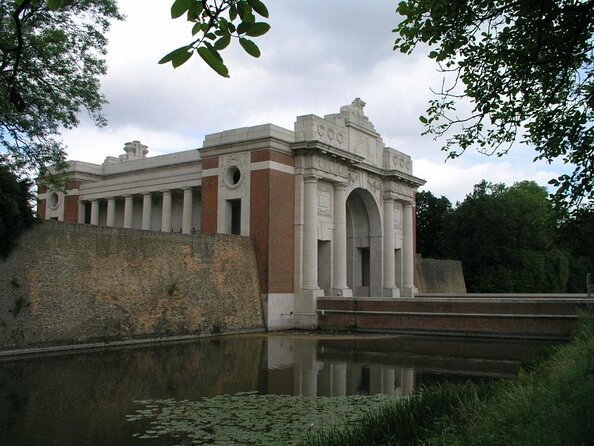
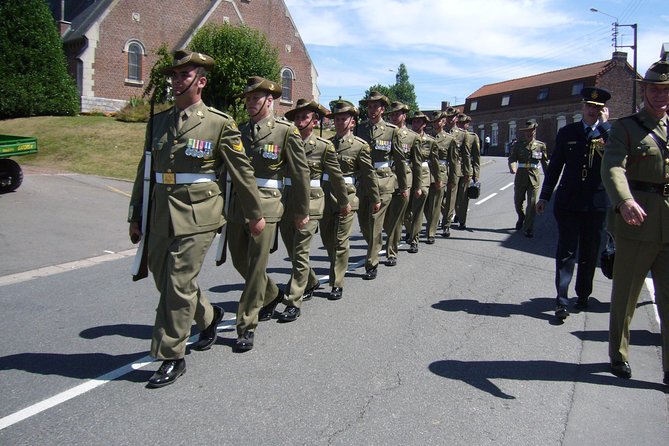
The Last Post ceremony takes place under Menin Gate and lasts about an hour. You attend the service, then Claude brings you back to your hotel. The ceremony is widely treated as the emotional high point of the tour, and it is easy to understand why: after a day spent following Australian units, cemeteries, and memorials, you finish with a formal act of remembrance.
Cold weather can make the wait uncomfortable, as one account of the day makes clear. Bring suitable clothing for the season and be ready for a quiet, serious atmosphere. This is not a casual show added for tourists. It is a solemn service, and you should plan to listen respectfully.
Lunch and the practical rhythm of the day
Lunch is included, which simplifies a long day. The Brothers in Arms restaurant is specifically praised as both interesting and enjoyable, and the meal gives you a proper break between the site visits.
Alcoholic drinks are not included, though they are available to purchase. Bottled water is provided. Since the tour begins at 9:00 a.m. and ends after the evening ceremony, lunch is more than a minor perk. It keeps you from losing time searching for a place to eat in an unfamiliar area.
The day still demands stamina. You move between museums, cemeteries, memorials, and the minivan, with many stops lasting only 30 minutes. Wear practical shoes and be prepared for outdoor visits in changing weather. The schedule is carefully filled, not leisurely.
Claude’s guiding style
Claude Verhaeghe is repeatedly praised for his command of World War I battles and geography, his professional manner, and his safe driving. That combination is important on a battlefield tour. You need a guide who can explain events clearly, but also handle a long day on the road without making the transport stressful.
His earlier email confirmation of pickup time and location is another practical positive. Hotel pickup in Bruges makes the start simple, and the private arrangement means the guide is focused on your group.
The strongest reason to choose this tour is the interpretation. The sites themselves are free or modestly presented, but their meaning is not always obvious. A good guide shows how the ground, memorials, and battle dates relate to each other.
Who will get the most from this tour?
I would choose this experience if you have Australian family military history, a serious interest in World War I, or a desire to visit the Western Front without renting a car. It is also a strong choice if you prefer a private guide who can answer questions and adjust the emphasis.
The tour is less suitable if you want a light sightseeing day, dislike cemeteries, or prefer to spend most of your time in Bruges. The subject is often sad, and the repeated visits to graves and memorials require emotional attention.
The Australian focus is clear, but the route also includes New Zealand memorials, British Commonwealth sites, French locations, and the Belgian city of Ypres. That makes the day broader than a single national story while keeping Australian service at its center.
Booking, cancellation, and access notes
The experience is booked an average of 131 days in advance, so planning early is sensible, especially if you need a particular date. Confirmation is provided at booking, and free cancellation is available up to 24 hours before the start time. Changes or cancellations inside that 24-hour window are not accepted for a refund.
A minimum of two people is required. Service animals are allowed, and the tour states that most people can participate. Since the day includes outdoor cemeteries and battlefield locations, you should still ask the provider about any personal mobility concerns before booking.
Should you book this Australian battlefield tour?
Book it if you want a serious, personal introduction to Australian World War I sites and value door-to-door transport. The combination of Fromelles, Pheasant Wood, Messines, Hill 60, Polygon Wood, Passchendaele, Tyne Cot, and Menin Gate gives you a broad day with strong historical links.
I would also book it for the guiding. Claude’s explanations of geography, battle conditions, and Australian service are the part that turns a long driving day into a coherent experience. Lunch and the private minivan add practical value to the high price.
Skip it if your ideal Bruges trip is slow, café-centered, or limited to Belgium’s medieval sights. For the right person, though, this is a moving and unusually focused day, with the Last Post at Menin Gate giving the whole journey a fitting final note.
FAQ
Where does the Australian Battlefields Private Tour begin?
The tour begins in Bruges with hotel pickup at about 9:00 a.m.
How long does the tour last?
The experience lasts approximately 12 hours and ends after the Last Post ceremony at Menin Gate, followed by transport back to your hotel.
Is this a private tour?
Yes. Only your group participates, and transport is provided by private air-conditioned minivan.
What is included in the price?
The price includes local taxes, lunch, a driver-guide, hotel pickup and drop-off, private transportation, bottled water, and entrance fees for the museum visits.
Is lunch included?
Yes. Lunch is included. Alcoholic drinks are not included, but they can be purchased.
Which Australian World War I sites are visited?
The route includes Fromelles, Pheasant Wood Military Cemetery, Australian Memorial Park, VC Corner Australian Cemetery, Rue Pettilon Military Cemetery, Messines Ridge, Hill 60, and the memorial to the 5th Australian Division at Polygon Wood.
Can I cancel for a full refund?
Yes. You can cancel at least 24 hours before the experience start time for a full refund. Cancellations or changes made less than 24 hours before the start time are not accepted for a refund.
Just added around Bruges
- Bruges Beer and Chocolate Walking Tour★ 4.5 · 3 reviews
- Private: Discover Bruges beers & brewery with chocolate pairing by a young local★ 5.0 · 3 reviews
- Best of Brussels Private Tour from Zeebrugge or Bruges★ 4.0 · 3 reviews
- Visit of Bruges in 1 day private tour from Paris★ 5.0 · 3 reviews
- Brussels: Private & Customizable Day Trip to Bruges★ 5.0 · 3 reviews
- Explore the Instaworthy Spots of Bruges with a Local★ 5.0 · 3 reviews
- Bruges: Ticket Volkskundemuseum (Folk Museum)★ 5.0 · 3 reviews
- Bruges; private walking tour with the Beardbarian★ 5.0 · 3 reviews
Private, compared.
Private Historical Tour: The Highlights of Bruges
Read our review →

Brussels Highlights & Hidden Gems Private Tour with a Local Guide
Read our review →
Belgian Beer Tasting and Course at a Private Bar
Read our review →
Highlights & Hidden Gems With Locals: Best of Bruges Private Tour
Read our review →
The 10 Tastings of Bruges With Locals: Private Food Tour
Read our review →
From Bruges to Damme: Private Electric Scooter tour
Read our review →Browse the lists this tour appears in