
Reviewed · TICKETS
Bruges: Musea Sculpta | Monumental Sculptures Entry ticket
Look closer, and familiar paintings change. Musea Sculpta turns details from famous Flemish works into enormous gypsum wall sculptures, giving you a fresh way to see art you may already know. I especially like the clear audio guide and the chance to examine works by Bosch, Memling, and the van Eyck brothers in relief. The courtyard garden is another welcome touch, with sofas and a pleasant view.
The main consideration is the subject matter. The museum focuses heavily on Christian art, so visitors expecting a broad collection or lots of written display panels may find it narrower than expected. At about $11 per person, though, this is an easy addition to a Bruges day, especially if you want something unusual rather than another traditional painting gallery.
In This Review
- Key points to know before you go
- Entering De Pelikaan in central Bruges
- A new way to see Flemish masterpieces
- Bosch, Memling, and the van Eyck brothers in relief
- Bosch’s Garden of Earthly Delights
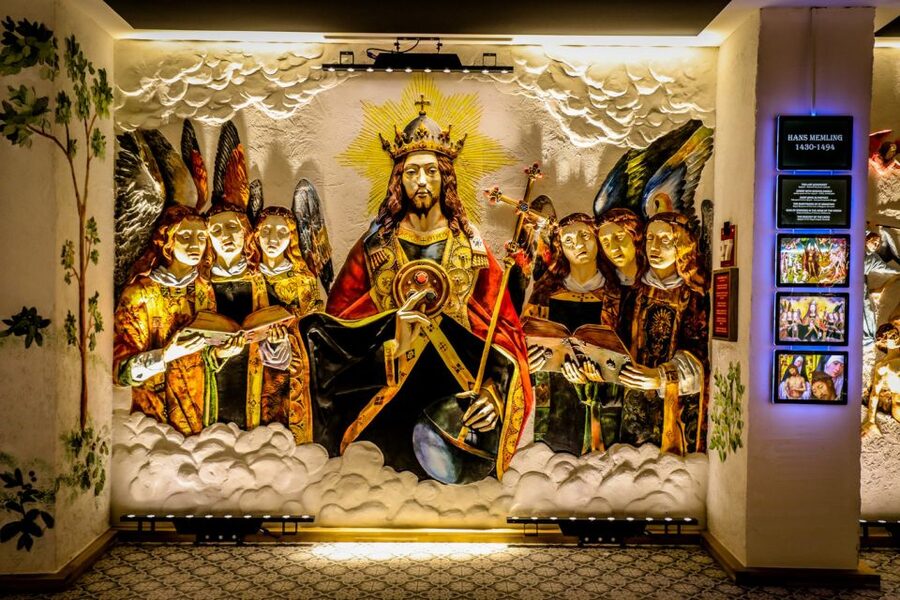
- Memling’s Last Judgement
- The Adoration of the Mystic Lamb
- Following the 265-metre sculpture gallery
- The making of 700 square metres of gypsum
- Taking a break in the courtyard garden
- Who will enjoy Musea Sculpta most
- Practical details for planning your visit
- Should you book Musea Sculpta?
- FAQ
- Where is Musea Sculpta located?
- What artworks are shown at Musea Sculpta?
- How long is the museum route?
- Is an audio guide included?
- Is Musea Sculpta wheelchair accessible?
- Can I bring a pet?
- What time should I arrive?
Key points to know before you go
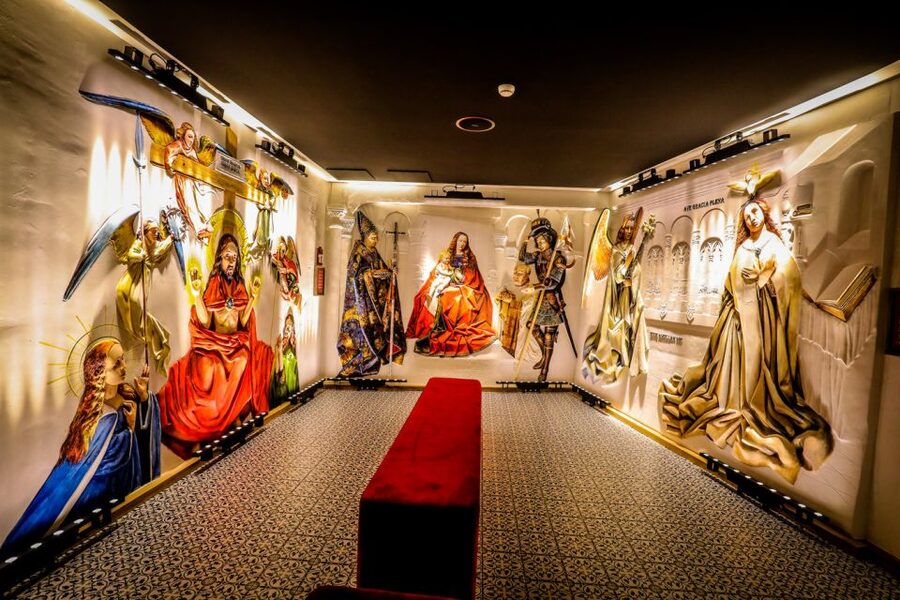
- Three famous masterpieces become wall-sized reliefs: See sections from Bosch’s The Garden of Earthly Delights, Memling’s The Last Judgement, and the van Eyck brothers’ Adoration of the Mystic Lamb in plaster.
- The 265-metre route is made for slow looking: You follow a long gallery of monumental sculptures rather than rushing through a series of conventional rooms.
- The audio guide does much of the explaining: It is offered in English, Dutch, French, Spanish, and German, with commentary on small details and the beliefs of the period.
- The sculptures use 22 tons of gypsum: International artists from several countries created the 700 square metres of relief work.
- The courtyard gives you a proper pause: Sofas are placed throughout the museum, and the garden offers a relaxing break with one of the site’s nicest views.
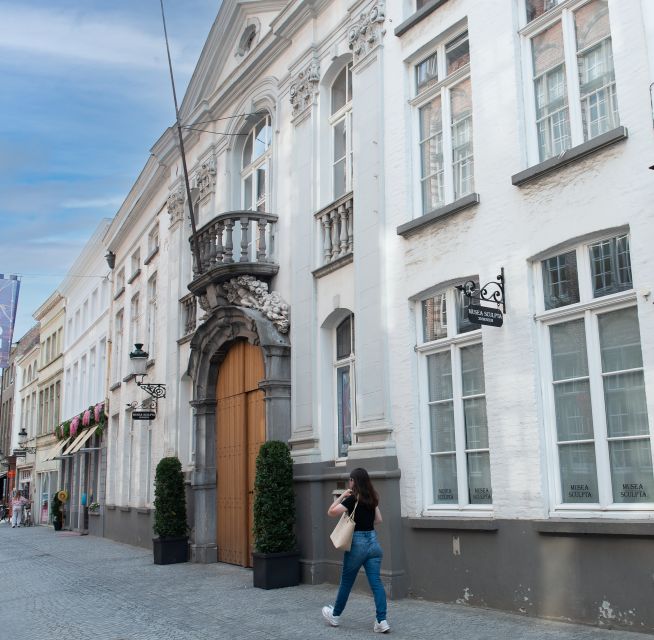
- The setting is part of the experience: You enter through the 1703 gatehouse of the historic townhouse De Pelikaan, marked by a white facade, brown gate, and pelican statue on the roof.
Entering De Pelikaan in central Bruges
Musea Sculpta is housed in De Pelikaan, a historic townhouse that is easy to identify. Look for the large white building with a brown gate and a pelican statue on the roof. The entrance is through an impressive gatehouse dating from 1703.
That arrival matters because the museum does not feel like a modern black-box gallery. You begin in an old Bruges building, then move into rooms filled with large, pale gypsum figures. The contrast between the historic setting and the unusual sculptural presentation gives the visit much of its character.
You should arrive before 5pm. The ticket is valid for one day, but the experience is not presented as a timed tour with a fixed group schedule. Check the available starting times when booking, then allow enough room in your day to listen to the audio guide without hurrying.
The advertised price is about $11 per person. That is good value if you enjoy art, unusual museums, or a quieter stop between Bruges’ major sights. It is less compelling if you want a traditional gallery filled with original paintings, because the main attraction here is the sculptural interpretation of well-known works.
A few more trips and experiences worth a look
- Bruges: Small Group Boat Cruise and Guided Walking Tour
★ 4.8 · 4,102 reviews - Bruges: Walking Tour, Canal Boat Trip w/Beer Tasting Option
★ 4.4 · 2,759 reviews - Historical Walking Tour: Legends of Bruges
★ 5.0 · 2,541 reviews
A new way to see Flemish masterpieces
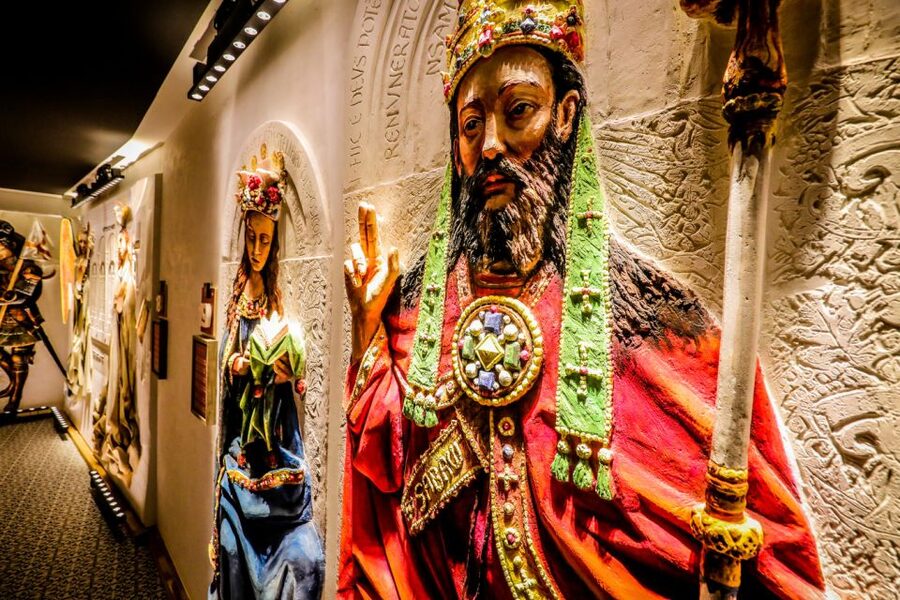
The central idea is simple but effective: take tiny details from major paintings and recreate them as large wall sculptures. A detail that might be easy to miss in a painting can become a full figure, face, creature, or scene in plaster.
This changes how you look. In a flat image, your eye usually moves across the whole composition. In relief, the figures project from the wall and catch light and shadow. You can inspect their outlines, gestures, clothing, and expressions from much closer than you normally would with a famous altarpiece.
The museum focuses on the Flemish primitives, a term used for the important painters of the early Netherlandish tradition. The works are closely tied to Christian stories and medieval religious thought. That context is useful, but it also shapes the visit strongly. If you are not interested in biblical scenes, saints, judgment, or religious symbolism, the subject may feel repetitive.
For anyone who enjoys spotting small clues, the format works well. The audio guide points out details and explains some of the beliefs of the period. One playful element mentioned in the commentary is a unicorn, which gives you something specific to look for as you move through the reliefs.
Bosch, Memling, and the van Eyck brothers in relief
Three major works anchor the visit.
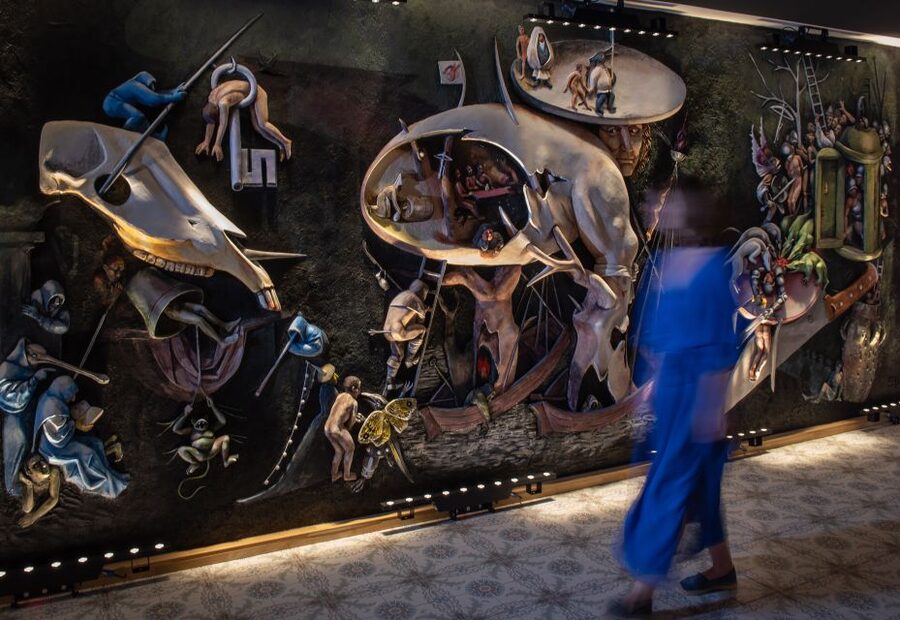
Bosch’s Garden of Earthly Delights
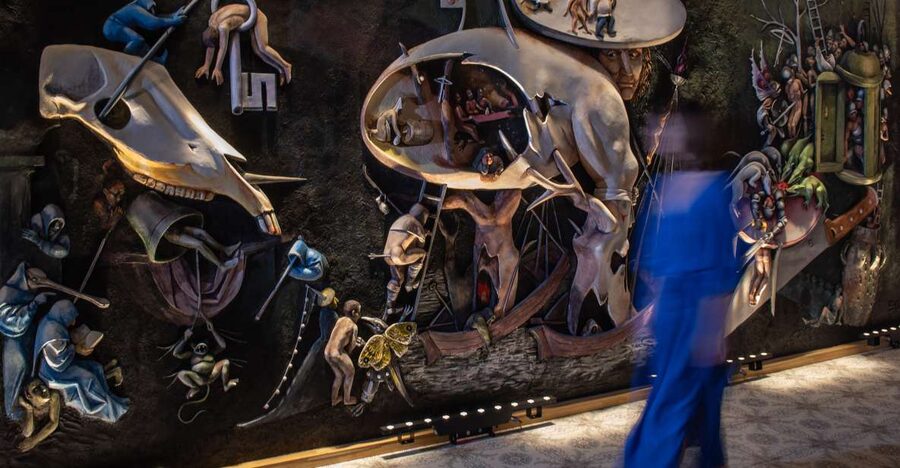
Jheronimus Bosch’s The Garden of Earthly Delights is ideal for a sculptural treatment because it is packed with strange creatures, symbolic scenes, and tiny incidents. The original is famous for rewarding close inspection, and the large gypsum version gives those details more physical presence.
You may find this section the most playful and surprising part of the museum. Bosch’s imagery includes the kind of odd figures that make you stop, scan the wall, and wonder what you are looking at. The audio guide helps provide a path through the details instead of leaving you to guess at every symbol.
Still, this is not the original painting. You are seeing a three-dimensional interpretation of selected details, not standing before Bosch’s complete work. Think of it as a new reading aid and an art experience in its own right, rather than a substitute for the original in a major museum.
Something different, still within reach of Bruges:
- Bruges: Choco-Story Chocolate Museum Guided Tour w/Tastings
★ 4.2 · 1,379 reviews - From Bruges: Great War Flanders Fields Minibus Tour w/ Lunch
★ 4.9 · 1,257 reviews - Bruges: Guided Rickshaw Tour
★ 4.9 · 1,199 reviews - Round-Trip Shuttle Service from Zeebrugge to Bruges
★ 4.0 · 1,143 reviews
Memling’s Last Judgement
Hans Memling’s The Last Judgement brings a more serious tone. Its subject is religious judgment, salvation, and punishment, and the relief format makes the human figures easier to inspect at close range.
The audio commentary is particularly helpful here because the scene depends on period beliefs and symbols. Without context, the many figures and gestures can blur together. With the guide, you can better understand why certain details appear and how the painting would have communicated with its original audience.
This section may be less comfortable for anyone hoping for light entertainment, but it gives the visit historical purpose. Musea Sculpta is not only showing unusual plaster figures. It is also asking you to consider how images once taught religious ideas to people who encountered them in churches and public settings.
The Adoration of the Mystic Lamb
The van Eyck brothers’ Adoration of the Mystic Lamb, also called the Ghent Altarpiece, is one of the most important works associated with early Netherlandish painting. Seeing details from it in relief gives you another way to study the figures and symbols.
The connection to Bruges is also convenient for anyone interested in Flemish art. Musea Sculpta lets you look at a sculptural version of details from a celebrated work before or after seeing other Flemish art in Belgium. Just keep the scale in mind. The museum presents selected scenes and details, not the full original altarpiece.
Together, these three works provide a useful range. Bosch brings strange and crowded imagery. Memling brings a solemn religious narrative. The van Eyck brothers bring the precision and symbolism associated with one of the region’s best-known masterpieces.
Following the 265-metre sculpture gallery
The museum describes its route as a 265-metre-long gallery of statues. That length gives the visit a sense of movement, but you should not treat it as a race to the exit.
The best way to approach the gallery is to listen in short sections. Start with the broad story, then pause where a detail catches your eye. Because the sculptures enlarge small parts of paintings, you will get more from the experience if you look closely instead of simply walking past each wall.
Sofas in every room make this easier. They are useful if you want to sit while listening, or if you are visiting with someone who needs regular rests. They also help turn the museum into a calm stop rather than a quick visual corridor.
The audio guide is included in English, Dutch, French, Spanish, and German. It is one of the strongest parts of the visit. The commentary explains details that would be difficult to understand from the sculpture alone, including references to the religious ideas of the period.
There are not large amounts of reading material at every stop. If you prefer wall text, labels, and long written explanations, bring that expectation down. The museum’s storytelling relies heavily on the audio guide, so take it when you enter and use it at your own pace.
The making of 700 square metres of gypsum
The scale of the project is impressive. The sculptures cover about 700 square metres, and the artists used 22 tons of gypsum to create them.
The work was made by international artists from America, Belgium, Germany, Italy, Ukraine, Poland, Russia, and Spain. That international group gives the project a broad artistic identity, even though the subject matter comes from a particular European tradition.
Gypsum is an interesting choice for this setting. Its pale surface makes the relief shapes easy to read, while light and shadow help separate figures from the wall. The material also gives the museum a consistent visual look from room to room.
You should not expect the polish or preciousness of a conventional painting collection. The appeal is physical and theatrical. You are seeing large-scale sculpture based on paintings, with figures and scenes pushed outward into the room.
That makes Musea Sculpta a good choice if you have already spent time looking at original art and want a change of pace. It can also work for children or adults who find a wall of relief figures easier to approach than a gallery of framed paintings, though the religious themes may not suit everyone.
Taking a break in the courtyard garden
The courtyard garden is more than a small extra. It gives you somewhere to pause after the long gallery, have a drink, and let the images settle.
The garden is described as having one of the nicest views at the museum. Since the experience takes place in a historic Bruges townhouse, the courtyard also lets you enjoy the building from a quieter angle. You can use it as a mid-visit rest stop rather than waiting until the end.
This is especially useful because the museum encourages slow looking. A short break can help you return to the sculptures with fresh attention. The sofas inside serve a similar purpose, so you do not need to complete the entire route without sitting down.
Wi-Fi is included, though it is unlikely to be the reason you come. It is simply a practical extra if you need to check plans for the rest of your Bruges day.
Who will enjoy Musea Sculpta most
I would recommend this experience to you if you fit one or more of these descriptions:
- You like Flemish art but want to see familiar works in a different form.
- You enjoy finding small visual details and symbols.
- You prefer an audio guide to reading long museum labels.
- You want a short, unusual cultural stop in Bruges.
- You appreciate historic buildings and quiet courtyards.
- You are looking for an attraction that is wheelchair accessible.
The museum may be a weaker choice if you want original paintings, a broad survey of Belgian art, or a collection with many unrelated subjects. It also may not suit you if strong Christian imagery is not your interest. One honest criticism is that the emphasis on Jesus and religious themes can be greater than some visitors expect.
The audio guide helps, but the museum is not designed as a long academic study of each original painting. It gives you a visual experience first, with background information added through the recordings.
Practical details for planning your visit
The entrance fee is about $11 per person, and the ticket remains valid for one day. You can reserve now and pay later, which is useful if your Bruges plans are still shifting. Free cancellation is available up to 24 hours in advance for a full refund.
The museum is wheelchair accessible. Pets are not allowed, so plan accordingly. Dutch and English are available for the host or greeter, while the audio guide also comes in French, Spanish, and German.
Plan to arrive before 5pm. The available starting times can change, so check them before booking. Since the route is 265 metres long and includes an audio guide, I would avoid squeezing it into the final minutes before another fixed appointment.
There is no need to build an entire day around Musea Sculpta. The $11 price makes it well suited to a flexible Bruges schedule. You can pair it with other central sights, then use the courtyard as a quiet pause before continuing through the city.
Should you book Musea Sculpta?
Book it if you want an original art stop that presents famous Flemish scenes in a form you will not see in a standard museum. The large plaster reliefs, excellent audio guide, historic gatehouse, and courtyard make the experience more than a quick look at decorative sculpture.
Skip it if you are seeking original masterpieces or a wide-ranging collection. Also think twice if you have little interest in Christian art, since Bosch, Memling, and the van Eyck brothers are presented through strongly religious subjects.
For most art-curious visitors, the modest price makes it a sensible Bruges addition. Go slowly, listen to the guide, search for details such as the unicorn, and leave time for the courtyard. That is when Musea Sculpta makes the most sense: not as a replacement for the original paintings, but as a memorable new way to look at them.
FAQ
Where is Musea Sculpta located?
Musea Sculpta is located in the historic townhouse De Pelikaan in Bruges, Flanders, Belgium. Look for the large white building with a brown gate and a pelican statue on the roof.
What artworks are shown at Musea Sculpta?
The museum presents sculptural reliefs based on Jheronimus Bosch’s The Garden of Earthly Delights, Hans Memling’s The Last Judgement, and the van Eyck brothers’ Adoration of the Mystic Lamb.
How long is the museum route?
The museum has a 265-metre-long gallery of monumental sculptures. The ticket is valid for one day.
Is an audio guide included?
Yes. The audio guide is included with admission and is available in English, Dutch, French, Spanish, and German.
Is Musea Sculpta wheelchair accessible?
Yes. Musea Sculpta is wheelchair accessible.
Can I bring a pet?
No. Pets are not allowed inside Musea Sculpta.
What time should I arrive?
You should arrive before 5pm. Check the available starting times when you arrange your visit.
Just added around Bruges
- Bruges Beer and Chocolate Walking Tour★ 4.5 · 3 reviews
- Best of Brussels Private Tour from Zeebrugge or Bruges★ 4.0 · 3 reviews
- Private: Discover Bruges beers & brewery with chocolate pairing by a young local★ 5.0 · 3 reviews
- Visit of Bruges in 1 day private tour from Paris★ 5.0 · 3 reviews
- Brussels: Private & Customizable Day Trip to Bruges★ 5.0 · 3 reviews
- Explore the Instaworthy Spots of Bruges with a Local★ 5.0 · 3 reviews
- Bruges: Ticket Volkskundemuseum (Folk Museum)★ 5.0 · 3 reviews
- Bruges; private walking tour with the Beardbarian★ 5.0 · 3 reviews
Tickets, compared.
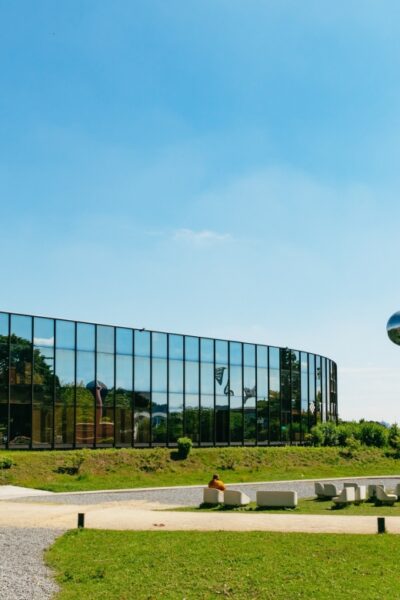
Atomium Entry Ticket with Design Museum Ticket
Read our review →


Browse the lists this tour appears in