
Reviewed · MUSEUMS
Bruges: Ticket Museum Sint-Janshospitaal
A medieval hospital still tells its story. Bruges’ St John’s Hospital Museum brings together a 12th-century care center, Hans Memling’s 15th-century masterpieces, and modern works that ask what kindness means today. I like the rare mix of art and living history, and I like that the old pharmacy finishes the visit with a clear, memorable glimpse of past medicine. One caution: some contemporary pieces may feel disturbing, especially the human and animal figure that one visitor found unpleasant.
The $17 ticket is good value if you want more than a quick look at Bruges’ handsome streets. You can spend the day with the ticket, and the museum is wheelchair accessible. Still, this is an art museum inside an old hospital, not a guided tour, so you will need to read, look, and set your own pace.
In This Review
- Key points to know before you go
- Entering Bruges’ 12th-century hospital
- Hans Memling’s masterpieces in their original home
- Modern art asks harder questions
- The old pharmacy and its herb garden
- How long to spend and how the ticket works
- Practical limits at the entrance
- Who will enjoy St John’s Hospital Museum most
- Is the $17 admission worth it?
- Should you book the St John’s Hospital Museum?
- FAQ
- Where is the St John’s Hospital Museum located?
- How much does admission cost?
- How long is the ticket valid?
- What does the ticket include?
- Can I cancel my booking?
- Can I reserve now and pay later?
- Is the museum wheelchair accessible?
- Are children under 13 admitted free?
- What identification should children bring?
- Can I bring luggage, pets, or use flash photography?
Key points to know before you go
- Memling’s original hospital setting: Hans Memling made several major works for St John’s Hospital, and they have remained connected with the building since the 15th century.
- A real 12th-century hospital: The architecture is not a modern replica or a themed display. You enter a place that once offered care and shelter.
- Old pharmacy finale: The authentic 17th-century pharmacy interior and herb garden provide a practical look at earlier medicinal practices.
- Old and new art together: Works by Berlinde De Bruyckere and Patricia Piccinini bring present-day ideas about empathy and hospitality into the museum.
- A flexible one-day ticket: The $17 admission is valid for one day, with free cancellation up to 24 hours ahead and a reserve-now, pay-later option.
- Family and access notes: Children under 13 can get a free ticket at the box office, and the museum is wheelchair accessible.
Entering Bruges’ 12th-century hospital
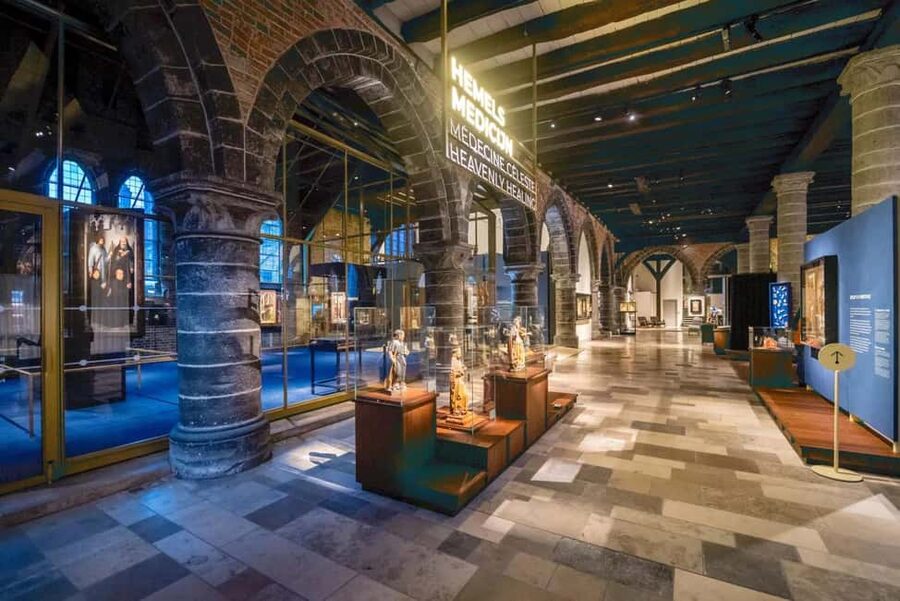
The first thing to understand is the building itself. St John’s Hospital began in the 12th century as a place for people who needed medical care or somewhere to sleep. Its purpose was not only treatment. It was also shelter, welcome, and human contact.
That idea gives the museum its shape. You are not simply walking through rooms filled with paintings. You are walking through a place built around care. The building’s age helps you picture the many people who passed through it, including patients, religious workers, caregivers, and those seeking a safe bed.
The museum presents hospitality as part of the hospital’s identity. That can sound like a large idea, but the setting keeps it grounded. The thick medieval walls and preserved architecture show that care was once delivered in a very different world, with fewer medicines and far less scientific equipment.
I would allow time to look up, across, and around the rooms rather than rushing from one artwork to the next. The building is one of the main reasons to come. If you only want paintings, you may miss half the experience.
More Museums in Bruges
- Bruges: Choco-Story Chocolate Museum Guided Tour w/Tastings
★ 4.2 · 1,379 reviews - Choco-Story: The Chocolate Museum in Bruges
★ 4.0 · 544 reviews - Bruges: Chocolate Making Workshop and Chocolate Museum Entry
★ 4.6 · 395 reviews
Hans Memling’s masterpieces in their original home
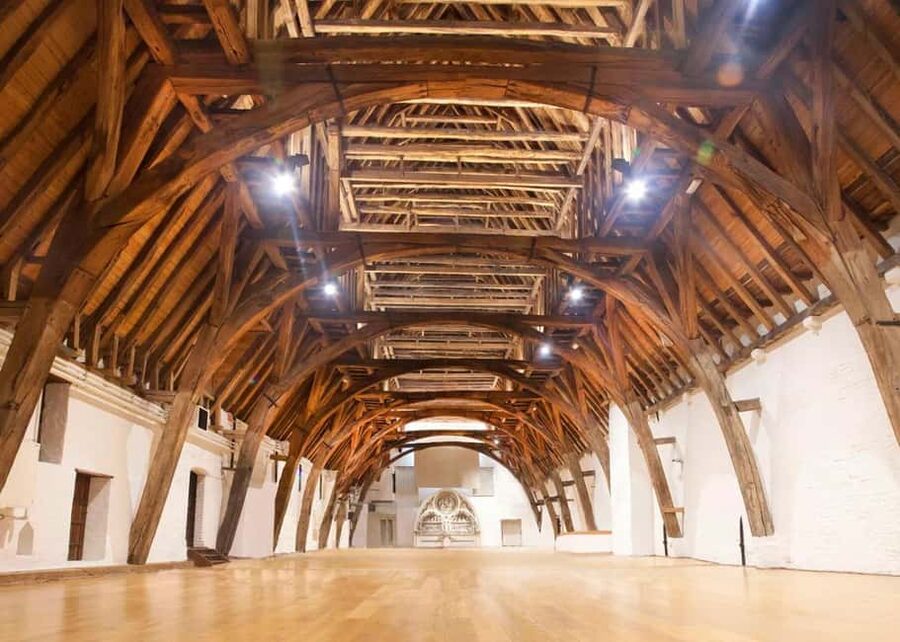
The museum’s strongest draw is its collection of works by Hans Memling, one of the best-known Flemish Primitives. Several of his major works were created specially for St John’s Hospital, and they have belonged here since the 15th century.
That setting matters. A painting can feel very different when you see it in the place for which it was made. Here, Memling’s art is linked directly to the hospital’s purpose and daily life. The works were not simply collected long after the fact and placed in a convenient gallery. They are part of the institution’s story.
Memling’s paintings reward patient looking. I would pay attention to the fine detail, the careful faces, and the way religious subjects were presented for people living and working in a hospital. The museum gives you a chance to see these works as both art and part of a working care center.
The collection is a good reason to choose this museum over a quick architectural walk. You get the atmosphere of old Bruges, but you also get important Flemish art in a place with a direct connection to it.
The limitation is that art lovers who want a large, broad survey of Flemish painting may find the selection focused. This is not a giant museum covering every period and artist. Its strength is the close link between Memling, the hospital, and the story of care.
Modern art asks harder questions
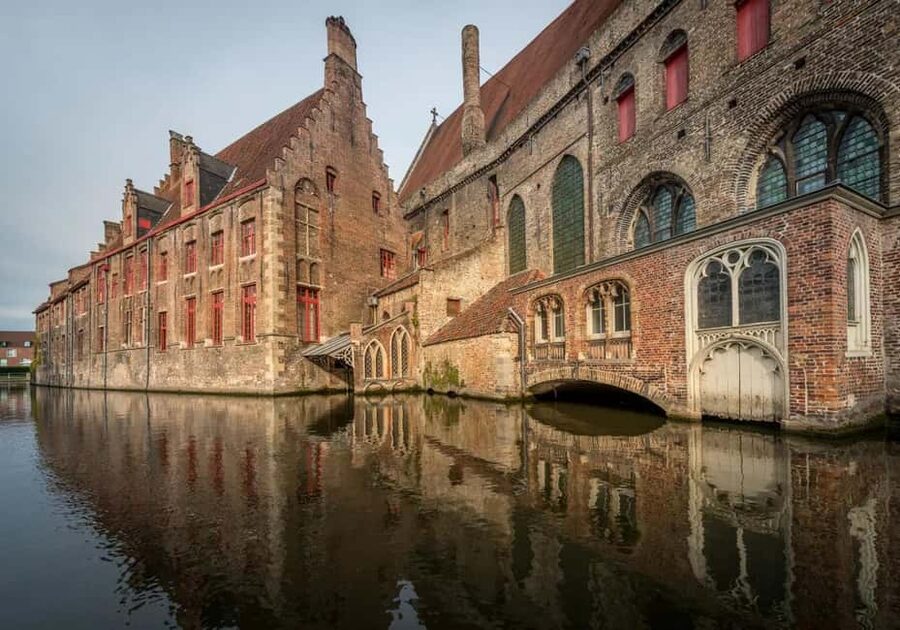
The museum does not stop with medieval architecture and old religious art. Contemporary works by Berlinde De Bruyckere and Patricia Piccinini bring the question of empathy into the present.
This change in style can surprise you. One room may connect you with centuries-old hospital art, while another asks you to think about bodies, vulnerability, relationships between humans and animals, and the meaning of care today. That contrast is deliberate. It keeps the museum from becoming a simple backward look at Bruges’ past.
I like this approach because it gives the old hospital a current purpose. The building is not treated as a frozen monument. Instead, modern art uses its setting to raise questions about how people respond to suffering and difference.
You should also know that not every work will feel comfortable. One contemporary human and animal figure caused a strong negative reaction, with one visitor describing it as disgusting. That response is useful to keep in mind before you go. If you prefer calm historical displays and traditional paintings, parts of the modern section may be too unsettling.
On the other hand, the museum includes creative elements that may appeal to families and hands-on visitors. One recorded experience included the chance to make personal artworks. Since the exact activity details are not specified, you should treat this as something that may be available rather than a guaranteed feature of every visit.
The old pharmacy and its herb garden
The hospital pharmacy is one of the most distinctive parts of the visit. It has an authentic 17th-century interior, along with a herb garden that connects the room to the materials once used in medicine.
This section gives you a practical counterpoint to the paintings. Instead of asking what a work of art means, it shows how people once prepared and understood remedies. The old bottles, furnishings, and medicinal setting help turn the broad subject of care into something concrete.
The herb garden adds another useful layer. It connects the pharmacy to plants and traditional remedies without requiring you to imagine the entire process from a written label. For me, this is the kind of smaller museum feature that stays in the memory because it feels specific.
I would save the pharmacy for the latter part of your visit. It works well as a final stop after the larger themes of the hospital, Memling, and contemporary art. It also gives children a different way to connect with the museum, especially if they have lost interest in looking at paintings.
Do not expect a modern medical museum with detailed demonstrations or a full account of pharmaceutical science. The appeal is the preserved 17th-century interior and the glimpse into earlier practice.
Something different, still within reach of Bruges:
- Bruges: Small Group Boat Cruise and Guided Walking Tour
★ 4.8 · 4,102 reviews - Bruges: Walking Tour, Canal Boat Trip w/Beer Tasting Option
★ 4.4 · 2,759 reviews - Historical Walking Tour: Legends of Bruges
★ 5.0 · 2,541 reviews - From Bruges: Great War Flanders Fields Minibus Tour w/ Lunch
★ 4.9 · 1,257 reviews
How long to spend and how the ticket works
The ticket costs $17 per person and is valid for one day. That price makes the most sense if you give the museum enough time to appreciate both the building and the collection, rather than treating it as a ten-minute stop between other Bruges sights.
You do not receive transport, food, or a guided tour with the admission. The ticket covers entrance to the museum. That keeps the decision simple: pay for a concentrated art and history experience in one important building.
The flexible booking terms add practical value. You can reserve now and pay later, and you can cancel up to 24 hours before the visit for a full refund. This is useful when your Bruges plans may change, though you should still check availability for the available starting times.
The ticket lets you skip the ticket line. That can save time during a busy day, especially if you are trying to fit the hospital around other paid sights. The information provided does not promise a fixed entry hour or a timed guided visit, so check the available time before booking.
For families, children under 13 can obtain a free ticket at the box office. Bring a passport or ID card for children, as requested by the museum. The online adult price should not be assumed for younger children if a free box-office ticket is available.
Practical limits at the entrance
The museum is wheelchair accessible, which makes this a more useful choice for visitors who need step-free access. Still, accessibility in an old building can involve details that are not covered by the available information, so you may want to confirm any specific needs before arrival.
Large bags and luggage are not allowed. That is important if you are visiting Bruges between hotels or arriving with a full daypack. Plan to leave bulky belongings elsewhere rather than assuming the museum will accept them.
Pets are not permitted, although assistance dogs are allowed. Flash photography is also forbidden. Bring a camera if you like, but be ready to photograph without flash and follow any room-specific rules.
The available information does not provide opening hours, an exact visit length, or a detailed room-by-room route. I would check the current entry times before you set your day around the museum. The one-day validity gives you some flexibility, but it does not replace checking when you can enter.
Who will enjoy St John’s Hospital Museum most
I recommend this museum to you if you like art with a strong sense of place. Memling’s connection to the hospital makes the collection more meaningful than a detached gallery display, while the medieval structure gives the visit a clear physical setting.
It also suits you if you enjoy museums that mix old and new. The contemporary works by Berlinde De Bruyckere and Patricia Piccinini may broaden the visit, but they can also make it less predictable. You should come ready for modern pieces that may be emotionally or visually challenging.
Families can benefit from the varied subjects. The old hospital, pharmacy, herb garden, traditional paintings, and possible art-making activity offer more variety than a single-style art museum. The free admission arrangement for children under 13 also improves the value, provided you handle the ticket at the box office.
I would be less quick to recommend it if you want a fully guided experience. No guide, guide name, or guided commentary is included in the information provided. You will set your own pace and make your own connections.
The museum also may not suit you if you dislike confronting contemporary art. The strong negative reaction to one human and animal work is a warning that the modern section is not purely decorative. If you prefer only medieval art, spend your time with Memling and the hospital rooms, then move on when the newer works become too much.
Is the $17 admission worth it?
At $17, I see good value in the combination of three different experiences: a preserved medieval hospital, major Memling works, and a 17th-century pharmacy. Each part gives you a different reason to stay, and the contemporary art adds a present-day question rather than simply filling empty rooms.
The price is especially fair if you already plan to visit museums in Bruges and want one with a clear local identity. You are paying for more than a set of objects. You are seeing important art in the institution that commissioned some of it, inside a building created for care.
The value drops if you expect a guided tour, a large museum, or a purely traditional display. The ticket includes entrance only, and the modern art may not be to your taste. I would also factor in the no-luggage rule if you are carrying bags through town.
The 4.4 rating from 38 recorded ratings suggests a generally strong experience, though the reactions are not uniform. That fits the museum itself: Memling and the architecture offer broad appeal, while the newer works can divide opinion.
Should you book the St John’s Hospital Museum?
Book it if you want a compact Bruges visit that combines medieval care, Memling, old medicine, and modern questions about empathy. The $17 price is reasonable, the one-day validity is convenient, and the free option for children under 13 makes it easier to include a family.
I would choose it over a standard art gallery if the building matters as much to you as the paintings. I would skip it only if you want a fully guided visit, dislike contemporary art, or need to carry luggage inside. For most art-minded visitors, the old pharmacy and Memling collection alone make this a worthwhile stop, while the hospital setting gives the whole visit its character.
FAQ
Where is the St John’s Hospital Museum located?
It is in Bruges, in Flanders, Belgium.
How much does admission cost?
The listed price is $17 per person.
How long is the ticket valid?
The ticket is valid for one day.
What does the ticket include?
It includes the entrance ticket to the St John’s Hospital Museum.
Can I cancel my booking?
Yes. You can cancel up to 24 hours in advance for a full refund.
Can I reserve now and pay later?
Yes. The booking option allows you to reserve your place and pay nothing at the time of booking.
Is the museum wheelchair accessible?
Yes, the museum is wheelchair accessible.
Are children under 13 admitted free?
Children under 13 can obtain a free ticket at the box office.
What identification should children bring?
Children should bring a passport or ID card.
Can I bring luggage, pets, or use flash photography?
Large bags and luggage are not allowed. Pets are not permitted, except for assistance dogs, and flash photography is forbidden.
Just added around Bruges
- Bruges Beer and Chocolate Walking Tour★ 4.5 · 3 reviews
- Private: Discover Bruges beers & brewery with chocolate pairing by a young local★ 5.0 · 3 reviews
- Best of Brussels Private Tour from Zeebrugge or Bruges★ 4.0 · 3 reviews
- Visit of Bruges in 1 day private tour from Paris★ 5.0 · 3 reviews
- Brussels: Private & Customizable Day Trip to Bruges★ 5.0 · 3 reviews
- Explore the Instaworthy Spots of Bruges with a Local★ 5.0 · 3 reviews
- Bruges: Ticket Volkskundemuseum (Folk Museum)★ 5.0 · 3 reviews
- Bruges; private walking tour with the Beardbarian★ 5.0 · 3 reviews
Museums, compared.

Atomium Entry Ticket with Design Museum Ticket
Read our review →
Choco-Story Brussels: Chocolate Museum Entrance with Tasting
Read our review →
Choco-Story Chocolate Museum Guided Tour w/Tastings
Read our review →
2.5-Hour Chocolate Museum Visit with Workshop
Read our review →
The World of Banksy Museum Permanent Exhibition
Read our review →
Browse the lists this tour appears in