
Reviewed · FLANDERS FIELDS & WWI TOURS
Flanders Fields Remembrance Tour from Brussels
War leaves a quiet mark here. This full-day trip from Brussels connects you with the Western Front through cemeteries, battle sites, museums, and the nightly Last Post Ceremony at Ypres’ Menin Gate. I like the carefully linked route, which moves from Vladslo and Diksmuide through Passchendaele and Tyne Cot before reaching Ypres. I also like the expert guiding, especially when guides such as Diederik, Dietrich, and Stefan turn names and dates into human stories. The main drawback is the length: allow about 13 hours, with plenty of coach time and a late return.
You meet at Bd de Berlaimont 18 in central Brussels at 9:15 am and return near Brussels-Central. The air-conditioned coach is a welcome base for a long day, and the tour gives you far more historical context than a quick independent visit. Still, you should be comfortable walking, getting on and off the coach, handling changing weather, and spending much of the day on the road.
In This Review
- Key points at a glance
- Why this tour works for first-time visitors
- 9:15 am departure from central Brussels
- Vladslo and the sorrow of Grieving Parents
- Diksmuide and the Brooding Soldier
- Flanders Fields Museum and the human cost of war
- Passchendaele, where a battlefield became a town
- Tyne Cot Cemetery and the scale of remembrance
- Essex Farm and the poem In Flanders Fields
- Hill 60 and the evidence beneath the ground
- Ypres, dinner, and the Last Post at Menin Gate
- The long road, and the real value at $113.72
- Who should book this Flanders Fields tour?
- Final verdict: a worthwhile day of remembrance
- FAQ
- Where does the tour start?
- Where does the tour end?
- Is hotel pickup included?
- How long does the tour last?
- Is lunch included?
- Is the tour offered in English?
- Are pets allowed on the coach?
- What should I bring?
Key points at a glance
- Käthe Kollwitz’s Grieving Parents: A powerful sculpture gives Vladslo German Military Cemetery an unusually personal focus.
- The Brooding Soldier at Diksmuide: This Canadian memorial recalls roughly 2,000 soldiers killed during the first German gas attack.
- Passchendaele and Tyne Cot: See how a battlefield became a quiet town, then visit the largest Commonwealth cemetery in the world.
- Essex Farm and John McCrae: Visit the field hospital site linked with the poem In Flanders Fields.
- Ypres after dark: Have free time for dinner, then attend the Last Post Ceremony at Menin Gate.
- A full historical day: The route is excellent for first-time visitors, but the schedule leaves little room for delays.
Why this tour works for first-time visitors
Flanders Fields is not one single sight. It is a wide area spread across villages, cemeteries, museums, memorials, and former battle sites. If you visit on your own without a plan, you can spend a lot of time driving between places and miss the connections between them.
This tour solves that problem. The guide builds a story across the day, explaining how the war developed, how the front moved, and why particular sites matter. The best guides, including Diederik, Dietrich, and Stefan, are praised for their ability to make military history clear without turning the day into a string of dry dates.
I especially value the order of the stops. You begin at a German cemetery, then see Belgian and Canadian memorials, Allied cemeteries, a field hospital, and Ypres. That broadens the story beyond one army or one national viewpoint. The tour is strongest when it shows the war as a shared human disaster rather than a collection of national victories.
The group can be as large as 100 people, although the actual size on a particular day may be smaller. Radios and earphones are provided when needed, which matters at outdoor sites where it can be hard to hear a guide. The tour is offered in English, French, or Spanish, though this booking is offered in English.
More Flanders Fields and WWI trips:
- Remembrance Tour: The Battle of the Bulge in the Ardennes
★ 5.0 · 51 reviews - From Brussels: The Battle of the Bulge Remembrance Tour
★ 4.8 · 37 reviews - Historic Battle of the Bulge Sites Tour from Brussels
★ 5.0 · 31 reviews
9:15 am departure from central Brussels
There is no hotel pickup. You need to reach Bd de Berlaimont 18, 1000 Brussels, for the 9:15 am departure. The end point is near Brussels-Central at Carr de l’Europe, so the arrangement is fairly useful if you are staying in the city center or arriving by public transport.
The coach has air-conditioning and is described as comfortable, a real benefit on a day that includes long stretches between sites. You can bring luggage on the large coach, though I would keep your day bag small enough to carry easily at cemeteries and memorials.
The operator can wait five minutes if you call ahead about a delay. Do not treat that as a generous grace period. For a smooth start, arrive early and have your voucher ready on your phone.
Bring comfortable shoes, rain protection, and some cash. The tour runs in rain unless conditions become extreme, and several stops are outdoors. You should also carry an ID, even though there are no border checks within the Schengen Area.
Vladslo and the sorrow of Grieving Parents
The first stop is Deutscher Soldatenfriedhof Vladslo, or Vladslo German War Cemetery. It is a quiet place, and the mood is set by Käthe Kollwitz’s Grieving Parents, one of the most affecting works connected with the First World War.
The sculpture gives the cemetery a family viewpoint. Rather than presenting a heroic soldier or a grand military scene, it shows grief that feels private and lasting. Your guide can help explain Kollwitz’s connection to the war and why this work carries such force in a cemetery filled with German dead.
This is a good early stop because it asks you to slow down before the day becomes a sequence of sites. Allow yourself a quiet moment here. The visit is not about collecting another photograph. It is about seeing how the war reached far beyond the trenches.
Diksmuide and the Brooding Soldier
At Diksmuide, the tour introduces the Belgian and Canadian story. The monument known as the Brooding Soldier is dedicated to around 2,000 Canadian soldiers who died during the first German gas attack.
The memorial is a useful reminder that the Western Front was not only a British and German confrontation. Canadians, Australians, and many other forces were drawn into the fighting. The guide’s explanation is particularly helpful here because the memorial’s meaning is not obvious from its shape alone.
Diksmuide also represents Belgium’s courage during the conflict. You are not simply looking at a monument in isolation. The stop helps place Belgium within the larger war and shows how local towns became tied to events with international consequences.
A few more trips and experiences worth a look
- Brussels: Atomium Entry Ticket with Design Museum Ticket
★ 4.4 · 9,254 reviews - From Brussels: Guided Day Trip to Bruges and Ghent
★ 4.6 · 8,353 reviews - From Brussels: Bruges & Ghent Day Tour – 2 Fairytale Cities
★ 4.7 · 8,242 reviews - Choco-Story Brussels: Chocolate Museum Entrance with Tasting
★ 4.3 · 4,883 reviews
Flanders Fields Museum and the human cost of war
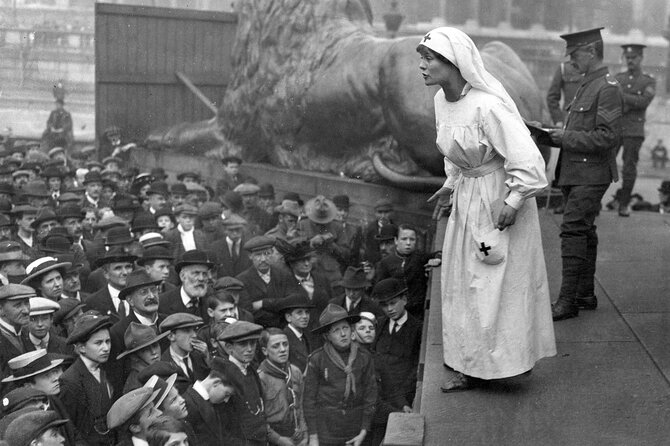
After a short lunch break, you visit the Flanders Fields Museum. The tour description lists admission as free, but lunch is not included, so plan to pay for your own meal and drink.
This museum is one of the most important stops because it provides structure for everything else you see. The outdoor sites can be moving, but a museum helps explain the causes of the war, the four-year occupation of Flanders, the fighting around Ypres, and the conditions faced by soldiers.
The exhibitions focus on violent warfare and the damp, difficult conditions of life at the front. One useful feature of a guided visit is that you can ask questions and connect objects and displays with the places you have already seen or will visit later.
Time may be the pressure point. Several people found the museum especially rewarding but felt the schedule moved quickly. If the museum matters most to you, stay focused and listen closely from the start. This is not a slow museum afternoon with time for every display.
Passchendaele, where a battlefield became a town
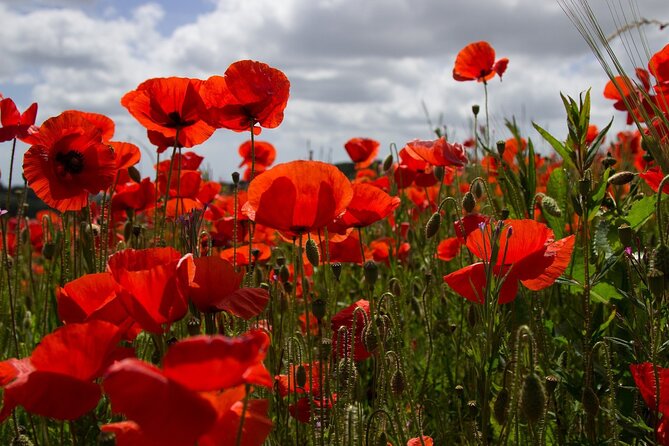
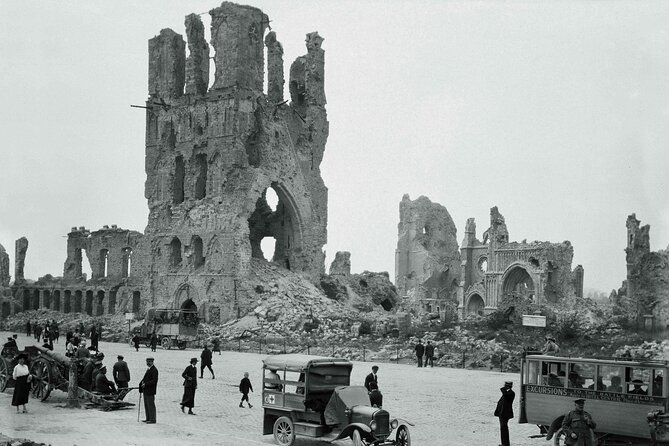
The stop at Passendale, the modern spelling of Passchendaele, lasts about 30 minutes. The town looks peaceful now, which is precisely what makes the visit useful. The guide explains how a place associated with one of the war’s bloodiest battles was transformed into a quiet community.
You may find this contrast more striking than a dramatic ruin. There is no need for a battlefield to look destroyed for its past to matter. The calm setting makes you think about the scale of reconstruction and the distance between the war years and the present day.
Because the stop is short, listen to the explanation before wandering off. This is a place where context does much of the work.
Tyne Cot Cemetery and the scale of remembrance
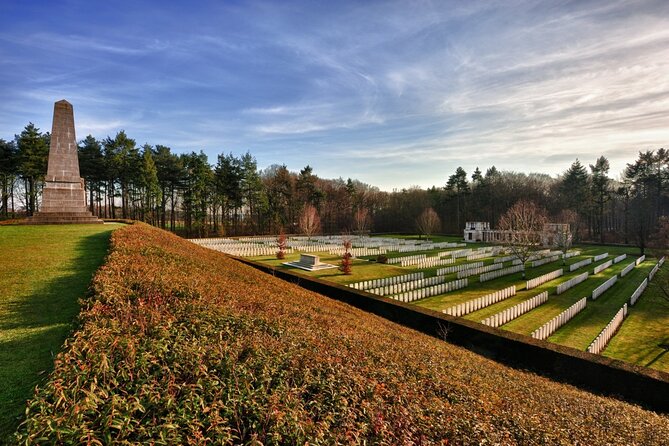
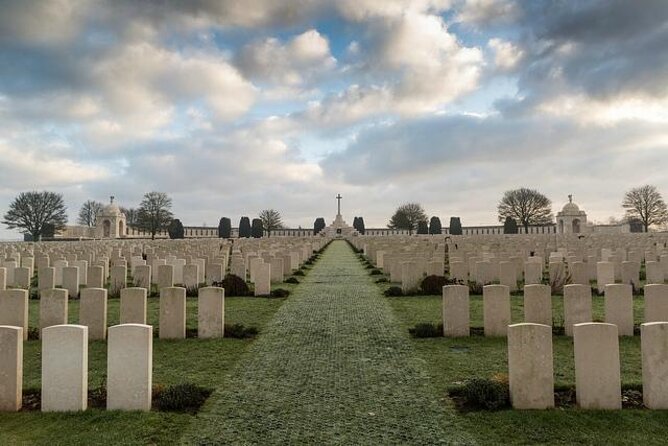
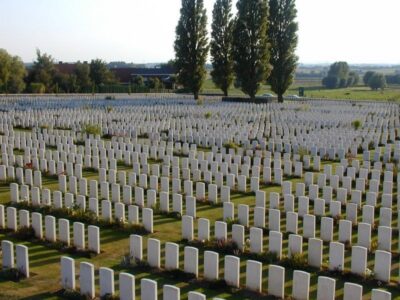
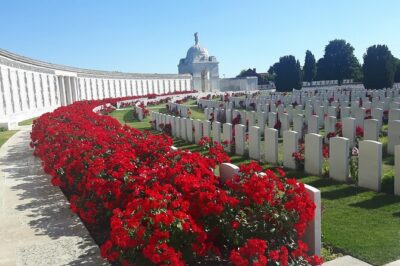
Tyne Cot Commonwealth War Graves Cemetery is one of the emotional centers of the day. It is the largest Commonwealth cemetery in the world, with British, Australian, and Canadian soldiers buried there. The grounds also commemorate thousands whose graves are not known.
The scale can be difficult to absorb. Rows of headstones create a quiet rhythm, while the surrounding walls and memorial inscriptions underline how many men were never recovered or identified. This is not a place for hurried sightseeing, yet the itinerary gives you a defined visit before moving on.
I recommend taking a few minutes to read individual names rather than trying to grasp the entire cemetery at once. A single age, regiment, or date can make the numbers feel personal.
Tyne Cot also helps you understand why the Flanders Fields experience is often more pilgrimage than ordinary sightseeing. You are visiting places of burial and remembrance, so respectful behavior matters. Keep voices low and avoid treating the cemetery as a casual photo stop.
Essex Farm and the poem In Flanders Fields
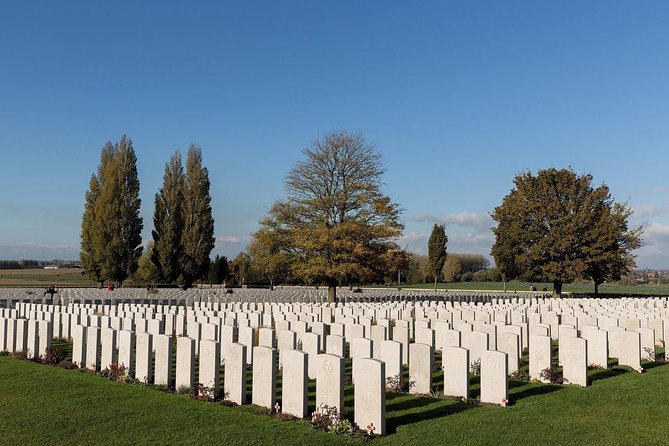
At Essex Farm Cemetery, you see the dressing station and bunkers associated with Canadian doctor John McCrae. This is where he wrote In Flanders Fields, one of the best-known poems of the First World War.
The stop is brief, about 15 minutes, but its literary connection gives the military story a different entry point. The poem’s poppies and remembrance imagery are familiar to many people. Standing near the place linked with its creation helps connect those words with the physical reality of wounded soldiers and medical work.
Do not expect a long visit. The value comes from the guide’s explanation and from seeing the bunkers in person. If the poem has personal meaning for you, this may be one of the day’s most important stops.
Hill 60 and the evidence beneath the ground
Hill 60 was a strategic position, and the tour includes a look at its tunnels. This part of the route gives you a sense of how much of the war took place below ground as well as above it.
The site adds variety after the cemeteries and memorials. Instead of focusing mainly on names and mourning, it shows the tactical side of the fighting and the lengths armies went to gain or hold a small patch of high ground.
Conditions can be muddy or wet, depending on the weather, so good footwear matters. The tour is not recommended for people who have difficulty walking, and you should expect repeated boarding and leaving of the coach throughout the day.
Ypres, dinner, and the Last Post at Menin Gate
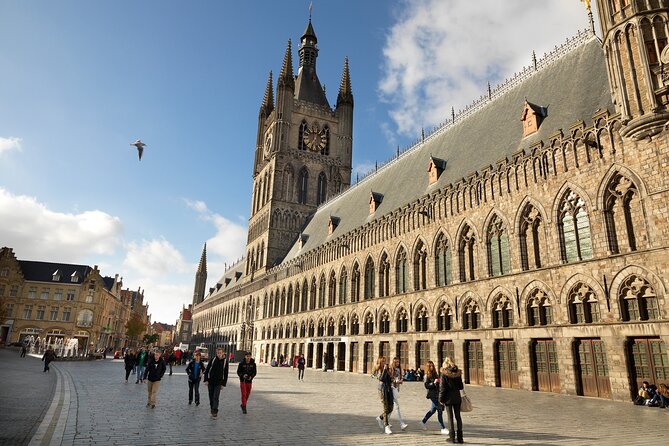
The final major setting is Ypres, where you have independent time before the evening ceremony. You can use this break to eat dinner at your own expense and see some of the attractive historic center at your own pace.
The free time is important. After a day of guided history, a pause gives you room to think, eat, and prepare for the ceremony. Keep track of the reconvening time carefully. The coach and group cannot wait for a long delay.
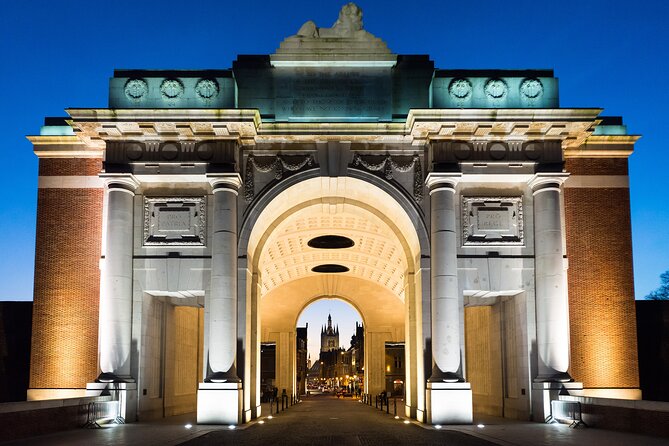
At 8 pm, you attend the Last Post Ceremony at Menin Gate. It is a daily tribute to Commonwealth soldiers and officers missing after the battles. The service is brief, simple, and solemn. On some evenings, music may add to the atmosphere, but that is not guaranteed.
The ceremony can be the emotional high point of the tour. It is also worth setting expectations correctly. The formal service lasts around 30 minutes in the schedule, while the actual Last Post portion may feel much shorter. Its power comes from repetition and ritual, not length or spectacle.
Afterward, you return to the coach for Brussels. This makes for a late finish, and the day can stretch to 11.5, 12, or roughly 13 hours depending on traffic, group arrangements, and the route.
The long road, and the real value at $113.72
At $113.72 per person, this is good value if you want transport, an English-speaking guide, and a packed introduction to the Ypres Salient. The price covers the air-conditioned vehicle and professional multilingual guide, while the listed visits have no separate admission charge.
You are paying mainly for the route and the interpretation. Hiring a car would give you more freedom, but you would need to plan the sites, drive between them, and understand what you are seeing. This tour removes that work and includes the evening ceremony, which is harder to fit into a simple daytime visit from Brussels.
The tradeoff is efficiency. Some departures may include a detour to collect or drop off people in Bruges, adding substantial driving time. This has been a repeated concern, and it is the clearest weakness of the experience.
The itinerary also tries to cover a great deal. You may feel rushed at some sites, especially the museum, and some people would prefer fewer memorials with more time at each one. If you want a slow, reflective visit, consider staying overnight near Ypres instead. If you have only one day, the packed schedule gives you broad coverage.
Who should book this Flanders Fields tour?
I would choose this tour if you have a serious interest in the First World War, family connections to the conflict, or limited time in Belgium. It suits adults and older children who can manage a long day, though one family completed it with children aged 10 and 14 and found it worthwhile.
It is also a strong choice if you want a guide to explain the difference between the sites. The best guides combine facts, battlefield detail, and a human sense of loss. Diederik, Dietrich, and Stefan receive particular praise for clear storytelling, strong historical command, and keeping the group moving.
I would hesitate if you dislike coaches, long transfers, late finishes, or frequent stops. People with mobility difficulties should note that the operator does not recommend the tour for anyone who has trouble walking.
Book at least several weeks ahead if possible. The experience is booked an average of 79 days in advance, which suggests that popular dates can fill early.
Final verdict: a worthwhile day of remembrance
You should book the Flanders Fields Remembrance Tour if you want a serious, well-guided introduction to the battlefields from Brussels and accept the long hours. The combination of Vladslo, Tyne Cot, Essex Farm, Hill 60, Ypres, and the Menin Gate ceremony gives the day real depth.
You should skip it if you want a relaxed museum visit or a short excursion. The route is demanding, and possible Bruges detours can make it even longer.
For the right visitor, though, this is more than a checklist of memorials. It is a carefully guided day that shows how war shaped towns, cemeteries, poems, and public memory. The Last Post at Menin Gate provides a fitting final pause before the ride back to Brussels.
FAQ
Where does the tour start?
The tour starts at Bd de Berlaimont 18, 1000 Brussels, Belgium. Departure is scheduled for 9:15 am.
Where does the tour end?
The tour ends at Brussels-Central, near Carr de l’Europe, 1000 Brussels.
Is hotel pickup included?
No. Hotel pickup and drop-off are not included. You must reach the stated central Brussels meeting point.
How long does the tour last?
The advertised duration is approximately 13 hours. Actual timings may vary, and some departures have taken around 11.5 to 13 hours.
Is lunch included?
No. Lunch is not included. You have a short lunch break and free time for food, so bring cash or another accepted payment method.
Is the tour offered in English?
Yes. This experience is offered in English. The operator also provides tours in French and Spanish.
Are pets allowed on the coach?
No. Pets are not allowed on board the coach.
What should I bring?
Bring comfortable walking shoes, suitable clothing for the weather, and rain protection such as a raincoat, poncho, or umbrella. Carry some cash and an ID.
Just added around Brussels
- Discover the secrets of Brussels while playing★ 5.0 · 3 reviews
- Standard vehicle from Charleroi airport to city of Brussels★ 4.5 · 3 reviews
- Full day Brugge & Ghent: the gems of Flanders★ 5.0 · 3 reviews
- Private tour : Best of Brussels half day From Brussels★ 5.0 · 3 reviews
- Private Tour – Bruges and Ghent, our fairytale cities★ 5.0 · 3 reviews
- Floating in the clouds★ 5.0 · 3 reviews
- Full-Day City Tour of Ghent and Bruges from Brussels★ 4.5 · 3 reviews
- Brussels Private Walking Tour With A Professional Guide★ 4.5 · 3 reviews
Flanders Fields & WWI Tours, compared.
Great War Flanders Fields Minibus Tour w/ Lunch
Read our review →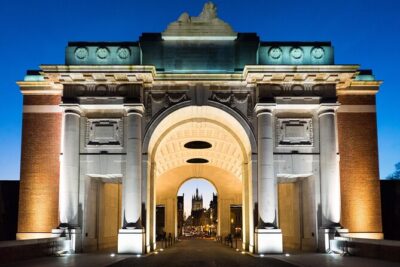
In Flanders Fields and Passchendaele Half Day Morning Tour
Read our review →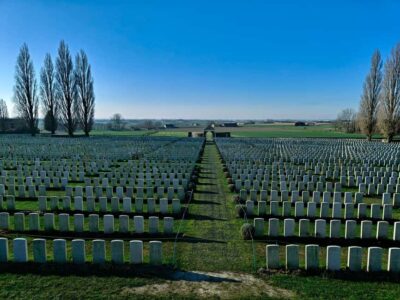
An exploration of the deadly salient battlefields
Read our review →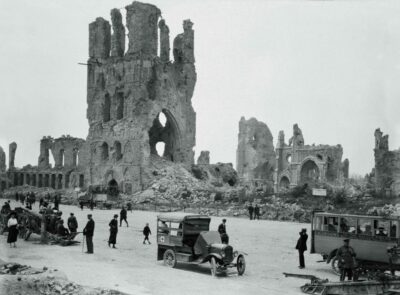
Remembrance Tour: The Battle of the Bulge in the Ardennes
Read our review →Browse the lists this tour appears in