
Reviewed · FLANDERS FIELDS & WWI TOURS
Ypres: An exploration of the deadly salient battlefields
The ground still carries the scars. This three-and-a-half-hour tour from Ypres connects Essex Farm, Yorkshire Trench, Langemark, the Brooding Soldier, and Tyne Cot in one well-paced route through the First World War battlefields. I especially like the small group of no more than seven people, and I like the way the tour includes both Allied and German sites rather than presenting only one side of the conflict.
Kimberley Wright is the main guide, though some departures may be led by Lucas or Roger. The strongest praise focuses on clear explanations, personal stories, photographs, and a warm manner. The main thing to consider is the short duration: you see many important places, but this is an introduction rather than a full specialist study of every battle and cemetery.
In This Review
- Key points before you book
- Why this route works in just 210 minutes
- Essex Farm Cemetery and the casualty system
- Yorkshire Trench and Dug-out: seeing the war below ground
- Langemark German Military Cemetery and another point of view
- The Brooding Soldier at Vancouver Corner
- Crossing the Passchendaele battlefields
- Tyne Cot Cemetery, the final major stop
- Kim’s guiding style and the value of a small group
- Is $88 a fair price?
- Who should book this Ypres tour?
- Final verdict: book it if you want context, not just monuments
- FAQ
- How long does the Ypres battlefield tour last?
- What is the tour price?
- Where does the tour start and finish?
- How many people can join the tour?
- What language is the tour conducted in?
- Which cemeteries are included?
- Does the tour visit Yorkshire Trench and Dug-out?
- Is the St Julien Canadian War Memorial included?
- What vehicle is used?
- What should I bring?
Key points before you book
- Small group, limited to seven: You get a more personal experience than on a large coach, with room for questions and possible adjustments.
- Six important stops: The route covers Essex Farm Cemetery, Yorkshire Trench, Langemark German Military Cemetery, the St Julien Canadian War Memorial, the Passchendaele battlefields, and Tyne Cot Cemetery.
- Both sides of the war are represented: Langemark gives the German forces a place in the story, which helps create a fuller picture.
- Personal family research can shape the visit: Kim has helped people locate relatives and has made small detours connected with family service records.
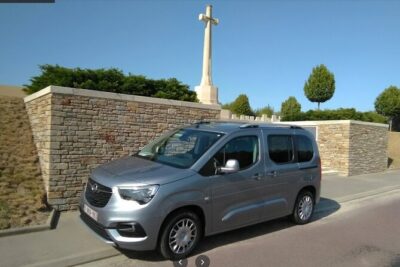
- Comfortable minivan transport: Pickup and return in a dark blue Mercedes van are included, with the vehicle carrying the tour company logo.
- Bring solid walking shoes: The route includes cemetery paths, trench remains, and outdoor memorial areas.
Why this route works in just 210 minutes
Ypres is a good base for seeing the salient, but the sites are spread across the countryside. You can reach some places by car on your own, yet the meaning of the ground is easy to miss without maps, photographs, and a guide who can connect one stop to the next.
This tour uses a short chain of drives to cover a lot of ground. The driving time is not wasted. As you cross the former battle zone, the guide explains how the front moved, why certain positions mattered, and how the flat Belgian terrain shaped military plans.
The published duration is 210 minutes. The scheduled visits allow about an hour at Essex Farm, 25 minutes at Yorkshire Trench, 45 minutes at Langemark, 25 minutes at the St Julien memorial, and 45 minutes at Tyne Cot, with short drives between them. The exact pace may change with traffic, weather, questions, and the interests of your group.
That timing suits you if you want a strong first look at the Ypres area without giving up a full day. If you are researching a particular regiment or battle in detail, you will probably want more time afterward.
More Flanders Fields and WWI trips:
- From IEPER Private 4-hour Tour of the Ypres Battlefield
★ 5.0 · 154 reviews - In Flanders Fields and Passchendaele Half Day Morning Tour
★ 5.0 · 117 reviews - From Brussels: Flanders Fields Remembrance Full-Day Trip
★ 4.4 · 65 reviews
Essex Farm Cemetery and the casualty system
The tour begins with Essex Farm Cemetery, about 10 minutes from the pickup point in Ypres. You have roughly an hour here, making it one of the most substantial stops.
This is where the tour introduces the casualty system and the work of the Commonwealth War Graves Commission. That background matters because the cemeteries are not simply collections of graves. They reflect decisions made after the war about identification, burial, remembrance, and the care of military dead.
You also visit the John McCrae memorial. McCrae was a Canadian army doctor associated with the poem In Flanders Fields, and his connection gives this stop a personal and medical dimension. The tour’s focus on casualty treatment and wartime medical work helps you see the cemetery as part of a larger human story, not just a quiet row of headstones.
I would allow yourself time to look around between explanations. The stop can be emotionally heavy, especially if you have a family connection to the war. Kim has shown a real willingness to help with that kind of connection, including researching relatives and helping people find graves or nearby locations.
The possible drawback is that an hour can pass quickly. If your main goal is family genealogy, tell the guide before the tour or at pickup. The more information you can provide, the easier it may be to connect your relative to the route.
Yorkshire Trench and Dug-out: seeing the war below ground
A five-minute drive brings you to Yorkshire Trench and Dug-out. The guided visit lasts about 25 minutes.
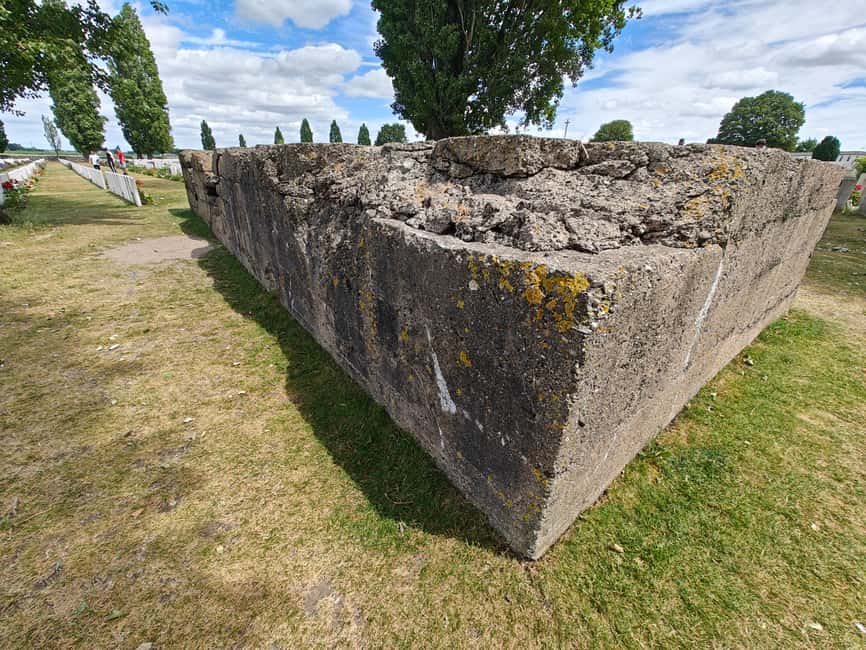
This is one of the most useful stops for understanding trench warfare. Instead of hearing only about mud, shellfire, and cramped living conditions, you can see the remains of a trench position and dug-out. The physical space gives scale to the military terms that can otherwise feel abstract.
The stop is brief, so expect a focused explanation rather than a long walk through an extensive trench network. The value comes from the contrast between the quiet site today and the dangerous daily life of soldiers who depended on these positions for shelter.
Wear comfortable shoes. You may be walking over uneven ground or standing outdoors while listening, and sensible footwear will make the stop easier. The tour data does not promise special accessibility arrangements, so anyone with mobility concerns should ask the operator before booking.
Langemark German Military Cemetery and another point of view
After another short drive, the tour reaches Langemark German Military Cemetery. You have about 45 minutes here.
This stop is essential because it widens the story. The Commonwealth cemeteries are carefully maintained and familiar to many English-speaking visitors, but Langemark shows how German military dead were commemorated. The cemetery helps you consider the war from the other side without turning the visit into a contest over blame.
The guide explains the Great War’s impact on Germany and the post-war years. That context is valuable because the war did not end when the guns fell silent. Defeat, grief, political change, and the treatment of the dead continued to shape Europe long afterward.
The reviews repeatedly praise the tour’s attention to different perspectives. I think this is one of its best features. A battlefield visit should not reduce the past to heroes and villains. At Langemark, you get a more balanced account of the people, governments, and armies caught in the conflict.
This is also a quieter kind of stop. You may find it more reflective than the trench visit, so take time to read the memorials and absorb the setting. The 45-minute allocation gives enough room for the guide’s explanation and your own pause.
A few more trips and experiences worth a look
- From Ypres, The Christmas Truce to Passchendaele Ypres Based WW1 private tour
★ 5.0 · 29 reviews - In Flanders Fields and Passchendaele Grand Tour
★ 5.0 · 25 reviews - From Ypres: WWI Battlefields Private Tour
★ 5.0 · 25 reviews - Full Day Canadian WW1 Vimy and Somme Battlefield Tour from Ypres
★ 5.0 · 6 reviews
The Brooding Soldier at Vancouver Corner
The itinerary identifies the next stop as the St Julien Canadian War Memorial, also known as the Brooding Soldier at Vancouver Corner. The drive from Langemark takes about 10 minutes, followed by a guided visit of around 25 minutes.
The memorial is linked to the Canadian experience of the First World War and gives the tour a strong visual focal point. The Brooding Soldier is a solemn figure, head bowed and hands resting on a rifle. It is a simple design, but its restraint fits the tone of the site.
Here, the guide places the memorial within the fighting around St Julien and explains the conditions faced by the troops. Photographs and personal accounts are particularly useful at this point. They help you compare the present-day fields with wartime images and understand how much the surroundings have changed.
This stop is short, but it breaks up the cemetery visits and keeps the route moving. If you are especially interested in Canadian military history, you may wish to ask questions here, since the available time is limited.
Crossing the Passchendaele battlefields
Between the memorial and Tyne Cot, the van crosses the Passchendaele battlefields. This section is less about one monument and more about connecting the sites through the countryside.
That drive is important. A cemetery can feel isolated when viewed on its own, but the road shows how close the positions and villages were to one another. The guide explains the campaign and the terrain as you travel, helping you understand why the fighting became so costly.
You will not be hiking across a battlefield for hours. Instead, you see the area from the minivan and receive interpretation along the way. This makes the tour manageable for people who want context without a long outdoor trek.
The route may sometimes include an extra stop or small detour. One group was taken to Bard’s Cottage Cemetery to find a great-uncle’s grave, while another tour included a stop at a chocolatier in the middle of Passchendaele. These additions are not guaranteed, so treat them as possible signs of a flexible guide rather than fixed parts of the program.
Tyne Cot Cemetery, the final major stop
Tyne Cot Cemetery is the last main visit, reached after about 20 minutes of driving. The guided time here is approximately 45 minutes.
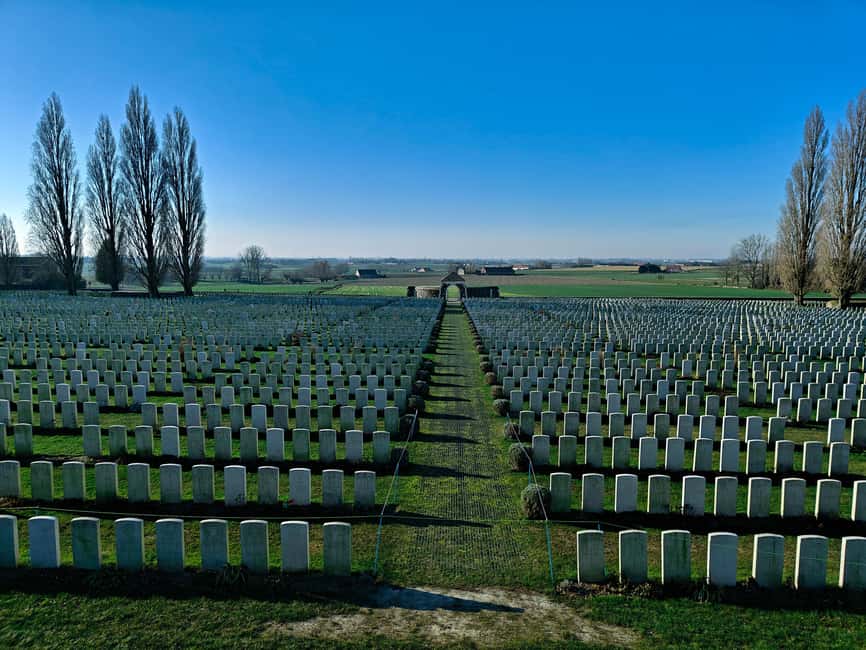
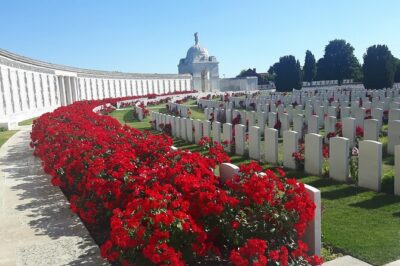
Tyne Cot is the largest Commonwealth War Graves Commission cemetery in the world. Its scale can be startling. The rows of white headstones and the surrounding memorial structures show how vast the losses were, especially during the Passchendaele campaign.
This is a fitting final stop because the earlier sites have prepared you to understand what you are seeing. Essex Farm introduced medical care and the casualty system. Yorkshire Trench gave you a physical sense of trench warfare. Langemark showed the German side. The Brooding Soldier connected the story to Canadian service. Tyne Cot then brings those threads together through the sheer number of names and graves.
The cemetery is visually striking, but the tour does not treat it as a photo opportunity. The strongest part of the visit is the balance between facts, individual stories, and quiet time. You can expect the guide to explain the cemetery’s purpose and the post-war effort behind its creation and maintenance.
The 45-minute visit is enough for a guided overview, though you may want to return on your own if you have a specific name to find. As with the other sites, mention family connections early.
Kim’s guiding style and the value of a small group
The guide is the main reason to book this particular experience. Kim is described as warm, friendly, well prepared, and able to explain difficult material in plain language. She uses photographs and maps to make the wartime scenes easier to picture, and she adjusts her explanations to suit the group.
That flexibility matters. The subject can become overloaded with dates, commanders, and troop movements. A good guide gives you enough structure to follow the story without burying you in military detail. Feedback also highlights her comfortable walking pace, clear speech, and ability to make time for questions.
The tour can be tailored to nationality or family interest. Australians, Canadians, British visitors, and people researching individual relatives have all found ways to connect their own stories to the route. Kim has also offered pickup from a train station in one case, though you should confirm any nonstandard pickup before booking.
The small group is limited to seven people. That is a real advantage here. You travel in a minivan rather than a large coach, and the format makes it easier to ask about a regiment, a cemetery name, or an event that has caught your attention.
There is one limitation. A small-group tour can still vary depending on the guide assigned and the mix of interests in your vehicle. The available comments praise Kim, Lucas, and Roger, but the experience may not be identical on every departure.
Is $88 a fair price?
At $88 per person, the price is reasonable for a 210-minute guided outing with pickup, drop-off, transport, and several major sites. You are paying for more than a ride between cemeteries. The value is in the interpretation, the route planning, and the chance to see places that are awkward to combine without your own vehicle.
The price is especially fair if you are staying in Ypres for a short visit. You see six significant locations in one morning or afternoon, and you avoid the work of planning roads, opening times, parking, and the order of stops.
It is less suitable if you want a very private, full-day genealogy service. The group is small, but it is not advertised as a private tour, and the duration limits how much individual research can be covered.
The minivan receives very strong marks for transport. It is described as clean, comfortable, and warm in winter. Still, bring comfortable shoes and dress for changing Belgian weather. The tour is outdoors at every important stop.
Who should book this Ypres tour?
I would recommend it to first-time visitors to the Ypres battlefields, families with a First World War connection, and anyone who wants a thoughtful overview without spending an entire day on the road.
It also suits people who prefer human stories to a long list of military dates. Kim’s use of photographs, maps, and personal accounts gives the tour an emotional connection while keeping the history clear and unsentimental.
You may want a different arrangement if you need extensive time at every cemetery, have serious mobility concerns, or want a specialist focus on one regiment or battle. Contact the operator before booking if your visit is at short notice, since last-minute arrangements may not always be possible.
Final verdict: book it if you want context, not just monuments
Book this tour if you want the Ypres battlefields to make sense. You will see the famous sites, but you will also visit a trench, hear about the casualty system, consider the German experience, and cross the ground around Passchendaele with a guide who connects the pieces.
The strongest reasons to go are the small group, clear guiding, family-history help, and careful choice of stops. The only real compromise is time. Three and a half hours gives you a powerful overview, not every corner of the salient.
For most visitors staying in Ypres, $88 is a sound investment. It turns scattered cemeteries and memorials into a connected story, then returns you to town with a better sense of what happened here and why these places still matter.
FAQ
How long does the Ypres battlefield tour last?
The tour lasts 210 minutes, or three and a half hours.
What is the tour price?
The price is $88 per person.
Where does the tour start and finish?
Pickup and drop-off are provided at an agreed location in Ypres.
How many people can join the tour?
The group is limited to seven participants.
What language is the tour conducted in?
The live tour guide speaks English, and English is the listed tour language.
Which cemeteries are included?
The route includes Essex Farm Cemetery, Langemark German Military Cemetery, and Tyne Cot Cemetery.
Does the tour visit Yorkshire Trench and Dug-out?
Yes. The guided visit there lasts about 25 minutes.
Is the St Julien Canadian War Memorial included?
Yes. The tour visits the memorial known as the Brooding Soldier at Vancouver Corner.
What vehicle is used?
Transport is provided in a dark blue Mercedes van with the Kims Battlefield Tours logo.
What should I bring?
Bring comfortable shoes for the cemetery paths, trench site, and outdoor memorial areas.
Just added around Ypres
- PRIVATE Australian Western Front Battlefields 3-Day Tour Ypres to Amiens★ 5.0 · 3 reviews
- Discover Tournai while playing! Escape game – The alchemist★ 4.0 · 3 reviews
- From LIlle or Bruges, Christmas Truce to Passchendaele Ypres 1 day WW1 private★ 5.0 · 5 reviews
- From Ypres 4hr Christmas Truce and Monster Mines of Messines PRIVATE Tour★ 5.0 · 5 reviews
- Full Day Canadian WW1 Vimy and Somme Battlefield Tour from Ypres★ 5.0 · 6 reviews
- e-Scavenger hunt Ypres: Explore the city at your own pace★ 4.5 · 6 reviews
- In Flanders Fields and Passchendaele Grand Tour★ 5.0 · 25 reviews
- From Ypres: WWI Battlefields Private Tour★ 5.0 · 25 reviews
Flanders Fields & WWI Tours, compared.
Great War Flanders Fields Minibus Tour w/ Lunch
Read our review →
Flanders Fields Remembrance Tour from Brussels
Read our review →
In Flanders Fields and Passchendaele Half Day Morning Tour
Read our review →
Remembrance Tour: The Battle of the Bulge in the Ardennes
Read our review →Browse the lists this tour appears in