
Reviewed · FLANDERS FIELDS & WWI TOURS
From Brussels: Flanders Fields Remembrance Full-Day Trip
History feels close here. This long day from Brussels brings you to Passchendaele, Tyne Cot Cemetery, and Ypres, with a guide explaining how the First World War unfolded. I especially like the visit to Essex Farm, where John McCrae wrote In Flanders Fields, and the quiet ceremony at Menin Gate.
I also like the way the story begins on the coach, using maps and background to explain the road to war before you reach the battle sites. Guides such as Diedrich, Stefan, and Steffen have earned praise for their clear, passionate presentations. The main drawback is the schedule: 13 hours is a very long day, and the museum visit can be as short as 35 minutes or one hour.
In This Review
- Key points at a glance
- Why this Flanders Fields day is worth your time
- From Brussels to the old front line
- German Cemetery, trenches, and the Brooding Soldier
- Passchendaele and Tyne Cot Cemetery
- Essex Farm and the story behind the poem
- Ypres and the In Flanders Fields Museum
- Menin Gate and the Last Post Ceremony
- Transport, timing, and physical demands
- Is $107 good value?
- Who should book this tour?
- Final verdict: book it for the full story
- FAQ
- How long does the Flanders Fields tour last?
- Where does the tour start and finish?
- Is lunch included?
- Is entry to the In Flanders Fields Museum included?
- Is the tour suitable for wheelchair users?
- Can I cancel the booking?
Key points at a glance
- Passchendaele and Tyne Cot: See ground linked to one of the First World War’s most costly battles and visit the world’s largest Commonwealth cemetery.
- Essex Farm: Visit the field hospital site associated with Canadian surgeon John McCrae and his famous poem.
- Menin Gate at 8 p.m.: Finish with the daily Last Post Ceremony, a simple and moving tribute to missing Commonwealth soldiers.
- A guide-led history lesson: The commentary begins in Brussels and continues throughout the day, covering the causes of the war, trench warfare, and local battle sites.
- A full coach day from Brussels: Round-trip transport makes the sites possible without arranging trains, buses, or local connections, but extra driving through Bruges can lengthen the day.
- Best for serious history interests: This suits you if you want a broad introduction to the Western Front rather than a slow, highly specialized battlefield study.
Why this Flanders Fields day is worth your time
Flanders Fields is not a single attraction. It is a wide area of cemeteries, former front lines, memorials, museums, and towns shaped by the war. Seeing it independently can be awkward, especially when you want to combine Passchendaele, Tyne Cot, Essex Farm, Ypres, and the Last Post Ceremony in one day.
This tour solves that transport problem. You meet staff outside the National Bank of Belgium at Bd de Berlaimont 18, find the Keolis coach, and spend the day moving between important sites. The professional guide supplies the connecting story, which matters here because many battlefield locations are quiet fields with few visible clues.
I like that the history starts before the first stop. During the drive, the guide explains the political events that led to the First World War and how the conflict developed into trench warfare. Some guides use maps, which help you understand the fronts and make sense of places that might otherwise feel disconnected.
The presentation level depends on your guide. Several guides have been praised for being warm, clear, and deeply informed. Diedrich, Stefan, and Steffen are names that have received particular appreciation, though the guide assigned to your departure may be different. If you already know a great deal about the war, you may find some of the explanations fairly broad and repeated. This is mainly an overview tour, not a specialist study of individual units and battle tactics.
More Flanders Fields and WWI trips:
- From IEPER Private 4-hour Tour of the Ypres Battlefield
★ 5.0 · 154 reviews - In Flanders Fields and Passchendaele Half Day Morning Tour
★ 5.0 · 117 reviews - Ypres: An exploration of the deadly salient battlefields
★ 5.0 · 76 reviews
From Brussels to the old front line
The first coach transfer takes about two hours. That is a useful time for the introduction, but it is also a long stretch of sitting before the battlefield visits begin. Bring water, wear comfortable shoes, and prepare for a day that runs from the morning departure through the 8 p.m. ceremony and the return to Brussels.
The route may include a pickup in Bruges. This is important to know because it can add considerable time to the day. Some departures have also returned through Bruges after the Last Post Ceremony, which means you may spend more time on the coach than the basic Brussels to Ypres route suggests.
The extra driving is the clearest weakness of the outing. It may be practical for the operator, but it reduces the time available for lunch, museum displays, and unhurried reflection. I would treat the day as a packed history excursion, not a relaxed visit to Ypres.
German Cemetery, trenches, and the Brooding Soldier
One early stop is a German Cemetery. Its mood differs from the Commonwealth cemeteries later in the day, and that contrast is useful. The First World War was fought by armies from many countries, and a German burial ground reminds you that the dead were not confined to one side of the conflict.
The tour then takes you to a section of First World War trenches. The condition and exact amount of trench access can vary, and one account specifically wished the trench visit had been more fully included. Still, even a short look helps explain the physical reality of the war better than photographs alone.
At the Monument of the Brooding Soldier, you pause for the Canadian troops killed during the first German gas attack. The memorial commemorates about 2,000 Canadian soldiers. Its design encourages silence rather than spectacle, which suits the subject.
Nearby, Hill 60 connects the visit to the underground war. Royal Engineers dug tunnels beneath the position before it later fell into German hands. The stop is valuable because it shows that the fighting was not only a matter of artillery and trenches above ground. Mining, tunneling, and attempts to destroy enemy positions from below were part of the struggle.
These sites are not presented as entertainment. You should expect graveyards, memorials, trenches, and plain countryside. The power comes from the contrast between the peaceful setting today and the violence described by the guide.
Passchendaele and Tyne Cot Cemetery
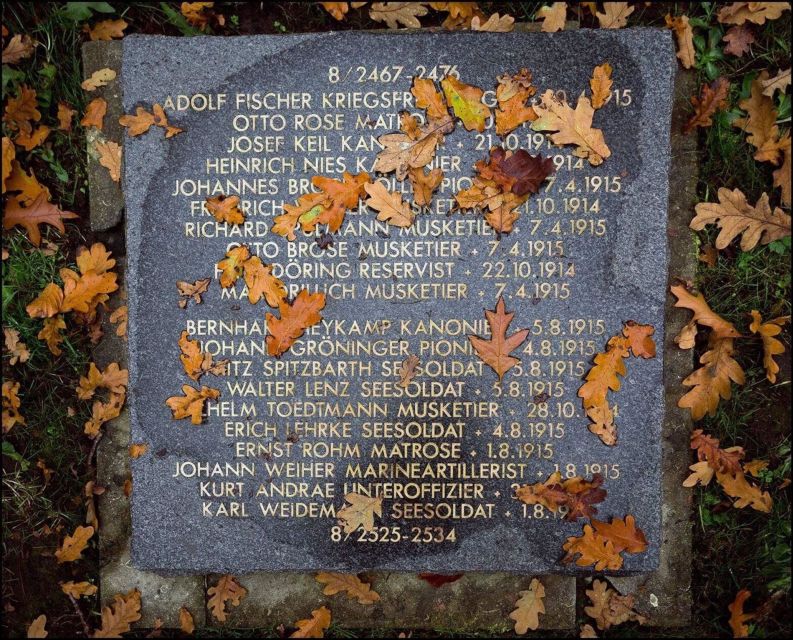
Passendale, also called Passchendaele, is one of the day’s central stops. The name is tied to the Third Battle of Ypres, remembered for mud, artillery, exhaustion, and enormous casualties. The exact remains of the battlefield are not always obvious to a first-time visitor, so the guide’s explanation is essential.
I find this part of the tour most useful when you listen for the practical details: how soldiers moved, why the ground mattered, and how a battle could continue despite terrible conditions. If your interest is highly specific, ask questions. The guides are encouraged by past praise for their command of the subject, but the amount of detail can vary.
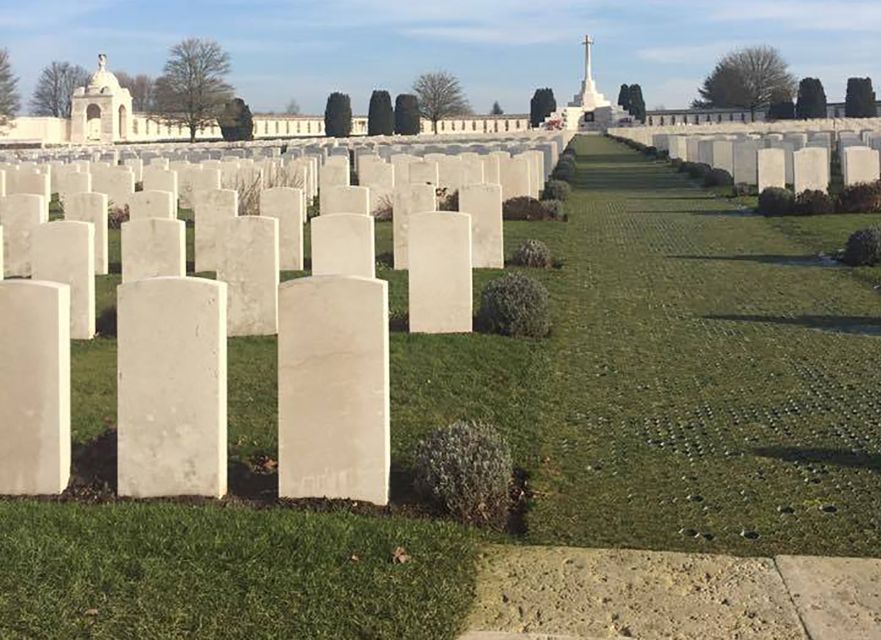
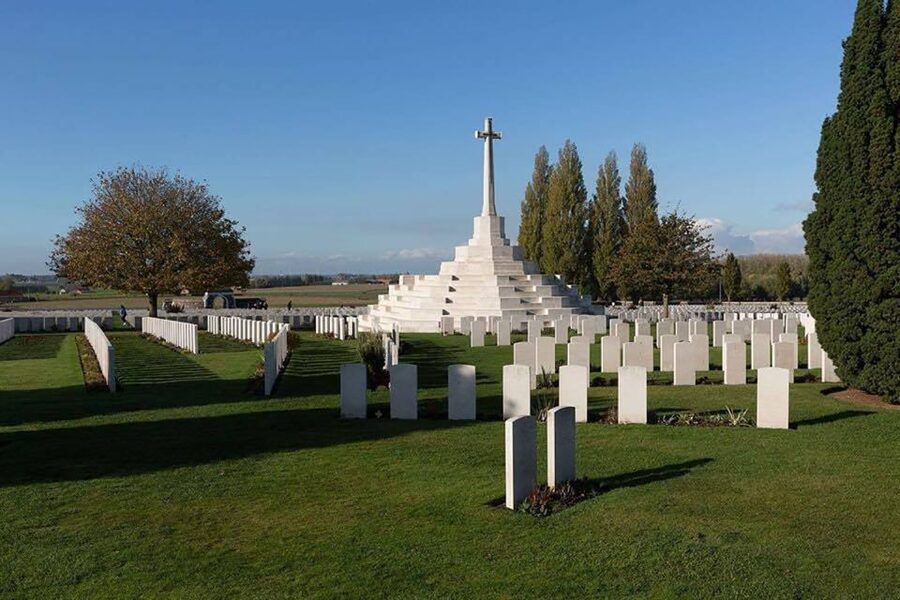
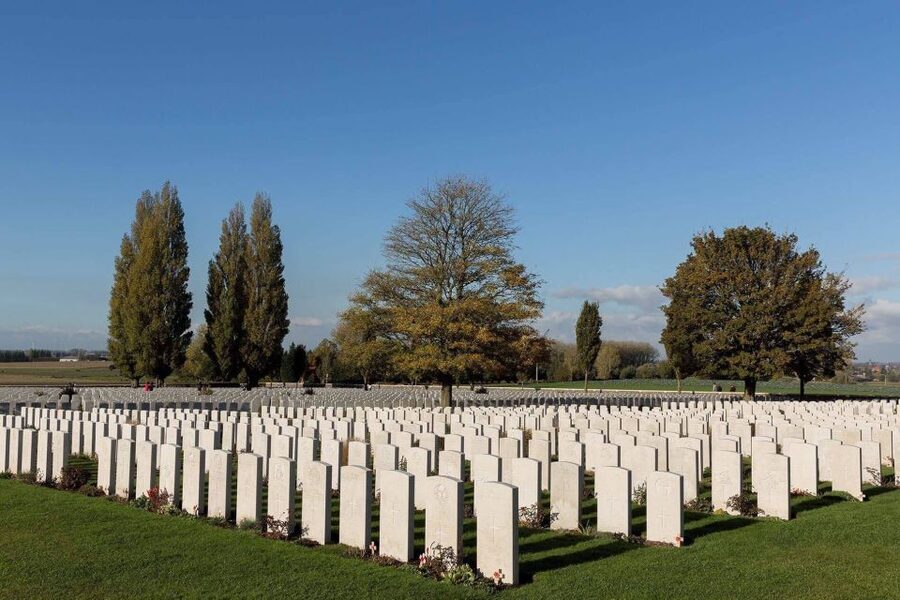
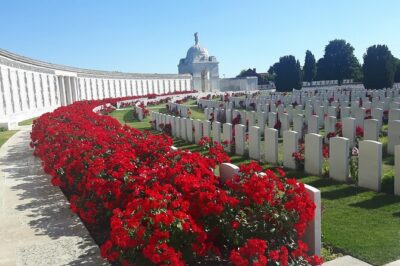
Tyne Cot Cemetery is one of the most important stops. It is the largest Commonwealth cemetery in the world, with British, Irish, Australian, and Canadian soldiers buried there. The scale changes your sense of the war. Instead of reading casualty figures on a page, you see how many individual lives are represented by row after row of names and headstones.
The visit also gives you time to consider the Commonwealth connection. The dead came from across the British Empire and Commonwealth, not only from Britain. That broadens the story beyond a European conflict and helps explain why Flanders Fields remains significant for Canada, Australia, Ireland, and other countries.
You should expect a respectful visit rather than a guided performance at every grave. The cemetery rewards quiet attention. Take time to read inscriptions if the schedule allows, but keep an eye on the meeting time. The day moves quickly.
A few more trips and experiences worth a look
- Full Day Canadian WW1 Vimy and Somme Battlefield Tour from Ypres
★ 5.0 · 6 reviews - From Brussels: Full-Day Antwerp and Ghent Guided Tour
★ 4.6 · 1,019 reviews - From Amsterdam: Bruges Full-Day Tour
★ 4.3 · 519 reviews - From Brussels: Bruges and Ghent Full-Day Trip by Train
★ 4.3 · 103 reviews
Essex Farm and the story behind the poem
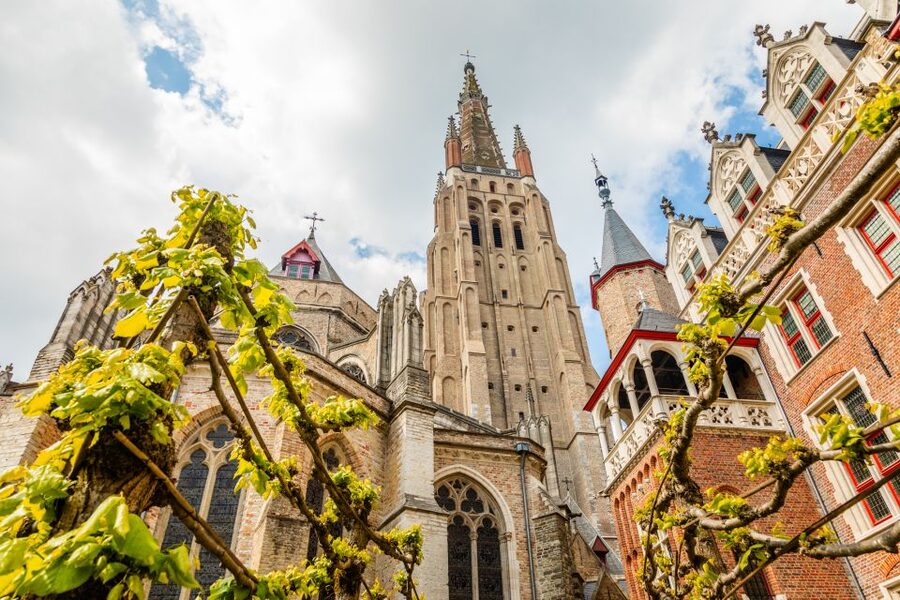
Essex Farm Cemetery is linked to a field hospital where Canadian doctor John McCrae wrote In Flanders Fields. This is one of the tour’s most accessible literary connections. Even if you know the poem by heart, standing at the site associated with its creation gives the words a sharper setting.
The stop also brings the war back to medical care. Field hospitals were close to the fighting, and doctors dealt with wounds on a huge scale. The cemetery is not simply a place connected to a famous poem. It also helps you think about the wounded, the medical staff, and the grim work behind the front line.
I like this stop because it joins a well-known piece of poetry to a physical place. It is brief, but it can become one of the most memorable moments of the day.
Ypres and the In Flanders Fields Museum
Ypres is the main town visit. Much of the city was destroyed during the war and later rebuilt, and the town now serves as a base for remembrance. You have time for a short lunch and a visit to the In Flanders Fields Museum.
Museum entry is included in the $107 price, which improves the value of the tour. The museum adds voices, objects, maps, and personal accounts to the outdoor sites. After seeing cemeteries and former battle positions, the indoor displays help place the suffering into a wider story of four years of trench warfare.
The trouble is time. The stated visit is about one hour, but some schedules have allowed only 35 minutes. That is not enough to see everything at a museum of this size. One sensible improvement would be to give the museum two hours and reduce the unstructured free time elsewhere.
Lunch is also compressed. The basic package does not list lunch as included, so you should budget for your own meal unless your specific departure says otherwise. Some past arrangements have included a meal and drink, but you should confirm this before setting your expectations. If you sit down at a restaurant, tell the staff you have a fixed departure time.
Ypres itself deserves more than a rushed pause. You may find the short visit enough for a meal, a quick look around, and the ceremony later. If you want time for shopping, a long museum visit, and a leisurely city walk, this schedule will feel tight.
Menin Gate and the Last Post Ceremony
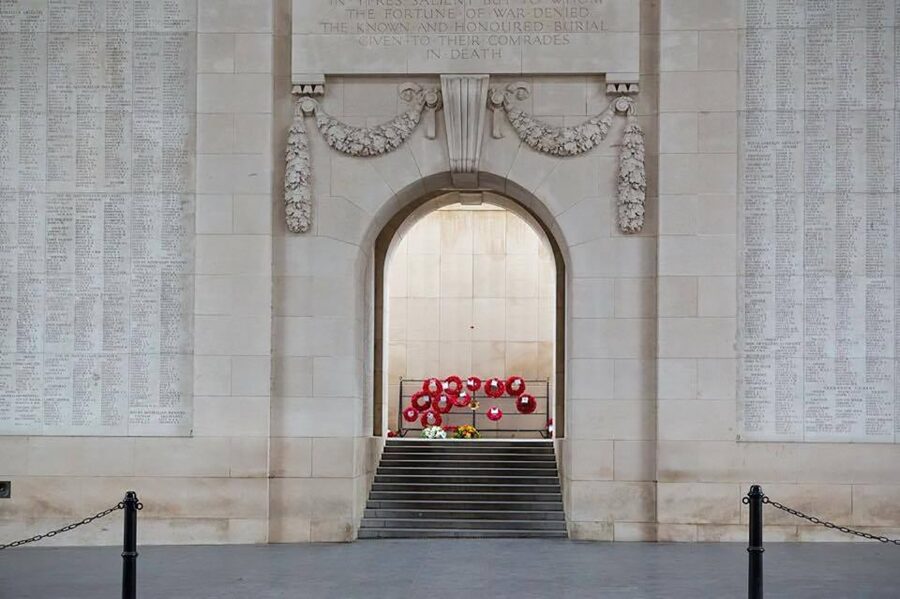
The day ends at Menin Gate in Ypres for the 8 p.m. Last Post Ceremony. This daily tribute honors Commonwealth soldiers and officers who went missing after the battles and have no known grave.
The ceremony is simple. That simplicity is part of its strength. After a full day of battlefields and cemeteries, the repeated bugle call creates a quiet focal point for remembrance. You do not need a long speech or elaborate staging to understand the meaning of the moment.
Plan to arrive ready to wait with the group and follow the guide’s instructions. The tour is built around attending the ceremony, so the return journey begins afterward. That makes the final transfer particularly late, especially if the coach also makes a Bruges stop.
For many people, this is the emotional reason to choose the full-day trip. The battlefield visits provide context, but the Last Post gives the day a clear ending. I would not book this tour if you need to be back in Brussels early that evening.
Transport, timing, and physical demands
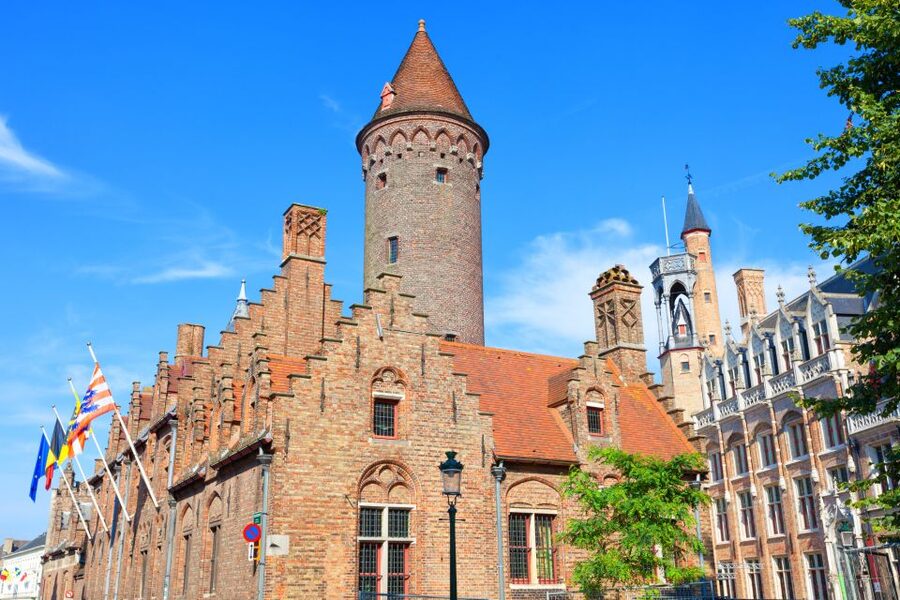
The round-trip coach is a major practical benefit. You do not need to work out connections between remote cemeteries, Passchendaele, Essex Farm, and Ypres. The coach has also been described as comfortable, and having a guide talk during the drive makes the long transfers more useful.
The tradeoff is the schedule. With 13 hours listed, you should expect a very full day. The route can include roughly two hours at the start, another hour between stops, and about an hour on the final transfer. Add the possible Bruges pickup and drop-off, plus the evening ceremony, and this is not a gentle sightseeing outing.
Comfortable shoes are essential. The tour is not recommended for people with limited mobility and is not suitable for wheelchair users. You may walk through cemeteries, around memorials, and on uneven outdoor ground. The information provided does not give a precise walking distance, so anyone with mobility concerns should ask the operator before booking.
The meeting point is outside the National Bank of Belgium, and the activity returns there after the final transfer. Hotel pickup and drop-off are not included.
Is $107 good value?
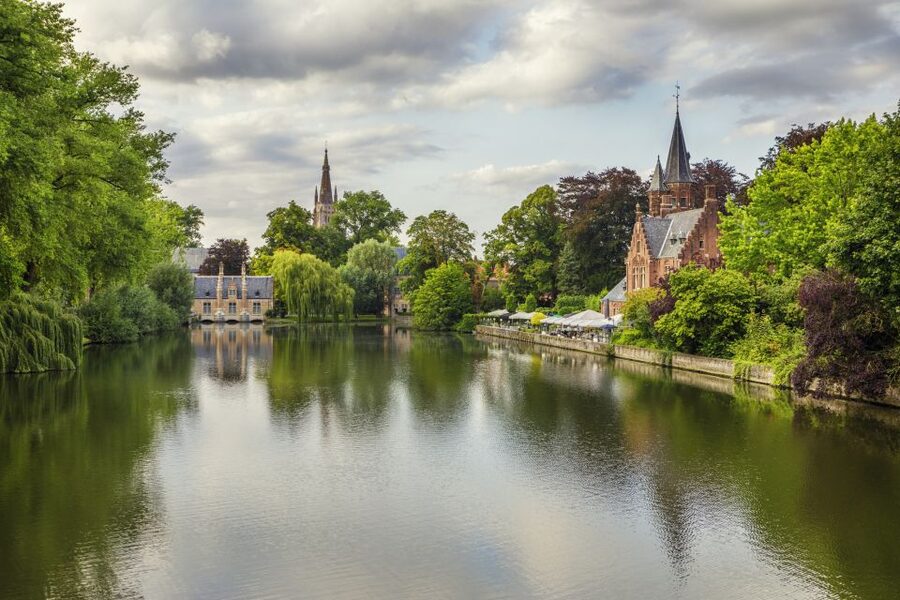
At $107 per person, the tour offers solid value if you want several difficult-to-reach sites in one day. The price covers the professional English-speaking guide, round-trip coach transport, and entry to the In Flanders Fields Museum.
Doing the same route on your own would require more planning and may involve several separate transport arrangements. You would also lose the running explanation that links the sites together. For a first visit to Flanders Fields, that combination makes the price reasonable.
The value is weaker if you want long, careful museum time or highly detailed military analysis. You are paying for breadth, transport, and a guide-led introduction. You are not getting a slow pilgrimage with an hour at every cemetery or a specialist lecture on every regiment.
Free cancellation up to 24 hours before departure and the option to reserve now and pay later make the booking less rigid. The tour can be canceled if the minimum number of participants is not met, so keep that possibility in mind when building a tightly timed itinerary.
Who should book this tour?
I would choose this trip if you are visiting Belgium for the first time and want a strong introduction to the Western Front around Ypres. It also suits family members tracing relatives who fought in the area, provided everyone in the group can manage the long day and outdoor walking.
It is a good match for history buffs, readers of First World War poetry, and anyone who wants to attend the Last Post Ceremony without arranging the details alone. The guides often add personal family stories, which can make the subject feel less like a list of dates.
I would hesitate if your main goal is detailed battlefield research. You may want more time at the museum, more unit-level information, or a route focused tightly on trenches and tactical sites. The tour gives a broad and moving picture, but it cannot cover every place advertised in depth during one day.
Final verdict: book it for the full story
Book this tour if you want the major Flanders Fields sites tied together by a live English-speaking guide and capped by the Menin Gate ceremony. The best parts are the range of stops, the comfortable coach, the included museum, and the chance to visit places such as Essex Farm and Tyne Cot in one outing.
Go in prepared for a packed schedule, short lunch, limited museum time, and possible extra driving through Bruges. If you accept those limits, $107 buys a practical and emotionally serious introduction to the First World War in Belgium. If you need a slower, more specialized pilgrimage, choose a smaller or more focused battlefield visit instead.
FAQ
How long does the Flanders Fields tour last?
The tour lasts 13 hours. Starting times vary, so check availability when booking.
Where does the tour start and finish?
It starts outside the National Bank of Belgium at Bd de Berlaimont 18. The activity finishes back at the meeting point.
Is lunch included?
Lunch is not listed among the included services. Some past arrangements have included a meal and drink, so confirm the details for your departure before booking.
Is entry to the In Flanders Fields Museum included?
Yes. Entrance to the In Flanders Fields Museum is included in the tour price.
Is the tour suitable for wheelchair users?
No. The tour is not suitable for wheelchair users or people with mobility impairments, and comfortable shoes are recommended.
Can I cancel the booking?
Yes. You can cancel up to 24 hours in advance for a full refund. You can also reserve now and pay later.
More 1-Day Tours
- From LIlle or Bruges, Christmas Truce to Passchendaele Ypres 1 day WW1 private
★ 5.0 · 5 reviews - From Brussels: Guided Day Trip to Bruges and Ghent
★ 4.6 · 8,353 reviews - From Amsterdam: Bruges Day Trip in English with Boat Option
★ 4.4 · 1,989 reviews - From Amsterdam: Bruges Day Trip in Spanish with Boat Option
★ 4.6 · 1,866 reviews
Just added around Ypres
- PRIVATE Australian Western Front Battlefields 3-Day Tour Ypres to Amiens★ 5.0 · 3 reviews
- Discover Tournai while playing! Escape game – The alchemist★ 4.0 · 3 reviews
- From LIlle or Bruges, Christmas Truce to Passchendaele Ypres 1 day WW1 private★ 5.0 · 5 reviews
- From Ypres 4hr Christmas Truce and Monster Mines of Messines PRIVATE Tour★ 5.0 · 5 reviews
- Full Day Canadian WW1 Vimy and Somme Battlefield Tour from Ypres★ 5.0 · 6 reviews
- e-Scavenger hunt Ypres: Explore the city at your own pace★ 4.5 · 6 reviews
- In Flanders Fields and Passchendaele Grand Tour★ 5.0 · 25 reviews
- From Ypres: WWI Battlefields Private Tour★ 5.0 · 25 reviews
Flanders Fields & WWI Tours, compared.
Great War Flanders Fields Minibus Tour w/ Lunch
Read our review →
Flanders Fields Remembrance Tour from Brussels
Read our review →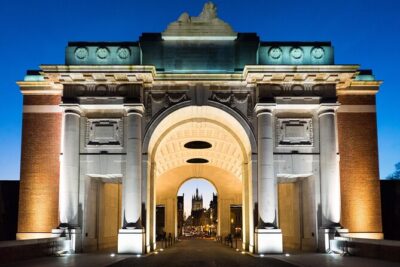
In Flanders Fields and Passchendaele Half Day Morning Tour
Read our review →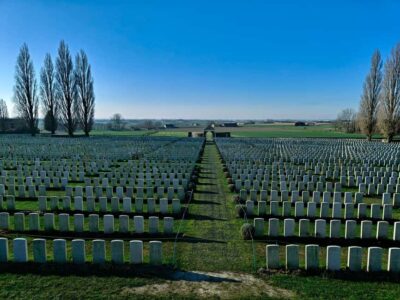
An exploration of the deadly salient battlefields
Read our review →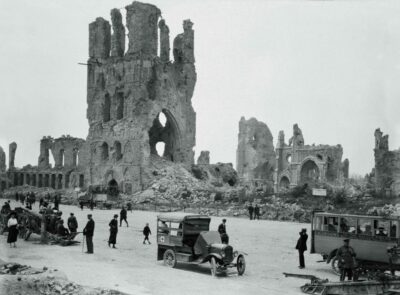
Remembrance Tour: The Battle of the Bulge in the Ardennes
Read our review →Browse the lists this tour appears in