
Reviewed · FLANDERS FIELDS & WWI TOURS
In Flanders Fields and Passchendaele Half Day Morning Tour
War still speaks here. This 3.5-hour tour from Ypres brings the Ypres Salient into focus through preserved trenches, cemeteries, bunkers, and memorials. I like the small group of no more than eight and the way the air-conditioned vehicle reaches sites that would be awkward to visit on foot. I also like the strong human angle, especially guide Roger’s ability to connect the battlefield to family names and national stories. The main drawback is that the schedule is tight, and the van may feel a little cramped in the back.
The tour costs $108.84 per person, with the €8 entrance fee for Sanctuary Wood Museum extra. That is fair value if you want several widely scattered sites in one morning, plus clear explanations from a guide who has written two books about the war. If you want long, quiet visits at each cemetery or museum, a full-day tour may suit you better.
In This Review
- Five things to know before you go
- Why this Ypres tour works so well in half a day
- Sanctuary Wood begins with the Ypres Salient
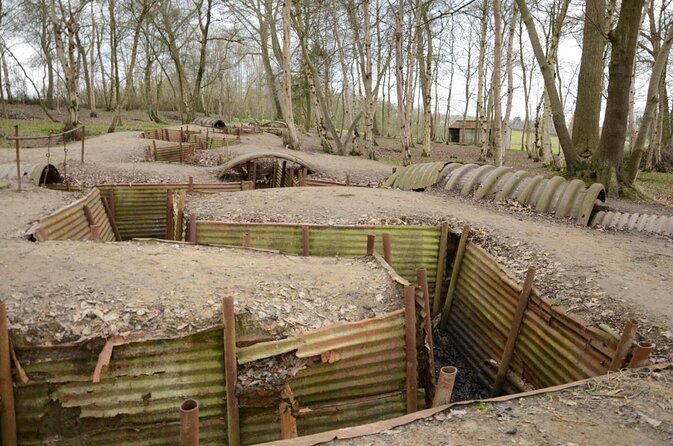
- Sanctuary Wood Museum and preserved trenches
- Essex Farm reveals the medical side of war
- Langemark Cemetery and the difficult German story
- Saint Julien remembers the first gas attacks
- Passchendaele puts the battle in context
- Tyne Cot Cemetery is the emotional centerpiece
- Roger’s guiding style is the main reason to book
- Price, comfort, and the half-day trade-off
- Who should take this tour?
- Booking advice and cancellation terms
- Should you book the Flanders Fields half-day tour?
- FAQ
- Where does the tour begin?
- What time does the tour start?
- How long does the tour last?
- How many people can join the tour?
- Is Sanctuary Wood Museum included in the price?
- What happens if the tour takes place on a Monday?
- Is the tour accessible by public transport?
Five things to know before you go
- Roger is the central strength: He is praised for his clear explanations, personal warmth, and deep knowledge of Ypres and the First World War.
- The route covers major sites: You visit Sanctuary Wood, Essex Farm, Langemark, Saint Julien, Passchendaele, and Tyne Cot Cemetery.
- The group is capped at eight: That makes it easier to ask questions and gives the tour a more personal feel.
- The museum costs extra: Sanctuary Wood Museum requires an €8 admission payment, and it is closed on Mondays.
- The tour begins at 10 a.m.: Pickup is at Station Ieper, Colaertplein 35, with the return to the same meeting point around 1:30 p.m.
Why this Ypres tour works so well in half a day
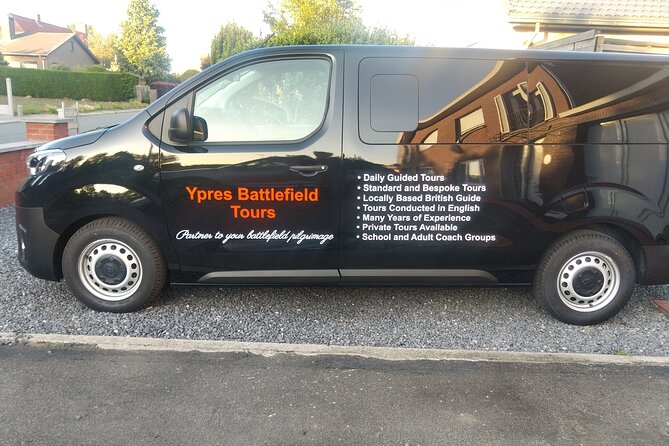
Ypres is a good base for exploring the First World War sites, but the battlefields spread well beyond the town. The most useful feature here is transport. You move between cemeteries, memorials, trenches, and former medical positions without spending your morning trying to arrange taxis or follow a complicated route.
The air-conditioned vehicle matters more than it may sound. Some stops are short, while others invite a longer pause, so having transport between them keeps the morning moving. The tour does not ask you to walk a long route between sites, though you should expect to get out and walk around cemeteries and trench areas.
The group limit of eight is another real advantage. On a large coach, battlefield visits can feel like a series of announcements made over a microphone. Here, the format allows questions and discussion. Several comments about Roger point to his patience and flexibility, including his willingness to let people move at their own pace.
That matters at places such as Tyne Cot and Essex Farm. These are not sites you should rush through simply because the clock says it is time to leave. A small group gives the guide more room to respond to your interests, including questions about a relative who served or was buried in the area.
The tour has earned a perfect 5 rating from 117 reviews, with 100 percent recommending it. The most consistent praise is not just for the number of stops. It is for Roger’s ability to make the sites understandable without turning the morning into a dry lecture.
More Flanders Fields and WWI trips:
- From IEPER Private 4-hour Tour of the Ypres Battlefield
★ 5.0 · 154 reviews - Ypres: An exploration of the deadly salient battlefields
★ 5.0 · 76 reviews - From Brussels: Flanders Fields Remembrance Full-Day Trip
★ 4.4 · 65 reviews
Sanctuary Wood begins with the Ypres Salient
The first stop is Sanctuary Wood, where the tour begins with an overview of the fighting in the Ypres Salient. This opening is important because the area can otherwise feel confusing. Names such as Ypres, Passchendaele, Hooge, Langemark, and Saint Julien appear across maps and memorials, but the wider connection is not always obvious when you visit alone.
Expect about 30 minutes here. The purpose is orientation: to understand the fighting around Ypres before examining the places where those events unfolded. Roger’s approach is especially useful for first-time battlefield visitors because he explains the subject in plain terms and connects the major episodes to the ground around you.
The site also gives the morning a measured start. This is not a fast checklist of famous names. You begin by setting the scene, then build from the broad military story toward specific places such as dressing stations, German cemeteries, and trench remains.
Sanctuary Wood Museum and preserved trenches
The next stop lasts about 50 minutes and includes the Sanctuary Wood Museum and its preserved trenches. This is the one part of the tour with an additional charge: admission costs €8 per person and is not included in the tour price.
The preserved trenches provide a direct sense of the conditions faced by soldiers. You are not simply looking at a plaque or a row of headstones. You can see the physical remains of defensive positions and consider how closely daily life took place to mud, shellfire, and medical danger.
Sanctuary Wood Museum is closed on Mondays. On those days, the tour visits alternative trenches instead, so the experience does not simply lose its trench component. If the museum is a priority for you, check the day of operation before booking.
This stop is likely to be one of the most memorable for children and adults alike, although the subject matter is serious. One family described the tour as particularly successful for children, with the guide making the subject engaging without treating it lightly. That balance is valuable in a place where the human cost can easily become overwhelming.
Essex Farm reveals the medical side of war
At Essex Farm Cemetery, the tour spends about 30 minutes examining preserved dressing station bunkers and the process used to evacuate wounded soldiers. This stop shifts attention away from battle plans and toward what happened after a soldier was injured.
That change of focus gives the route more depth. You begin to see the Ypres Salient not only as a place of attacks and counterattacks, but also as a network of medical posts, evacuation routes, cemeteries, and support positions.
The site is free to enter. You should allow yourself a quiet moment here. The bunkers are practical remains, but they also make the medical story easier to grasp than a general description in a museum can do.
Roger’s strength appears particularly well suited to this kind of stop. His explanations are often described as respectful and easy to follow, and the tour gives you time to take in the place rather than rushing immediately to the next attraction.
Something different, still within reach of Ypres:
- From Ypres, The Christmas Truce to Passchendaele Ypres Based WW1 private tour
★ 5.0 · 29 reviews - In Flanders Fields and Passchendaele Grand Tour
★ 5.0 · 25 reviews - From Ypres: WWI Battlefields Private Tour
★ 5.0 · 25 reviews - Full Day Canadian WW1 Vimy and Somme Battlefield Tour from Ypres
★ 5.0 · 6 reviews
Langemark Cemetery and the difficult German story
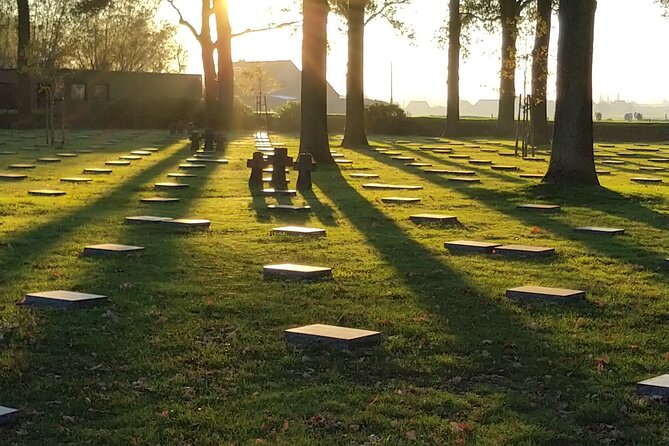
Langemark German Cemetery offers a different view of the war. It contains 44,000 burials and has links to Adolf Hitler and the Nazi period of the Second World War.
That connection makes this stop more than another cemetery visit. It introduces the way wartime memory, German identity, and later political movements became tied to the sites of the First World War. Roger’s discussion of the German cemetery has been praised for adding useful context about postwar politics and relations.
The visit lasts about 30 minutes and is free. It also gives you a chance to compare the design and atmosphere of a German cemetery with the Commonwealth sites later in the morning.
This is a solemn place, and the subject can be unsettling. That is also why a guide helps. You get historical framing rather than being left to draw conclusions from symbols and architecture without context.
Saint Julien remembers the first gas attacks
The Saint Julien Memorial is a short 10-minute stop at the Brooding Soldier Memorial. The memorial commemorates the first gas attacks, making it one of the tour’s clearest reminders of how the First World War introduced new forms of industrial killing.
The stop is brief, but its subject is heavy. The Brooding Soldier is a powerful figure, and the tour uses it to explain what happened in this part of the Ypres Salient.
Do not expect a long walk or a large museum visit here. Think of Saint Julien as a focused pause between larger stops. Because the rest of the morning includes more time at trenches and cemeteries, the short timing works reasonably well.
Passchendaele puts the battle in context
The visit to Passchendaele lasts about 15 minutes and covers the battlefields of Passchendaele and the war’s continuing legacy. The timing is short, so this is not the place for an extended exploration.
Its value comes from the wider picture. After seeing specific bunkers, graves, and memorials, you hear how Passchendaele fits into the larger story of the fighting around Ypres. The stop helps link the individual places together.
If Passchendaele is your main reason for visiting Flanders Fields, be aware that 15 minutes may feel brief. The tour provides an introduction rather than a detailed study of every part of the battlefield. For many people, that is a sensible trade-off on a half-day route that also includes Tyne Cot and Sanctuary Wood.
Tyne Cot Cemetery is the emotional centerpiece
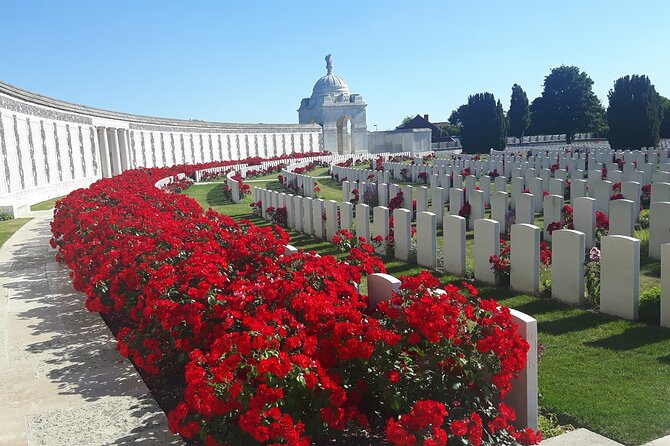
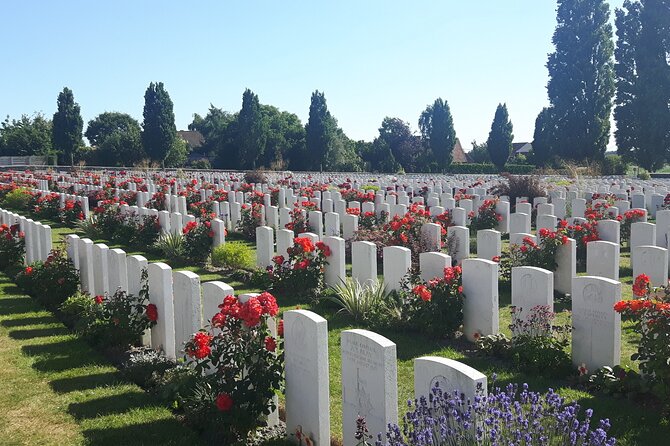
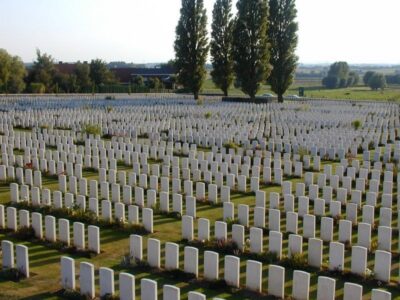
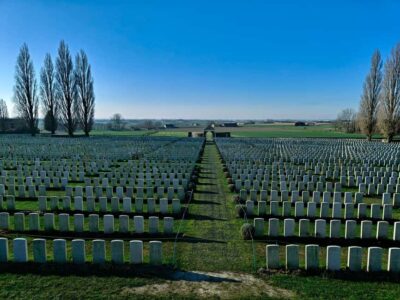
The final major stop is Tyne Cot Cemetery, visited for about 35 minutes. It is the largest British and Commonwealth war cemetery in the world, and the scale is immediately striking.
The rows of white headstones and the memorial walls create a powerful sense of the number of lives lost. Yet the cemetery is not only about scale. Individual names, ages, units, and personal connections can make the broader story feel painfully specific.
This is where Roger’s willingness to help with family research can be especially useful. Several people praised his efforts to trace relatives, including one person searching for a grave at Hooge Crater. If you have a family name connected to the Ypres Salient, bring the details you have. The tour may not guarantee a genealogy search, but Roger has shown that he takes those questions seriously.
Tyne Cot is also a good final stop because it gives the morning a quiet ending. After the explanations of attacks, medical evacuation, gas warfare, and battlefield conditions, the cemetery brings the focus back to remembrance.
Roger’s guiding style is the main reason to book
The route is strong, but Roger is the feature that turns it from transportation into a proper tour. He is repeatedly praised for explaining difficult material clearly, answering questions, and adjusting the experience to the people in the vehicle.
He has also been singled out for tailoring the discussion to different national backgrounds. On one tour, he highlighted the contributions and memorials connected with Americans, New Zealanders, Australians, and Canadians. That is useful because Flanders Fields can mean something different depending on your family or national connection.
The personal attention does not seem limited to formal commentary. Roger has helped people locate relatives, allowed flexibility after serious travel delays, and made space for quiet reflection. One person arrived late after a train problem and still received help getting included in the tour.
That flexibility should not be treated as a guarantee. You should still arrive on time at the station meeting point. But it suggests a guide who sees the people on the tour as more than seats in a van.
Price, comfort, and the half-day trade-off
At $108.84 per person, this is not the cheapest way to see Ypres. The price becomes easier to justify when you consider the transport, small group, range of stops, and specialist guiding.
You are not paying only to be driven past monuments. The value lies in understanding why each site matters and how the places connect. Without a guide, you can visit many of these locations, but you may miss the medical, political, and personal details that give them meaning.
The extra €8 for Sanctuary Wood Museum is modest but should be included in your budget. The tour is offered in English, and confirmation arrives at booking. It starts at 10 a.m. from Station Ieper on Colaertplein and returns to the same meeting point.
One practical complaint is worth noting: the van can feel a little cramped in the back. The group size is small, but the vehicle is still a vehicle, not a spacious coach. For a 3.5-hour tour, this is a minor concern, though taller passengers may want to board early if seating choice is available.
Most people can participate, and service animals are allowed. The meeting point is near public transport, making the tour workable for a day trip from Brussels or elsewhere by train, provided you plan carefully around the 10 a.m. start.
Who should take this tour?
I would choose this tour if you:
- Want a clear introduction to the Ypres Salient in one morning
- Have limited time in Ypres
- Prefer a small group over a large coach
- Want to visit both Commonwealth and German cemeteries
- Have a family connection to the First World War
- Prefer explanations and discussion instead of visiting sites alone
- Plan to explore more independently afterward, perhaps by bicycle
The tour also works well for families, based on the positive response from children on one visit. Still, the subject is confronting. Adults should decide how much detail is suitable for younger children.
I would look elsewhere if you want a slow, specialist study of one battle, a full museum day, or long walks across the former front lines. The route covers many locations, so each stop has a set time.
Booking advice and cancellation terms
Book ahead if your Ypres visit is fixed. The tour is booked an average of 58 days in advance, which suggests that popular dates can fill well before the morning itself.
You can cancel for a full refund up to 24 hours before the start time. Changes or cancellations inside that 24-hour window are not accepted for a refund. The tour also requires a minimum number of participants, and if that minimum is not reached, you are offered another date or experience, or a full refund.
Should you book the Flanders Fields half-day tour?
Yes, if you want the main Ypres Salient sites explained by a guide who treats the subject with care. The strongest reasons are Roger’s personal approach, the small group, and the unusual mix of trenches, cemeteries, medical bunkers, German memorials, and battlefields.
The tour is not perfect. The van may feel tight, Sanctuary Wood Museum costs extra, and Passchendaele receives only a short visit. But for $108.84, you get a focused morning that would be difficult to reproduce efficiently on your own.
If you have a relative connected to Ypres, tell Roger before or at the start of the tour. If you are simply trying to understand why Flanders Fields matters, this is a practical and moving introduction. I would book it as a first visit, then return independently to the places that deserve more time.
FAQ
Where does the tour begin?
The tour begins at Station Ieper, Colaertplein 35, 8900 Ieper, Belgium.
What time does the tour start?
The start time is 10:00 a.m.
How long does the tour last?
The tour lasts approximately 3 hours and 30 minutes and returns to the original meeting point.
How many people can join the tour?
The group has a maximum of eight travelers.
Is Sanctuary Wood Museum included in the price?
No. Admission to Sanctuary Wood Museum costs €8 per person and is paid separately.
What happens if the tour takes place on a Monday?
Sanctuary Wood Museum is closed on Mondays. The tour visits alternative trenches instead.
Is the tour accessible by public transport?
Yes. The meeting point is near public transportation, and the tour begins at Ypres railway station.
More Half-Day
- Brussels Half-Day Tour with a Local Guide – Private & Custom
★ 4.5 · 16 reviews - Private Half Day Tour of Brussels
★ 5.0 · 6 reviews - Private tour : Best of Brussels half day
★ 5.0 · 4 reviews - Private tour : Best of Brussels half day From Brussels
★ 5.0 · 3 reviews
Just added around Ypres
- PRIVATE Australian Western Front Battlefields 3-Day Tour Ypres to Amiens★ 5.0 · 3 reviews
- Discover Tournai while playing! Escape game – The alchemist★ 4.0 · 3 reviews
- From LIlle or Bruges, Christmas Truce to Passchendaele Ypres 1 day WW1 private★ 5.0 · 5 reviews
- From Ypres 4hr Christmas Truce and Monster Mines of Messines PRIVATE Tour★ 5.0 · 5 reviews
- Full Day Canadian WW1 Vimy and Somme Battlefield Tour from Ypres★ 5.0 · 6 reviews
- e-Scavenger hunt Ypres: Explore the city at your own pace★ 4.5 · 6 reviews
- In Flanders Fields and Passchendaele Grand Tour★ 5.0 · 25 reviews
- From Ypres: WWI Battlefields Private Tour★ 5.0 · 25 reviews
Flanders Fields & WWI Tours, compared.
Great War Flanders Fields Minibus Tour w/ Lunch
Read our review →
Flanders Fields Remembrance Tour from Brussels
Read our review →
An exploration of the deadly salient battlefields
Read our review →
Remembrance Tour: The Battle of the Bulge in the Ardennes
Read our review →Browse the lists this tour appears in