
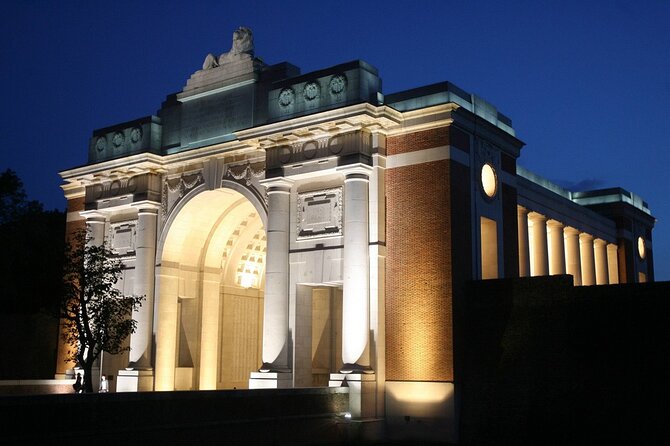
Reviewed · FLANDERS FIELDS & WWI TOURS
In Flanders Fields and Passchendaele Grand Tour
The trenches still have stories to tell. This full-day outing from Ypres follows the Ypres Salient through cemeteries, bunkers, mine craters, museums, and preserved trench lines, giving you a clear sense of how the First World War shaped this corner of Belgium. I like the small group of no more than eight and the range of sites, from Tyne Cot Cemetery to German positions at Bayernwald. I also like that a light sandwich lunch, soft drink, and bottled water are included.
The main consideration is the price: $344 is a serious spend for a seven to eight-hour tour. The day also covers emotionally heavy material, and the schedule moves quickly between several sites. One practical detail needs checking before you pay: the tour information lists Sanctuary Wood Museum admission as both included and not included in different places.
In This Review
- Key points to know before booking
- Why this Ypres battlefield tour is worth your day
- Sanctuary Wood: artifacts and surviving British trenches
- Passchendaele and Tyne Cot Cemetery
- Langemark and the German side of the war
- Essex Farm and the story behind In Flanders Fields
- The German Command Post and battlefield control
- Caterpillar Crater and the war underground
- Hill 60: bunkers, craters, and brutal fighting
- Bayernwald and the German trenches
- What the $344 price includes
- Timing, meeting point, and practical planning
- Who will get the most from this experience
- Should you book the In Flanders Fields and Passchendaele Grand Tour?
- FAQ
- Where does the tour start and finish?
- What time does the tour begin?
- How long does the tour last?
- How many people can join the tour?
- Is lunch included?
- Are alcoholic beverages included?
- Is admission to the sites included?
- What is the cancellation policy?
Key points to know before booking
- Eight stops cover both Allied and German positions: You visit British, Commonwealth, and German cemeteries, bunkers, trenches, and mine craters.
- Roger is a major part of the experience: His clear explanations, personal manner, and ability to answer questions receive especially strong praise.
- Sanctuary Wood offers preserved British trenches: The museum adds artifacts and a physical sense of trench warfare that photographs cannot provide.
- Lunch is included: Expect a light sandwich and soft drink, with bottled water supplied as well.
- The tour begins and ends at Ypres station: Meet at Station Ieper, Colaertplein 35, at 10:00 a.m.
- The subject is serious: Cemeteries, mass graves, battlefield deaths, and the human cost of war are central to the day.
Why this Ypres battlefield tour is worth your day
Ypres is not a place you understand fully by visiting one museum. The First World War front here stretched across fields, villages, roads, command posts, hospitals, cemeteries, and underground works. This tour helps you connect those separate pieces.
That connection is the real value. At one stop, you may be looking at a huge Commonwealth cemetery. Later, you are inside or beside a German bunker. Then you are standing near a mine crater that changed the ground itself. The route gives you several viewpoints instead of presenting the war as a single national story.
I especially like the balance between indoor and outdoor stops. Museums provide objects and explanation. Cemeteries bring scale and silence. Bunkers and trenches show the cramped, defensive world where soldiers lived and fought. The result is more useful than simply driving past a series of memorials.
The group limit matters, too. With no more than eight people, you should have a better chance to hear the guide and ask questions than you would on a large coach outing. Several people singled out Roger for his strong command of the subject, warmth, humor, and care when discussing painful events. He has written two books on the subject, which helps explain the depth of the commentary.
Still, this is not a casual countryside excursion. You spend much of the day thinking about mass death, failed offensives, medical treatment, and the long reach of war. I would choose it because of that seriousness, not expect it to soften the subject.
More Flanders Fields and WWI trips:
- From IEPER Private 4-hour Tour of the Ypres Battlefield
★ 5.0 · 154 reviews - In Flanders Fields and Passchendaele Half Day Morning Tour
★ 5.0 · 117 reviews - Ypres: An exploration of the deadly salient battlefields
★ 5.0 · 76 reviews
Sanctuary Wood: artifacts and surviving British trenches
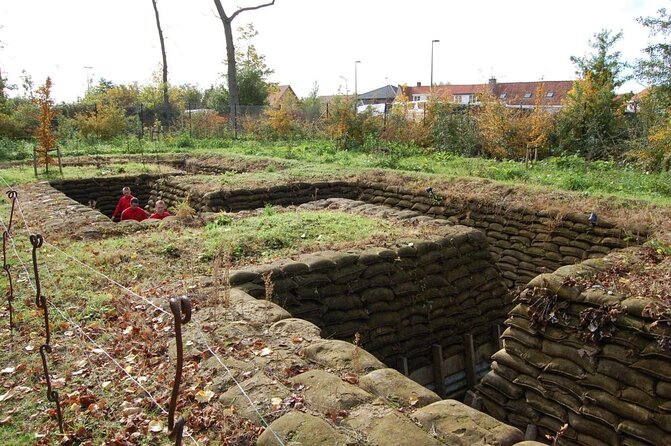
Sanctuary Wood Museum is an early highlight and a useful introduction to the day. You have about 40 minutes to see its collection of wartime artifacts and an extensive preserved British trench system.
The word preserved matters here. A trench system gives you a physical reference for the narrow, defensive world described in books. You can better picture how soldiers moved, sheltered, and worked in spaces built for survival rather than comfort.
The museum also gives the tour a strong object-based start. Artifacts can make the war feel specific: not just dates and offensives, but equipment, tools, and the material remains of daily life. The preserved trenches then connect those objects to the ground outside.
This stop is listed with conflicting admission information. The tour highlights say admission is included, while the detailed stop description says the ticket is not included. Since the price is already high, ask Ypres Battlefield Tours to confirm this before booking.
Allow yourself to stay focused. Forty minutes is enough for an introduction, but it is not a long museum visit. If you want to read every display at length, you may find the pace tight.
Passchendaele and Tyne Cot Cemetery
The route continues through the Passchendaele battlefields before reaching Tyne Cot Cemetery. You have about 20 minutes here, with free admission.
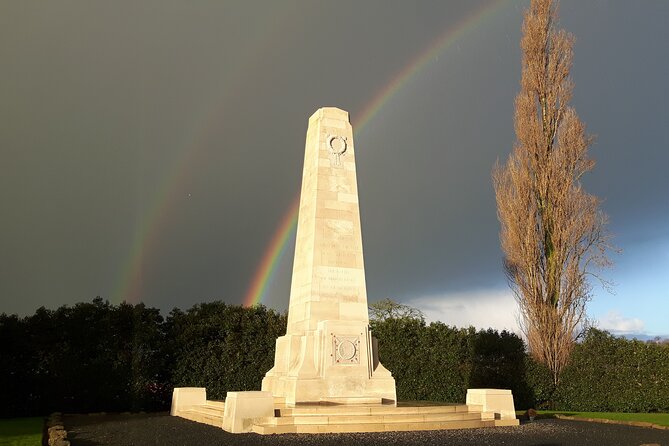
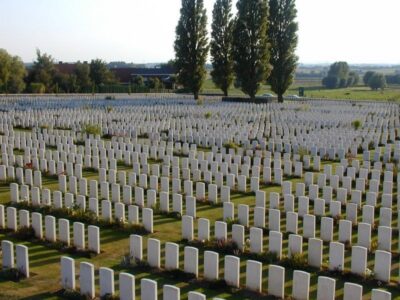
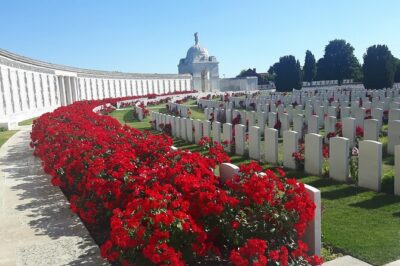
Tyne Cot is the largest British and Commonwealth war grave cemetery in the world. Its scale helps you grasp the cost of the fighting in a way that a casualty figure on a page rarely can. The setting is carefully maintained and visually calm, which makes the number of graves even more difficult to absorb.
The short stop is a strength and a limitation. It keeps the full day moving, but 20 minutes does not leave room for a slow visit or extensive reading. I would treat it as a focused memorial stop and listen closely to the guide’s explanation.
This is also one of the places where the tour’s international scope becomes clear. The day is not only about battle tactics. It is about the people who came from different Allied countries, and about the system of cemeteries and memorials created after the fighting.
Langemark and the German side of the war
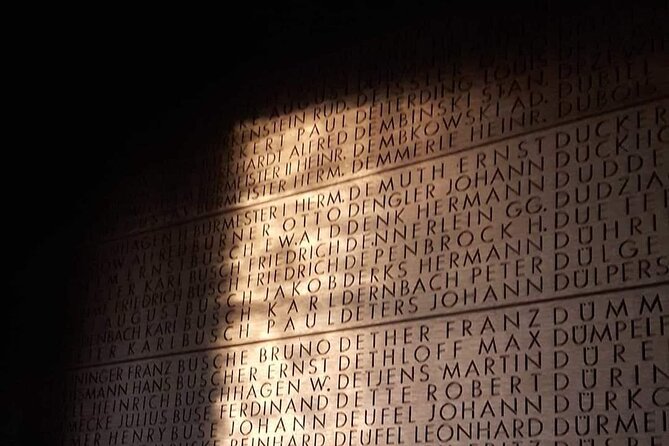
Langemark Cemetery provides a different tone. It is a German cemetery with a mass grave and links to later Nazi use of First World War memory. The stop lasts about 40 minutes and admission is free.
That historical connection makes Langemark more complicated than a simple battlefield memorial. You are not only considering German military losses. You are also looking at how wartime remembrance could later be used for political purposes.
I value this inclusion because it prevents the tour from becoming one-sided. A battlefield day should not reduce history to heroes on one side and villains on the other. The German cemetery gives you space to consider loss, nationalism, memory, and how societies use the past.
This may be one of the more demanding stops intellectually. If you want only military facts, the political links may feel like a change of direction. If you want a fuller account of how the war was remembered, it adds useful context.
A few more trips and experiences worth a look
- From Brussels: Flanders Fields Remembrance Full-Day Trip
★ 4.4 · 65 reviews - From Ypres, The Christmas Truce to Passchendaele Ypres Based WW1 private tour
★ 5.0 · 29 reviews - From Ypres: WWI Battlefields Private Tour
★ 5.0 · 25 reviews - Full Day Canadian WW1 Vimy and Somme Battlefield Tour from Ypres
★ 5.0 · 6 reviews
Essex Farm and the story behind In Flanders Fields
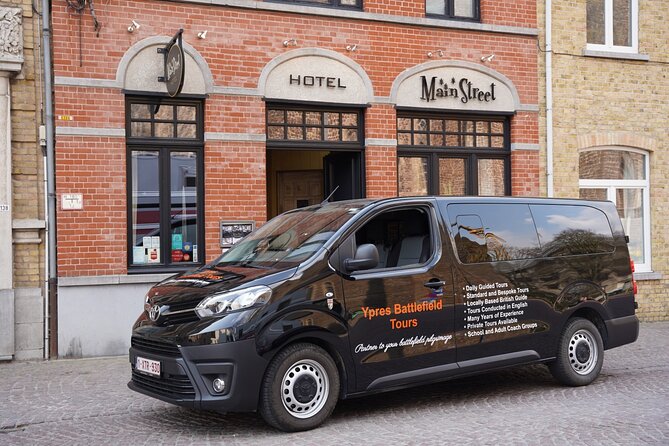
At Essex Farm Cemetery, you visit preserved dressing station bunkers and the memorial to Lieutenant Colonel John McCrae. The stop lasts about 40 minutes, and admission is free.
This is where battlefield medicine and poetry meet. McCrae is closely linked with In Flanders Fields, one of the best-known poems associated with the First World War. The preserved bunkers help place the poem in the setting of a wartime medical station rather than treating it as an isolated piece of literature.
That physical setting gives the story weight. The poem’s language is familiar to many people, but seeing the medical facilities and cemetery connected with the site can make its references more direct and human.
The stop should suit you if you enjoy history that links military events with personal stories and culture. It is also another place where the subject may become emotional. The day does not keep war at a safe distance.
The German Command Post and battlefield control
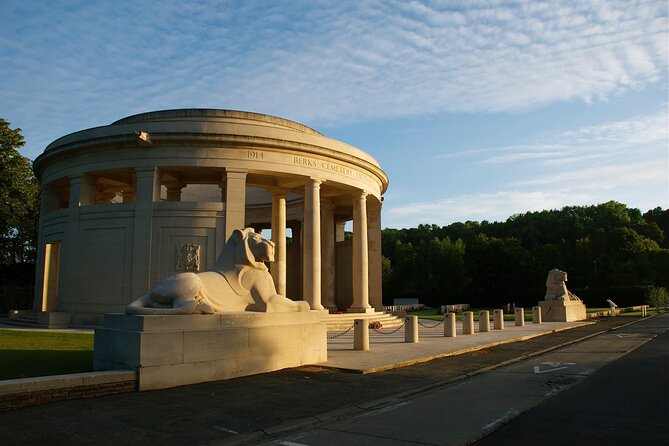
The German Command Post is described as the largest preserved German command bunker in the Ypres Salient. You have about 15 minutes here, with free admission.
This is a short visit, but the bunker helps explain how the front was organized. The other stops show trenches and cemeteries at ground level. A command post points you toward planning, communications, and the decisions made behind the front line.
Fifteen minutes is enough for a quick explanation and look around, but not for a long independent exploration. I would pay attention to Roger’s interpretation here, since the value of a compact stop depends heavily on clear storytelling.
The inclusion of a German command position also reinforces the tour’s effort to show the Ypres Salient from more than one military viewpoint.
Caterpillar Crater and the war underground
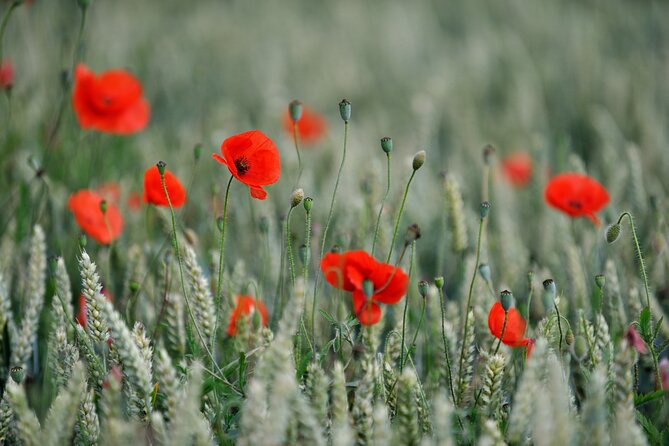
The Caterpillar Mine Crater, also called Hill 60 B, brings you to the story of the Battle of Messines Ridge and underground warfare. You have about 30 minutes here, and admission is free.
This is one of the day’s most striking physical sites. The crater was created by a mine explosion, leaving a huge depression in the ground. It shows how the war was fought not only with troops and artillery on the surface, but also through tunnels and explosives beneath it.
I would expect this stop to be especially memorable because the terrain itself records the fighting. A museum can explain an explosion. A mine crater lets you see its lasting mark.
The topic can become technical, especially when the guide explains the underground work and the Messines battle. Roger’s role is important here, since good explanation helps you understand why tunneling mattered and how it fit into the wider campaign.
Hill 60: bunkers, craters, and brutal fighting
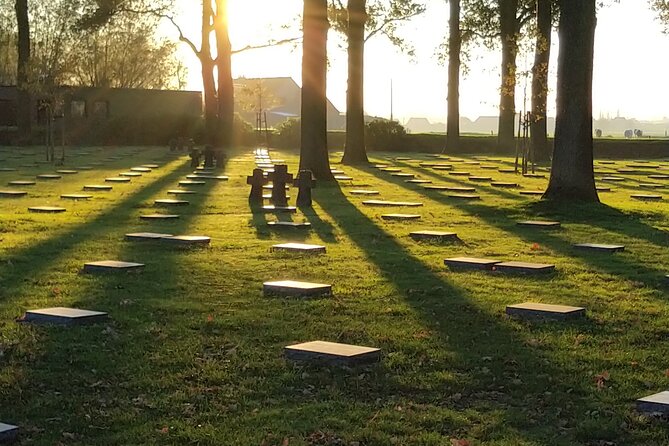
Hill 60 is a preserved battlefield with bunkers and mine craters. The visit lasts about 30 minutes and admission is free.
The name sounds modest, but the site carries the memory of terrible fighting. Its preserved features give you a direct look at the kind of ground troops had to attack, defend, and cross under fire.
I like the contrast between Hill 60 and the cemeteries. At a cemetery, the human cost is organized into rows of names and graves. At Hill 60, the physical damage and defensive works keep your attention on the battlefield itself.
Wear practical shoes for this kind of stop. The supplied information does not promise a specific walking surface or distance, so you should be ready for outdoor ground and uneven areas. Most people can take part, but the tour is more comfortable if you are prepared for repeated short visits outside.
One review specifically praised the trenches near Hill 62 and the Caterpillar Crater as highlights. The listed route names Hill 60 and Hill 60 B, so confirm the exact stops if a particular hill or trench system is important to your plans.
Bayernwald and the German trenches
Bayernwald is described as the only preserved German trench system in the Ypres Salient. The visit lasts about 45 minutes, and admission is included.
This is one of the strongest stops for understanding how German defensive positions differed from the British trench system seen earlier at Sanctuary Wood. Seeing both sides during one day allows you to compare rather than rely on a single national perspective.
The longer 45-minute visit should give Roger room to explain the site and for you to look carefully at the trenches. Like Sanctuary Wood, Bayernwald turns abstract descriptions into something you can see in the ground.
The admission information here is clear, unlike the conflicting Sanctuary Wood details. If trench warfare is your main interest, make sure both museum and trench visits are available as advertised before the day begins.
What the $344 price includes
At $344, this is a premium small-group tour. The price makes more sense if you value interpretation, transport between scattered sites, and the chance to cover a wide section of the Ypres Salient in one day.
You receive a light sandwich lunch and soft drink, plus bottled water. Alcoholic drinks are not included. The included meal is practical rather than elaborate, but it saves you from finding lunch during a tightly timed route.
The group size is the key value point. A maximum of eight gives the outing a personal feel and lets you ask about particular units, battles, memorials, or family connections. The strong praise for Roger also suggests that you are paying for more than transport. His background, books, humor, and thoughtful handling of difficult material are central to the experience.
The price may not suit someone who wants a quick overview or prefers to explore museums alone. You could find the cost hard to justify if you are mainly interested in one cemetery or one battle site. For someone with a serious interest in the First World War, the day’s breadth and guide access make the expense easier to defend.
Timing, meeting point, and practical planning
The tour starts at 10:00 a.m. at Station Ieper, Colaertplein 35, 8900 Ieper, Belgium. It returns to the same meeting point after about seven to eight hours.
That start point is useful if you are arriving in Ypres by train. One person received special help from Roger after a late arrival caused by a missed train, but you should not treat that as a guarantee. Plan to arrive early, especially if you are connecting from Brussels.
A mobile ticket is provided, and booking confirmation is sent at the time of booking. The tour is near public transportation, and service animals are allowed. Most people can participate, but no detailed mobility information is provided, so ask ahead if you need specific help with walking surfaces or access to bunkers and trenches.
Free cancellation is available up to 24 hours before the start time. Cancellations or changes inside that window are not refunded or accepted. The tour also requires a minimum number of participants, so if the operator cancels for that reason, you are offered another date or experience, or a full refund.
Who will get the most from this experience
I would recommend this tour to you if you want a serious, guided look at the Ypres Salient and prefer context to a quick photo stop. It suits people interested in military history, remembrance, battlefield archaeology, poetry, memorial design, or family research connected with the First World War.
It is also a good choice if you have only one day in Ypres and want to cover sites that are spread across the region. The small group should appeal if you prefer questions and conversation over a large coach setting.
I would hesitate if you dislike cemeteries, find wartime subjects upsetting, or want a relaxed day with long museum visits. Eight stops in seven to eight hours is a full schedule. You will see a lot, but some visits are brief.
The tour has received a perfect overall rating from 25 reviews, with 100 percent recommending it. The most praised qualities are Roger’s expertise, his kindness, his humor, and his care with the emotional side of the subject. Those qualities matter greatly here. Facts alone cannot explain Ypres well.
Should you book the In Flanders Fields and Passchendaele Grand Tour?
Book it if you want the broadest guided introduction to the Ypres Salient in one day, especially if German and Allied sites both matter to you. The combination of Tyne Cot, Langemark, Essex Farm, Hill 60, the Caterpillar Crater, Sanctuary Wood, the German Command Post, and Bayernwald gives you a strong range of perspectives.
At $344, I would book only if the guide and small group are important to you. Before paying, confirm the Sanctuary Wood admission detail and the exact Hill 60 or Hill 62 stops. If those points are clear, this is a well-focused day for understanding not only where the battles happened, but how the war is remembered.
FAQ
Where does the tour start and finish?
It starts and ends at Station Ieper, Colaertplein 35, 8900 Ieper, Belgium.
What time does the tour begin?
The start time is 10:00 a.m.
How long does the tour last?
The experience lasts approximately seven to eight hours.
How many people can join the tour?
The shared tour has a maximum of eight travelers.
Is lunch included?
Yes. A light sandwich lunch and a soft drink are included, along with bottled water.
Are alcoholic beverages included?
No. Alcoholic beverages are not included.
Is admission to the sites included?
Admission is free at Tyne Cot Cemetery, Langemark Cemetery, Essex Farm Cemetery, the German Command Post, the Caterpillar Mine Crater, and Hill 60. Bayernwald admission is included. The information for Sanctuary Wood Museum conflicts, so confirm whether its admission is included before booking.
What is the cancellation policy?
You can cancel up to 24 hours before the start time for a full refund. Cancellations or changes made less than 24 hours before the tour are not refunded or accepted.
Just added around Ypres
- PRIVATE Australian Western Front Battlefields 3-Day Tour Ypres to Amiens★ 5.0 · 3 reviews
- Discover Tournai while playing! Escape game – The alchemist★ 4.0 · 3 reviews
- From LIlle or Bruges, Christmas Truce to Passchendaele Ypres 1 day WW1 private★ 5.0 · 5 reviews
- From Ypres 4hr Christmas Truce and Monster Mines of Messines PRIVATE Tour★ 5.0 · 5 reviews
- Full Day Canadian WW1 Vimy and Somme Battlefield Tour from Ypres★ 5.0 · 6 reviews
- e-Scavenger hunt Ypres: Explore the city at your own pace★ 4.5 · 6 reviews
- From Ypres: WWI Battlefields Private Tour★ 5.0 · 25 reviews
- From Ypres, The Christmas Truce to Passchendaele Ypres Based WW1 private tour★ 5.0 · 29 reviews
Flanders Fields & WWI Tours, compared.
Great War Flanders Fields Minibus Tour w/ Lunch
Read our review →
Flanders Fields Remembrance Tour from Brussels
Read our review →
In Flanders Fields and Passchendaele Half Day Morning Tour
Read our review →
An exploration of the deadly salient battlefields
Read our review →
Browse the lists this tour appears in