
Reviewed · FLANDERS FIELDS & WWI TOURS
PRIVATE Australian Western Front Battlefields 3-Day Tour Ypres to Amiens
The Western Front is best understood one field at a time. This private three-day journey links Ypres, Fromelles, Arras, Bullecourt, Pozieres, and Amiens with a guide who has family ties to the battle sites. I like the flexible private itinerary, especially if you are tracing a particular Australian soldier. I also like the mix of quiet cemeteries, museums, memorials, and famous battle locations. The main drawback is cost: at $1,965.48 per person, meals and accommodation still come out of your pocket.
This is not a quick battlefield photo stop. It is a long, serious look at Australia’s First World War story, from the 1914 Christmas Truce to the Battle of Le Hamel in 1918. Guide Soren Hawkes is praised for careful preparation, warm company, and going beyond the basic route. You will need to be ready for full days, emotional subjects, and a good deal of driving.
In This Review
- Key points to know before booking
- Why this private route works so well
- Day one: Messines, Passchendaele, and the Ypres Salient
- Day two: Fromelles, Arras, and the road to Amiens
- Day three: The Somme, Pozieres, and Monash’s final victories
- What the $1,965.48 price buys you
- Practical details that shape your days
- Who should book this Australian battlefield tour?
- Should you book it?
- FAQ
- Where does the tour begin?
- Where does the tour finish?
- Can the tour run in the opposite direction?
- How long is the tour?
- Is the tour private?
- Are meals included?
- Is accommodation included?
- Is bottled water provided?
- Can the itinerary be tailored around a family member?
Key points to know before booking
- Three days connect Ypres with Amiens: You begin in Ypres and finish in Amiens, with a reverse route available.
- Private guiding shapes the trip: The itinerary can be adjusted around your interests, including family members who fell in the battles.
- The focus is strongly Australian: From Fromelles and Bullecourt to Pozieres and Le Hamel, the tour follows the Australian Corps across the Western Front.
- Museums add meaning to the memorials: In Flanders Fields Museum, the Fromelles museum, École Victoria, and the Sir John Monash Centre provide indoor context.
- The Last Post is included at Menin Gate: You can attend the 8pm ceremony in Ypres, held most nights since 1927.
- You pay separately for food and rooms: Bottled water is supplied each day, but meals, lodging, and personal spending are not included.
Why this private route works so well
The geography gives the tour a clear story. Day one covers the Ypres Salient, where Australian units fought through the fields around Messines and Passchendaele. Day two moves south through Fromelles, Arras, and Bullecourt. Day three follows the Somme and finishes with the Australian National Memorial and the Sir John Monash Centre near Amiens.
That structure matters. Instead of seeing isolated memorials, you follow the direction of the fighting and watch the Australian experience change from one battle to the next. The tour also covers both famous places and smaller sites that are easy to miss without a guide.
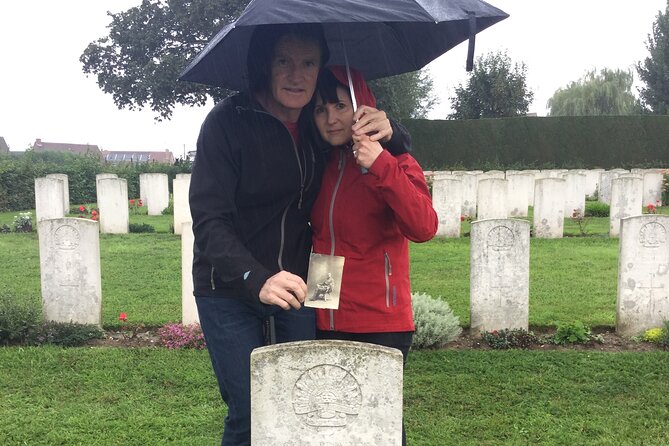
The private format is the real advantage. You are not tied to the pace of a large group, and you can ask for more time at a cemetery, a family grave, or a particular unit memorial. If you arrive with names and service details, the guide can tailor the route where possible. That is especially valuable for families making a pilgrimage.
Soren Hawkes brings a personal connection to the subject through family links to the battle sites. His guiding has been praised as heartfelt, reliable, and well prepared. That combination matters here. These places need more than dates and troop movements, but they also need clear explanation rather than vague sentiment.
More Flanders Fields and WWI trips:
- From IEPER Private 4-hour Tour of the Ypres Battlefield
★ 5.0 · 154 reviews - In Flanders Fields and Passchendaele Half Day Morning Tour
★ 5.0 · 117 reviews - Ypres: An exploration of the deadly salient battlefields
★ 5.0 · 76 reviews
Day one: Messines, Passchendaele, and the Ypres Salient
The first day begins at 9am and follows the Australian advance from Messines toward Passchendaele. This is a full day, and the number of stops means you should expect a steady pace.
At Messines Ridge, you get the main battlefield setting for the day. The tour covers the Ypres Salient from 1914 to 1918, with special attention to the Australian attacks of 1917. If a relative died in this fighting, this is one of the places where a personal family story can be worked into the wider campaign.
The Christmas Truce Memorial at Plugstreet Wood offers a change of tone. You stop for about 30 minutes to hear the story of the informal Christmas ceasefire in 1914. It is a short visit, but it gives the war a human scale before the tour returns to the industrial destruction of later battles.
At Spanbroekmolen Mine Crater, the guide explains the huge explosion of June 7, 1917. The crater helps you grasp the force of underground mining in this sector. Hill 60 follows, with attention to the work of the 1st Australian Tunnelling Company. These places are not simply scenic viewpoints. Their value comes from understanding what happened beneath the ground as well as above it.
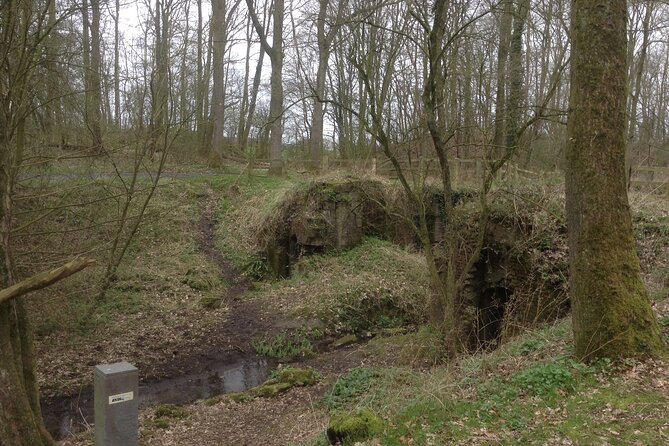
Polygon Wood brings the fighting closer to ground level. You walk through the woods, see concrete bunkers, visit the cemetery, and view the Australian 5th Division monument. This is a good example of why a private tour helps. You can pause to connect the remaining structures with the story of the soldiers who captured them.
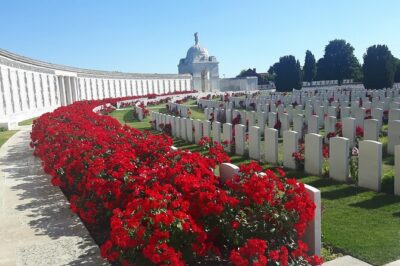
Tyne Cot Cemetery is listed as a very brief stop, so do not expect a long, quiet visit unless the schedule is adjusted. It is the largest Commonwealth War Graves Commission cemetery in the world, with about 12,000 burials and thousands of names on the memorial to the missing. Two Australian Victoria Cross recipients are buried there.
That short timing is worth noting. Tyne Cot is one of the most important sites in the region, and many people will want more than a quick look. Tell the guide in advance if it is a priority for you.
At Essex Farm Cemetery, you visit the former hospital site connected with Lieutenant Colonel John McCrae, who wrote In Flanders Fields. The stop lasts about 20 minutes and links a familiar poem with an actual place of wartime medical care.
You then have one hour at In Flanders Fields Museum in Ypres. This is the main indoor stop of the first day, and it gives you a chance to absorb maps, objects, and personal accounts at your own pace. The museum is especially useful if you have limited background knowledge before arriving.
Ypres itself gets a short look at the Cloth Hall, cathedral, and main square. You may have free time to eat, with Flemish stew suggested as the local dish to try. The schedule is tight, so this is more of a town orientation than a relaxed city visit.
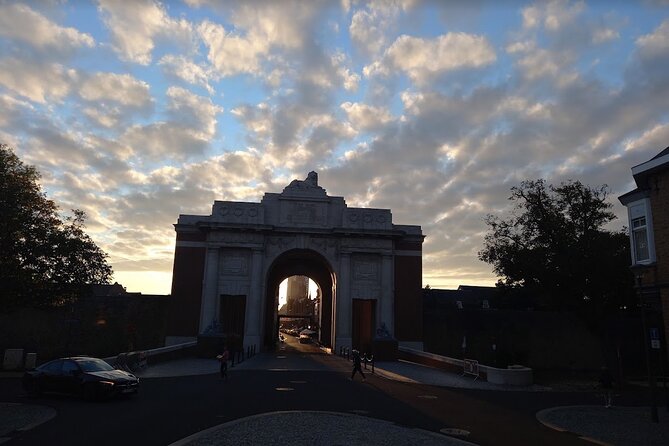
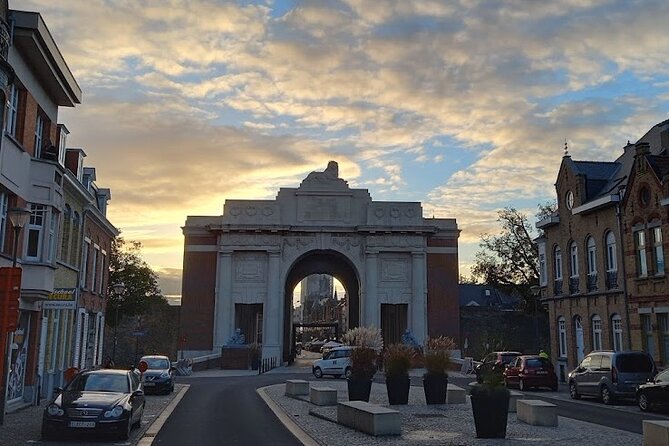
The emotional centerpiece comes at 8pm with the Last Post ceremony under the Menin Gate. Local fire brigade buglers have held the ceremony every night since 1927, except during the Nazi occupation in the Second World War. It is free, public, and deeply tied to Ypres. Plan your day around it.
Langemark Cemetery closes the first day with a different perspective. You walk among the graves of approximately 44,000 German soldiers and see how Germany commemorated its war dead. Placing a German cemetery beside the Commonwealth sites makes the conflict feel less one-sided and more human.
Day two: Fromelles, Arras, and the road to Amiens
Day two shifts south and focuses on some of the most painful chapters in the Australian story. Fromelles is central here.
The Museum of the Battle of Fromelles explains the battle and the discovery in 2008 of a mass grave containing 250 Australian soldiers. The museum visit lasts about 45 minutes and helps prepare you for the cemeteries that follow.
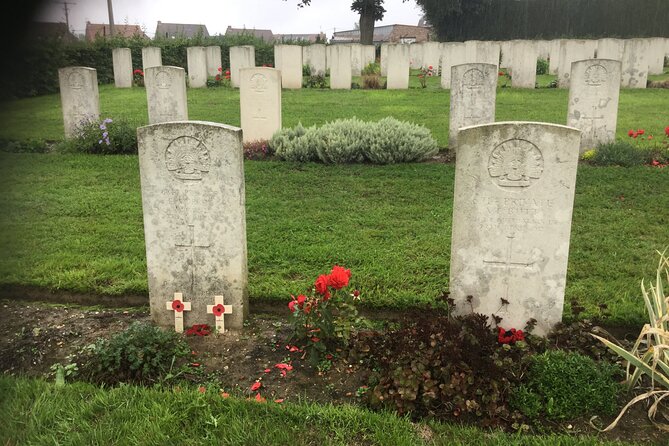
At Le Trou Aid Post Cemetery, you hear about Major General Harold Edward Pompey Elliott and the losses suffered by the Australian 5th Division. The cemetery is described as one of the most striking First World War cemeteries on the route. The stop takes about 20 minutes.
Pheasant Wood Military Cemetery is closely linked to the mass grave discovery. Here you see the graves of soldiers found and identified after the excavation. For families researching a missing serviceman, this part of the tour can carry particular weight.
At VC Corner Australian Cemetery, you see the mass grave and look across the battlefield from the old Australian trench lines. The physical relationship between the cemetery and the former front line is important. You are not only reading about distance and position, you are being shown where the soldiers began.
Australian Memorial Park presents the battle from the German side and includes the Cobbers statue. The statue is one of the most recognizable Australian memorial images in the region, showing a soldier carrying a wounded comrade. The stop is short, but the story gives the day a strong moral center.
Arras provides the main break. You have about an hour for lunch and time in the handsome central squares, part of a UNESCO World Heritage site. Meals are not included, so budget for lunch separately. This is also your chance to step away from the cemeteries and regain energy before the afternoon stops.
At Bullecourt, the focus returns to the Australian losses. The tour explains a battle that cost approximately 10,000 Australian lives in two weeks. That figure can be difficult to absorb, which is why seeing the location helps give the number some physical meaning.
The Slouch Hat Memorial follows, along with remnants of tanks used in the battle. It is a quick stop, but it adds a technological dimension to the day. You are seeing how new machines entered a war still fought through trenches and mud.
You reach Amiens at about 5pm. The guide drops you at your lodging or helps you reach the railway station, and can point out places to eat and good views for your own evening. Accommodation is not included, so reserve your Amiens room separately and make sure the location works with your final drop-off.
Day three: The Somme, Pozieres, and Monash’s final victories
The final day begins in Albert, where you stop at the basilica and hear the story of the famous Leaning Virgin. This is a brief introduction to a town closely linked with the Somme battlefield.
Lochnagar Crater is one of the most powerful physical reminders of the opening day of the Somme offensive. The crater is about 30 meters deep and was created by the mine exploded on July 1, 1916. The guide explains the day’s enormous British losses, including approximately 20,000 dead.
The 1st Australian Division Memorial turns the focus to Pozieres. The battle lasted six weeks and cost 24,000 Australian casualties for a ruined village and roughly one mile of ground. Those figures explain why Pozieres carries such a heavy place in Australian memory.
At the Windmill Memorial, you see the site of the German trench system known as OG1 and OG2, along with the location of a former windmill. This is a useful stop for understanding the trench network and the importance of small rises and fortified positions.
The Tank Corps Memorial marks the place where tanks were first used in battle. You hear how the machines developed and how tactics changed around them. It is a welcome reminder that the Western Front was also a laboratory for modern warfare.
Lunch is at Le Tommy, a cafe devoted to the Australian sacrifice. Lunch remains your own expense, and the stop is listed only briefly, so ask the guide how much time is available if you want a proper meal rather than a fast break.
École Victoria is one of the route’s most unusual stops. The small French school was paid for with pennies donated by Australian children in the 1920s. The story brings the postwar relationship between Australia and France into view, long after the guns fell silent.
At Adelaide Cemetery, the guide explains the unknown Australian soldier exhumed there in 1993. The visit lasts about 20 minutes and connects one anonymous grave with the larger question of how missing soldiers were identified and remembered.
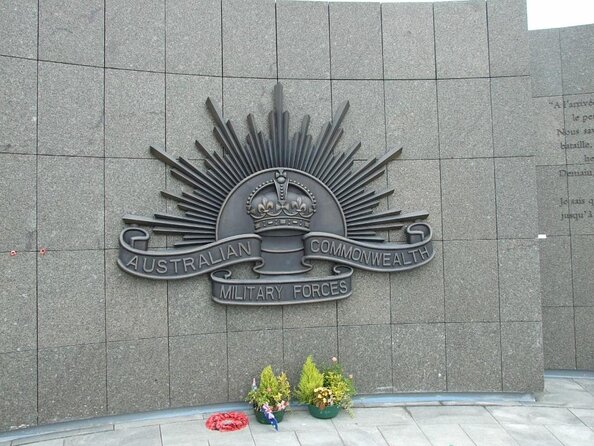
The Australian National Memorial is a major stop, with about an hour to view the memorial to approximately 20,000 Australians missing in the area. This is the sort of place where you will want time to read names and take in the scale of the loss.
You then have an hour at the Sir John Monash Centre. It is the final major indoor visit and gives the Australian campaign a strong closing frame. The center is especially useful after three days of seeing the actual sites, because the films and displays can help pull individual battles into one larger story.
The last battlefield visit is the Australian Corps Memorial at Le Hamel. Here you hear about General John Monash’s carefully planned battle of July 1918, remembered for its speed, lower losses, and important military firsts. Afterward, you return to Amiens and are dropped at your hotel or railway station.
Something different, still within reach of Ypres:
- From Brussels: Flanders Fields Remembrance Full-Day Trip
★ 4.4 · 65 reviews - From Ypres, The Christmas Truce to Passchendaele Ypres Based WW1 private tour
★ 5.0 · 29 reviews - In Flanders Fields and Passchendaele Grand Tour
★ 5.0 · 25 reviews - From Ypres: WWI Battlefields Private Tour
★ 5.0 · 25 reviews
What the $1,965.48 price buys you
The price is high, but it covers three full days of private transport and guiding, rather than a single sightseeing transfer. You also receive entry to the listed museums and the Sir John Monash Centre, plus bottled water each day.
The strongest value is the time saved. Connecting Ypres, Fromelles, Arras, Bullecourt, Pozieres, Le Hamel, and Amiens by public transport would be difficult, particularly with cemeteries and rural memorials spread across the region. A private vehicle also lets you travel one way, from Ypres to Amiens, instead of backtracking.
Still, this is not an all-inclusive package. You pay for every meal and your accommodation. The amount makes most sense for two or more people sharing the private experience, for families following a serviceman, or for serious Australian military history enthusiasts who would otherwise need to arrange several separate days.
If you mainly want a general introduction to the Western Front, a shorter group tour may cost less. If your goal is personal research, focused guiding, and a route built around Australian units, the price is easier to justify.
Practical details that shape your days

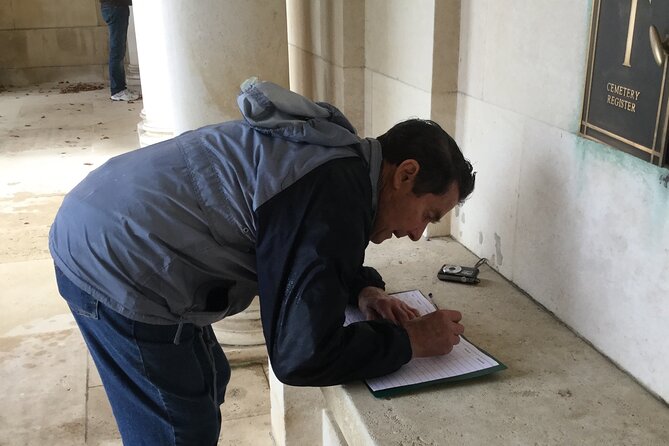
The tour starts at 9am. Bring a clear list of ancestors, service numbers, battle dates, or cemetery references if you have them. The guide can tailor the route where possible, but the more precise your information, the more useful your questions will be.
Expect a full schedule. Several stops last 10 to 30 minutes, while the main museums receive about an hour. You will need to balance your wish to linger with the need to keep moving toward Amiens.
Pickup is offered, and the tour can run from Ypres to Amiens or in reverse. The final drop-off is at your Amiens lodging or the railway station. Confirm your preferred start and finish points when booking.
The activity is private, so only your group takes part. Service animals are allowed, and the tour is near public transportation. Most people can participate, but the amount of walking and the emotional weight of the subject are worth considering before you commit.
Free cancellation is available if you cancel at least 24 hours before the local start time. Changes or cancellations inside that window are not accepted for a refund.
Who should book this Australian battlefield tour?
I would recommend it most strongly to Australians with family connections to the First World War, people researching a particular regiment, and visitors who want a serious three-day study rather than a quick introduction.
It also suits anyone who values a private guide and does not want to drive between remote cemeteries. The route has enough museums and town stops to break up the battlefield visits, but the subject remains central from morning to evening.
You may want a shorter option if you dislike long days, have little interest in military history, or prefer to spend more time in Ypres and Amiens themselves. The itinerary is packed, and the major cemeteries deserve quiet attention.
Should you book it?
Book this tour if you want the Australian story told across the actual battlefields, not just a list of famous names. Soren Hawkes brings personal feeling and careful preparation, while the private format gives you room to focus on your own family questions.
Before booking, check your accommodation in Ypres and Amiens, set aside money for meals, and decide which sites matter most. If Tyne Cot, a family grave, or a museum is especially important, say so early because some scheduled visits are short.
For the right person, this is a powerful and unusually personal way to cross the Western Front. For a casual sightseer, it may be too intense and too expensive. Know which kind of trip you want, and the choice becomes fairly clear.
FAQ
Where does the tour begin?
The standard route begins in Ypres at 9am.
Where does the tour finish?
The tour finishes in Amiens, with drop-off at your Amiens hotel or the Amiens railway station.
Can the tour run in the opposite direction?
Yes. You can choose a Ypres to Amiens route or travel in the reverse direction.
How long is the tour?
The experience lasts approximately three days.
Is the tour private?
Yes. Only your group takes part in the activity.
Are meals included?
No. All meals are at your own expense, including lunch stops in Arras and at Le Tommy.
Is accommodation included?
No. You choose and pay for your own accommodation.
Is bottled water provided?
Yes. Complimentary bottled water is included each day.
Can the itinerary be tailored around a family member?
The guide can tailor the route where possible if you have an ancestor who fell in the battles. Provide relevant family or military details in advance.
Just added around Ypres
- Discover Tournai while playing! Escape game – The alchemist★ 4.0 · 3 reviews
- From LIlle or Bruges, Christmas Truce to Passchendaele Ypres 1 day WW1 private★ 5.0 · 5 reviews
- From Ypres 4hr Christmas Truce and Monster Mines of Messines PRIVATE Tour★ 5.0 · 5 reviews
- Full Day Canadian WW1 Vimy and Somme Battlefield Tour from Ypres★ 5.0 · 6 reviews
- e-Scavenger hunt Ypres: Explore the city at your own pace★ 4.5 · 6 reviews
- In Flanders Fields and Passchendaele Grand Tour★ 5.0 · 25 reviews
- From Ypres: WWI Battlefields Private Tour★ 5.0 · 25 reviews
- From Ypres, The Christmas Truce to Passchendaele Ypres Based WW1 private tour★ 5.0 · 29 reviews
Flanders Fields & WWI Tours, compared.
Great War Flanders Fields Minibus Tour w/ Lunch
Read our review →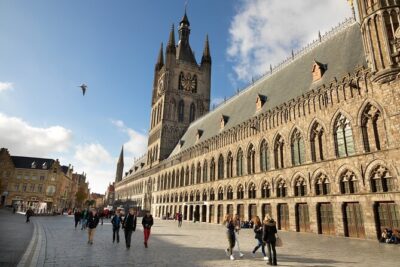
Flanders Fields Remembrance Tour from Brussels
Read our review →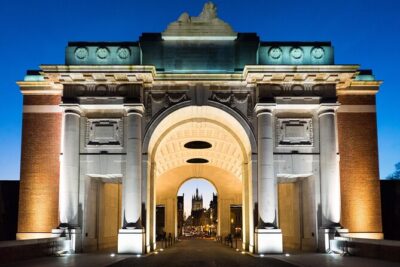
In Flanders Fields and Passchendaele Half Day Morning Tour
Read our review →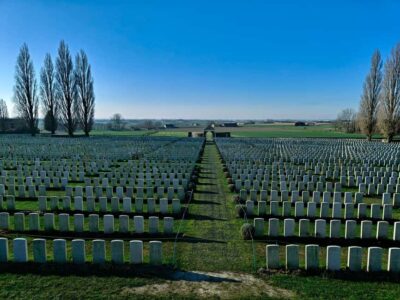
An exploration of the deadly salient battlefields
Read our review →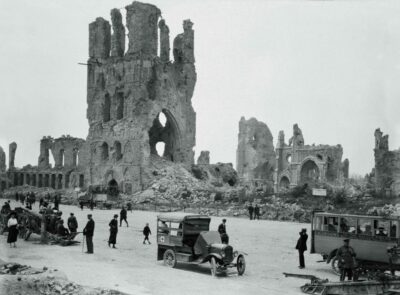
Browse the lists this tour appears in